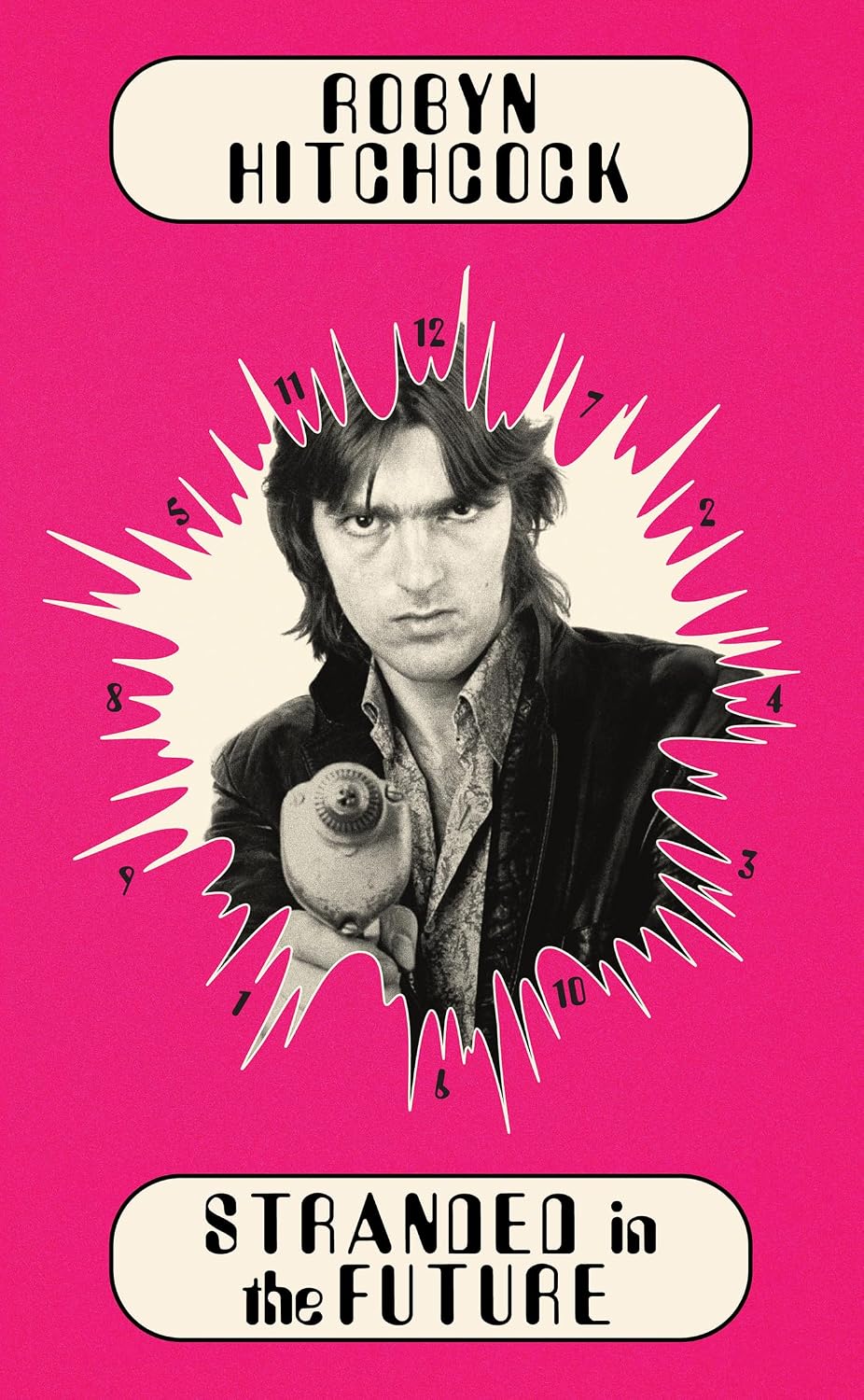
Following up his memoir focusing on a pivotal teenage year (1967: How I Got There and Why I Never Left), Robyn Hitchcock continues the winding thread of his musical and other obsessions in what is effectively Part Two of his continuing reflections on his Cambridge youth and musical journey. In Stranded in the Future, Hitchcock picks up the story in 1968 and moves through the 1970’s as he shifts his musical emphasis from discoverer to creator, winding up with his formation of the seminal psychedelic garage pop band, the Soft Boys, and their early days navigating quarrelsome neighbors and the London music industry.
The axis of this story is his twin obsessions – his former girlfriend and Syd Barrett, both of whom loom large in his interior monologues – while containing numerous and not at all unwelcome digressions, such as his lifelong obsession with trolleybuses (Longtime Hitchcock listeners should be well familiar with his interest in various forms of transport, as well as crustaceans and other marine and vegetative life).
The book is written with Hitchcock’s distinct and idiosyncratic voice. The surreal humor that is such an essential element of Hitchcock’s songwriting and stage patter, is given free reign here, with Hitchcock taking us on a rollercoaster ride through his synapses. But rest assured that he is far from a one-trick pony; Hitchcock is a wonderful writer, capturing the awkwardness of teenage lust and inanity of dope smoking dialogue with painful, but hilarious realism. Indeed, every sentence is a joy.
Music fans, of course, will get even greater enjoyment out of the book, with anecdotes galore about the evolution of Hitchcock’s songwriting and the early days of the Soft Boys. While many memoirs and biographies of punk-era musicians tend to portray the onset of punk as a lightning bolt delivered at iconic shows like the Sex Pistols appearance at the Manchester Free Trade Hall in 1976, Hitchcock takes us back to the mundanity of venues filled with little remembered pub rock bands made up of older musicians (e.g., the Kreem ‘Orns, Sex Toys, and Halitosis Collective) quickly jumping on the punk bandwagon by increasing tempo and removing melody. While the Soft Boys were too strange and 60’s rooted to be anywhere near the center of 1977 punk, Hitchcock tells how they managed to score a prime opening slot for Elvis Costello in early 1978 at the legendary Roundhouse. While that might have been the height of their time in the public spotlight, their later recordings, particularly their psychedelic pop masterpiece Underwater Moonlight, have ultimately earned them far more respect and appreciation than most of their punk era contemporaries.
Given the brilliance of 1967 and Stranded, readers must hope that Part Three of Hitchcock’s musical memoir is not long in coming. As per the title of a 2007 Hitchcock box set, I Wanna Go Backwards!