Like a compulsion, I’ve spent a lot of time over the years trying to introduce others to one of my all-time favorite bands, Radar Brothers. This, in itself, is tricky to navigate. No matter how much we attempt to philosophically distill what makes our taste what it is, music tends to lend itself to a mysterious, elusive quality that simply clicks or it doesn’t. That’s naturally a part of what makes it so special. With Radar Brothers, though, I felt like the right components were there to get others on board. The band routinely churned out such infectious pop songs that it’s almost uncanny, the production lush and hypnotically textured. With the passage of time and artists like Acetone (there’s plenty of overlap here) finally getting their proper retrospective due, perhaps the Radar Brothers are due for the next digital-era reappraisal.
Consistently hitting that elusive sweet spot, the languid Radar framework is sun-baked and melancholic to the core, the ideal antidote for an evening in the backyard or the dusty drive on a desert roadtrip. A looming psychedelia so lazily spun that the colors flicker between muted and a vibrant kaleidoscope. It’s comforting and cathartic, a slow-burn that still possesses a riveting obtuse edge, particularly lyrically. The band’s former label summarized it accurately: “operating at a pace approximately that of continental drift”. Such a speed has often lended the band’s earlier work with the “slowcore” genre tag, though despite some obvious connectivity with their early material, it’s a pigeonholing that I’ve never really agreed with. Notably, it doesn’t account for Putnam’s pastoral and melodic songcraft, at times venturing into a vibrant territory.
Here’s the twist: on paper, the band shouldn’t be so lost in obscurity, and not just because of my subjectivity of their brilliance. This is no case of private press languishing, there were pertinent framework pieces in place. Radar Brothers released eight superb albums at the height of the booming indie rock zeitgeist. The last five were on the influential label Merge, and the band routinely got prestigious opening slots for the likes of Teenage Fanclub, The Breeders and even Modest Mouse. The band’s chief sonic architect Jim Putnam has a compelling origin story: his father Bill was a pioneering audio engineer who founded Universal Audio and United/Western Recorders. The records got a fair amount of press from alternative rock publications of the time, usually grappling with the excellent production and the notion of the unchanging or monotonous formula. One publication labeled them a band of grandiose simplicity, whole another dubbed them “Zoloft rock”, a microcosm of this dichotomy.
Jim Putnam studied fine arts at CalArts (he would design all of the band’s album covers, including the final record’s homage to Joni Mitchell’s The Hissing of Summer Lawns). “A lot of the fine arts people were also musicians, and a lot of the music school people played music with the art students”. One of those music students was Radar Brothers drummer Steve Goodfriend, who studied experimental composition. Other classmates included Mark Lightcap and the late Richie Lee, who would form the band Acetone. “I think they definitely influenced us a lot”. Goodfriend and Lightcap had a band called Dick Slessig Combo, and after graduation Lightcap had given him a tape of Putnam’s under the name “Bus Engines”. “I listened to that over and over, played it into the ground”, Goodfriend recalls.
“I don’t know why but it really charmed me and his work really spoke to me, particularly the way he was playing drums”. Jim was a guitarist in early nineties shoegaze band Medicine leaving after their first album to form the group Maids of Gravity with fellow bandmate Eddie Ruscha, son of the legendary LA pop artist. It was another quick exit for Putnam however; beginning to focus on his own songs, he departed after the first album to start his own band that same year.
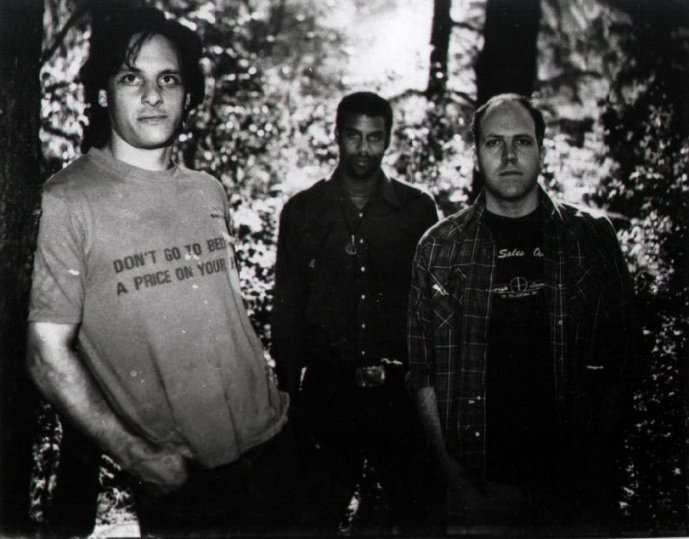
Along with Goodfriend, bassist Senon Williams (a childhood friend of Ruscha’s) was recruited to form the original lineup and core trio through the first five records. Williams had previously been a member of Cement, a band with original Faith No More singer Chuck Mosley. The band’s first EP was released in 1995 on a short-lived independent label called Fingerpaint; their gimmick was releasing limited 10” EPs featuring original finger paintings by the artist. For Senon, there was a specific “we’re a real band” moment. “I went on a six-week trip to Southeast Asia, and came back to find Jim and Steve had a vinyl release”, he recalls. The band practiced extensively at an infamous Silver Lake rehearsal space called Hully Gully, while recording was done in Putnam’s backyard garage studio in Atwater Village, a haven for vintage recording equipment. This included Putnam’s “baby”, a prized and rare 40 channel Sphere console from 1978. Throughout the various records, the studio was given a rotating title of colorful monikers and “phases” such Skylab or Phase IV Intergalactic Recording Facility.
After their debut eponymous full length two years later, the band then signed with Chemikal Underground, a Glasgow-based label started by members of The Delgados. With career highlights like single “Shoveling Sons”, 1999’s The Singing Hatchet built a more lavish, panoramic sound that would foreshadow and solidify a quixotic trajectory over the rest of the band’s catalogue. The trio would record basic tracks based around a riff or idea, and Putnam would later use his production wizardry to polish the finished tracks in the home studio. In addition to the new Scottish label, the band garnered an appreciation in Europe, playing MTV Unplugged and recording a couple of Peel Sessions. Goodfriend has fond and vivid memories of playing in cities like Munich and Hamburg. Working for his family’s microwave electronics business, he would also often have to take the band’s van to local Kinko’s stores, selling components for the likes of electronic billboards. “I don’t know that we were the best live band, as much as we loved what we were doing. We would hang out for ten hours after the forty minute show”.
This momentum was fully materialized with the next album And The Surrounding Mountains, with the band creating a sparse, picturesque landscape that feels equal parts desolate, understated and wistful. The band managed to sign with Merge in North America, thanks to a friend from Rilo Kiley putting in a good word when touring with Superchunk. Like the piano-driven haze of “The Wake of All That’s Past”, there are moments of melancholic beauty while tapping into Neil Young strumming and Meddle-era Pink Floyd arrangements/balladry (“Fearless” is one of Putnam’s all-time favorite songs). The songs also pack an obtusely lucid emotional punch, fueled by the piano lines, woozy orchestral arrangements including chiming bells. In addition to the deliberate mountainous imagery and a running theme of family and relatives, songs like “Still Evil” introduces a darker and enigmatic quality in Putnam’s lyrics. In an acoustic tumbleweed haze, “Rock of the Lake” strums slowly for over a minute before the vocals kick in so loose and slowly that they might register as spoken word.
The band wasn’t exactly smitten with the slowcore tag that inevitably plagued them. Williams just saw it as a way for the press or reviewers to easily pigeonhole them. “I understand our tempos were slow, but melodically very expansive. The way we created music was very organic and shifting”. Putnam thinks Goodfriend’s drumming had a lot to do with it, taking precedent even when the band attempted more upbeat compositions. “I loved playing slow, but I had no sense of the slowcore thing”, Goodfriend recalls. “Jim is this amazing force: his ideas move very deeply and slowly, like a bulldozer. That’s what I really picked up on”.
The band was a key fixture in the Los Angeles indie scene of the early to mid-2000s, balancing proper tours with plenty of local gigs and residencies around the hip epicenter of Silver Lake and Echo Park. However, the band uniquely predates that: they emerged from the halcyon days of venues like Spaceland and playing gigs with formative eastside legends like Elliott Smith and Beck. In that landscape of mp3 blogs and prefab spotlights launching overnight success stories, Radar Brothers admittedly lacked a touch of the buzzy, “next big thing” narrative of some of their peers of the era. I liked this about them. In a way, it made the whole thing seem decisively blue collar. A Los Angeles Times article summarized the dichotomy: “widely admired but not especially hyped; its shows are usually bustling but not with industry sharks, and its long catalog of wispy, magic-hour guitar jangle is more likely to soundtrack a Silver Lake Sunday barbecue than tear up the Hype Machine charts”.
Reflecting on that Los Angeles zeitgeist some thirty years later, Putnam articulates the blessing and curse of being a band from LA during that nineties era when regionality and music scenes were a vital signifier for an audience or press to “understand” the artist. “That was kind of detrimental to us. We always felt like outsiders and not a part of any LA scene”. He recalls that when the band would go on tour in those pre-internet times, people would be confused to learn the band wasn’t from a place like Portland or Minnesota, where the band Low was from. “I’d do interviews and when they learned I was from LA, they would get upset and not want to talk to us anymore”. Similarly, when Putnam lived in San Francisco for a few years, he observed a similar attitude and the age-old SF/LA rivalry spawning from the sixties, with the Bay Area’s skepticism of plastic Hollywood stereotypes.
The Fallen Leaf Pages subtly swerves from the sparser alt-country leanings of its predecessor, with production sounding a bit more on a polished indie rock wavelength, at times reminiscent of the likes of Built To Spill. Despite the immediacy of singalong single “Papilion”, it’s perhaps the 2000s record of theirs that most reveals itself on keen repeated listens, particularly the subtle beauty and sway of songs like “Is That Blood”, “The River Shade” and closer “Breathing Again”. A fish in a pond is featured in the CD’s inner jewel case. Despite their Angeleno roots, a touchstone theme in the band’s lyrics is often less about the Pacific Ocean or California sun and more about the inland natural world of mountains, lakes and ponds.
Like an anchoring through-line, those lyrical themes are very consistent across the catalogue. Sometimes it’s overt: songs like “Lake Life”, “Camplight”, “Watching Cows” and “The Fish” (this is to only mention a select few). Other times that imagery pops up out of seemingly nowhere. “Drop me in the fishing hole”. “Crows fight beetles in the firelight”. To Putnam, this is a testament to the beautiful and diverse terrain of the SoCal area, from the surrounding mountains to the access of brisk escapes to the desert and beach. “When I write lyrics, it’s a pastoral kind of visual thing. I have to be able to visualize it, like a film”.
2008’s Auditorium is a remarkable record, equipped with upbeat rockers (“When Cold Air Goes to Sleep”) to a slick, fully realized dusty psychedelia (“Hills of Stone”). The back half of the album is particularly strong, with songs like the slow-building coda that bubbles up in “A Dog Named Ohio” and the blissful strummer “Lake Life”, the latter featuring an eerie sounding musical saw. Not an easy feat, “Brother Rabbit” is perhaps the band at their most laid back. The subject matter is quintessentially Putnam: with no lack of pretense, the lyrics are about sitting in his trusty green chair while watching his dog chase a rabbit in the backyard. Upon recently revisiting the record prior to our conversation, Goodfriend found all of the pertinent Radar touchstones present on the album, “almost like bullets”.
On the same day that Auditorium was released in January of 2008, the original trio played their final gig at the last night of a residency at The Echo on Sunset Boulevard. An emotional affair, friends and family joined the band on stage at the conclusion of the set. Senon recalls the amicable departure as something like a “hug it out session” at The Roost, their local bar hangout in Los Feliz. “It was no social breakup as human beings, no blame or arguments”, he reflects. “We weren’t hashing out songs like before, it felt disjointed and not as fulfilling as it used to”. Williams had found that fulfillment with a new band he was joining at the time, Dengue Fever. For Goodfriend, it was a confluence of personal events. “I was busy in many different walks of life at that point. Having a kid and a tight schedule, that became hugely problematic”.
Putnam still had to tour behind Auditorium, so he got to work putting together a new band “sort of ad hoc”, briefly recruiting his friend Eric Morgan on drums, who then brought in bassist Be Hussey. After a few months, drummer Stevie Treichel of previous LA cult band The Movies then replaced Morgan. Hussey had been through the indie rock gauntlet with his nineties band Morsel and jumped at the opportunity to join a group that came equipped with the likes of a steady label and overseas booking agents. “It was kind of like jumping on a slow-moving train”, he recalls. Following the touring, Putnam and the retooled Treichel/Hussey rhythm section would record 2010’s The Illustrated Garden.
With Putnam’s nature-based lyrical themes swiftly moving back to the likes of the avian variety, The Illustrated Garden wields some of the band’s most polished psychedelic pop songs, packing an immediate melodic punch. If it’s possible to listen to earworm tracks like “For The Birds” and “Rainbow” and not have them stuck in your head for the next twenty four hours, I wouldn’t know. A fellow recording engineer, Hussey also formed a unique and fresh collaboration with Putnam on the production side, as the album was tracked and mixed at both of their studios with fully equipped consoles. With this second iteration of the band carrying on the tradition of operating as a three-piece, Hussey recalls the album feeling a bit like staying the course of the original Radar Brothers framework.
The final Radar album Eight is a curious swan song, on paper the antithesis of a band running out of creative steam after sixteen years. With an initial working title of “Radar Brothers Family Magnetic”, the group further expanded into a six-piece (“a revolving door”, as Jim puts it) including pedal steel guitar and a pair of keyboard players (Brian Cleary and Ethan Walter). “There was a feeling of perhaps a last gasp or one more big push”, Hussey reflects on the impetus for the album. He proudly describes throwing all of their resources out there to record it the right way, including the hybrid recording process as a “maximalist” mixdown, taking the full analogue mix on tape and capturing high res on a separate rig. Hussey was also aware of the overall trajectory of the group and the fact that the industry at large likely had the attitude that while they were still chugging along on the respected Merge, they were likely beyond the point of gaining any significant traction.
Aside from sounding so sonically rich, this revamping created an identifiably larger sound in the songcraft, representing both a more rocking edge yet a natural continuation of the Radar discography. There’s a lavish country twang and lifting chorus on “Couch”, while the more abstract “Ebony Bow” (a favorite of Hussey’s) is almost unrecognizable from anything else in the band’s catalogue. Amidst experiencing some major personal struggles at that time, Putnam admits Eight was a much more collaborative affair. “Reflections” has an effortlessly catchy melodic edge, and “Time Rolling By” feels like the larger band turning a jam session into a textured studio piece.
The album’s 2013 release was also the recipient of an experiment by Merge: it was the first time they did a vinyl only release (though it came with a CD packaged inside). Sure, the first wave of the vinyl renaissance was booming and CDs were more than fading away in the post-iTunes era. There was obviously another motive however: it was a cost-cutting strategy by the label, given the lack of sales typically generated by a Radar Brothers release. Hussey found the decision odd considering they ultimately did press the CDs anyway. Despite the late era reinvention, the band unceremoniously came to an end after nearly two decades. Putnam summarizes it as creative indifference, and in his mind it was ready to move on from leading his own band. In Hussey’s memory, there was no official ending. “In my book, it just kind of fizzled out”.
Quietly as ever, Jim Putnam has pushed on in a solo capacity. Under the moniker Mt. Wilson Repeater, he has released three self-coined “exploratory” records, the mad scientist hunkering down in his coveted sonic laboratory and playing every instrument himself. These records create a kaleidoscopic environment where lush experimental soundscapes venture into an ambient territory before ultimately swerving via Putnam’s patented melodic touch (ricocheting between instrumentals and tracks where the vocals are a complimentary piece pushed back in the mix). Finally, Putnam actually released a more stripped down eponymous solo record under his own name just last year on the French label We Are Unique.
Senon Williams still plays in Dengue Fever and is also a prolific visual artist and poet, frequently exhibiting around town (though all are still in California, he is the last of the original trio still residing in Los Angeles proper). The late eighties CalArts milieu continues to live on: Steve Goodfriend still occasionally plays shows with Dick Slessig Combo, his project with Mark Lightcap formed nearly forty years ago. Though reclusively playing sporadic shows at venues like art galleries, a 2004 limited CD release showcases the band playing an epic, 43-minute version of “Wichita Lineman”. Williams has also recently played live with Acetone following the band’s recent reissue and boxset campaign, and 2022 saw the release of an excellent instrumental record by The Ecstasy of Gold, a quartet including Williams and two members of Acetone.
In the end, the discography and trajectory of Radar Brothers defies the conventional, perpetuated myths that artists must consciously reinvent themselves. It was clear through these conversations that the band had little ambitions besides playing the music that they loved, and the kinship from those kinetic relationships never waned over the last few decades. “I can still play all of those songs, like muscle memory”, Goodfriend reflects. Ultimately, whether or not these records will ever have their full circle re-appreciation moment remains to be seen, yet my compulsion to share them has only grown stronger. This motivation only plainly resonated something further: you can never have too much of a good thing. In a way that can only be described as comforting, Radar Brothers have always exceeded in providing that.