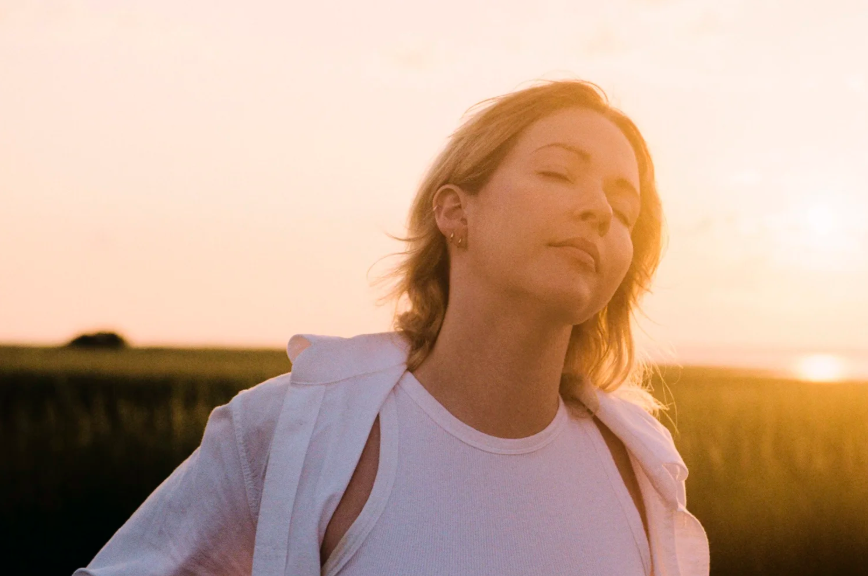
Photo by Su Müstecaplıoğlu
On her third album, and first for Don Giovanni Records, Dublin-born songwriter Ailbhe Reddy digs into the complicated sides of relationships and what lingers after they end with introspective writing, blending vulnerable self-reflection with poetic imagery. Across Kiss Big’s nine tracks, she balances raw, confessional honesty with sharp melodic and lyrical details, pulling together storytelling with flashes of intensity, and catharsis.
The songs draw from personal experience, books like Fleishman Is in Trouble and the one‑act play Crave, and there’s a more melancholic tone here compared to her earlier releases. Fans of Lucy Dacus or Julia Jacklin will find a kinship with Reddy’s indie-confessional music. With a mix of quiet acoustic moments (“Kiss Big”), programmed beats (“That Girl”), and bold, charismatic guitars (“So Quickly, Baby”), the album carries a strong sense of character and range showing Reddy pushing into new textures without losing what makes her writing feel so immediate. And while the record sits with heartbreak and its fallout, Reddy talked about how as every day passes, you’re growing towards the future.
In the conversation that follows, Reddy gets into how her songwriting has evolved, the artists who’ve shaped her creative instincts, and the studio experimentation that helped define Kiss Big. She also reflects on what touring looks like in 2026 and how life on the road continues to feed her work.
When you write your biography, what is the chapter for 2025 going to be called?
AILBHE: Working On It.
Is that working on music? Is that working on life? Is that just a general statement of working on it?
AILBHE: Until 2025, I really hunkered down and got into preparing for releasing this album. I started writing more. I worked on loads of things and probably learned more in 2025 than I had in the five years before. You have those years where you grow a lot, and they’re usually—I think there’s a thing called the plastic hour, where things expand and shift, and it can be a bit painful, but usually ends up solidifying and being a time where you learn. So I feel like 2025 was a time where I didn’t have that much music work on, and I’ve been writing a book and I spent loads of time working on that, and then working on getting this album out. So yeah, Working On It feels like a good chapter title. Working on everything.
What are the albums that you listened to between 12 and 16 that you still listen to today that you still love?
AILBHE: That’s a tricky one, but I can think of two things that I listen to as a child/teenager. There’s a few things that I do not listen to anymore, like Guns N’ Roses. I was obsessed with them. I used to make my own posters, cutting out little bits and making collages and stick it up all over my wall, and write out their lyrics. Foo Fighters as well, was massive for me back then. I used to go to HMV on Grafton Street in Dublin and spend all my pocket money on whatever CDs I could get. But the one that I still come back to, Jeff Buckley Grace, I probably heard as a kid and just became progressively more obsessed with in my teens.
Also, Avril Lavigne. I don’t listen to her new stuff, but that first record felt like it was made for me. I remember hearing it and I was about 11, and I just became so obsessed with her. I used to take my dad’s camcorder and I would wait for the video to come up on MTV. I would film the video for “Complicated” or “I’m With You,” and then I would rewatch it back whenever I wanted because this was pre-YouTube. But by the time I was like 16, YouTube just came into existence, and suddenly you’re able to find just the history of music and all of these old music videos and documentaries. I would just spend hours looking up every single thing I could find on Jeff Buckley and reading everything I could find about him. I’d gone through that phase before with Nirvana as well, with Kurt Cobain, I had kind of an obsession.
I missed opportunities to see Jeff Buckley live. When Grace came out, I had the CD but didn’t listen to it for months. I was into other styles of music and just never gave it a chance. When I finally did listen, I realized how stupid I had been.
AILBHE: It’s such a great record. Last year, I think it was the 30-year anniversary of that record, and there was a show in Dublin where they were having Irish musicians come in and sing the songs. I did “Dream Brother.” You don’t realize it until you’re singing it yourself; you can’t miss any of the little ad-lib things he does, because that’s part of what makes the song. What a vocalist. It’s really the most challenging thing I’ve ever sang.
A record store in Columbus recently posted their top-selling albums of 2025, and Grace was the second most sold record. It blows my mind that 30 years later, 50 people bought that on vinyl. I’m fascinated that that album still sells as much as it does.
AILBHE: I feel like he’s one of those artists that people are constantly discovering. I discovered him 15 years after that record came out. It was also my gateway to Leonard Cohen because I heard “Hallelujah.” This was pre-“Hallelujah” becoming cheesy for a while because it was used so much in film and TV and X Factor in the UK had so many people singing it. My mum was a massive Leonard Cohen fan, so she bought me a lyric book when I was 15 or 16 of Leonard Cohen songs and was like, “If you’re gonna write songs, learn from the best.” I read all about how he had written “Hallelujah,” and how actually he had had so many more verses. When Jeff Buckley wanted to cover it, he gave him all of the verses to choose from. I think he had like 60 verses or something.
Is there one song or album that, when you hear it, you’re transported back in time?
AILBHE: There’s one that sticks out for me always, and it’s When the Pawn… by Fiona Apple, which I didn’t discover until my early 20s. I was just starting to get into playing music and being an artist myself, and I heard “Paper Bag” and was like, “What is this? This is incredible.” I felt like Avril Lavigne, as an 11-year-old girl who was a total tomboy, that felt like it was written for me. And then Fiona Apple, as an oversensitive 21-year-old, I felt, “That’s for me.” Everything that I listened to beyond that was guy bands like Nirvana, Foo Fighters, Arcade Fire; that was the predominant world of music that I was living in. But Fiona Apple, I was like, “This is for me.” I totally remember it because I was working in an office at the time and I heard this song and was like, “I have to listen to every single thing she’s ever released.” It totally changed how I wrote music; I think she’s just one of the best to ever do it. Even though she’s highly rated, I think she’s still underrated.
I remember I went through a breakup and there’s this song, “Love Ridden,” and you know when you’re just being really melodramatic and you’re listening to that song? It brings me back to driving around in my car, just being super upset, making myself feel even worse by listening to such a sad song. It’s not one of the famous songs from that record, it’s like a lost one, and I think that the way I’m still an album listener, and one of the things is like the single pulls you in, but it’s always the one that nobody else knows that ends up being your song, and “Love Ridden” was that for me. I loved that album so much that I actually wrote an article in the Irish Times talking about how much I love that record. That brings me back to that time when you’re changing and learning loads.
I watched an interview you did in 2016 and you were talking about moving from being a singer-songwriter to playing with a full band. Can you trace that evolution to you in 2026?
AILBHE: I guess I started off as a singer-songwriter because I didn’t know anyone who was playing in bands when I was in school. The high school I went to, I played guitar and I was the only person who was in my class who played guitar. It was always a really solitary hobby. I joined a band with two guys when I was maybe 17 or 18, but it was during that real folk revival era, so everything that I did was very acoustic guitar songwriting. Third album in, I’m definitely a songwriter first. If I have a song that I can’t sit down and play on an acoustic guitar, I don’t think it belongs in an album. If you can’t strip it back to that, then to me, it’s not a song.
I think that it just took me a while to get comfortable with playing with a band. I found drums really petrifying to play with because I didn’t think I was good enough. Once I got into the studio, it ended up being about drums and percussion and I started getting more comfortable with that, to the point where, when I started working on this album, I was putting in synths and electronic drum beats. A lot of the songs are built off drum beats. You just become more curious. You get a little taste of working with something and then all of a sudden you’re like, “What would it be like for me to get rid of the guitar for a minute and write the whole song over synth and a drum loop?” That’s how “That Girl” was written.
Are there moments when you’re making music where you dial in and say, “This is it, I found it”? Alternatively, are there moments where you have taken a left instead of a right, gone outside of your comfort zone, or gone down a rabbit hole only to realize it’s not what you should do?
AILBHE: So many times. Especially with this album, because I had a lot of time with it. I got dropped from a label after my second record, so it ended up being a way longer process than I thought it was going to be. I had loads of time with these songs. “Graceful Swimmer” started off as kind of indie rock. I had such an idea of how it was supposed to go, and then I had it as a piano song, and it just went a million different directions. When we were in the studio, I was like, “This isn’t working.” Tommy McLaughlin, who I produced the album with, just had this thing of, “You keep forcing the chorus; I think you should sing it really softly.” That was what unlocked it. I had “demo-itis,” where you do a demo and you want it to be really big, and he was like, “No, this song is soft.”
I just love collaboration. I think one of the worst things about touring becoming more expensive is that you end up touring with one person or no people, and it takes away the joy that you get from playing with others. That is why I do music, to connect with other people. Tommy and I had so much time with this record that there were times where I was like, “Take all of this out, put all of this in,” and then I’d be like, “I’m so sorry, take that all out again!” Having the time to sit with it meant I could leave it in a drawer for six months, listen again, and make final decisions.
I’m so glad you mentioned that song because that is my favorite track. That’s the one that really stuck out to me as sounding a little bit different than the rest. I heard you say in an interview how important lyrics are to you. As a lyric writer yourself, is there anything in your personal life where you’ve said, “I’m not going to share that”? Is there a closed door?
AILBHE: Everything I’ve ever written has been true, or maybe a melodramatic version of events, which is just songwriting, your most intense feeling at a certain time. I don’t think there’s anything on this record that’s insanely dramatic; maybe that’s just a bit of maturity. But the thing that I probably protect is other people. One of the cruelest things about being a songwriter is that you control the narrative and then you release it into the world. That feels so unfair. I don’t mind people knowing whatever they want about me, but protecting other people who the songs are about is important. There have been times where I’ve taken a lyric out because it feels too personal to somebody else or too identifying. People from my hometown would know who that is, and I don’t think that’s fair. My version of events was obviously very hurtful for me, but I’m sure theirs is like, “You were a pain in the butt.” The bit that I hold back the most is anything that might hurt somebody else.
I interviewed Ruston Kelly once, and he wrote an album about overdosing. I asked him if it’s ever hard to perform that personal stuff live. He said once he’s put it out to the world, it becomes the audience’s song and he is just the narrator; it no longer hurts to sing it. Is that similar for you?
AILBHE: Exactly. On my last record, I had a song about my grandmother dying and about my mother going through an illness. Those were really hard to sing at the start, but as time goes on, you become—not desensitized, but it feels like other people project their own meanings on it, so it stops being about you at all. I always love that Lucy Dacus line in “Night Shift” where she says, “In five years I hope these songs feel like covers dedicated to new lovers.” At some point, the song won’t mean anything to me; it’s just another song.
Is there a lyric of yours on this record that you’re particularly proud of? And if you had to get a lyric tattooed on your body, is there one that comes to mind?
AILBHE: I actually found a lyric earlier by Ani DiFranco: “There’s beauty in the things between us, but there’s power in how we overlap.” I thought that was a beautiful lyric. Probably something from Fiona Apple, too.
I love a line from Soul Asylum: “You’re a dream for insomniacs.” To me, that sounds like relief. It offers hope to somebody who doesn’t think they have hope. It gives me goosebumps every time I hear it.
AILBHE: The lyric that popped into my head is so similar; it’s another thing of relief and hope. It’s from “Pink Bullets” by The Shins, which is a lyrical masterpiece: “But your memory’s here and I’d like it to stay / Warm light on a winter’s day.” Coming from Ireland, I know the feeling of the darkest winter with gray skies, and then every once in a while you’ll have a day with blue skies and beautiful sunshine. It feels like a bit of hope, like this isn’t gonna last forever and you will see the sun again. If I had been able to get a tattoo as a teenager, I probably would have that on my arm right now. I used to write it on my arm when I was 16.
It sounds like your weather is very similar to mine in Columbus, Ohio. From October to May, it’s exactly what you described. It’s depressing and gray.
AILBHE: I remember I worked in a mall when I was 20 during December. It was horrible. I’d be like, “What is weather? What is sunlight?” It was so depressing, I never left the mall for a whole shift and it was just dark and horrible. I live in London now, and once the sun comes out in April or May, people go crazy.
I noticed your bio mentions that Fleishman Is in Trouble was an influence on this record. I didn’t know anything about the book until I watched the TV series. Was the influence from watching the show, or did you go back and read it?
AILBHE: I watched the show first, then read the book. I felt like it uses the male experience as a Trojan horse to sneak in a story about women. There are these amazing quotes about how cheating isn’t necessarily about trying to hurt your partner, but about trying to find out who you were. It captures this malaise, confusion, and ambiguity about where you’re supposed to be in life—the chances you didn’t take and the things you didn’t do.
I think the narrator is so brilliantly written as a woman in her late 30s or early 40s who is living the life she chose, but is examining the paths not taken. Society gives us this script that men can keep recreating themselves, but once a woman becomes a mother, that’s her track. I’m 34, and I found that narrative really interesting. In music, people often feel that once you hit 30, no one cares—which is being debunked time and time again; Lily Allen just released the record of her life at 40.
The book also discusses how discomfort in a relationship isn’t always about the other person; it’s about how you’ve lost yourself. You’re not as interesting or taking as many chances, which is natural when you settle down. You have to examine yourself rather than blaming the other person for who you’ve become. My single “That Girl” is built around the lyric, “I’m still that girl that you knew.” When you’re breaking up, people start viewing you a certain way, and you’re trying to figure out who you are without that person. You try to find the version of yourself you were before you met them, which you can’t ever really get back to, but there’s a core kid inside you that never goes away.
I’d written the full song but didn’t know how to end it. Then I read a quote in Fleishman that says you’re never going to be as young as you are “now and now and now and now.” That inspired me to use the idea that I’ll never be further from the relationship I was in than I am now. Every single day you wake up, you are further away and growing. To me, it feels like hope and continuous renewal.
I wasn’t familiar with Crave by Sarah Kane, but then I found the monologue and realized it was the basis for the closing track. What can you tell me about that?
AILBHE: Sarah Kane is an incredible playwright, and her estate very generously gave me permission to use an adapted version of the monologue. It felt like the basis for the second half of the album, which is about the cyclical nature of relationships and how optimistic we are about romance. We think we’ll never love again after a breakup, and then we end up back in it with newfound excitement. That monologue is one of the most beautiful pieces of writing I’ve ever come across. I initially put music to it thinking I wouldn’t get to release it, so I’m eternally grateful they let me. I’m very keen for people to know I didn’t write it, but I feel like it is the perfect ending track.
Your bio says the album was written in Dublin, London, New York, and the American Midwest. Why is that geography important to the story of this record?
AILBHE: I started writing this record during a heatwave when I first moved to London. When I hear those songs, some of the first half of the record reminds me of being in my old apartment with the open window onto the main street and it being 34 degrees Celsius, roasting. I ended up touring my second record and meeting someone who lives in New York—my partner—and I’ve spent half my time there for the last few years. That really informed the writing. I was seeing more theater, reading more on long-haul flights, and broadening my horizons culturally and artistically. Brooklyn has an indie scene that feels very much alive. The title track, “Kiss Big,” mentions New York, but it was actually written while I was on tour driving through Indiana. It’s about ringing my partner while I was on the road and talking about everything I saw along the way. It feels very inspired by those places.
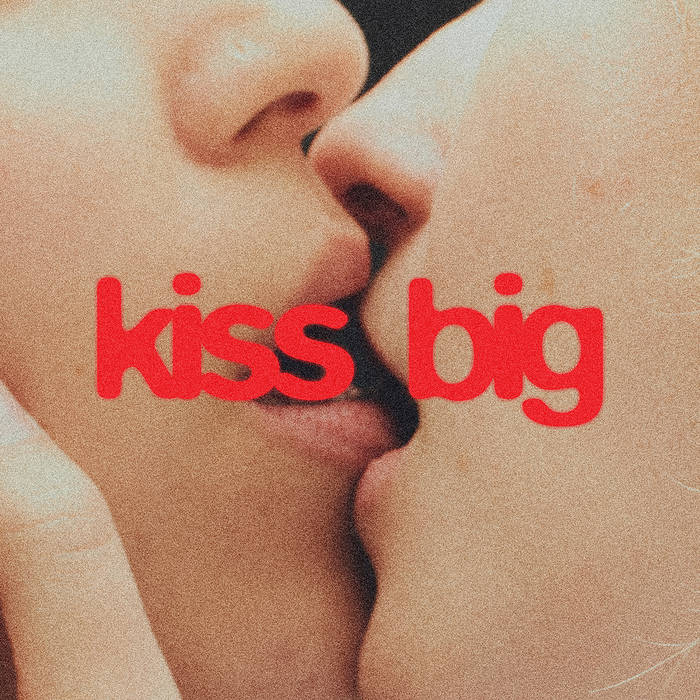
With the revival of vinyl, people pay more attention to album art. What was the thought process behind the cover of Kiss Big?
AILBHE: There is so much story behind it. It was taken by an amazing New York-based, Turkish born, photographer named Su Müstecaplıoğlu, a very dear friend of mine. We went out and shot photos of couples, loads of friends, in a garden in Hackney at 11:00 in the morning because we wanted the really good light. We had gone through photography books before I had even named the album and saw these disturbingly close-up photos of people kissing—to the point where you initially wonder, “What the hell is that?” because it’s just flesh. I wanted something like that: skin up-close, where you have a moment of being unsure of what you’re looking at. I wanted mine to be a bit more tender and romantic because of the album content. I wanted it to be kind of romantic but when you first see it, you kind of go, “What?” It’s very identifiable as a kiss if you look for more than a second, but in that first split second, you’re wondering what it is.
I noticed on songs like “So Quickly Baby,” “Untangling,” and “Gorgeous Thing,” the guitar playing really jumps out. It’s not necessarily solos, but very interesting, unique parts. Was that part of the initial songwriting, or something added later to give it that extra “perk”?
AILBHE: I’d consider myself a guitarist first and foremost. When I started, I thought I had a terrible voice, so I mostly just played guitar. For “Gorgeous Thing,” I had this guitar solo on the demo that was aggressively loud—90s indie rock style. We worked on it in the studio to make it feel big, because the song itself is so soft, like it’s “slapping you in the face.”
On “So Quickly Baby,” my producer Tommy McLaughlin came up with that gravelly middle-eight part that almost drops the song into a totally different genre. “Untangling” was one we wanted to feel like a jam. The outro actually went on for several more minutes in the studio before we tapered it to where it felt natural. I came from an indie rock background and this is the album that has the least guitars on it, usually it’s all guitars. This time there’s guitars that peek through, but it is mostly done in a different way.
We talked about “Graceful Swimmer” earlier—that one sounds unique, almost like a club dance song with that specific beat. Is that a real drummer or programmed?
AILBHE: “Graceful Swimmer,” “That Girl,” and “Align,” have a mix of an acoustic drum kit and electronic drums, so you’re hearing a mix.
I saw the video you did for “Shoulder Blades” with the Theodora Byrne Ensemble. Was that a one-off thing or do you like to take things you’ve written and look at them in different ways? Is it something you’d like to explore more in the future?
AILBHE: I love taking a song and interpreting it in different ways. The Theodora Byrne Ensemble, that’s Theo who runs the ensemble who came up with a choir version of that song. I often do acoustic versions of my heavier songs. I believe if a song is good enough, it should be able to change into different realms and genres. I’ll probably put out a very stripped-back keys and guitar version of this album at some point.
What does 2026 look like for you? Is touring in the U.S. difficult right now?
AILBHE: The album comes out on the 30th, then loads of touring. We’ll be on the U.S. East Coast in February and March, then London and Ireland in April and May. I’m lucky to be with an American label and have a support network in New York, which helps with musicians and visas. When I did it a few years ago, I was bringing musicians over from Ireland, and that’s just an insane price. I do have a visa, which is challenging to get, but once you have that it’s the same as everything else.
It’s sad to see international touring becoming so clamped down. We’ve had 50 years of people freely sharing music across borders, and now it feels restricted. I’ve heard people say, “People don’t want to pay money (to see live music).” Music is more expensive than it’s ever been, it used to be $15 for a gig, you walk in, everybody’s at the same level. Now, the money isn’t going to musicians. In my experience, fans are endlessly generous. What we really need to look at is the middleman who is taking advantage of both sides. When you cut that out, and you do something in an independent venue, and it’s just you, fans, and the venue, it’s a damn joy.
I talked to a band recently who joked that they are now a “clothing company that performs music” because they only make money selling t-shirts, not playing the actual gigs.
AILBHE: A lot of bands make most of their money from merchandise. It will right itself because people are getting sick of it and there is a lot more eyes on dynamic pricing and all that stuff. The sooner we deal with that abuse of a system that isn’t working, the better off people will be. I don’t think people should be paying $50 for a ticket, that’s insane. That’s unaffordable. That means that instead of going to see 5 gigs a month, you see one. That sucks for everybody.