Photo by by Jason Thrasher
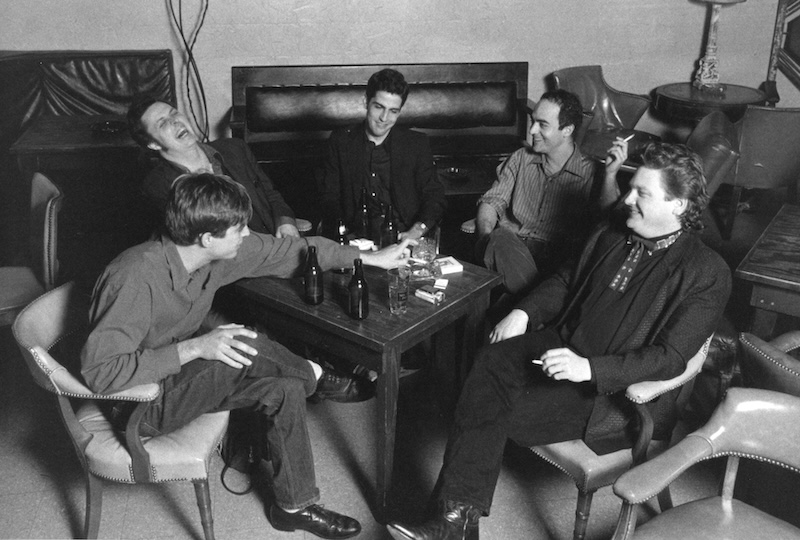
From the same Athens, Georgia college music scene that birthed artists like R.E.M., Pylon, The B-52’s, Widespread Panic, and Drive-By Truckers, The Star Room Boys were an anomaly. Active from 1994 to 2002, they were one of the few classic country acts to come out of that scene. Inspired by artists like Lefty Frizzell and Merle Haggard, the band released two albums, Why Do Lonely Men and Women Want to Break Each Other’s Hearts? (1999) and This World Just Won’t Leave You Alone (2002), before fizzling apart as members moved into the next phases of life, including starting families and careers.
The Star Room Boys never broke out of Athens the way they’d hoped, but they built a devoted following, including fans like Patterson Hood (Drive-By Truckers) and Lydia Loveless, who have cited the band’s small catalog as an influence on their own music. To celebrate the 25th anniversary of Why Do Lonely Men and Women Want to Break Each Other’s Hearts?, the band revisited the album, had it remastered, and, after a slight hiccup and delay, are issuing it on vinyl for the first time ever (“the 27th anniversary,” they joke).
Lead singer Dave Marr and guitarist Philip McArdle are back on the press circuit, something neither imagined they’d be doing 24 years after breaking up. It’s a good chance to tell the band’s story and a chance for two old friends to reconnect. Marr still calls Athens home; McArdle is now based in Southern California.
With Why Do Lonely Men and Women Want to Break Each Other’s Hearts? officially out now, will there be an album release show?
DAVE: No, but we did a couple of pre-release shows about four weeks ago — one in Athens, one in Atlanta. We played the 40 Watt here in Athens and sold it out completely, which is kind of a new experience for us. We had the vinyl back just in time to sell at those shows, and it got gobbled up. Really cool, really fun.
Tell me about your place in the Athens scene. That’s where the band lived during the formative years, right?
DAVE: Yeah, all of us. There was one country band at the time, Redneck Greece Delux — really good players, a clever, entertaining frontman in Greg Reece, but very much a novelty act, steeped in caricatures of redneck culture. There were a lot of good musicians around who’d come up playing with people like Vic Chesnutt and the Dashboard Saviors, a country-influenced bar band that had formed in Athens in the ’80s. Jack Logan was making music with those same folks for years. But nobody was doing straight country. That’s what we wanted to do, and we talked about it for a long time before we actually did.
It started as me and a guitar player named Doug Hollingsworth, who wrote about half the songs, and our bass player, John McMahon — the three of us hatched the plan. We only played one show with our first lineup before our drummer moved away. Bob Fernandez, who’d just come back to Athens after some years in Atlanta, joined not long after — we were all working at a screen print shop downtown, and I ended up getting an apartment with him right around the time he joined the band.
Then it was five of us: Bob, John McMahon, me, Doug, and Andrew. We got a pedal steel player at one point, a guy named Alan Hughes — he was in the band maybe six months before he left, and we replaced him with Johnny Neff, who had actually been playing in Redneck Greece Delux. That’s how I first met him. His now-brother-in-law, William Tonks, was dating Johnny’s older sister. William was, at that time, pretty clearly the best country guitar player in Athens — a great guy and a great player — and he brought Johnny into the scene. Johnny had been in Savannah, and I think he was only about 19 when he moved up to Athens.
A year or so later, Doug and Andrew both left the band to move to different cities around the same time. We didn’t replace Andrew, but we replaced Doug with a guy named Jeff Passafiume. Jeff lived in Atlanta and was playing with a bunch of bands, but he’s just an absolute genius of a guitar player. He offered to play with us, and we said, of course. That also lasted about six months, because he just didn’t have the bandwidth — he was driving over to Athens for practice on weeknights. It was ridiculous, but really fun having him in the band, and he came down for our reunion shows last month. When Jeff decided to pull the plug on his Star Room Boys experiment, that was when we brought Philip into the operation.
Why Do Lonely Men and Women Want to Break Each Other’s Hearts? came out in ’99. What year would you say the band actually started?
PHILIP: Dave, it was ’94 that you guys first formed, and I think our final lineup — the one that made the records — came together in ’97, is that right?
DAVE: I think that’s right. We always say ’94, though it might have been ’93. Nobody can remember.
What took four years to get from forming to recording?
DAVE: We did some recording with Doug and the band — a few demo sessions. There are a couple of cassettes that came out locally around that time. When Doug and Andrew left the band, we’d been working on a whole first album — again, Doug wrote about half the songs during that period, and I sang everything. So that album just kind of died on the vine. We hadn’t entirely finished tracking it, and we obviously hadn’t started mixing. Somewhere there are ninety-percent-finished rough mixes of this first Star Room Boys album, with a bunch of songs that were never performed again.
Depending on how the reissues and vinyl releases go, potentially a third, unreleased album at some point?
DAVE: I don’t know — it probably never quite got to that point. But never say never. I’d like to hear that stuff, actually. Anyway, that’s kind of the answer to your question — right at the point we felt like we were a mature enough band to make a record, we kind of fell apart, and then had to build back up again. It wasn’t all that long after Philip joined the band that we were feeling ready to go back into the studio and make this record.
How did the reissue come about, and why was now the right time?
PHILIP: There may have been some early, abortive attempts I wasn’t even privy to, since I’m the one member of the band who’s not in Georgia anymore — I’m out in California. But this current reissue started with an old friend of ours, Matt Hudgins, who’d had a country band in Athens come up right after us. He’d started a small record label and got in touch with us years ago about doing a boutique vinyl reissue — a small run, distributed to local record stores, just because the album meant a lot to him.
We spent a long time working together — delays finding funding, finding materials for the artwork, getting it remastered. We’d originally intended it as a 25th-anniversary reissue and missed that deadline. We were really close to having it done when Matt and a partner he was working with realized that, as long as we were doing it, a small-scale release didn’t make sense anymore — we wanted a real record release, a distributor, a proper digital release. They felt they weren’t the right partners to make that happen at scale, so, completely amicably, we decided to find a new home for the album.
We’d already paid to remaster it, with a guy named Jason Nesmith, and had the artwork redesigned. When we realized Matt’s label wasn’t going to be the way to go, we reached out to David Barbe, who’d produced the original album. Over the years he’s become incredibly well-connected across the music scene — he directs the music business program at UGA — and he connected us with a few people, including the folks at Strolling Bones. They knew the album, they knew us as a band, and they were genuinely enthusiastic about taking it on. It didn’t take long from finding them to having it in the queue.
DAVE: There was a month or two when we were trying to make it work with Matt and his partner, and it started to feel like, after all this time, are we really just going to do a locally-distributed reissue with no press? We thought that would be a shame — we felt there was an audience out there for this music. When David gave it to George Fontaine at Strolling Bones, George listened to it for about a week straight. He was heading to South by Southwest — he always drives, doesn’t like to fly — and he took it there and back. He got home and immediately called me and said, “Man, I really want to put these records out, this is incredible music, I realize I’ve always loved it.” He’d heard us when we were originally a band, but had gone on with his life. When they decided they wanted to do it and offered to do it with us, and we realized what they’d be able to bring to it, it was like this incredible good fortune. I don’t think any of us feel like we could’ve stumbled into a more perfect situation. They’re right here in town — their office is a mile from where I am right now. Everything about it is really cool. Their staff are amazing — a small group of incredibly capable people who can pull resources by special arrangement with New West when they need to, and they’re doing that.
Were the albums ever on streaming?
DAVE: They had been for a while, and then we finally took them down. I think one had been put up by a bot, and the other by a perfectly well-meaning guy who’d worked at the label that originally licensed the record from us.
PHILIP: Actually, I think the second one never was up on streaming. It was up on Bandcamp, but not Spotify. The first one, though, yeah — we hadn’t authorized the release. We didn’t fight it once we realized it was up there, but we just found it there one day, and it stayed for a while. This is the first authorized, properly mastered-for-digital version of it that we’ve got out there.
For longtime fans, but also people discovering you now, it wasn’t readily available on streaming before. Are you hearing from people who say they never thought they’d get to own your music, and now they can?
DAVE: Yeah, we’ve heard that from a few people. I’ve lived in Athens the whole time, so most people I know have had access to the physical records — they just couldn’t put them on a streaming service. But we’ve heard from friends out of town, and younger people, that they’re excited it’s available again.
I’m guessing Lydia Loveless, who is quoted in the press material for the album, never owned any of your CDs. I bet it’s cool for her to finally have the albums.
PHILIP: I think she’d had some CDs — maybe CD-Rs — that had been passed down to her from friends along the way. She’s connected with Todd May from the Lilybandits, who’s in her band. They were just in Athens a couple of weeks ago, right, Dave? You guys caught up with them.
DAVE: They were, and I’d never met her before, so I got to meet her, and of course see Todd, who we all love. Their show was amazing. She’d had a CD of the first album but not the second, so I gave her a little pile of stuff.
Getting this together sounds like it wasn’t just a weekend project — digging up the artwork, the masters. Did it almost feel like making a new record?
PHILIP: Almost — the work was different, but there was a lot of it. We aren’t the best archivists, so piecing the artwork back together was difficult, and we had to make adjustments because some things had been lost to time. But it’s been enjoyable. It’s given me a new appreciation of the record — for a long time after the band, I felt like I was such a young player when we made it, that I’d made so many dumb mistakes, and I put it away. With distance, and talking to people who are still enthusiastic about it, I’ve come back to really loving it again. I haven’t gotten sick of it.
There’s a band in Columbus called The Whiles. They recorded their first album in 2004. Shortly after it came out, the singer left the band. Last year, they re-recorded the album with the other singer in the band. They’ve said that they wanted to re-record with better equipment, newer technology that wasn’t available during the original recording, and bring a more mature perspective to the songs they wrote and recorded right out of college. Given that this album was released in 1999, would you ever think about re-recording it for the same reason that The Whiles re-recorded their first album?
DAVE: It’s an interesting thing to think about, but I feel like getting back together and playing the songs again has served as much of that purpose as I’d need — which isn’t to diminish it at all, it’s been amazing, wonderful, a really rich experience to wrap ourselves around these songs again. Three-quarters of the songs we played at our shows last month are songs I hadn’t even tried to play in twenty-four years. I had to relearn them, or have them re-taught to me, because everyone in our band is a more competent musician than me. Getting to re-approach these songs — it’s not just singing, it’s a perspective and a set of musical habits that have developed over the last quarter-century since we last engaged with them, influences we’ve deeply absorbed that we didn’t know existed when we made these records. We’re being faithful to the songs when we play live, but I think all of that is going into the mix, and it really agrees with me.
How did the band actually end — a bad breakup, or did it just fizzle out?
PHILIP: Part of the reason the band broke up — I don’t want to say we weren’t making it, it’s not like we expected to be stars, but we’d hit a plateau. We were playing the same size gigs, doing the same tours over and over, in the same van.
DAVE: I’d hit a songwriting drought, too, so we didn’t have any new songs.
PHILIP: A couple of us had gotten married, bought houses — our lives were growing in different directions. It felt like a natural time, and I don’t think any of us really protested the idea of breaking up, even if some of us hadn’t thought it would happen quite that soon — it didn’t feel unusual when the idea came up.
But it was such a formative experience for me. I joined right when I turned twenty-one — the first band of any note I’d played with in Athens — and from twenty-one to twenty-five, I spent an enormous amount of my time playing, practicing, recording, touring, and hanging out with these guys. It’s never been something I wanted to shut out. I’m still really proud of what we did, and I think all of us are. None of us had any kind of falling-out — we’ve all stayed in touch, and I think we’ve all kept this as a big part of our musical identity. For me, it’s certainly the biggest part of what small music career I’ve had.
Was there anything, looking back, you wish had gone differently — an opportunity you didn’t take, something that might have led to a very different conversation right now?
DAVE: I’ve never really stopped to consider that. We were banging our heads against the wall for quite a while trying to create opportunities, and if some had come along, we’d have noticed them. We never got the distribution that would have helped us. We never toured west of the middle of the country. We never went to Europe. I dearly wish we had. A big reason for that is that we all already had lives — we weren’t just a band of ramblin’ boys piling into a van and living there for two and a half years.
PHILIP: That’s the thing that comes to my mind — we’ll never know, but our friends the Drive-By Truckers were coming up around the same time as us. I wound up on a tour with them practically weeks after I joined the band. They’re a great example of people who devoted all their time, money, and energy to it — Patterson, Cooley, that whole gang — living in the van, playing as many shows a year as they possibly could. That, plus the quality of their music, is a big part of why they became the success they are and still are.
For myself, I was young and pretty risk-averse — I was never willing to give up a Monday-through-Friday job to hop in the van whenever we wanted to play three weeks of shows. I hedged my bets that way. We’ll never know if going all in would have changed anything. It may have, it may not have.
Was this reunion a homecoming for old fans, or did you find yourselves in front of people who’d never seen you before?
DAVE: Definitely both. There were a lot of people our age who’d seen us before, but I’d say half the crowd was people who weren’t necessarily young, but too young to have caught us the first time — they’d learned about us since and were excited to finally see us live. That’s a really cool thing to experience.
PHILIP: We had people reach out before both shows whose parents had introduced them to us. Especially in Athens — our hometown — multiple people told us it felt like a big high school reunion, except one where everybody brought their kids.
Is this the first time you’ve played together as a full band in twenty-five years?
PHILIP: First time. Dave, Johnny, and I would occasionally go play a small show in Macon or Athens over the years, but we never wanted it to feel like any kind of Star Room Boys reunion. This was the first time we all got back together as a full band.
Are you thinking annual reunion shows from here, especially with the second record being reissued too?
PHILIP: Maybe not quite annual. We’re talking about doing this again when the next record comes out, probably around 2028, and maybe fitting in one or two shows on the East Coast if the opportunity comes up. But we want it to be meaningful — none of us wants this to turn into “oh, the Star Room Boys are playing that same old set again.”
Your sound is hard to place in time. If this record came out tomorrow as brand new, I don’t think anyone would guess it wasn’t. Is that something you were conscious of?
DAVE: It’s occurred to us — Philip, you may have written this down somewhere for the reissue — but we really wanted to mix our influences and our own instincts in a way that wasn’t tied to any particular time, including the one we were actually making the record in.
PHILIP: A lot of the more traditional country bands around at the time aimed for something “timeless,” which usually just meant modeling themselves after classic country records from the ’60s that never go out of style because they sound fantastic. We do some of the tricks from Buck Owens or Merle Haggard records, but we never followed the stencil closely enough to take their exact shape. I think that’s why it ends up hard to tie to a particular time — I believe you when you say you might not know what decade to place it in.
Have other artists cited you as an influence? A press release landed in my inbox recently that name-checked you alongside Kevin Gordon and Ryan Davis and the Roadhouse Band.
DAVE: Younger musicians here in Athens have told me we were an important band to them growing up, which is nice to hear.
Dave, I know you’ve stayed active — I Google you every few years and see you’ve done other stuff. Philip, what have you been doing musically these past twenty-some years?
PHILIP: I’ve never stopped playing, honestly — just small-scale stuff. I played with local bands and singer-songwriters around Georgia, and I still work a good bit with Johnny Neff. Since moving to California, I’ve played with various San Diego folks, some of it just bar-band stuff, some more serious. Nothing where I’m touring or making records under my own name. But I’ve stayed busy enough as a guitar player to still feel accomplished and active. It’s an important part of my life — just not what I do for a living.
DAVE: He’s also done a bunch of recording with his sister, and not that long ago either.
PHILIP: My twin sister, Shannon, who was actually one of the people who introduced me to Dave — she was a member of The Mendoza Line, and I played on a lot of her first two solo records, working with her and her producer, Adam Gold. Before that, I toured and recorded with The Mendoza Line too.
Any itch to write new material — a proper follow-up record?
DAVE: Not actively right now. I’ve had a solo band for more than ten years and made a record with those guys about a decade ago. I’ve been meaning to make another solo album for six or seven years now and just haven’t gotten around to it — there’s a particular way I want to do it, and it’s hard to pull off. That’s the next thing in my queue, along with putting out the second Star Room Boys record and playing whatever shows we wander into.
Last question — and I ask every artist I interview some version of this. Is there a song that, the moment you hear it, drops you right back into one exact memory?
DAVE: I can think of one, and I genuinely cannot name the artist, which is insane. The song is “Sometimes When We Touch” — I must have been eight or nine. My pet mouse had been sick, and I woke up one morning to find she’d passed away. I picked her up and carried her into my mom’s room, weeping, and that song was playing on her clock radio. It just opened up the flood of sorrow that was already in me. I’ll remember that moment every time I hear it for the rest of my life.
PHILIP: I can’t think of one tied to an exact moment, but there are two songs from the radio in southern Georgia that used to genuinely scare me as a kid — “The Devil Went Down to Georgia” by the Charlie Daniels Band, and “The Night Owls” by the Little River Band. I remember hearing them riding around with my dad, who already kind of scared me a little, and something about the minor key, the subject matter — they felt like horror movies to a little kid. Those two songs have always sat together in my mind, and they still take me right back to that part of my childhood.