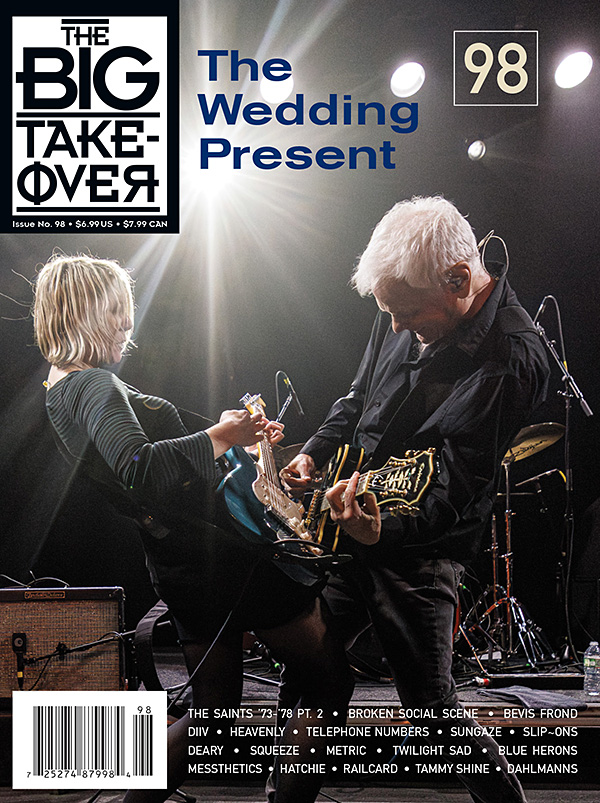
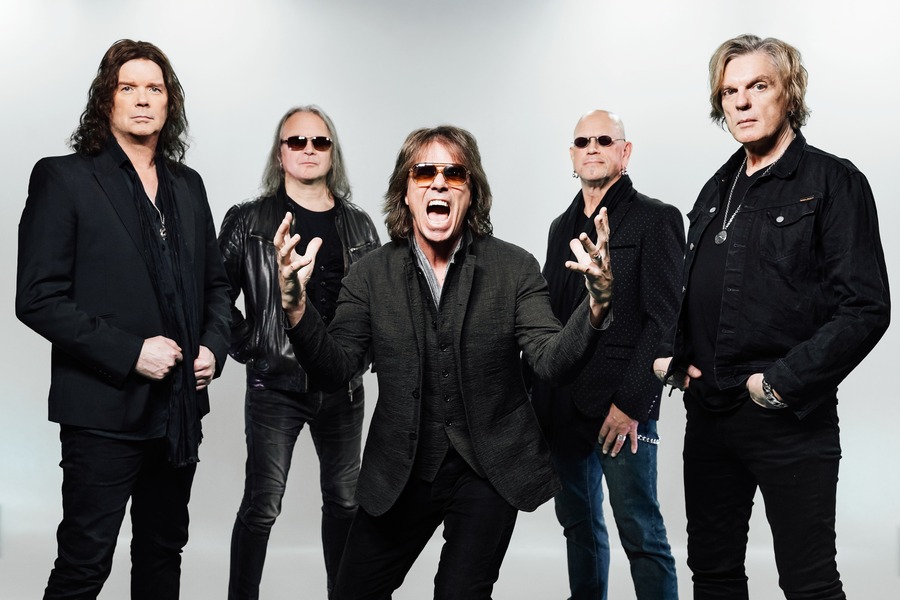
Photo by Andy Ford
Forty years after “The Final Countdown” turned Europe into arena-rock royalty, the band is still making the case for the album as an art form. Its latest chapter, which began with 2015’s War of Kings, draws heavily from the ’70s hard-rock tradition of Deep Purple, Rainbow and UFO—a sound that may have been lurking beneath Mic Michaeli’s keyboards, John Norum’s searing guitar work and Joey Tempest’s soaring vocals all along. Europe may always be best known for ’80s singles like “The Final Countdown,” still heard in the closing minutes of sporting events around the world, “Carrie” and “Cherokee,” but its more recent, less radio-conscious return to classic hard rock reveals a band operating at full power.
Drummer Ian Haugland called in to talk about the band’s twelfth album, Come This Madness, the pull of the full-length in a singles-driven world, the pandemic-sized gap since its last release and why “The Final Countdown” still gives him goosebumps every night.
I recently saw Nikki Sixx say it’s not worth making full albums anymore — that Mötley Crüe will probably never make another one. You just made a full record. Is there ever any doubt in your mind that it’s still worth doing?
IAN: I know that we’ve talked about whether it’s really worth making an album, or whether we should just release two or three songs at a time and assemble them into an album later. But Europe is very much an album-oriented band. We grew up with albums. We see the album as a body of work — the sequencing of songs, how we assemble the different moods and styles, that’s all important to us. I guess it’s kind of old-fashioned and nerdy, but that’s the way we want to work. It’s really important to us to make a whole album, not just one song or a couple of songs.
Do you think younger listeners even experience music that way anymore?
IAN: We have to think in terms of who’s actually listening to Europe today, and I doubt that fourteen or fifteen-year-old kids would even consider it. They’ve probably heard “The Final Countdown,” but not necessarily know who’s performing it, or care to know. We have to make music for the people who listen to Europe — we have to be aware of that. When we play live, we see a lot of young guys rocking out and singing along with both the old songs and the new ones, so we are reaching young kids. I just don’t think they care very much about albums as a format.
A lot of 80s and 90s records had a handful of songs that felt like filler, added just to round things out. Has Europe ever put something on a record that didn’t quite belong?
IAN: Not really — but I know exactly what you mean, because I agree with you. A lot of albums at the end of the ’80s and early ’90s were like that. You could tell: they’d got the ten best songs, and then, at the end, there were always four or five more that were just unnecessary, kind of boring. We always said we consider the album a body of work, and it usually feels finished after no more than twelve songs. We had a situation with Prisoners in Paradise, at the end of the ’80s — the last album before we took a break. We recorded sixteen or eighteen songs for it, though we’d originally agreed with the record company on twelve. But by the time the album was ready to be released, the label had changed all its staff, and the new people — who didn’t know what Europe was — said, “We don’t hear any hits, you need to record more songs.” So we recorded six more. Still, there’s no more than twelve songs on the final album.
How did Come This Madness come together? Is there usually one song that becomes the foundation for the whole album?
IAN: I think that’s pretty much right. Joey usually gets into writing mode just strumming his guitar, and all of a sudden he gets something where he thinks, “Okay, this might become something.” It takes its time and its course, and eventually he feels like it’s going to set the mood for whatever the album is going to become. So there’s usually a need for one song to be the starting point of the whole process. For this record, it was actually the very last song on the album, “Nothing Can Follow This.” That one came about while we were recording Last Look at Eden, back in 2010 — it never fit that album, so it sat on the shelf. Joey kept playing around with it, and it wasn’t until we started work on Come This Madness that it suddenly felt right. That was the song that really kicked this album into motion.
Does it ever seem like work to you?
IAN: No, it’s never work in that sense. I mean, it’s hard work — once you start to get into the songs, to start rehearsing and really get into them, that takes a lot of hard mental work. But it’s not the same feeling as having a punch-the-clock, go-to-work kind of thing. I think we all realize more and more, with age, how incredibly lucky we are to have our big hobby as our work. It’s amazing.
Your process has changed a lot from record to record. What was different this time?
IAN: When we recorded Walk the Earth and War of Kings with Dave Cobb, it was a very spur-of-the-moment process — we went into the studio with loose ideas and song structures and basically built the songs there, before pressing record. It was an interesting way to make music, but also a little risky. We weren’t totally comfortable not having the chance to live with the songs and reevaluate them. With this album, we had a lot more time to live and work with the songs before recording, which is the process that suits us best, I think. We recorded War of Kings in Stockholm and Walk the Earth in London, at Abbey Road Studios. Come This Madness was recorded in Stockholm with Tom Dalgety, an English producer — it was a good process working with him.
Are there still moments in the studio where something catches you off guard, even after all these years?
IAN: Yeah, yeah. Most of the songs on this album struck me with a “wow” feeling, for one reason or another. The ballad “This Time of Year” is very beautiful, very melodic, very melancholic — there’s a strong feeling to that song. And the bass riff on “One-on-One” — John Levén wrote that, and the whole song is written around it — that one was a “wow” moment too. He can really kick ass with his bass playing. Realizing how lucky we are to still be doing this, working with Tom Dalgety, and with Mike Fraser, who mixed the record and did all those huge albums in the 80s — that still gets me.
The album is very driving and energetic, so “This Time of Year” stands out as the moment that lets the listener catch their breath. Was that intentional?
IAN: Emotional, yeah. It’s not a wasted song at all — it’s exactly that: a chance to breathe.
Why did the band take a break at the end of the 80s? Was that an in-fight, or did it just feel like you’d done what you set out to do?
IAN: It was a lot of stuff going on. We had problems with our management, and we’d been touring quite extensively for a decade. And, not to say the least, when grunge came, that shook the ground for basically every band from the 80s and totally changed the focus, from that sound to Nirvana, Pearl Jam, Alice in Chains. We didn’t get any backup from the record company, like a lot of the other ’80s bands didn’t either. We were kind of burnt out. We went out on tour after we released the album and it never really felt fun anymore, so we just decided to finish the tour and then take a break.
What brought you back together?
IAN: It was by chance, really. Around the millennium celebrations, a concert promoter in Sweden contacted us and asked if we wanted to play “Rock the Night” and “The Final Countdown” into the next millennium. We couldn’t resist — economically it was great, and just to be able to say we played from 1999 into 2000 was a big thing. That was the seed that got sown. The actual reunion didn’t happen until 2003, though, because Joey and John Norum both had solo commitments. But in 2003, we got together and started doing it again.
You’ve been remarkably consistent since then — a record every two or three years — but there’s a nine-ish year gap before this one. How much of that was the pandemic?
IAN: Since Walk the Earth came out in 2017, we’ve basically been touring every year, apart from the pandemic years. So we’ve stayed busy the whole time, touring and writing, and it eventually became Come This Madness. It’s given us time to live with the song ideas and make the best of them.
“The Final Countdown” gets played everywhere — I watch the Cleveland Guardians almost every night, and it plays in the ninth inning whenever there are two outs. Does it still give you goosebumps? Did you have any idea, when you wrote it, that you’d still be hearing it more than forty years later?
IAN: Not really. I remember the first time I heard it — Joey played it for me in his car — and my immediate thought was that this song was really special. I’d never heard anything like it. But I never thought it was going to become a mega, worldwide hit. When we recorded it, we thought it was going to become a great show starter, with that intro — a great live song. And it is. Still, every time we play it, it actually does give me goosebumps, because the reactions from the audience are always so overwhelming. It’s almost like just pushing a button and people go crazy.
Does playing the same songs night after night ever get old?
IAN: No. It’s a new audience every night, and the overwhelming joy and energy that bounces off the crowd is just pure bliss. We used to open the show with “The Final Countdown” and close it with a shorter encore — just a snippet of the last couple of choruses and the fanfare. So we tie the whole thing together with that song.
You’re touring Europe through the rest of the year. Is the U.S. still on the radar?
IAN: Definitely. We were so close to coming to America in 2021 — we were scheduled on a tour with Kansas and Foreigner — and then the pandemic hit us all between the eyes, and we couldn’t do anything. In general, we’ve spent way too little time in America to establish ourselves. Had we done that, we’d probably be touring there now with Mötley Crüe and Journey and Def Leppard. But we’re hoping this album opens up new doors for us to come back, because we love touring in America. When we do, we’d definitely lean on a package tour with more established bands, to get out there and remind people that we’re still a great live band.
Is there a song that, the moment you hear it, takes you right back to a specific memory?
IAN: Oh, yeah, definitely. My sister, back around 1968, had a little vinyl player, and she had a single of the Beatles’ “She Loves You.” When I heard that, it really captured my interest — I felt like this was something magic. I also remember the first time I heard Rainbow, in 1975. I was in school, and a classmate had gotten the first Rainbow album for his birthday. He said, “Dude, have you heard this band? It’s really good.” I hadn’t, so we skipped school and went to his room to listen. “Man on the Silver Mountain” kicked off with that Ritchie Blackmore guitar riff, and when Ronnie James Dio’s voice came in, it was like hearing the voice of angels. That’s when I was blessed by rock and roll, I’d say. After that, I just focused on hard rock music — that’s what I wanted to do.
I feel lucky to have grown up in the ’70s and ’80s — there’s no real equivalent of Rainbow today.
IAN: Right, that’s true. I agree with you. I’m happy I got the chance to grow up in the ’70s.
Come This Madness feels like it belongs in that same lineage — ’70s and ’80s guitar rock that I think is genuinely missing right now. It’s one of the best rock records I’ve heard this year, maybe the last few years. I hope it does well enough to bring you back to the States.
IAN: Yeah, absolutely — me too.