Photo by Emily Vicario
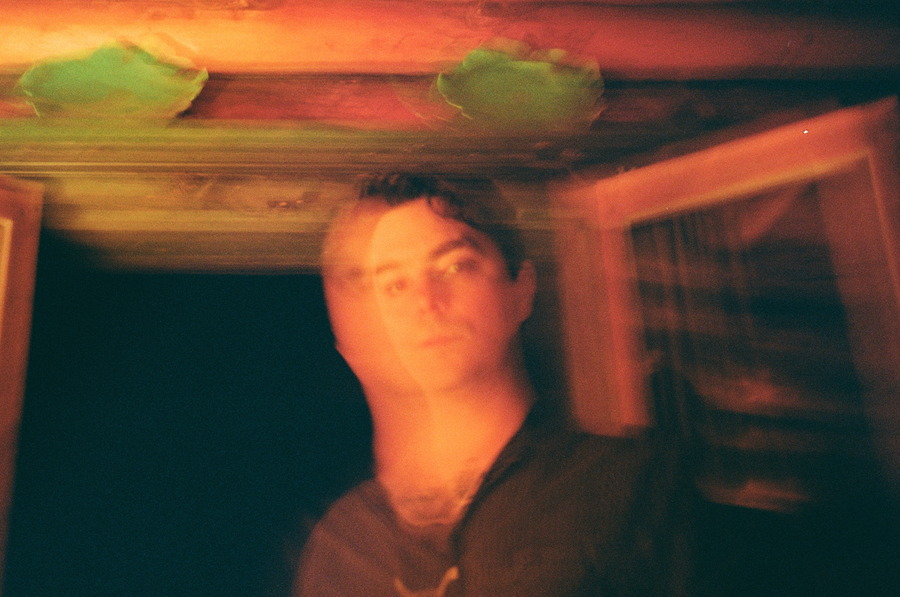
There are nearly as many varieties of punk rock as there are breeds of dog, and about as much in common between a pitbull and a poodle. Nick Vicario’s been performing and releasing music since his early teens (The Diskords, Public Eye, Cemento, Crisis Man), and you can call what he does “punk rock,” but his current project, Smirk, doesn’t sound like the Ramones, Turnstile, Minor Threat, or Bad Religion. Maybe that’s fine, because punk was always as much attitude as sound and by that measure, Vicario earns the label. Counterculture teen years. Drug addiction. Burning bridges. And now, slowly, taking steps toward the other side. He’s seen it, done it, and survived it and that survival is the muse behind songs that don’t flinch.
While the press release announcing Speculative Fiction references bands like GBV, Big Star and The Paul Collins Beat as touchstones, don’t let that fool you. This mutt still isn’t about to pass for a cocker spaniel.
If I was going to try to find the Smirk record in a record store, what section do you think fits best?
NICK: In a macro sense, obviously punk, but there’s many different styles within these songs. There’s, dare I say, indie parts. There’s a bossa nova part in one song. It’s just whatever I’m feeling, but yes, it’s a punk band, first and foremost. When I started the band, and I still do this, I set out to create punk songs that would fit on an old, obscure comp, or 7-inch from the late 70s that no one’s heard, because I’m a huge fan of that kind of shit. I just really, really wanted it to sound old. It’s tough because, with modern recording, you can literally make anything sound any way you want it, but there’s just this thing about drums. Drums are so difficult to make sound old. People have gotten the Motown thing down, that’s cool, and you can do the Bonham thing, but for Smirk, I just could not nail the late ‘70s punk drum sound. So what I do classically in this band is—I don’t even know if I should be admitting this—I find, say, a drum intro from an old ‘60s or ‘70s song, where no other instruments are playing, just drums. And I’ll take that, put it into Pro Tools, and I’ll use that as the drums, so mostly all the Smirk drums are old, rare, kind of obscure samples of old drum parts.
Who do you consider your personal Mount Rushmore of music? They don’t necessarily have to be influences per se on your music, but who are the artists that you hold in higher regard than everyone?
NICK: I really love Leonard Cohen, Lee Hazelwood, that kind of stuff as far as song craft and lyricism go. The Smiths, especially Johnny Marr, I’d say he is my number one guitar influence of all time. The Rolling Stones are my favorite band of all time. Television is a big influence on Smirk, and then there’s the whole metal thing. I know this is pretty basic, but Slayer influenced a lot of the new record. And stuff like that. But yeah, god, what is my favorite band? I don’t even know.
I love that answer. I’m so glad you mentioned The Smiths and Johnny Marr because there’s something that sounds British about your music. I can’t quite put my finger on it.
NICK: Absolutely, and the record was very much influenced by UK ‘82 punk, and The Damned too. Thank you for saying that, because I was hoping that would come across.
What do you think about a band like the Rolling Stones now? It’s amazing that they’re still around. Do you pay attention to the new stuff?
NICK: Yeah, I thought that Hackney Diamonds was pretty good. The production obviously bothered me, but hey, what do you need to do? I was telling my wife the other day, if they just let me produce that record in the Smirk style, I swear, we’d be number one.
I love that too. I’m not a huge Marilyn Manson fan, but I sort of get tired of the gimmick. I think I would love Marilyn Manson to not wear any makeup, just wear a black t-shirt, and make an album that sounds like they shot a video in black and white, if that makes sense.
NICK: Dude, yeah. Exactly. Just performed, instead of labored over, which isn’t gonna happen ever, but yeah, I know what you mean, and there’s a lot of contemporary bands that I like the songs or whatever enough, but production is a big deal. Obviously everyone wants to sound the best, and current—I’m talking about bigger bands, I guess—but it’s just like, man, if I could just get in there.
If somebody just reads the song titles on this record, the tone could come across as a little bit intense. “Going Off to Die,” “Ritual Torture,” “Shit Song,” “Crime Pays.” I don’t think the album itself sounds intense and rough, but it’s definitely not like a pop album. When you went to write this stuff, was it thematically where you wanted it to go, or did the songs just sort of come out, and this is how they ended up?
NICK: Kind of a mixture of both. I feel like when I write lyrics for this band, it’s almost like fantastical. There’s obviously problems I have in my life, and they are a big deal to me sometimes, but this is a way to release that energy. And so I feel like I definitely end up going more dark, more often than not, just to get that emotion out. And a lot of my old favorite bands also did shit like that—The Smiths, again, their music’s obviously very upbeat sometimes, but the lyrics were so fucking dark, and I loved that, the juxtaposition. And not that my music’s poppy or anything—there’s not much of a juxtaposition there—but I just always loved that he did that.
It sounds like it’s therapeutic. When you’re able to get this stuff out, do you completely exorcise it out of your system, or does it still linger?
NICK: It’ll always be there. I’ve got this, and then I got talk therapy, and my wife to help me. They all seem to help.
I’ve got 2 weeks of listening under my belt, and this is bound to change over time, and it certainly will, but “Sistine Junk” is sort of my “first-week-of-listening” favorite song. It sort of reminds me a little bit of Black Rebel Motorcycle Club. What can you tell me about that song?
NICK: As far as the music, I wanted to write just kind of a gritty, almost bar-band rock song—as far as the verse, it was very simple, but then with some almost pretty guitar parts we’ve woven in there. And then the lyrics are just kind of about this unending idea that there’s like a devil on my shoulder constantly, and he’s just there to remind me that shit is tough, and you’re not gonna be able to sleep tonight. I struggle with sleeping, and then I go to my phone, and I’m just doom scrolling forever, so there’s words about that in there. I wish I could change my brain chemistry sometimes, but I can’t.
I sort of miss the days before there were phones or even the internet. It was special to have to seek out music when everything wasn’t in the palm of your hand. But, of course, I love that I can listen to just about any recorded song whenever I want.
NICK: It’s obviously changed the music industry so much—everything’s so available. Especially YouTube, you can find some deep-ass shit on there. Before the internet, you were just going to shows, buying the tapes, hoping you’d like the band that night, and there’s a beauty to that, for sure. When I was younger, I found some of my favorite local bands that way. But yeah, it is nice to have streaming.
A couple of other songs I want to talk about—”Victimry.” I remember the year that I went from listening to hair metal to listening to indie rock. My world changed literally overnight and I was all in. First with Nirvana, and then everything that followed. It led me a few years later to bands like Green Day, Jawbreaker, Bad Religion. I don’t think “Victimry” sounds like those bands, but it does remind me of that time in my life and the things I was listening to.
NICK: Thanks. Yeah, I feel like that’s one of the more meat-and-potatoes punk songs on the album. And that one’s a funny one. Victimry, obviously, is a made-up word. I was kind of going for a George W. Bush type thing, like how he used to make up words. I feel like he would say something like victimry.
And then “Dog Years.” Lyrically, it’s heavy. Do you want to talk about where the lyrics came from?
NICK: When I wrote those, I was living in LA, and I was going through a lot of substance abuse issues. I was not treating my friends that great, and a lot of bad things were happening to me at that time—not to make it a victimry situation here—but yeah, I was struggling with thoughts of self-harm, and at the same time, I didn’t want to bother anyone by talking about it. So that’s kind of what that’s about. There’s a lyric in there, “I just can’t begin to even bother you, friend.” And so, yeah, that’s what that’s about.
Not to probe too deep into your personal life but was it a point where you hit a rock bottom?
NICK: Oh, for sure, yeah. Several, I’d say. When I was in LA, big time. I was living with roommates, one of them moved out because of me. I totaled a car, and it was bad, yeah.
But, like, you were saying with the Smiths, out of stuff like that comes art. And it may not feel like that’s why you were doing all this stuff, that someday you could write a great record about it, but do you ever stop to think about, had you not gone through those times, maybe this record would sound totally different?
NICK: I do, yeah. I think the music itself would have been similar, but man, the lyrics—I don’t know what the fuck I would have written about. I guess the earlier Smirk stuff is a little more goofy, and almost jokey in some songs. And there’s kind of some of that on Speculative Fiction, but yeah, this was really shaped by my troubles at the time.
I don’t think I would trade those couple years for anything. I learned so much, and it was a catalyst for me to really reflect on how I was treated and the people that love me. And I’m so glad I did. I think some of them have forgiven me, so that’s good. And it was also a catalyst for me to clean up, and I moved across the country, I got married. But yeah, I wouldn’t trade that experience for anything. I would sure trade how I treated my friends.
What was it that lifted you out of that?
NICK: I thought if I stayed in Los Angeles, I was going to die.
Was there a reason for moving east, or did you just literally say, “I’m starting over, I’m hopping on a plane and getting as far away from here as I can”?
NICK: Yeah, actually, I reconnected with my college girlfriend—she was living in Charleston, and she was like, “Come out here, it seems like you need to get out of there.” So I did, and we fell back in love, and it was great, and now we’re married.
So now the next album is all sunshine and rainbows?
NICK: All love songs. I have a kid now too, so it’s probably just gonna be mostly a children’s album.
Being a husband and a father, how much of your day is dedicated to music versus everything else?
NICK: It’s absolutely a driving force for me these days, when I’m not parenting, obviously—he’s 6 months old, so you know how that can be. But I have my studio set up. I try to kind of treat it like a job, and obviously it doesn’t work out every day, but I try to go up, and I’m working on a new record already. Basically I just do those two things right now. We don’t know anybody here in Connecticut, but I have to go down to New York to see people, which is kind of nice, because I can choose when I have the emotional capacity to go hang with people. So I do that sometimes too, and it’s been great for the band as far as touring, because I have a whole East Coast band down there—if we need to tour, I’m just like, “Yo, come on up, we’ll rehearse.” And then another cool thing is I have a West Coast band too, so it’s kind of worked out beautifully as far as the touring stuff.
That’s great. Smirk isn’t the case of four best friends from high school who started a band in someone’s basement and still play together today. It’s cool that you’re able to put together bands based on where you’re playing and availability.
NICK: Yeah, I’m working on my Midwest one, I think—we’re actually moving to Florida next month, and I’ve got a couple leads down there for a band. I love it down there. It gets a bad rap, but whatever.
You started when you were a kid?
NICK: Yeah, my first band, I think I was 11 or 12, in Portland, Oregon, where I grew up. We played the middle school talent show, and that was, I think, my first real gig, and ever since then, I got the bug, I got the itch. So yeah, I’ve been touring since I was, like, 14, and that was my first band. We were called The Diskords. The first Diskords 7-inch came out in 2002.
The way you make music, how different, or similar, is it now compared to when you were a teenager?
NICK: I’d say they’re pretty much in the same wheelhouse, except for a little less juvenile, obviously. That first 7-inch is very much an ode to late 70s punk—*Stooges*, Sex Pistols, all the classics—and I’m still very influenced by all that today.
Where were you hearing that stuff as a 12-year-old in the early 2000s?
NICK: I was very into Nirvana before this band started, when I was 11 or whatever, and then these other two kids at my middle school—I don’t know how, maybe through their parents—were super into punk, and not just Ramones and the basic shit, but they knew some deeper cuts, and I just could not believe the records they were showing me. I’ve been in love with that ever since.
Do you remember the first band you discovered on your own, that you felt like was YOUR band and was one you told your friends about?
NICK: It’s tough, because I got all of that knowledge from my friends that were in that scene. But maybe—you ever heard of this band, The Avengers, from San Francisco, late 70s? That was my first one—like, okay, this is my shit, and then I think I showed them that.
Your son is only 6 months old but when he’s 11, if he comes to you and says, “I want to be in a band,” will you encourage it or will you be like, “I did that when I was your age and I don’t think it’s a good idea”?
NICK: I would love to support him doing that. I really hope he does, but he’s probably gonna rebel and become an investment banker or something. Hopefully not—I mean, he has all the gear he could ever need at his disposal.
Would you be the manager type?
NICK: Yeah, probably. “Let me change this chord for you, buddy,” and maybe “tighten up your pants.” I’m just kidding.
What roles did Ross Farrar (Ceremony), Max Smadja (RIXE), and Ryan Mangione-Smith (Advertisement) play on the record?
NICK: I generally record everything myself, but then I love having little Easter-eggy features from friends, so Ross, the singer of Ceremony, is in the opening track, “Greetings,” on vocals. My friend Ryan, who actually plays in the live band these days, did a couple guitar solos. My friend Max, from that band RIXE, from Paris, mixed one of the songs and played some instruments on one of them. I always love that type of thing.
Are there any lyrical Easter eggs?
NICK: Yeah, definitely. The one that Ross from Ceremony did—they have a song called “Terminal Addiction,” and one of the lyrics in my song, “Greetings,” is “terminal addiction,” and I have him sing that part with me in the voice that he does on the Ceremony song, so it’s kind of fun.
Is touring for you something that you reluctantly do because you have to, or is it something that you’re like, “I can’t wait to get out there”?
NICK: It’s a mixture of both, for sure, just because I’ve been doing it so long. And, save for a few tours, it’s all still pretty DIY, and not the most luxurious travel experience, but I don’t really care about that, because I love it. I love doing it. I’m really excited to play this album live, and see old friends I never see. I love doing it, except for my back—it fucks up my back, but hey.
So let’s say that everything goes exactly the way you hope, and if I call you in December, and I’m like, “alright, album came out in July, it’s December now, what happened,” if everything goes your way, what would you tell me?
NICK: Yeah, so it’ll be multiple tours: East Coast, West Coast. I’m going to be hopefully booking a Florida-only tour within that timeframe as well, which I’ve never played in Florida, so I’m super excited about that. But yeah, it’s just gonna be a lot of giggin’.
If you’re gonna play in Florida, you might as well play, like, 6 shows in Florida because it’s almost like playing on an island.
NICK: Absolutely, and that’s our plan, because for all the national tours I’ve done, it’s kind of expensive to dip down in there. So I’m very excited for that. We are gonna do, like, 6 shows. Since I’ll be living there, this is the perfect time, I feel like.
Do you have a song that, when you hear it, takes you right back to something?
NICK: Whenever I hear “Rose Parade” by Elliott Smith, it brings me right back to growing up in Portland, going to that very parade. I was raised by a single mother, and that was her favorite record, Either/Or. That was playing constantly in my house, and so whenever I hear it, I’m brought right back to my childhood, and the Rose Parade itself. It’s gotta be one of my favorite songs of all time, but yeah, that for me is very evocative.