
Writing off Greg Freeman, the distant-second-most-famous country-inspired singer-songwriter from the great state of Vermont (though he recently moved to some place called Chicago—I guess named after the band?), as yet the latest with an off-kilter voice and literary lyrics to ride the alt-alt-country wave of the mid-2020s to modest success on the same bills as a Wednesday or a Ryan Davis or perhaps a Waxahatchee, should be done at your own peril. Yes, there’s a number of bands and singers in recent years who have plucked the Uncle Tupelo chord and found shock success in quick fashion, and if you’re not a fan of one, you may not be a fan of any. Yes, an easy comp can be made between Greg Freeman and Asheville’s MJ Lenderman, with a stylistic palette clearly filled by many of the same paint buckets, but it’s just not quite right. Greg Freeman is none of these things, and can’t be defined by anyone else’s music. He’s his own, truly inspired and truly unique thing. There are songs on his three records that go to lengths (figuratively and literally) that most of his contemporaries don’t, and lyrics and hooks that stick with you in a way that can’t be brushed away by what you instinctively want to compare him to.
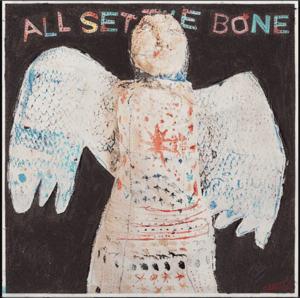
There is no greater introduction to the artist Greg Freeman than his latest, a brilliant 66 minutes, 13 tracks called All Set The Bone. It was only a year ago that Burnover captured a subsection of the indie fanbase and became a minor cult hit, and a year before that that Freeman’s first album I Looked Out gathered online steam prompting a re-release and signing to Transgressive Records (the album was originally out on Bud Tapes in 2022 to less notice). What All Set The Bone brings us is a pretty damn fully realized artist, who may introduce himself with the shy, yearning beauty of a bare-bones true love on “Indu” (the lead single and track 5 on the record, perhaps as close as I’ve heard this year to a perfect love song) then collapse into extensive jams on “Loser’s Prize”. Indu, by the way, was apparently written in a post-flu “fugue state”. He says in Paste this masterpiece took him twenty minutes. May we all one day be so lucky. Neither of these tracks, though, captures the full magic of the album the way the seven-minute “Marooned” does.
Beginning with lyrics like “Do you feel your world will shatter at the slightest touch/Is it the child in you that’s scared to feel too much”, the softness gives way to anger, a breakdown around the four-minute mark beginning to resemble a droning record-skip of a repeated chord until, broken from his stupor, Freeman emerges, announcing that “Once you’re finished treading water you’ll still feel the wavеs”, a repudiation of any true complacency in our modern hellscape of a world, yet maybe one that still sees hope in trying to escape it? There’s no dissonance between the emotional cores of each of these songs, though, because Freeman is presenting us with a quite full range of a young person’s mind, and perhaps a relationship’s rises and falls as one comprehensive story, rendering a hyper-specific yet generically universal rural landscape around a tale of love beginning and ending, or perhaps love holding a man together through a deep depression or dissatisfaction with everything outside of its bounds. The battle with time, capitalism, and their wears and tears is a persistent theme, one that pulls our album’s protagonist from his love, from his life, developing in him a deep cynicism and sour view of the world that is constantly cured by observing the world’s beauties, the beauty of the person who loves him, before it comes in like a wave again.
These waves, of course, are governed by the moon, a main character of the record, referenced as a synonym for a love interest, so it seems, repeatedly. On “Indu” (which happens to be the Sanskrit word for “moon”), it’s the moonlight in their eyes, on “Loser’s Prize” it’s over their shoulder as “whole years disappear”. On “Marooned”, the object of Freeman’s affection looks to make him “move like the tides to the moon”. I could go on. A thread such as this one, when wove properly through an album’s core so as to explain its point to the listener, will always make me pay closer attention and care so much more about the record’s purpose. The moon is shining very bright here.
Not long ago, Freeman was on his own and obscured by the wealth of talent received by the pinnae of the modern listener, designing DIY tour posters and promoting shows with selfies. Now? He’s still doing all that, but headlining in the UK and playing Primavera Sound next year. Greg Freeman may already have three albums out, and may not be the biggest game in town. He’s done all this, though, in a few short years, with his closest friends contributing to his albums and writing on his own terms, and has exactly the status he needs to break out faster than we can see coming. Freeman is better on each successive record, and if it’s not next week or month, count on seeing this fellow everywhere as soon as his next one.