
Jazz seems to have been undergoing a renaissance of independent labels in the last decade, including imprints owned and operated by the musicians themselves. Saxophonist Kevin Sun is one of those players who decided he knew as well as any executive how to run a record company.On the basis of three of his latest releases, that’s definitely true.
Guitarist James Wengrow’s NYC-based Crypsis Trio plucks various sounds from different genres without working up a sweat. The Australian native finds common ground in everything from free jazz and fusion to math rock and extreme metal, without once sounding like he’s mixing flavors just for shock value. Thus “Aflame Inside in Public” can balance speed demon licks with jazz harmony, and blast beats with funky grooves. Clean thrash metal riffing meets avant-jazz drumming with arco bass spice and herky-jerky chord work on the strangely graceful “Deadline Junky.” “Arborealpolitik” throws postpunk riffs, atmospheric arpeggios, New Orleans drumming, and free jazz drive for a tune that comes up smelling like Crypsis. Like Wenglow himself, drummer James Paul Nadien and bassist Mathias Højgaard Jensen easily hold multiple ideas in mind at once, allowing them to pivot when required and boil different styles of music down a common essence. That means Thelonious Monk’s “Let’s Call This” and John McLaughlin’s “This Is For Us To Share” sit just as comfortably as the leader’s own hydra-like compositions. Wengrow and company may have omnivorous tastes, but Emissary comes out as far more than the sum of its parts.
Made up of musicians who originally convened for a tour, Slow Tiger take a painterly approach to composition and recording on their self-titled debut. Craft and arrangement rule here, with improvisation confined mostly to solos. Saxophonist/clarinetest Adam Scheit’s ‘Song for Silence” starts like a ballad, but slowly adds layer upon layer and builds up to something like a jazz version of a lighter-waving power ballad. “Eleven in Six,” an energetic, eccentric riff rocker written by trumpeter Kenny Warren, jumps around like a nervous grasshopper, but, due to the band’s craft, never falls into chaos. Opening the album, Warren’s ‘Powerpuff Backpack” leans into pop-derived hooks on top of its jaunty rhythm. Composed by organist JP Schlegelmilch, “Mending the Nets” cruises on layers of keyboard and horn harmony, keeping a tight ship while it rides its groove into the ether. Mind you, the quintet doesn’t stick solely to the arrangements – Warren in particular tends to go off script, and bassist Andrew Dow’s “Funhouse” echoes the controlled chaos of its clown-frosted carnival inspiration. Even Warren’s “Light Pitcher Fixture” – another carefully layered slow burn – begins to lose its shit as it nears the end, thanks in part to drummer Nathan Ellman-Bell”s hyperactivity. Slow Tiger is a band that definitely paves its own path to follow.
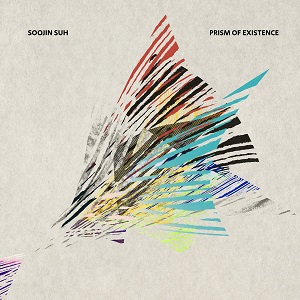
Best known in the West for her membership in the Near East Quartet but a jazz star in her home country of South Korea, drummer and composer Soojin Suh brings her Coloris Trio Stateside with the band’s latest album Prism of Existence. As is her goal, Suh guides the piano trio – which contains pianist Jaehun Kang and bassist Hoo Kim – with her instrument. But she sounds like a generous bandleader – Kang’s nimble fingering leads the melodies and Kim serves as his boss’s equal partner in the rhythm section. Indeed, it’s Su’s music that really takes center stage. Part of her largesse is to write tunes that highlight her bandmates’ abilities, particularly Kang’s – his nimble fingerings and comfort with her oddly cadenced discordance (“Fragments of Memory,” “The Doors of Perception,” “Network Song,” written by Kim), as well as overtly accessible melodies (“Uncertainty III – Beginnings and the Endings,” “There is No Evil in Pain,” also written by Kim), puts the young keyboarder on a sure path to greatness. Kim stays in the background, but a close listen reveals how his tuneful grooving contributes to the tracks. The leader contributes a strong, flexible foundation throughout, setting up her players for success while still maintaining a recognizable personality. There’s a reason why drummers often make great jazz bandleaders, and Prism of Existence is an excellent example of how it works.