Back before he became one of the most prolific soundtrack composers in Hollywood, trumpeter/synthesist Mark Isham made instrumental music that didn’t fit under any recognizable umbrella. His mixture of classical, jazz fusion, and what was once (still?) called new age music resulted in a half dozen or so fine records, from the proto-ambient Vapor Drawings to the eclectic electric Castalia to the cool jazz Blue Sun, as well as earning him gigs with jazz pianist Art Lande, singer/songwriter David Sylvian, fusion band Group 87, and equally uncategorizable guitarist David Torn.
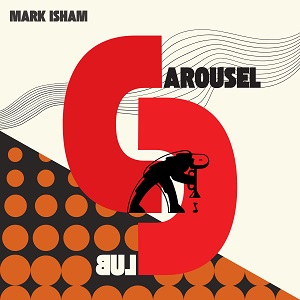
At the Carousel Club is his first album of non-soundtrack compositions in fifteen years, and it was worth the wait. Over the course of a half-hour, Isham and his sidepeople (including guitarist Nels Cline, bassist Kaveh Rastegar,, drummer Vinnie Colaiuta, vocalist Awo Awosika, and the Orchid String Quartet) unveil six pieces as iconoclastic as anything in the trumpeter’s catalog. “City Lore,” for example, mixes percolating percussion with an African-tinged groove, over which Isham soars with his trademark tone and ambient synth sounds. The title track starts with pleasant synths and a tune bordering on gooey, before suddenly erupting into a backbeat-driven rush of strings and drums. “My Night in An Iberian Post Office” adds an aura of mystery, while still keeping the rhythm whirring and the sounds buzzing. “A More Beautiful Question” shifts between plaintive muted trumpet and dramatic propulsion, sounding like the kind of film credit music that makes you stay to the very end.
Isham comes from the Miles Davis school, where making the notes count means more than flash, so he leads the melodies, rather than soloing with abandon. Isham’s vision is one of ensemble unity, with all sounds coming together to support the tunes – not unlike the cinematic music Isham makes in his day job.