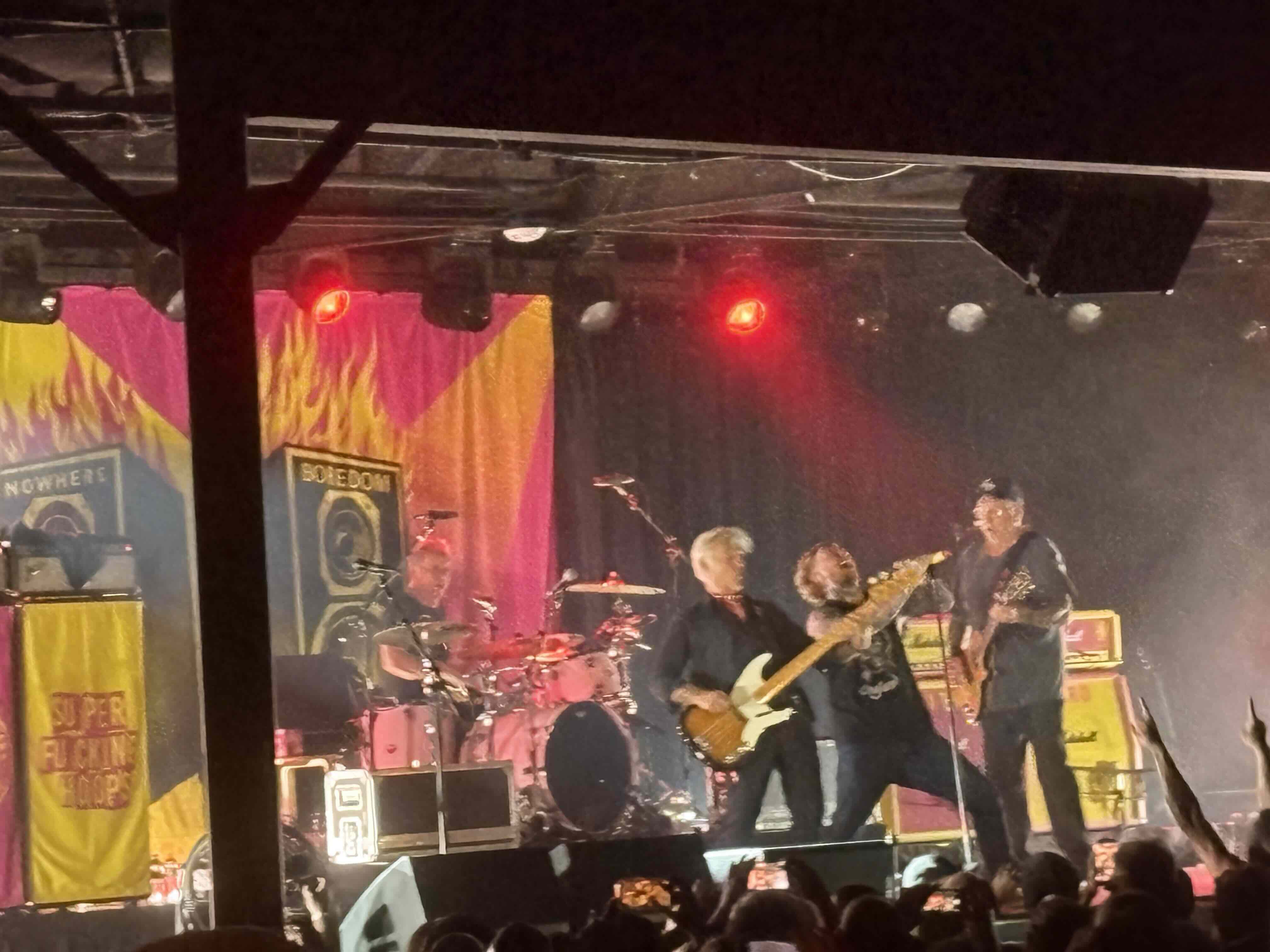
Touring without Johnny Rotten may, understandably, make an avid Sex Pistols fan skeptical about how this incarnation of the band can pull off the same punk ethos. But Frank Carter, the replacement frontman on the current tour (of Frank Carter and The Rattlesnakes), was more than capable of taking control of the crowd.
Thirty years ago, in 1996, I attended the Sex Pistols’ Filthy Lucre Tour at this same venue with my older brother. I had only limited exposure to the force that was the Sex Pistols and was invited along largely because my brother had recently gone through a breakup. I agreed because I loved live music, even though I had only been to a handful of concerts and wasn’t yet old enough to drive.
I remember lots of sweaty moshers, including one large man with “Murder” emblazoned across his back in Gothic lettering. Johnny Rotten had extremely spiky hair that looked as though it might have been molded with glue, and I remember him making what my mother might have called “lewd gestures.” I’m sure the newspaper described it as “gyrating,” which was the first time I had ever heard that word.
There was another reason this return to the Longhorn Ballroom felt significant.
In 1978, the Sex Pistols played only one U.S. date on their ill-fated American tour: the Longhorn Ballroom in Dallas. Originally a country-western dance hall, the venue was reportedly chosen by manager Malcolm McLaren because he wanted a culture clash—and he certainly got one. The Pistols provoked the crowd, reportedly calling them “a bunch of bloody cowboys.” Sid Vicious was headbutted by an audience member and continued playing with a bloody nose. After the show, Johnny Rotten announced that the band was breaking up.
Fast-forward to September 11, 2026. I returned to the Longhorn Ballroom much more worldly-wise—and excited to experience the Sex Pistols there again, this time as part of their 50th-anniversary touring era.
Rotten’s absence stemmed from a falling-out with the other members over an FX miniseries. And while Carter brought plenty of profanity and attitude, there was no way to recreate the effect the Sex Pistols would have had in 1978. This crowd was older, more experienced and, undoubtedly, knew what it was getting into.
Carter nevertheless delivered the kind of young, manic, shouting energy you want from a punk frontman. He told the crowd to make room for him to roam through the standing floor, putting himself right in the middle of the chaos rather than simply performing from the stage.
When a medical emergency interrupted “God Save the Queen,” Carter stopped and called immediate attention to what was happening. Once the situation was addressed, he restarted the song. Later, the formation of what may have been the first female-only mosh pit added another memorable moment to the night.
Those moments made it clear that Carter wasn’t simply trying to impersonate Rotten. He brought his own personality to the role: outspoken, confrontational when necessary, but also remarkably respectful of the people around him.
For longtime fans—and for those of us fascinated by the history and mythology of this iconic punk band—it was a fun and worthwhile night. It was never going to replicate the headbutting, gobbing and outright mayhem of the Pistols’ 1978 Dallas appearance.
But that wasn’t really the point.
Hearing those songs again, inside the same Longhorn Ballroom where the Sex Pistols once helped make Dallas punk history, made history feel strangely alive all over again.