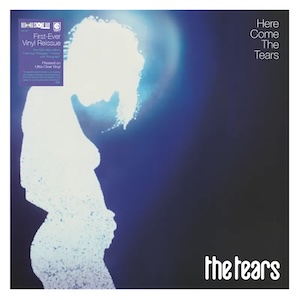
Craft Recordings has now reissued the album for its first appearance on vinyl. Issued as a Record Store Day exclusive, stray copies can be found in independent record stores and online. The album’s 13 songs and 53 minutes are squeezed onto a single LP platter. There are sonic compromises as a result, but fans of the format and the principal players will be pleased overall with the transfer.
The work compares favorably to Dog Man Star, although it won’t satisfy the “what if” questions of those who might have been curious to hear what would have happened if Butler had gained the full rein he wanted to indulge his complex and progressive song ideas (like the truncated[!] nine-minute version of “The Asphalt World”) in 1994. Most of the Tears’ songs are focused and taut glam-pop infused with moody romanticism. Only the watery-toned and expressive “The Ghost of You” (written for Anderson’s late mother) and “Apollo 13” challenge the five-minute mark. Further comparisons to Anderson and Butler favorites including David Bowie’s The Man Who Sold the World and Hunky Dory are relevant.“Refugees” is a string-laden rocker with sinewy guitar lines during which Anderson observes and identifies with dislocated newcomers finding their way in London. The sympathy for immigrants resurfaces on “Brave New Century,” a song simultaneously critical of celebrity worship with emotional impact underscored by Butler’s Led Zeppelin-meets-_Abbey Road_ medley-styled fretwork.
The spark-spitting pop anthem “Lovers” echoes the glam of Coming Up single “Trash.” Anderson sings an ode to youthful devotion with hope to go the distance. Drummer Makoto Sakamoto propels the song with a booming, muscular beat while Butler’s leads scrape the clouds. With sonic nods to the Smiths’ chime and jangle, “Autograph” finds Anderson ruminating over less mature days and decadent past dalliances with groupies. Beatific ballad “Co-Star” anticipates a happy reunion as Butler follows pealing, skewed guitar lines with crashing chorus chords to buoy Anderson’s emotional reach.
“Imperfections” follows the lead of Shakespeare’s satirical Sonnet 130 in calling his lover’s attributes as he truly sees them. “I’m a sucker for your beautiful mistakes,” he concludes. The early success of Suede’s “Stay Together” is recalled by “Fallen Idols.” Butler’s guitar nods to George Harrison while Anderson sings a vulnerable portrait of self-doubt.
“Beautiful Pain” imagines a lover as a drug in a similar theme to the La’s standout single “There She Goes,” although Anderson’s lyric seems to express more of a longing to shake the monkey off his back. Anderson’s frankness and willingness to expose his inner workings and anxieties are perhaps most prominently displayed on lithium daydream “The Asylum.” It’s a destination that he all but consigns himself to as inevitable. Maybe he’ll be beamed into an isolated room by the spaceship conjured from Butler’s science-fiction guitar sounds in the song’s coda.
“Apollo 13” is a lush symphonic waltz erupting with layers of Butler’s twisted vibrato. “A Love as Strong as Death” concludes the album with a starry-eyed longing for bliss that arrives in a blanketing “wave that crashes over us.”
Butler’s arrangements are layered and interesting, with inventive tones and sounds to catch the ear on repeated listens. Sakamoto, bassist Nathan Fisher and keyboardist Will Foster provide sturdy support and must have been the reliable backbone of every Tears performance. Anderson’s lyrics touch on the reliably melancholy topics of star-crossed love, disconnection, yearning, regret, and search for transcendence. Here Come the Tears may not top separate projects including Coming Up or People Move On, but it’s a worthy addition to the collection. It is simply not to be ignored by any fan of either Anderson or Butler.