
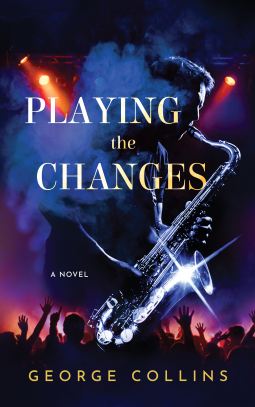
There is something wonderfully appropriate about using music as the backdrop to a story about picking up the pieces of a shattered life. Music, and to be more specific, jazz, after all, is music built on instinct, improvisation, the ability to listen, adapt, and occasionally find beauty in the most unexpected places. It is also a pretty good metaphor for life itself, especially when the carefully arranged composition you thought you were following suddenly falls apart. In Playing the Changes, George Collins explores precisely that idea, delivering a thoughtful, emotionally engaging novel about grief, redemption, creativity and the possibility of second chances.
The story’s protagonist is Ray Stark, a top neurosurgeon whose professional life is built on precision, logic, and control, a man with an impressive reputation and a bright future ahead of him. Then, the death of his young daughter sees everything come tumbling down; his marriage begins to unravel; he grows more distant from his wife, though that distance may have begun to form before the tragedy’s full extent; his professional confidence falters, and the emotional foundations he built his life on begin to crumble.
As Ray struggles to work his way through the devastating consequences of his loss, Collins reveals his main character by gradually peeling back the layers of his personality; we gain more understanding as we learn more about a difficult childhood, an abusive father and an alcoholic mother, and how such ghosts still haunt his adult life. It becomes clear that his reliance on intellect and professional achievement has long been a way to keep uncomfortable emotions at arm’s length. He understands the intricacies of the human brain, but understanding the human heart proves a different proposition.
The unexpected catalyst for change comes through his reengagement with music, more specifically, an encounter with an old jazz recording, a cathartic moment which reignites Ray’s dormant passion for playing the saxophone, opening a door to a part of himself that has been neglected for far too long. With the help of an unlikely, gruff and somewhat world-weary musical mentor, he begins to rediscover not only his musical abilities but also the emotional language that he has spent a lifetime avoiding.
This is where Collins calls on his own background as a musician to add a pertinent dimension to the narrative. Rather than using jazz as mere atmospheric decoration, he uses Ray to explore and explain its deeper language: the importance of listening, the interplay between musicians, the freedom of improvisation, and the need to respond to what is happening around you. Those qualities become central to Ray’s personal journey.
For Ray, learning to play again is, in many respects, learning how to live again. The musical and emotional strands of the story develop with a lovely symmetry. The discipline that once defined his professional existence must give way to something less predictable. He has to learn that not everything can be controlled, that vulnerability is not necessarily weakness and that sometimes the most meaningful moments arrive when you stop trying to dictate every note.
Collins also handles the novel’s wider themes with sensitivity, exploring the complexities of grief, the lingering consequences of childhood trauma and the fragile business of rebuilding damaged relationships. So carefully does he deal with these complex issues that you might wonder if his musical experience isn’t the only element taken from real life, a reminder that writing a fictional book can be a way for an author to talk about their own life, even if that conversation is largely with themself.
Ultimately, Playing the Changes is a novel about finding a new rhythm when the old one has become impossible to follow. Thoughtful, compassionate and infused with a genuine appreciation of music, it reminds us that life rarely follows a perfectly rehearsed arrangement. Sometimes we have to listen, find our feet and improvise. As is always the case in art, music and particularly jazz, rules are there to be broken.