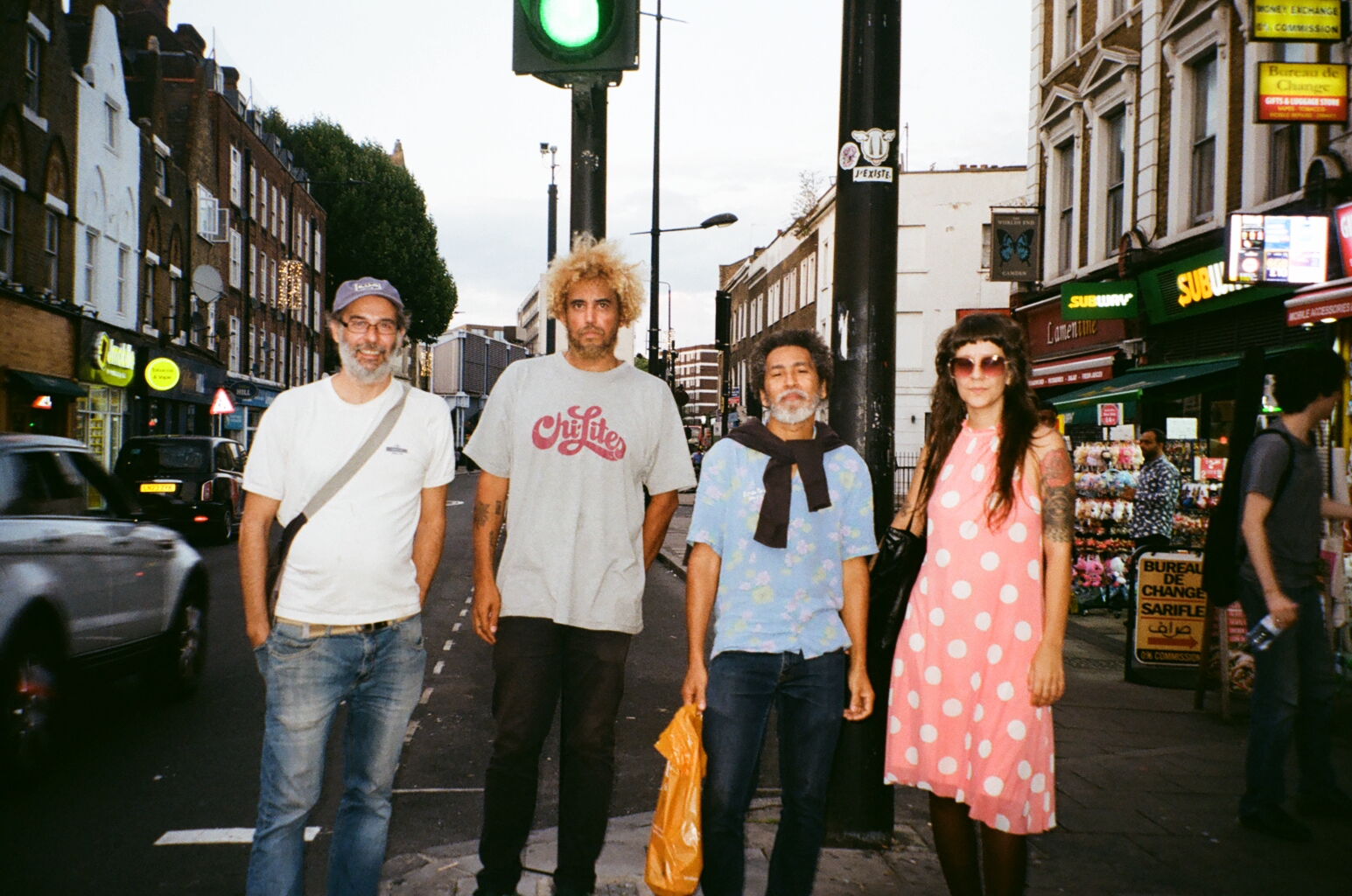
Photo by Sophia Poole
Few musicians embody the restless creative spirit of Brazil’s contemporary underground quite like Lê Almeida. Whether operating through the hypnotic, genre-defying force of Oruã or the fluid improvisational language of Casual Art Ensemble, Almeida has built a body of work that resists categorization while remaining deeply rooted in curiosity, collaboration and fearless experimentation. His music rarely stands still, instead inviting listeners into living, evolving sound worlds where instinct is valued as highly as precision and collective expression outweighs individual spotlight.
Emerging from the vibrant cultural landscape of Rio de Janeiro, Oruã has become one of the most adventurous voices in modern Brazilian independent music. Drawing from psychedelic rock, noise, krautrock, Afro-Brazilian rhythms, lo-fi aesthetics and the country’s rich musical heritage including Caetano Veloso, Luiz Gonzaga, Os Mutantes, and Milton Nascimento, the band transforms familiar influences into something unmistakably its own. Their performances pulse with controlled spontaneity, balancing hypnotic grooves with bursts of sonic exploration that blur the boundaries between composition and improvisation. Instead, these histories filter through layers of lo-fi abrasion, the motorik insistence of krautrock, and Afro-diasporic pulse.
That adventurous spirit has carried Oruã far beyond Brazil, leading to collaborations with Built to Spill’s Doug Martsch and Jim Roth after discovered Oruã’s sound and invited Almeida and João Casaes to join Built to Spill as temporary members that extended into the studio, where Almeida and Casaes recorded, co-produced, and co-mixed the band’s 2022 album ‘When the Wind Forgets Your Name’ for Sub Pop. That experience (working within an established American indie infrastructure while carrying their own rhythmic and textural instincts), left its imprint. Not as imitation, but as expansion.
On ‘Slacker’ (K Records, 2025), the guitars feel both more spacious and more destabilized. Less about riff as hook, more about tone as current. Oruã have always blurred the line between composition and collective invocation. Though all songs are composed by Almeida, the band functions less as backing unit and more as organism. Longtime collaborators João Casaes (synths), Bigú Medine (bass), and Ana Zumpano (drums) form the core, with additional voices and textures including saxophone, theremin, kalimba appearing like weather shifts. The multiplicity of contributors never clutters; it thickens. Vocals often feel textural rather than declarative, language dissolving into rhythm.
If Oruã represents Almeida’s ability to reshape rock music into expansive new forms, Casual Art Ensemble reveals another side of his artistic philosophy. Built around shifting lineups and open-ended collaboration, the project embraces improvisation not as an exercise in technical display but as a process of shared discovery. Each musician contributes a distinct voice while surrendering individual ego to the larger conversation, creating immersive pieces that move effortlessly between ambient drift, psychedelic abstraction, free-form jazz, electronic experimentation and deeply organic rhythmic interplay. The result is music that rewards attentive listening not through complexity alone, but through its remarkable sense of collective intuition.
Taken together, Oruã and Casual Art Ensemble reveal an artist whose creative ambitions extend far beyond conventional songwriting or genre boundaries. As a guitarist, producer, collaborator and sonic architect, Lê Almeida continues to challenge expectations while building bridges between Brazil’s rich musical traditions and a global community of adventurous listeners. In this interview, he reflects on the creative philosophies that connect these seemingly different projects, the importance of collaboration, the freedom found in improvisation, and the enduring pursuit of music that values exploration over certainty.
My gratitude to Lê for taking time out to chat about his work.
James Broscheid: Releasing ‘Slacker’ on K Records places you in a very specific DIY lineage. Did that history shape the way you approached this record, or did it simply feel like a natural home?
Lê Almeida: For me personally, it’s a natural home, but I recognize that it elevates our value. For those who understand lo-fi culture well, it’s an interesting and explosive combination. Our album ‘Slacker’ was already finished when we decided to release it on K Records.
JB: The word “slacker” carries heavy ’90s American indie baggage. What does reclaiming that term mean coming from downtown Rio in 2025?
Lê: This word spontaneously came to define several things related to our lifestyle in Brazil. A “slacker” here is a person who is always on the go, who does a little bit of everything to be able to do something, in this case, something artistic.
JB: The latest Oruã album feels anything but passive. Its grooves are insistent, almost ritualistic. Is the title ironic, subversive, or a critique of productivity culture?
Lê: The title has a certain irony to it, but it’s relatively spontaneous. That word ends up making more sense in the United States than anywhere else. I believe we’re simply embracing our own slacker ethos with clarity: recording an album in another country using the language of that place, which isn’t our own.
JB: You’ve described your sound as “working-class krautrock.” Is that phrase political, sonic, or both?
Lê: Both. Basically, that definition is quite clear when it comes to proletarian workers making experimental art. I still believe that’s our situation. We literally only manage to travel the world because of the music we make.
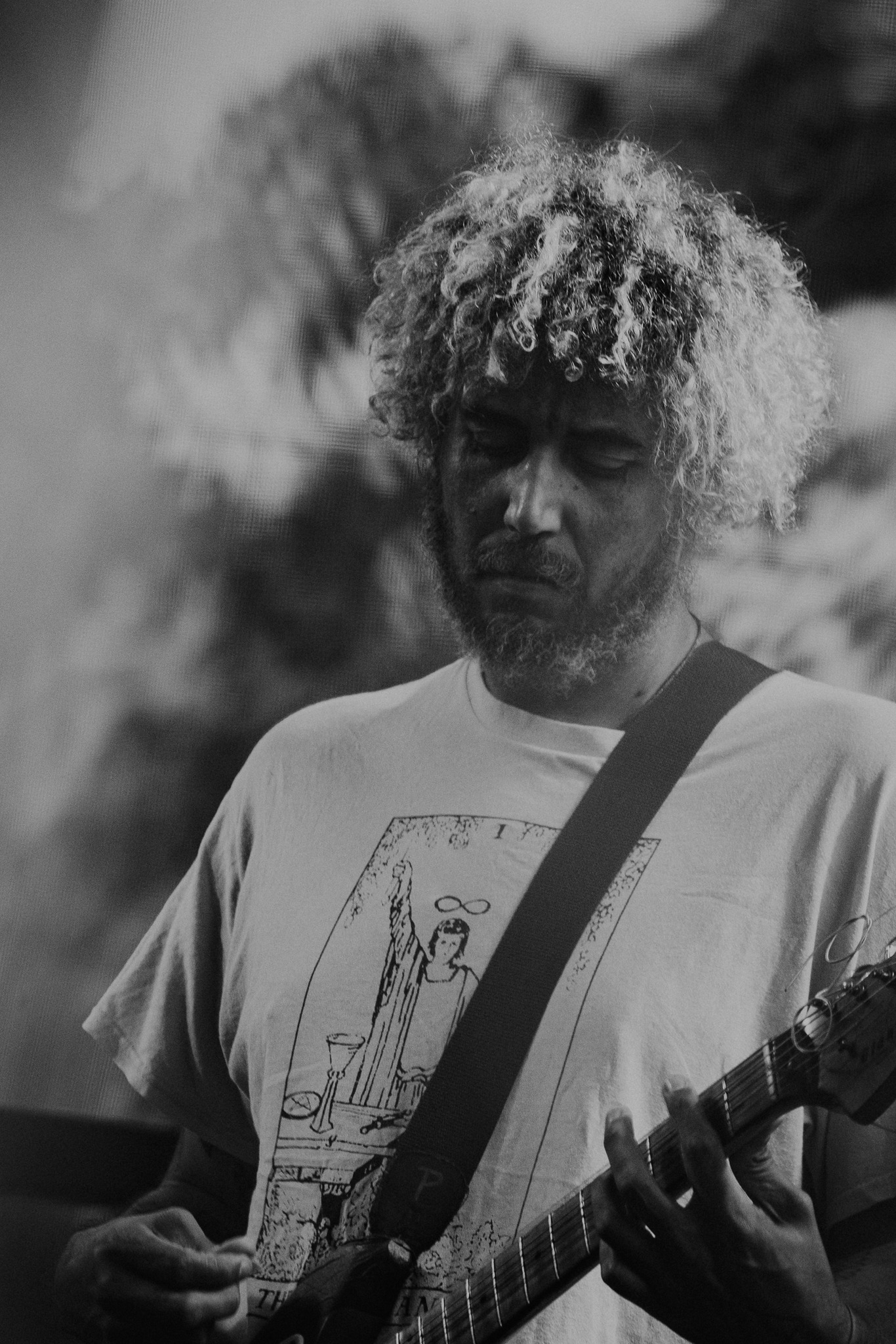 Lê by Poznan
JB: Recording in Seattle at Ft. Lawton with Jim Roth (after your deep involvement with Built to Spill) puts you inside a Northwest guitar tradition. Did the physical environment shift your sense of tone or space?
Lê: Absolutely. Jim’s studio environment was a natural place for me. It always made perfect sense to be there and to learn more about guitars and recording. It was definitely where I wanted to be doing what I was doing. It was a time of great learning.
JB: Speaking of Built To Spill, when Doug Martsch first connected with you, what do you think he recognized in Oruã that others hadn’t yet heard?
Lê: I believe that was the way we made and recorded music here in Brazil. There’s always been a very peculiar and particular way of making records, and I think Doug wanted to make a record like ours.
JB: Co-producing their record ‘When the Wind Forgets Your Name’ must have expanded your studio vocabulary. What lessons carried into ‘Slacker,’ and what did you consciously resist?
Lê: It was a fun album to make, where we stepped out of our typical comfort zone. We put together a sound in the studio using different elements to arrive at a certain sound. That was very much part of our recording school. I believe that with ‘Slacker’ it was a different kind of experience where we already had someone with a sound ready for us to play. I really enjoy recording live with the band and that’s exactly what we did on this album, but with a more refined sound than usual.
JB: Some overdubs were recorded back in Brazil. Does the album feel geographically split to you, or unified by a particular emotional current?
Lê: It’s very cohesive within the music. This process of recording remotely has always been something we’ve explored for a long time. It’s natural for me to have overdubs that were done at other times or even in different countries. Our album ‘Passe’ (Transfusão Noise Records and IFB Records, 2024) for example, had sessions in Brazil, the USA, and Europe. Everything was done during our tours.
JB: Repetition drives this record (not as minimalism, but as propulsion). Are you chasing trance, confrontation, or collective release?
Lê: I seek enjoyment first and foremost, but I think a lot about the atmospheres that can occur during loops. The relationship with trance is more intuitive for each individual.
JB: The guitar work often feels deconstructed, maybe less riff, more current. Is that a deliberate dismantling of traditional indie-rock heroics?
Lê: I’ve always liked strange things on the guitar, sounds that sometimes didn’t sound like a guitar, things like that. At times I feel and think of the guitar as if it could be other instruments at the same time, like the saxophone for example. It’s difficult for me to see myself as a guitarist. I believe I can only get a good guitar sound out of it, and I don’t think much about the obvious things to do.
JB: In that light and despite the instrument being central to your sound, are there musicians outside of guitar culture, saxophonists, percussionists, electronic artists, who shape the way you think about playing?
Lê: I believe so. I really like Pharoah Sanders, Joe Henderson, Alice Coltrane. The melodic journeys they take move me. I have a strong connection to the swing of guitar beats; Jorge Ben was something that motivated me a lot. Basically, I don’t have technical knowledge; I learned to play in my own way and developed it from there. Sonic Youth and My Bloody Valentine were essential.
JB: Speaking of other instruments like the sax and theremin, both introduce a kind of cosmic instability. Were those textures about widening the palette?
Lê: These are natural elements for me within the sound of Oruã. I’ve always found it interesting to add elements that would make the sound grow in some way.
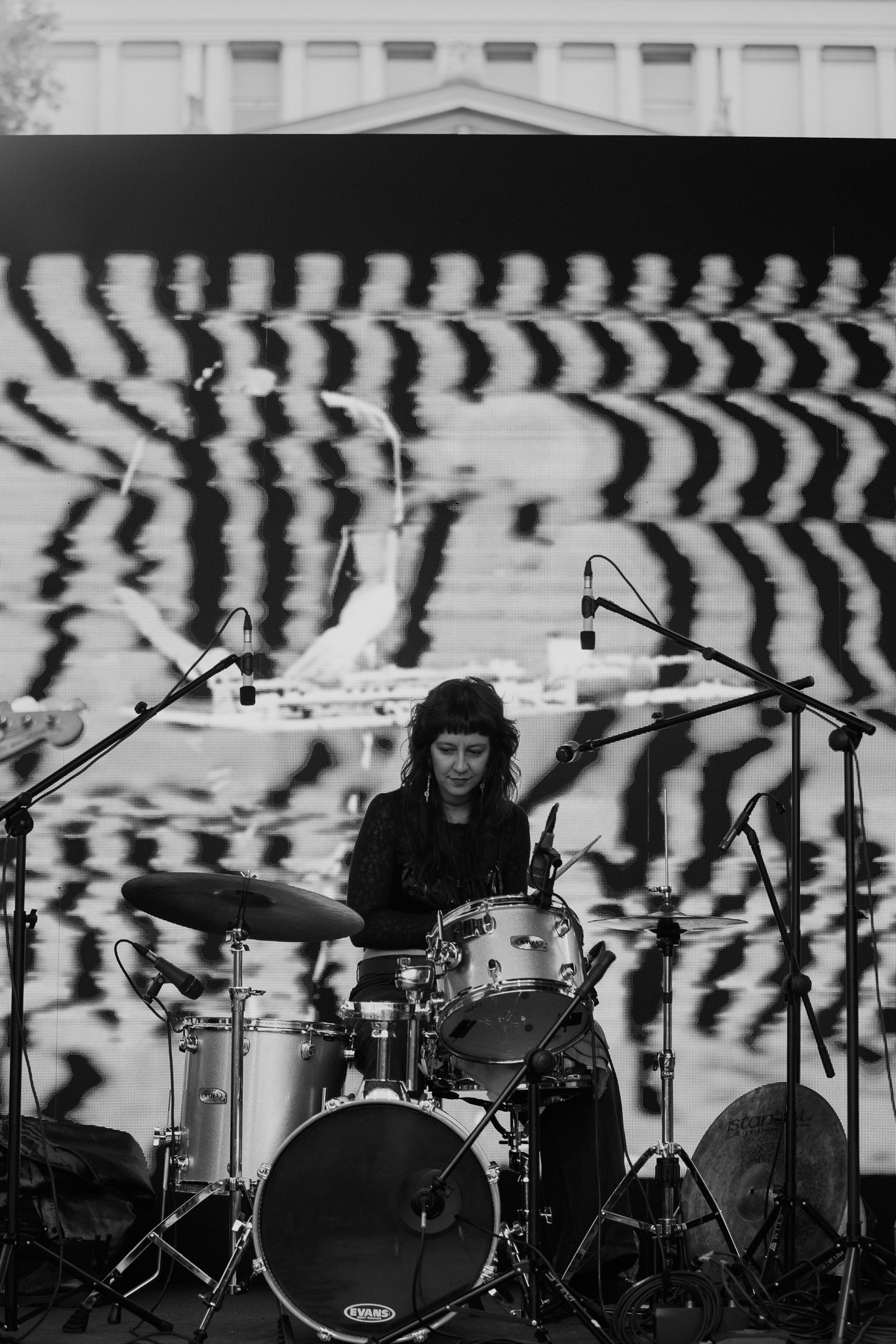 Ana by Poznan
JB: You reference Brazilian psych traditions. How do you channel those roots without turning heritage into aesthetic shorthand?
Lê: Some life experiences end up influencing me as much as the music itself. Luiz Gonzaga and the Northeast of Brazil have always been major influences on my essence. In some way, they motivated me to want to pursue life on the road as a way of life.
JB: International audiences often project expectations onto Brazilian music. Do you feel pressure to perform with “Brazilian-ness,” or is Oruã actively resisting that frame?
Lê: We certainly don’t think about that or feel that pressure. Our Brazilian identity is much more peripheral and displaced. It happens outside the norm, and we know that our movement with Oruã opens many doors for bands and ideas coming from underprivileged places that possess strength and determination.
JB: Do you see the band as part of a larger contemporary Brazilian underground movement, or do you still feel culturally isolated from the country’s mainstream music industry?
Lê: Interestingly, here in Brazil I perceive this cultural isolation; things here are based on power, and we are on a poorer side, but very well-connected. Oruã is certainly a fundamental part of the motivation to have the courage to go on tours to unknown places around the world. I feel that many bands from the Escritório scene are always looking for new places and new tours. We end up giving some kind of motivation to other people simply by the fact that we don’t stop and are always in motion, even if in small steps.
JB: Escritório seems to function as more than a rehearsal or recording space in your work; it almost feels like a social philosophy about how music should exist within a city. After years of maintaining that environment in downtown Rio, how has that space changed your understanding of improvisation not simply as a musical practice, but as a way of surviving economically, emotionally, and collectively within an unstable world?
Lê: In all our travels, I’ve never encountered anything quite like Escritório. People from the suburbs renting a commercial space and creating a movement in the city center is something relatively large and impactful. Escritório has always promoted free improvisation sessions, and this has always had a positive impact on our community, encouraging more people to learn to play an instrument and explore music. Currently, there’s a new type of event to encourage experimental solo sets. These movements are very good for the circulation of ideas.
JB: While you composed all the songs, the band feels communal and porous. How do you balance singular authorship with collective chemistry?
Lê: We do a lot of improvisation. From the beginning, that’s always been the idea behind some of our compositions. I create a lot of things and bring them to play with the band, and we develop a sound together.
JB: After moving between Rio’s underground and Seattle’s indie infrastructure, what still feels risky, or necessary about making music this way?
Lê: Everything is quite risky right now, but we need to keep making music. I’ve been lucky enough to travel a lot and see more of the world. Being able to move around and have freedom is still the greatest benefit of all this.
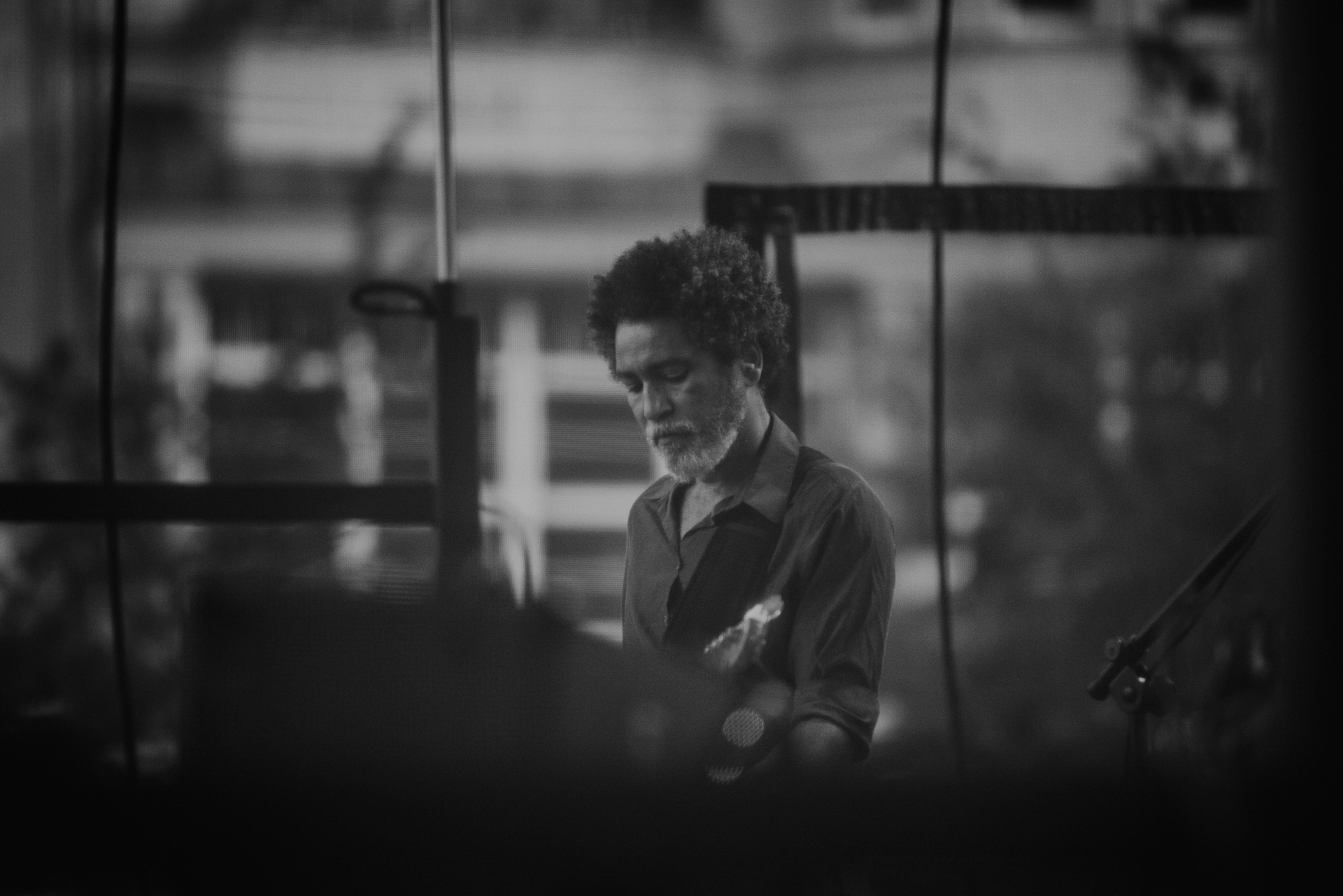 Bigú by Poznan
JB: Your lyrics often embrace confusion as a form of clarity, suggesting that good lyrics need to say something even if they are not immediately transparent. In the context of ‘Slacker,’ how do you balance the “malandro spirit” of street-smart improvisation with the need to confront heavy themes like “parochial and racist separation”?
Lê: Thinking seriously about some issues. In Oruã we’ve always had some very serious lyrics and themes, things that would at least make people think. Issues of social class and race have always been around me. I’m really happy to know that many people identify with our subjects and our causes.
JB: The track “México Suite” was born from a deeply personal and painful experience of unjust detention and border politics. Could you elaborate on the process of transforming that specific “outburst” of trauma into a piece of art, and how you feel the song functions as a broader questioning of the courage required for artists from the Global South to travel the world?
Lê: This was a major episode in my story. Putting it out there in the form of music gave me more courage to fight and question. It was interesting to hear from other South American musicians about similar situations to what I experienced. I realized that some barriers are still very present. I still dream of visiting Mexico and changing my entire impression of what happened.
JB: ‘Slacker’ has been described as a “transcontinental triumph” where the rhythmic ghosts of Pernambuco collide with jagged indie-rock architecture. How do you ensure that these traditional Brazilian references and Afro-rhythms from macumba terreiros remain the heartbeat of the music when filtered through the “Teutonic aesthetic” of Krautrock and experimental noise?
Lê: The origin of all this basically comes from the Escritório, our rehearsal, recording, and performance space located in downtown Rio de Janeiro. I worked there for 10 years producing all sorts of things, and that gave me a great understanding of different types and origins of music. The importance of Afrobeat and Fela Kuti (Nigerian musician, 1938 – 1997), is as important to me as krautrock, maybe even more so. I came from a very poor area of Rio, and a lot of my motivation came from the arts, so maintaining a space in the city where many people frequent allows me to consciously expand my own sound.
JB: With the current lineup involving long-time collaborators like João Casaes and Ana Zumpano, the band often aims to take the audience into a “collective trance.” How did the addition of Jim Roth’s maracas, synths, and percussion on nearly every track of ‘Slacker’ alter the internal chemistry of the band’s improvisational sessions?
Lê: It was natural. We had already been occasionally improvising with Jim for years before we recorded ‘Slacker.’ Many of the tracks we recorded we had already been playing for a few years, so Jim added some very important layers to the sound of each track during the recording sessions, I believe it gave the tracks good depth.
JB: There’s a recurring tension in ‘Slacker’ between freedom and instability—constant movement, touring, improvisation, precarious labor. Do you think that instability is essential to the music, or something you ultimately hope to escape?
Lê: I hope to escape. I dream of a world where we’ll have healthy tours and receive decent pay and good deals.
JB: Your recordings often preserve imperfections, bleed, and physical space. In an era where so much independent music is digitally polished, does maintaining that rawness feel aesthetic, political, or simply honest to how Oruã exists?
Lê: It’s pure honesty. I was raised in the cassette tape culture and have always been fascinated by recording. I feel fulfilled being able to record using few resources and have it sound good.
JB: A lot of psychedelic or experimental rock can become detached from everyday life, but your music stays grounded in labor, class, and survival. How important is it for Oruã to keep experimental music connected to material reality?
Lê: It’s about the importance of having real relevance in the world. Good ideas need to be spread, and I believe we communicate with many people who have attentive minds. You can feel that at shows and in people’s curiosity about the lyrics. We really live a somewhat outsider lifestyle sometimes, and I think it’s extremely important to have a voice to express opinions, vent, write poetry, things like that.
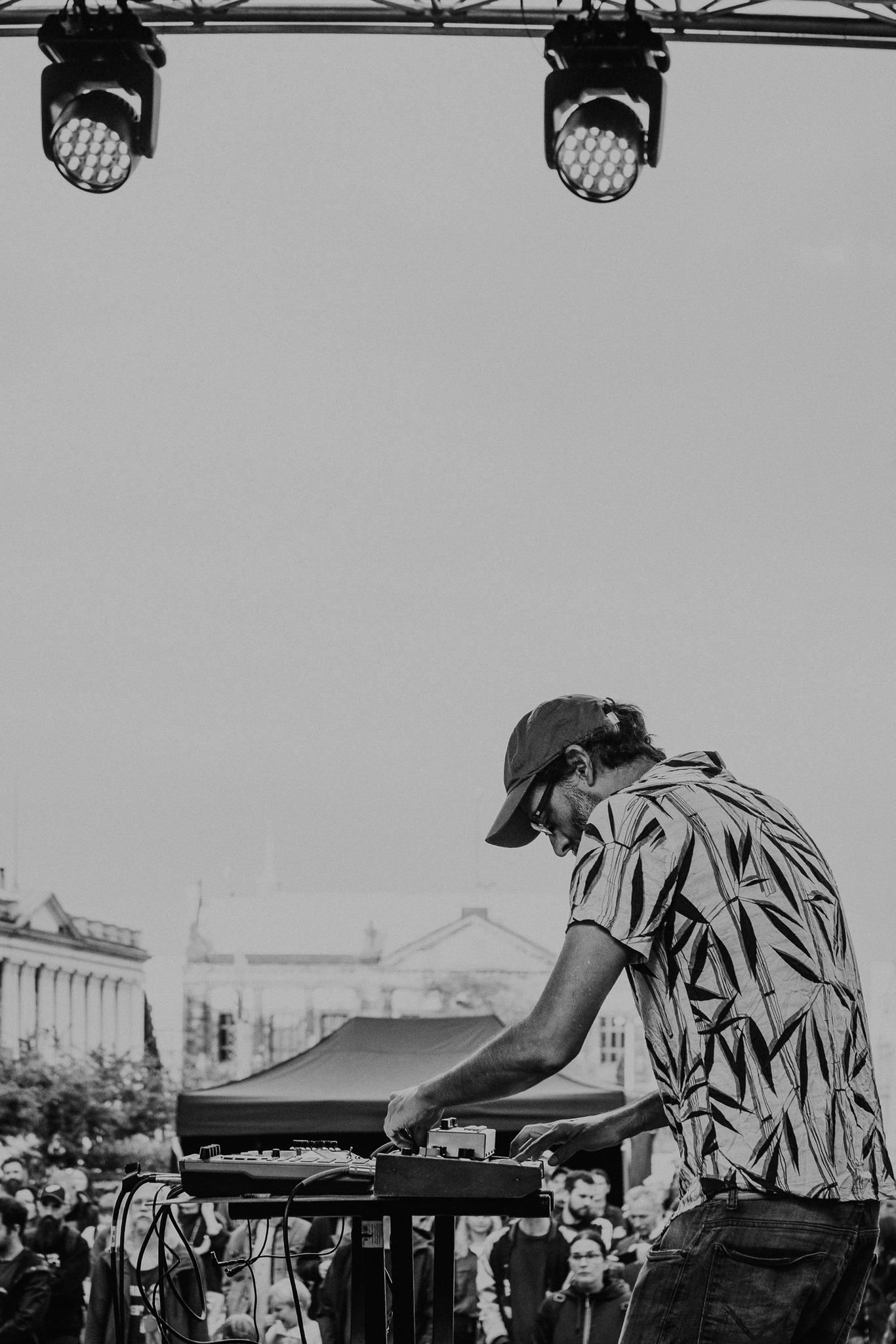 João by Poznan
JB: Moving into Casual Art Ensemble, do you feel more interested in pushing further into live-band immediacy, or are you becoming more curious about collage, studio manipulation, and fragmented recording processes across countries?
Lê: Right now, I’m only thinking about playing with the band to see things emerge and new ideas take shape. We have long-term plans to record a new album next year. We’ve always been into studio experiences, so I think that interest will always be a constant in our history.
JB: Casual Art Ensemble feels less like a fixed band than a temporary society built around trust, coincidence, and listening. When you gathered these musicians after returning from Seattle, were you trying to document a specific musical moment in Brazil, or were you more interested in creating situations where people could temporarily escape their usual artistic identities?
Lê: Perhaps a bit of both, but I think what I really wanted was to document the moment. They were very spontaneous sessions where people didn’t quite know what we were doing, but in my mind, I already thought that just the meeting of people was an event. After those recordings, we did some shows with very different lineups, and that was very interesting. I’ve been slowly starting to think about a second album, obviously based on encounters.
JB: ‘Moon Forces’ (Transfusão Noise Records and Half Shell Records, 2026), constantly blurs the line between improvisation and composition. Even though many performances emerged spontaneously, the year-long process of mixing, layering, and restructuring seems to transform the recordings into something almost architectural. At what point does an improvisation stop being a document of a moment and become a composed emotional reality shaped by memory and editing?
Lê: There are many moments of listening. It’s a type of process where I need space and time. From listening, I polish the diamond; sometimes part of the process is sending some tracks to close friends to listen to. All these improvisations on the album remain improvisations even with new elements; the forms of these tracks change and sometimes become more structured but still come from a free zone of ideas.
JB: The album repeatedly evokes movement between cities, rooms, friendships, and states of consciousness, yet it never feels fragmented despite the rotating personnel and multiple recording locations. Do you think cohesion came from the musicians themselves, from your mixing approach, or from a deeper shared social experience rooted in contemporary Brazilian underground culture?
Lê: It’s DIY culture at its core; what these places and people have in common is that they both record themselves. It’s a liberating kind of knowledge, and I believe that my friends and I share a lot of this culture among ourselves and with new people.
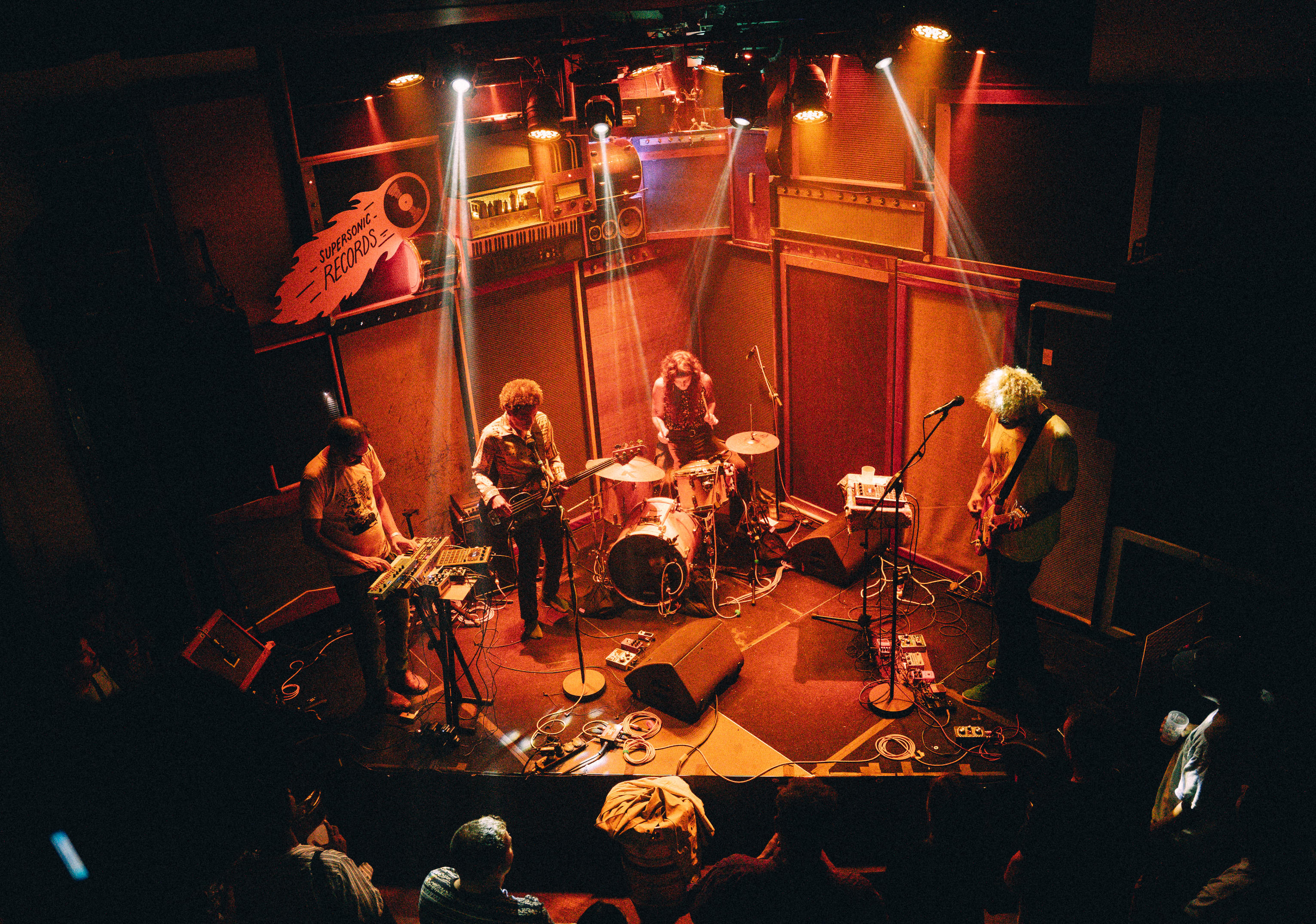 Photo by now madd8
JB: There is a strong physicality throughout ‘Moon Forces’: percussion that feels ritualistic, horns that behave more like weather systems than melodic instruments, guitars that dissolve into texture rather than asserting control. Were you intentionally trying to dismantle traditional hierarchies inside ensemble playing, where certain instruments or personalities usually dominate the space?
Lê: We didn’t think too much before recording. The idea was just to improvise and let things happen.
JB: Many contemporary improvisational records emphasize virtuosity or chaos, but ‘Moon Forces’ often feels patient, communal, and deeply attentive to atmosphere. In a cultural moment dominated by speed, visibility, and constant self-definition, do you see the act of collective listening and slow musical unfolding as carrying a political or even spiritual dimension for you now?
Lê: I believe that in current times, people with a spiritual connection within the artistic realm are rare, but when it happens, it’s beautiful to see, and I’m happy that it was possible in this first Casual recording. It’s strange to realize that some people will only understand what’s culturally good now in an unknown future.
For more information, please visit:
Transfusão Noise Records
K Records
Half Shell Records
Oruã
Lê Almeida