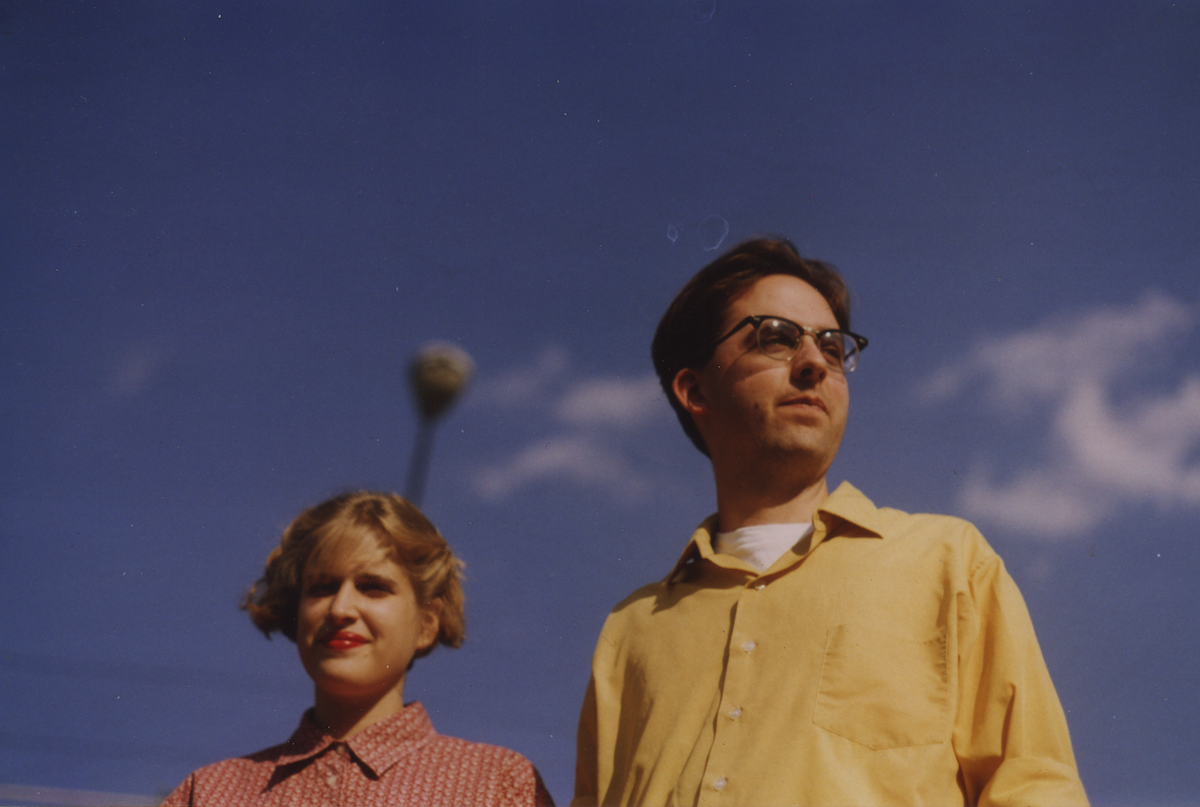
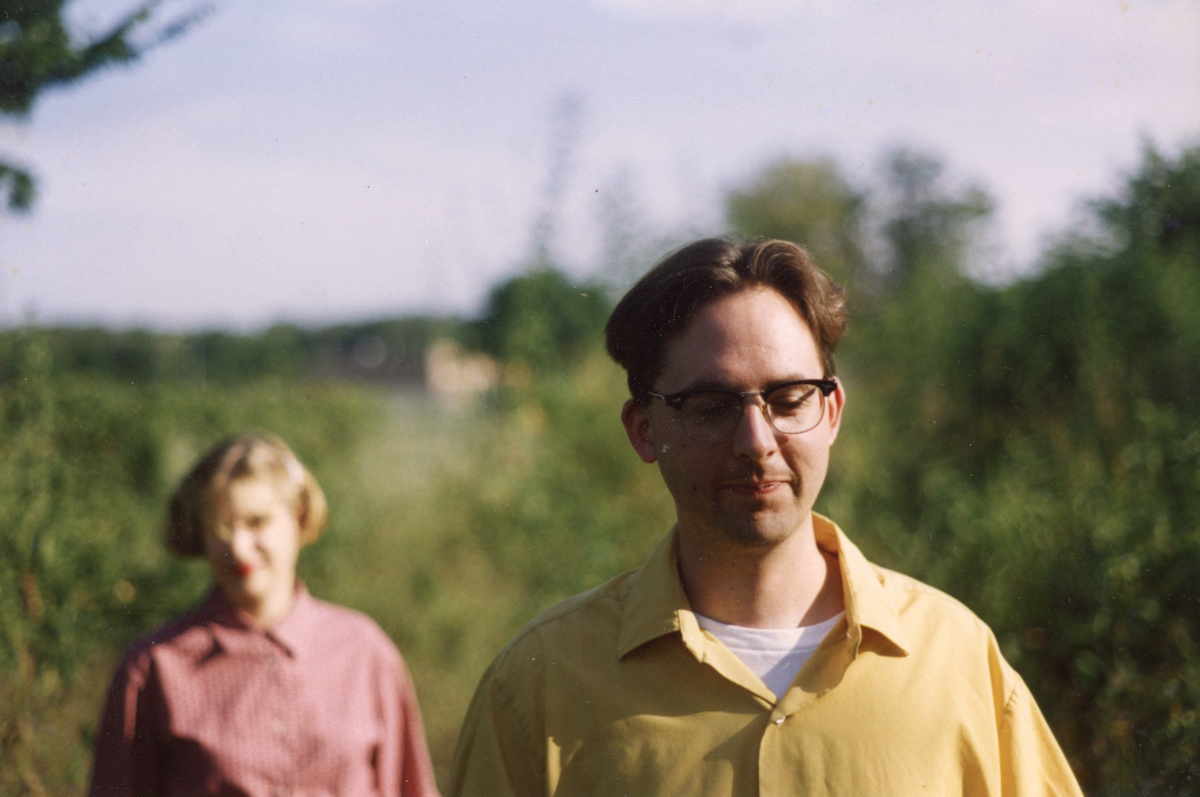
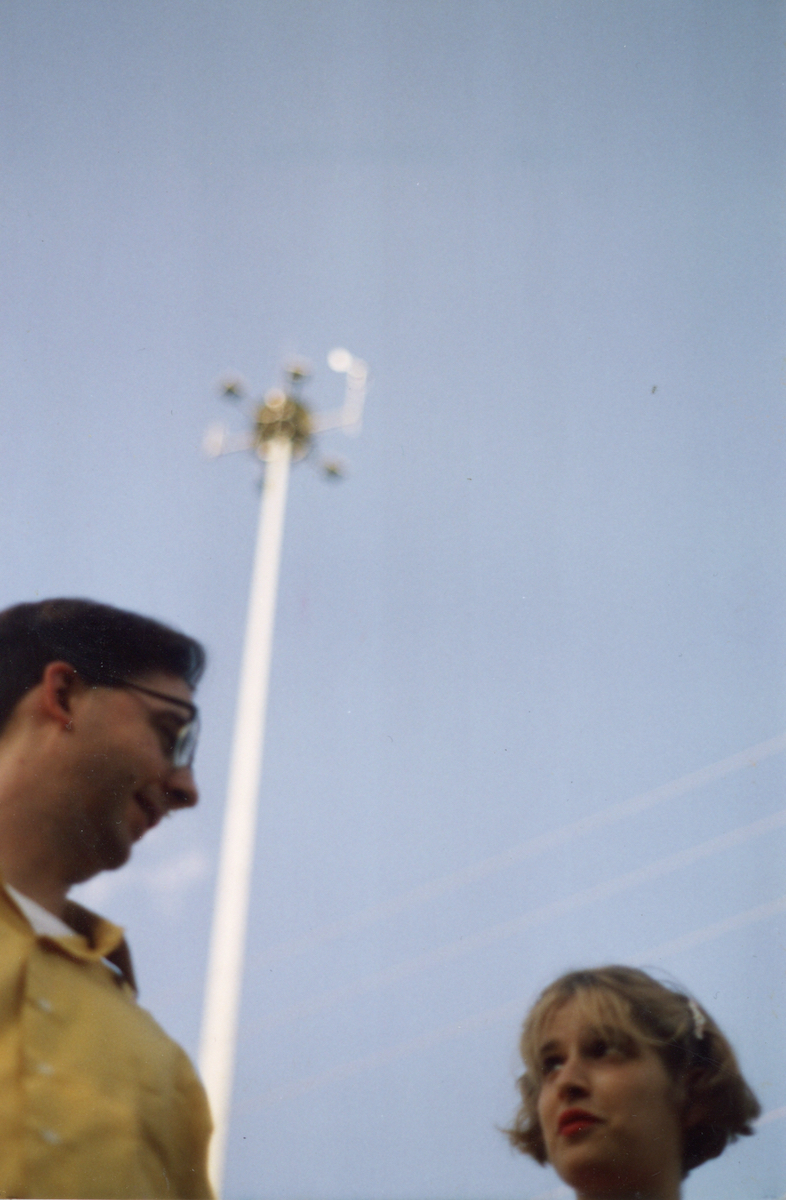
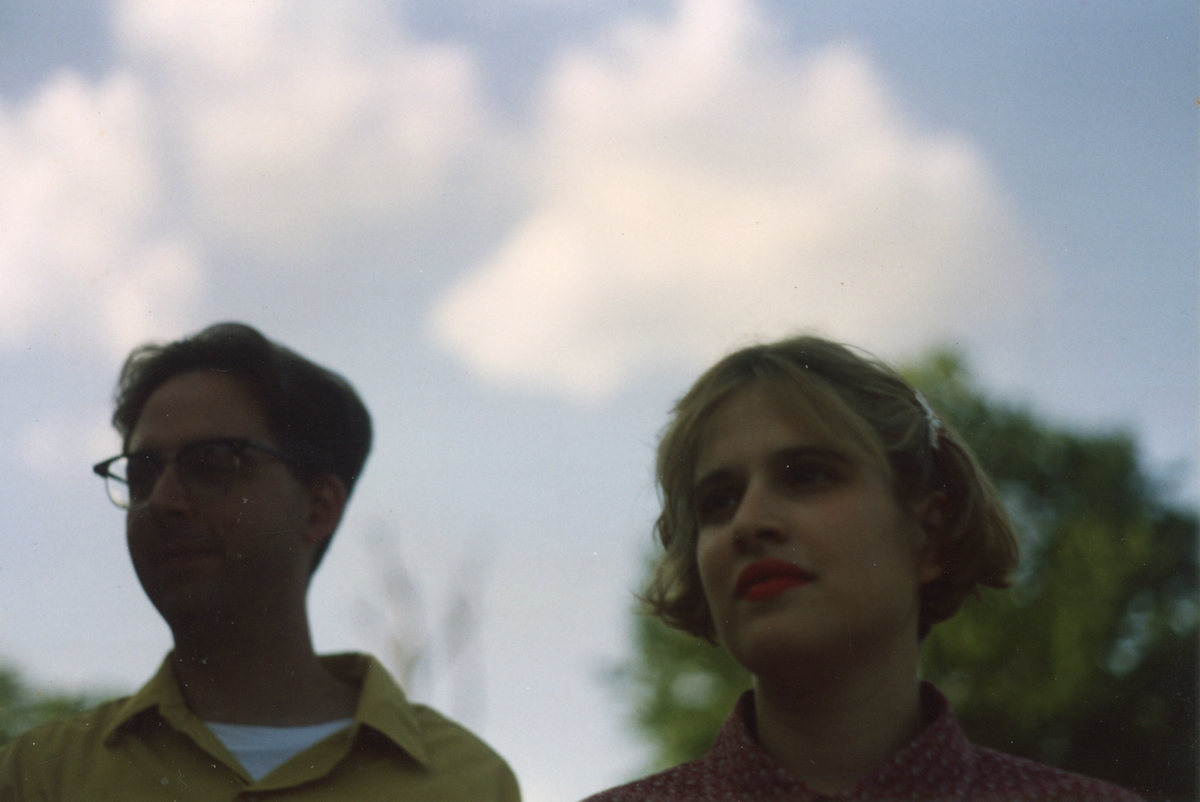
All Photos by Dan Plunkett
Marc Ostermeier has always made music that seems to exist just outside of time. Long before algorithms flattened genre into metadata and before “shoegaze revival” became its own industry, his band Should quietly carved out a sound that resisted easy categorization; too atmospheric for indie rock orthodoxy, too melodic for pure slowcore abstraction, too emotionally restrained to ever announce itself loudly. Their 1998 debut, ‘Feed Like Fishes,’ arrived with little fanfare at the tail end of a decade overflowing with noise and reinvention, yet its hushed gravity has only deepened with age.
Now, through Numero Group’s expansive deluxe reissue, collecting the original album alongside ten period recordings and finally bringing the record to vinyl, the full scope of ‘Feed Like Fishes’ can be appreciated as more than a cult obscurity. It feels like a document of transition: not only of a band finding its identity after shedding the name shiFt, but of Ostermeier himself moving from collage-like sampled guitar loops toward a more tactile and emotionally intuitive style of songwriting. The album’s blurred guitars, unresolved melodies, and deliberate pacing suggest music less interested in arrival than atmosphere; songs that drift, hover, and quietly transform while you’re inside them.
What makes ‘Feed Like Fishes’ endure is its sense of instinctive creation. Recorded largely in isolation between Austin and State College on modest equipment, the album captures a moment before self-consciousness calcified independent music into marketable aesthetics. You can hear Ostermeier teaching himself how to play guitar in real time, hear the chemistry between Marc, Eric Ostermeier, and Tanya Maus forming organically across improvised vocal takes, tape experiments, and skeletal arrangements influenced as much by Yo La Tengo, Codeine, and Low as by the textural extremities of shoegaze. There’s ambition here, but almost none of the performative grandiosity that usually accompanies it.
In revisiting ‘Feed Like Fishes’ nearly three decades later, Ostermeier isn’t simply reopening an archive; he’s revisiting a formative creative philosophy, one rooted in experimentation, restraint, and the possibility that deeply personal music can find its audience slowly, over years, through intimacy rather than exposure. The result is a reissue that functions not as nostalgia, but as long-overdue recognition.
Many thanks to Marc for his thoughtful reflections on ‘Feed Like Fishes’ and its reissue.
James Broscheid: Looking back at the period between ‘A Folding Sieve’ and ‘Feed Like Fishes,’ you were in the middle of a personal and technical transition, moving geographically while also moving away from the loop-based sampling approach that defined much of your earlier work. When you listen to ‘Feed Like Fishes’ now, do you hear it primarily as the product of that transition, or do you see it as the moment where a clearer musical identity finally crystallized for you?
Marc Ostermeier: I see ‘Feed Like Fishes’ primarily as a product of a distinct time. My production techniques had improved. I felt more influence from bands like Bedhead, Low, and Yo La Tengo. I feel that ‘Feed like Fishes’ is a more fully realized work than ‘A Folding Sieve.’
JB: Do you think that distance has revealed qualities in the album that you were too close to recognize at the time, or has it changed what you personally value in your own work?
MO: The distance in time probably leads me to be less critical of things I was self-conscious about. Outside validation also helps. I am a different person than I was thirty years ago, just like everyone. I have heard so much music in the interim that has shaped my tastes.
JB: That move away from loop-based composition seems to have introduced a sense of “naturalness” into the music, but your guitar style remained highly minimal and repetitive. Do you see that restraint as a kind of conceptual continuity with your earlier process, just expressed through a different medium?
MO: I think it is fair to say there is a conceptual continuity. I am generally attracted to minimalism, not just in music but in art, in architecture, etc. It’s natural that I apply it to the music I create.
JB: Your earlier songwriting process relied heavily on the manipulation of sampled guitar loops through the ‘Ensoniq’ EPs and an overdriven mixer, which created a very particular sonic fingerprint. Once you abandoned that method and began recording guitar parts more conventionally, how did that change the way ideas formed in your head before they were recorded?
MO: Writing songs primarily on the guitar opened things up creatively. The guitar parts were still repetitive and simple, but they varied across the song in dynamics and in other, subtler ways. This difference made the songs feel more natural, less artificial. I did not feel like I had lost anything.
JB: Several of the songs on the album seem to carry the residue of experimentation. When you think about tracks like “In Nine,” which evolved out of a version you were dissatisfied with, how important was the willingness to dismantle and rebuild songs rather than simply finish them and move on?
MO: Vocals are the last part I record after which my opinion of the song can change considerably. Even when I have a vocal melody clearly in mind, I have a hard time foreseeing how I will feel about a song until the vocals are added. Back then, most songs that progressed beyond a few simple ideas were committed to 8-track and finished. I rarely reworked songs once vocals were added other than to tinker with a mix or add a small part. “In Nine” is a rare example of a song that went through a lot of changes. It’s ironic that I ended up keeping the section I was dissatisfied with on “In Nine’s” predecessor “Things Are the Same” (the second half). And “In Nine” would not have made the album without swapping out my bass part for Eric’s (Ostermeier).
JB: “In Nine” stands out as a rare case where you significantly reworked a song. Looking back, do you think your general reluctance to revisit songs was a limitation, or did that tendency help preserve a certain immediacy and decisiveness in your catalog?
MO: I was going back over my notes for the 8-track reel-to-reels from the ‘A Folding Sieve’ era recently. Almost all songs just have one instance among the tapes. The exceptions are “In Nine” and “Collide,” which have three each. I hope to get these tapes transferred soon. I am curious about what the other two Collide versions are like, plus there are a couple of other songs I am not sure what they are (or how complete they are). That said, since moving to recording on the computer I have reworked songs more often, in part because it is relatively easy to do so. Perhaps when working on 8-track tape the effort to re-record a new version of a song was too much of a barrier. Or I just wanted to move on to new ideas.
JB: The record reflects a wide set of influences, from the warmth and drift of slowcore to more overtly melodic indie pop, yet you deliberately left some of the more immediately “poppy” songs off the album. How conscious were you about constructing an album that resisted straightforward accessibility?
MO: I wasn’t purposely avoiding accessibility, per se. I felt many of the poppier songs were less distinct – like I was taking an easier road. I thought the collection of songs I picked were more interesting as a group even though I left off some of the more catchy songs.
JB: Your recording process also seems shaped by the practical limitations of the tools you had: a SansAmp instead of a traditional amplifier setup, cassette recordings used as the basis for loops, and a Fostex 8-track being physically transported across states for vocal sessions. Do you think those constraints ultimately became part of the aesthetic identity of ‘Feed Like Fishes,’ or were they obstacles you were constantly trying to work around?
MO: I don’t think I was trying to work around the limitations. I worked within the limitations. One aspect of my guitar playing that subtly shapes the aesthetic of ‘Feed Like Fishes’ (and subsequent albums) is that I almost never play chords on the guitar or have a rhythm guitar part. I don’t write songs by strumming chords on the guitar. Most all guitar parts are one or two notes at a time. This choice originally stemmed from my limited abilities but now has just become my style.
JB: To me, rarely playing chords and instead focusing on single notes suggests a style born from limitation that became intentional. At what point did you become aware that this constraint had turned into a defining voice rather than something to overcome?
MO: I think by the time I was recording songs for ‘Like A Fire Without Sound’ (Words On Music, 2011), I realized that not playing a series of guitar chords was atypical. But I felt no need to change. I was just doing what came naturally.
JB: The collaborative dynamic with Eric appears to have been quietly transformative, particularly when he would arrive with a bassline or guitar figure that redirected the structure of a song. When you think about those moments like the bassline that helped unlock “In Nine” or the parts that sparked “Lullen” and “Memdrive,” how did Eric’s perspective alter your own instincts as a songwriter?
MO: I would mail Eric cassettes of songs I was working on to get his feedback. In the big picture, both then and now, Eric and I have similar tastes in music, so he was a great second pair of ears (not that I always agreed with his perspective). At that time, we were interested in making different styles of music. ‘Feed Like Fishes’ and Eric’s debut album as Motion Picture (‘Every Last Romance’ – Words On Music), both came out in 1998 on our fledgling label Words On Music (now almost 30 years old). Eric’s involvement in “In Nine” was atypical, as it came in at the very end when I asked him if he would write a better bass line for the song. The other songs he is on (“Lullen”, “Memdrive”, “Faded” and “Inst2”) all started with parts he wrote specifically as ideas for Should songs. Then, when we worked on the songs together, he generously deferred to me to shape the song in the direction I felt it should go – to make it sound like Should. For example, for “Memdrive,” he wrote the bass part. We came up with a simple drum pattern together. I improvised the repetitive, droning guitar as we recorded all three “live” to tape. Later, I added several more guitars and vocals. “Memdrive” is a song that neither of us would have created alone.
JB: The collaborative moments you described with Eric often seem to produce results neither of you would arrive at independently. Do you think those kinds of “third spaces” in collaboration require a certain surrender of authorship, or do they sharpen your sense of what your own contribution actually is?
MO: I wouldn’t describe it as a “surrender of authorship.” The authorship rests with the group recording it. How much each person gives-and-takes and, in the end, contributes is part of the process.
JB: Tanya’s contributions also seem to have reshaped certain songs in fundamental ways, particularly when she wrote the melody and lyrics for “Lullen” on the spot or reframed the character of the vocals on “Both Eyes Open.” When someone enters the process that late and makes such a decisive mark, does it feel like the song was waiting for that voice all along, or does it change your sense of authorship over the material?
MO: Tanya usually writes the harmonies, as was the case with “Both Eyes Open.” I thought her harmony was better as the lead vocal, so I mixed it that way. There are multiple directions a song can develop. I want to do whatever makes the song better. Tanya’s vocal/melody/lyrics on “Lullen” were what that song needed, and she has cowriting credits with Eric and I. If we had all been closer geographically, then maybe there would have been more collaborative songs.
JB: When Tanya’s contributions fundamentally reshaped songs like “Lullen,” you emphasized doing “whatever makes the song better.” Has that philosophy ever conflicted with your personal attachment to an idea, or has it always been easy for you to let go in service of the final piece?
MO: I’d like to think I am usually open to whatever makes the songs better. But of course, I have biases of “what is better” like everyone else. And it may take some time to recognize that a new idea is better. That wasn’t the case with “Lullen,” but on other songs I have realized it too late. For example, on “The Great Pretend” (the song, not the album), Tanya had the idea to sing in a gospel-like style. We did include those takes, but in hindsight I mixed her vocals too low, probably because it wasn’t how I had originally envisioned the song. Now I wish her vocals were mixed higher as I think they make the song more interesting. Incidentally, “The Great Pretend” was the first song I wrote when I moved to recording on the computer. I attempted to make a song in the style of some of my favorite Brian Eno songs (e.g. “On Some Faraway Beach” and “Here Come the Warm Jets,” Island Records, 1974). I obliquely reference Eno with the title I chose, truncated from his song title “The Great Pretender.” “The Great Pretend” also has the double meaning. I was only pretending that I could create such a song.
JB: The album opens with “Fish Fourteen,” a piece recorded years earlier using rudimentary equipment and tape echo, which feels like a deliberate act of sequencing that frames the rest of the record in an unusual way. What made you decide that such an early and somewhat primitive recording belonged at the very beginning of the album rather than being treated as an archival curiosity?
MO: Short instrumentals at the beginning of albums can really help set the mood (e.g. as on ‘Seventeen Seconds’ by The Cure). I am quite fond of “Fish Fourteen” and how it sounds, even today, though I understand how many feel otherwise. The song speaks to the repetition and distortion found elsewhere on the album. I think the primitive sound of “Fish Fourteen” really sets up “Sarah Missing,” making it sound more polished and striking in comparison. However, in retrospect, a shorter version of “Fish Fourteen” would have been better.
JB: At the time of the album’s original release, the band was no longer performing live, and much of the music circulated through mail order catalogs and independent distribution networks. In retrospect, do you think that relative invisibility shaped how listeners eventually discovered the album, perhaps giving it a slower, more organic path toward appreciation than a typical indie release might have experienced?
MO: As a huge music fan, I am excited when I discover great music from a band I never heard of. I feel a different connection to a relatively unknown artist I discovered organically than one with wide exposure. Only the music should matter, but I can’t help feeling that way. The other aspect is one hears music in the context of what one has heard before and what is currently being released. Is that benefitting ‘Feed Like Fishes’ now? I suspect so.
JB: The decision to abandon the name shiFt and adopt the almost deliberately mundane name Should happened at a moment when search engines and digital discoverability were not yet part of musicians’ calculations. Looking back from the present day, where the mechanics of being found online often influence band names and branding, does that choice feel charmingly naive, or does it represent a kind of freedom artists rarely have anymore?
MO: Even before modern search engines, the choice of “Should” was probably a poor one from a marketing standpoint. But I never had career aspirations in music. I sought to create songs that I would want to listen to, that I would find interesting. My lack of traditional ambition as a music artist gave me the freedom to choose such a name. But I wanted my music to be heard by others. I wanted to know what listeners thought of it. I needed a name. I didn’t want a stereotypical shoegaze band name. I wanted something fairly meaningless, which then would be a bit mysterious or cryptic.
JB: ‘Feed Like Fishes’ has gradually gained a deeper appreciation over the years, culminating in the Numero Group reissue. When a label known for excavating overlooked music reframes an album within a broader historical narrative, does it change how you personally understand the record’s place in time?
MO: I couldn’t help but feel better about “Feed Like Fishes” after Numero’s interest in reissuing it coupled with the increase in fans of the album over the last five years or so. I’m unsure of the record’s place in time. My own personal view of the album in the context of my life is how I think about it. It’s hard to get outside of that.
JB: Many artists describe revisiting older work as an uneasy experience, hearing flaws or decisions they would change. When you listen to ‘Feed Like Fishes’ now in the context of this reissue, do you find yourself focusing more on the technical imperfections of the recordings or on the mindset of the person you were when you made them?
MO: I don’t feel uneasy with ‘Feed Like Fishes.’ I do feel that way about ‘A Folding Sieve’ and especially with the other songs from that earlier period, so I know what you mean. I would change very little about ‘Feed Like Fishes.’ A shorter version of “It’s Pull Is Slight” would have been better. I wish the production on “In Nine” would have been less muddy. And there are a couple of timing mistakes on the guitar I wish I could fix. But these are minor complaints. I’m very happy with ‘Feed Like Fishes’ today, more so than I was back then. I guess I have more confidence in it now.
JB: If you imagine an alternate version of yourself in 1997 with unlimited studio resources and modern recording tools, do you think ‘Feed Like Fishes’ would have become a more polished record, or would something essential about its character have been lost in the process?
MO: The album would have been different with unlimited resources and modern recording tools. Whether that would have been better or not, we’ll never know. I think there definitely is a chance it would have sounded less distinct. The overall sound of ‘Feed like Fishes,’ which is probably a major aspect of its appeal today, was shaped by the limitations.
JB: Finally, because the album documents such a clear turning point in your songwriting approach, do you feel that ‘Feed Like Fishes’ quietly set the blueprint for everything that followed in Should, or does it stand more as a snapshot of a particular creative moment that you later moved beyond?
MO: Although all Should albums can’t help but be shaped by previous albums, I think they are primarily snapshots of a particular creative moment, to use your phrase. Like ‘A Fire Without Sound’ (2011) was a product of me getting back to music after a long hiatus and learning to write and record using modern digital tools on the computer. ‘The Great Pretend’ (Words On Music, 2014) was a product of me switching to mostly writing songs on the electric piano. I also decided on that album to let the songs evolve in whatever direction sounded natural, rather than setting out to write “Should” songs. Since then, I have primarily, though sporadically, been working on post-punk songs tinged with shoegaze. I’ve been using the moniker Small Black Reptile because the tone and singing style do not fit Should. Words On Music released a digital single of two Small Black Reptile pseudo-demos in 2017. I have about 25 songs of similar material that I want to cull and finish for an album. However, a few of those songs naturally seem more like Should songs. Tanya and I are interested in working together again. Buoyed by the Numero reissue, we’ll see where that leads.
JB: Would you approach that with a sense of continuity, or are you more interested in testing how far that original framework can be stretched or redefined?
MO: I haven’t thought too deeply about it. For revisiting unfinished songs, my first thought is to be faithful to the original intent rather than reimagining them.
JB: Does that perspective make it easier to move on from past work, or does it ever create a sense that certain ideas or approaches were left unresolved?
MO: Yes, I tend to move on once that album is released. For the last two Should albums (especially ‘The Great Pretend’) there have been a lot of unfinished songs (unfinished usually means no recorded vocals). Once the album is out, I lose interest in trying to finish those songs. I’d rather move on to something new. With Small Black Reptile, I hope to do something different. I have almost three albums worth of mostly unfinished songs. I’d like to try and finish most if not all of them and then cull them to the best songs for an album.
JB: You’ve noted that obscurity can create a different kind of listener connection. Do you think that dynamic still exists in the current music landscape, where discovery is often mediated by algorithms rather than chance?
MO: I think it does. Yes, in theory anyone’s music is readily available (e.g. on Spotify or Bandcamp). But where obscurity used to come from lack of resources or distribution, it now comes from the fact that there is just so much music out there. I remember maybe ten years ago I read a statistic that more music was released in a single day that year than was released in a single year in the late 1980s. I imagine the gap has only grown since then.
JB: With the Numero Group reissue reframing the album historically, do you find yourself resisting that external narrative in order to preserve your personal connection to the work, or has it helped you see the album as something larger than your own experience?
MO: I bristle a bit at descriptions of ‘Feed Like Fishes’ as lo-fi or bedroom rock. Lo-fi to me is poorly recorded, sloppily played, or oddly mixed; sometimes done because of lack of skill/resources or sometimes just done on purpose for the aesthetic. I took great care in trying to craft the sound I wanted on that album. I was not aiming for lo-fi. I am sure the songs and sound of that album have idiosyncrasies to many ears, but that is not what I would call lo-fi. To the extent that ‘Feed Like Fishes’ has some uniqueness, I think those idiosyncrasies are part of the charm. But if lo-fi just means “doesn’t sound generically/typically well-produced,” then yes, the album is lo-fi. To answer the last part of your question, any album is necessarily something different to the listener than to the artist who created it. Learning how much the album means to some fans has been heartwarming.
JB: Across your projects from Should to Small Black Reptile, there’s a recurring theme of shifting tools shaping the songwriting itself. Do you feel that your identity as an artist is tied more to those evolving processes than to any fixed sonic signature?
MO: The process shapes the sound, but also my interests have evolved over time and my abilities as a songwriter/producer/performer have improved over time. This doesn’t mean that each album is better than the last. What resonates with listeners is hard to predict and difficult to quantify. I can just do what interests me and what I enjoy.
For more information, please visit Numero Group | Words On Music | Bandcamp | Facebook