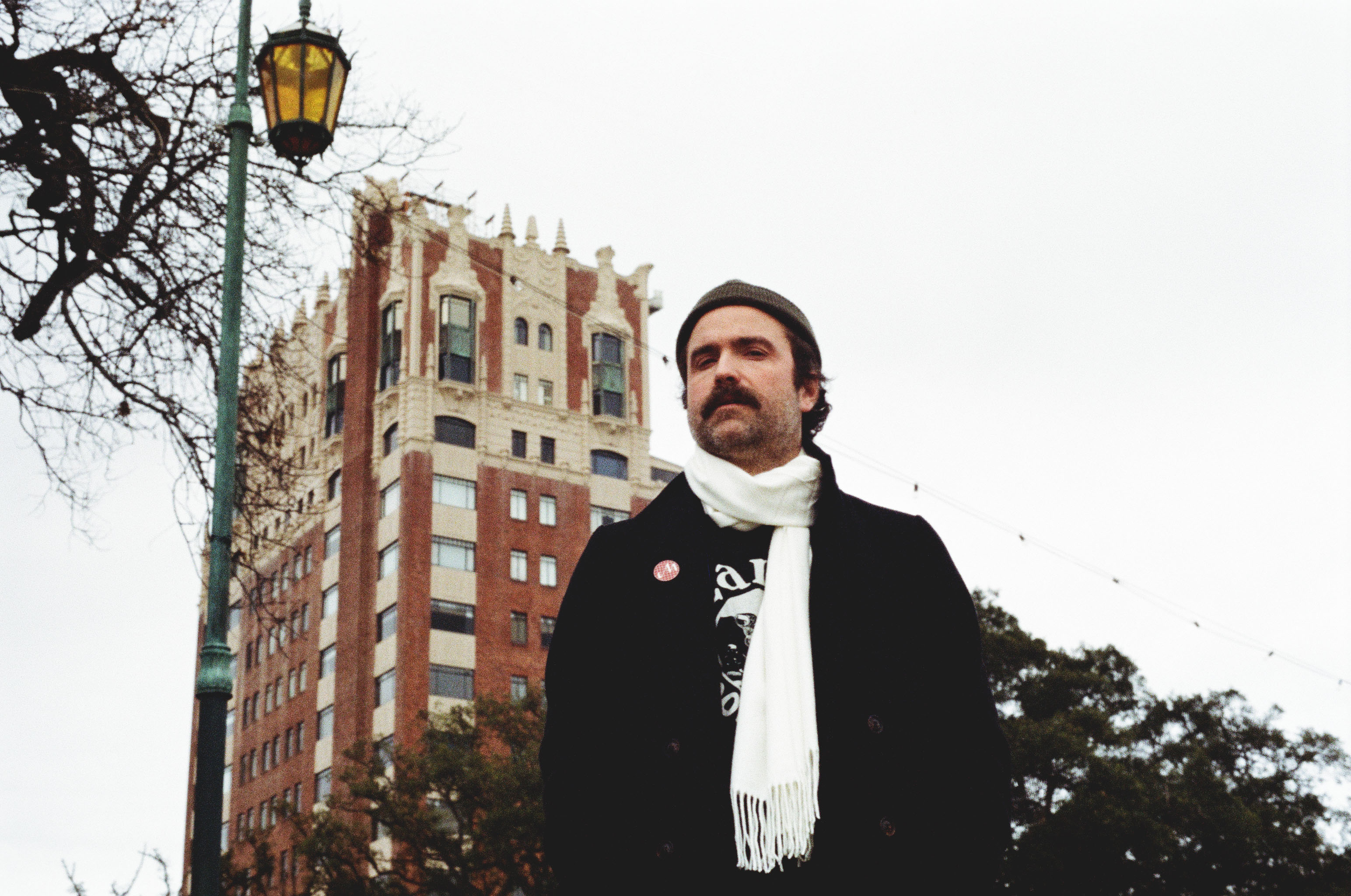
Photo by Corey Poluk
In the sprawling, neon-lit geography of modern independent music, it is increasingly rare to encounter an artist who views the long-form album not just as a collection of digital files, but as a physical and philosophical architecture. With his debut solo effort, ‘Waxworld,’ Joel Cusumano has constructed a sonic environment that defies the fleeting nature of the streaming era. This record does not merely sit in the background of a listener’s day; it demands a spatial awareness, inviting us into a curated museum of the mind where the boundaries between the organic and the synthetic are intentionally blurred.
For years, Cusumano has operated as the essential connective tissue of the San Francisco underground, a musician whose presence behind the scenes lent a certain gravity and precision to every project he touched. However, ‘Waxworld’ represents a profound pivot, a moment where the observer becomes the observed. It is an exploration of the uncanny valley of human emotion. Much like the 18th-century anatomical wax models that inspired its namesake, the music is startlingly lifelike yet frozen in a state of hyper-real perfection. It asks a fundamental question about the creative process: at what point does the imitation of life become more compelling than life itself?
The brilliance of this work lies in its refusal to take the easy path of least resistance. In a landscape often dominated by predictable lyrical structures and comfortable melancholies, Cusumano chooses to populate his narrative with the arcane and the esoteric. He reaches back through history, pulling threads from Gnostic mysticism and classical theology, weaving them into a vibrant, high-fidelity tapestry that feels both ancient and immediate. This is not intellectualism for the sake of posturing; it is a sincere attempt to find a language capable of describing the complexities of the modern human condition; a condition defined by constant flux, digital fragmentation, and a yearning for something permanent.
Musically, the album is a definitive exhibition of technical command and release. It possesses a kinetic energy that suggests a clockwork mechanism wound to the point of breaking. There is a palpable sense of urgency in the performance that suggests these songs had to be externalized to ensure the artist’s own survival. Yet, for all its power and forward momentum, the record remains deeply vulnerable. It is the sound of a person stripping away the protective layers of a decade-long career in the shadows to reveal a core that is sensitive, searching, and fiercely intelligent.
‘Waxworld’ is a reminder that the most profound artistic statements often come from those who have spent the most time listening, observing, and waiting for the right moment to speak. It is an invitation to look past the surface of things and consider the intricate, beautiful, and sometimes terrifying machinery that lies beneath.
Huge thanks to Bobby Martinez at Dandy Boy Records for the coordination and to Joel for his time.
James Broscheid: You’ve noted that wax is a substitute for skin and tissue, symbolizing change and flux. In the recording process, where is the “melt”? Are there moments on the album where the rigid structure of a pop song intentionally dissolves to match that theme of impermanence?
Joel Cusumano: Though I like to think I play with pop structure for impact and drama, I’m not sure I ever broke the structure in a meaningful way. However, I did end “Forming” by letting each instrument drift off out of key and tempo rather than fading the entire track. And it was very much an intentional move to suggest that themes of flux and impermanence, as well as to play off the “forming” suggested in the song’s lyrics. After it crescendos, the song falls apart, it seems to lose its form, rather than fade out or hit an agreed upon stopping point.
JB: You mentioned “La Venerina,” a sculpture by Clemente Susini that looks organic but is a hollow deception. Does that reflect your view of the power pop form itself? Is the catchy, upbeat melody a wax skin designed to hide the darker, more visceral lyrical organs inside?
JC: I didn’t consider it, but possibly something like that would work as a metaphor for my personal brand of power pop. To be honest, while it’s not that I mind being called power pop, I just use the term more as marketing. I’m not sure my music is really power pop. Yes, archetypal power pop lyrics contain a lot of heartbreak and nostalgic longing, but I don’t think The Nerves, for example, would have written a song like “Death-Wax Girl” or “Through a Darkened Glass”. My attitude reflects my tastes in power pop really; I think the most interesting power pop bands are the ones who draw outside the stylistic lines, like Cheap Trick (dirty sarcastic stuff like “He’s a Whore”), Big Star / Alex Chilton (“No Sex” could be a nasty, reactionary mirror of The Raspberries’ “Go All the Way”), or Game Theory (almost provocatively/punishingly musical erudition).
JB: You gave a scathing (and refreshing) take on AI as a “draining of lakes” compared to the Sibyls’ “living water.” As a musician living in the heart of the tech oligarchy, do you feel like an insurgent? Does making physical music feel like a specific form of political resistance against the predictive future Sam Altman (CEO of OpenAI), is selling?
JC: Well, I don’t feel like much of an insurgent. I think ‘Waxworld’s concerns are bourgeois in that they are mostly limited to the emotional, psychological, or aesthetic. Maybe that will change on the next album. But sure, today it’s probably a political act of some small size to make human, organic, tactile music. The more the human element bleeds through, imperfect vocals, the bending strings, the feedback, the more we can be assured it’s not AI. Art is the creative (as opposed to purely functional) application of the human mind onto form and material. If the deliberative, rational conception of the art is performed by a machine, whatever it creates is not art; it’s simply product. Furthermore, anyone who “makes” AI art is forfeiting their humanity; after all, what distinguishes us from animals or machines, or a pile of laundry is our minds. And they’re degrading their intellectual capacities. There are already studies demonstrating ChatGPT use diminishes critical thinking, creativity and problem-solving. Engage with AI for your “creativity” at your own peril, and at the peril of humanity, whose world will be made sicker and uglier and emptied of community, of purpose, by it.
JB: You mentioned that history will eventually laugh at today’s tech CEOs. If you were writing a song from the perspective of a historian in the year 3025 looking back at 2024/2025 Silicon Valley, what would be the ruin or broken temple that defines our era? Additionally, in light of people, (non-musicians mind you), using AI to come up with songs for them.
JC: My first thought would be the inhuman, bile-hued, color block condos that spring up like weeds here. To complete this clumsy metaphor, I guess these represent Silicon Valley’s worship of pure functionality and cheapness. Sorry, I feel like I’m back in college devising a shitty thesis for a paper I neglected until 3 hours before it was due! I’ve got nothing.
JB: Speaking of your 20s, you thought you were a genius but were actually “awful.” Now that you’ve found “intention, control, and precision,” do you ever miss the ignorant confidence of your younger self? Is there anything a 21-year-old Joel knew about music that the current, more learned you has forgotten?
JC: Just to be clear, I stated I was “awful” at songwriting back then. Maybe I wasn’t “awful” in totality! But yeah, I really don’t miss being 21. Maybe I’d like my hair back but that’s about it. I do think there was an excitement and urgency about being connected to new music and the scene and culture in a way that I’ve become either too complacent or too exhausted to keep up with. That’s just aging though.
JB: You’ve moved away from direct songs about relationships toward theology and prophecy. When you’re reading Dante (Alighieri, 1265-1321) or Ovid (Publius Ovidius Naso, 43 BCE – 17/18 CE), how do you decide which idea is sturdy enough to hold up a three-minute rock song without it becoming a classics lesson?
JC: I can’t remember what big ideas I was claiming to have engaged with, but it sounds like I might have been huffing my own supply. I will definitely continue to write direct songs about relationships (these are the lifeblood of pop!), but my perspective and imagery will continue to evolve. A lot of ‘Waxworld’ is about conventional “relationship” topics—love, loss, heartbreak. The most prominent songs that have nothing to do with love are probably “Forming” and “Through a Darkened Glass.” The latter reflects on a certain hubris and ahistoricism that I perceive in the culture; it uses instances of prophecy, such as the Delphic oracle’s final prophecy to the Emperor Julian. For a line in “Mary Katharine’s” second verse I had in mind Plato’s wax tablets. But I use that reference superficially as another image to describe a love affair. I’m not engaging with Plato’s “big ideas” about memory and epistemology. As far as how I decide what ideas to pilfer from things I’m reading, I think they really happen when I read something that interests me, such as the tale of Apollo and Daphne that I adapted into “Two Arrows.” I’d say anything I do isn’t any different or “bigger” than someone referencing a movie or book they like in a song.
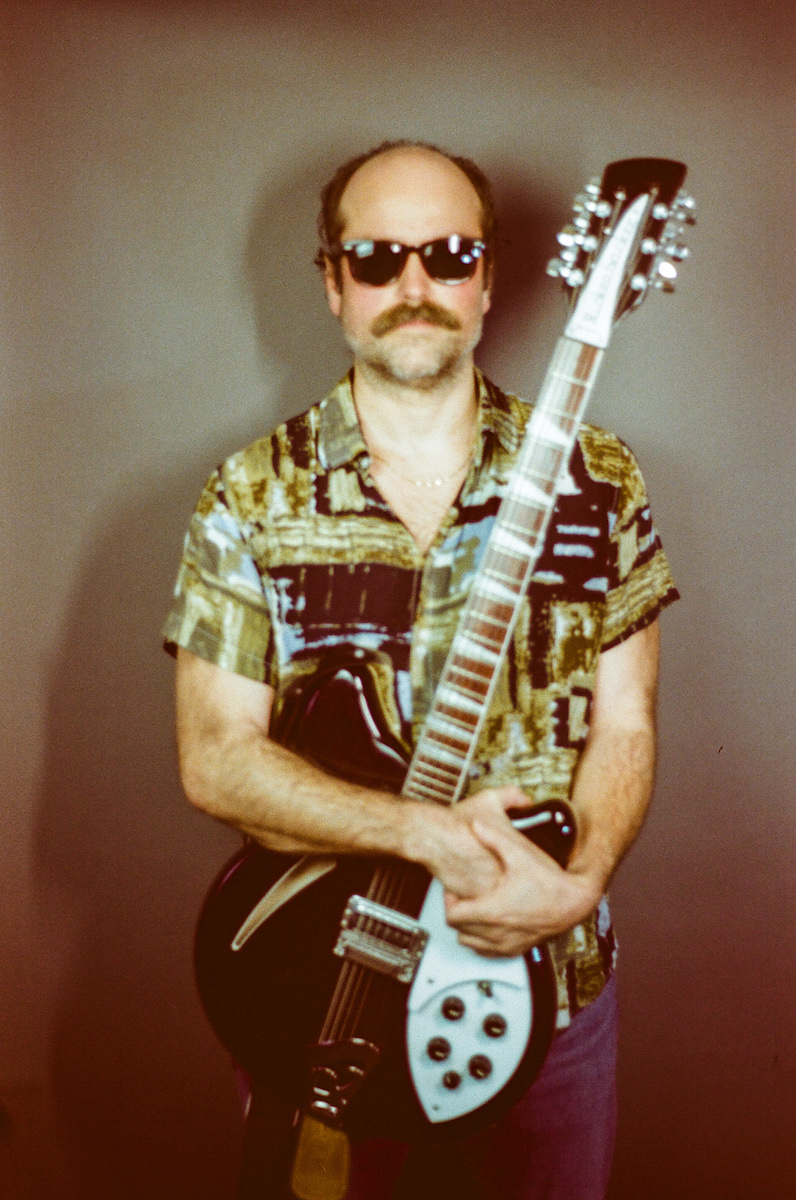 Photo by Tash de Valois
JB: You spent years building other people’s visions (R.E. Seraphin, Cocktails, etc.) to learn humility. Now that ‘Waxworld’ is a solo “success,” how do you stop that “Italian-surname-is-marketable-enough” ego from taking over? Does the “sideman” brain still chime in during mixing sessions to tell the frontman brain to turn the vocals down?
JC: A solo success! That’s going in my press materials. Well, I think that a band functions best when it’s an organism and everyone knows their role. Not in a hierarchical fashion but simply a rational one. The goal is a great song, album, performance, etc. When I was writing/recording ‘Waxworld,’ I don’t know if I even turned on my “sideman” brain. I played most of the instruments on the album, so I wasn’t having any arguments with myself that I didn’t get to play a showy solo here or there, or my part is being turned down in the mix, or whatever. Because there was no existing band coming into the recording of the album, everyone else involved was on the same page of “let’s just make this the best we can”.
JB: Absolutely use that press quote! Living in Pozzuoli as a child in an area that is literally on top of a volcanic caldera (the Phlegraean Fields), did that energy, the idea that the ground could open up at any moment, inform the urgent nature of your guitar playing?
JC: I wish I could claim that, but I don’t think so. More likely it came out of untreated mental health issues and childhood frustrations. A rough birth. But as an elementary student we did go on many field trips to the Phlegraean Fields at Solfatara (sadly now closed after several tourist deaths in 2017). So, who knows!
JB: You mentioned a reviewer critiqued your vocal pitch, completely missing your detached style. Who are the “imperfect” singers that gave you the permission to be yourself? Is there a specific power in a vocal that sounds like it’s struggling or disinterested rather than theatrical?
JC: First, I completely understand if someone is put off by my voice. It’s not meant for broad consumption, and I entirely embrace that. There’s plenty of perfectly pitched music being vomited out by Suno (AI music creator) or performed on a cruise ship, as we speak, so anyone with that type of refined taste has options. Singers who influenced me would probably be somewhere on the Lou Reed axis, let’s say Lou Reed through Tom Verlaine through everyone in Sonic Youth, etc. Elvis Costello, a big influence on my music in all respects, has a very strong but rough voice. I could probably go on and on listing everyone with an expressive but broken voice who’s made a record since ca. 1977, but I think you can fill in the blanks.
JB: I believe your vocals were described as a blend of “apathy and earnestness.” Is that detachment a protective layer you use to sing about harrowing personal topics, or is it a stylistic choice influenced by your college rock heroes like Pavement or The Church? By the way, not many artists mention Milton Nascimento these days so kudos!
JC: It’s a vocal style that’s developed organically, but it reflects my personality, and I think there are textual reasons for it too. My lyrics are often ironic or detached. I like people to be on their feet wondering if I mean what I’m saying. There has to be some mystery.
JB: In “Mary Katharine,” you mention the “tearing of the veil.” You called the idea of giving up your ambitions for a person a “fantasy” or “medicated” feeling. Do you think great art requires a level of dissatisfaction?
JC: Well, just to be clear, I wrote “Mary Katharine” when I felt very satisfied with a relationship. The “tearing of the veil” for me was the divine transition from an old life into a new one in which I was idiotically in love with a someone. Barf. But the question of dissatisfaction is actually something I struggle with. I fear much, but not all, of my best stuff is written during periods of emotional turmoil. I take it Michelangelo was also in a place of great emotional torture while painting the Sistine Chapel, right? But I think ultimately the psychological engine of great art is great passion. You can be passionate about things other than the start or end of a love affair—such as intellectual pursuits or aesthetics. I think a song like “The Sheep in the Goats” was simply a game I played trying to write a sarcastic song about the theology I’d been reading. Nothing to do with a breakup, nothing birthed from a foul mood.
JB: You’ve mentioned that “Two Arrows” was the final song written for the album, following a shocking breakup right as you were scheduled to start recording. Given that you didn’t even rehearse it before the studio, how did that lack of “polishing” affect the swagger of the final take compared to songs you’d been sitting on for years?
JC: I’m not sure it’s affected by lack of rehearsal or over-thinking/over-writing. It could be. Sometimes a song is just ready early on and overthinking it is diminishing (think the ‘Tim’ version of “Can’t Hardly” vs the ‘Pleased to Meet Me’ one by The Replacements). I think the swagger or urgency of it comes from being still deeply wounded from the breakup that inspired it. There are songs like “Push Push” and “Another Time, Another Place” that outside certain lyrics date back over a decade, I have arranged and re-arranged them over multiple demos, and I don’t think they necessarily lost any urgency because of that.
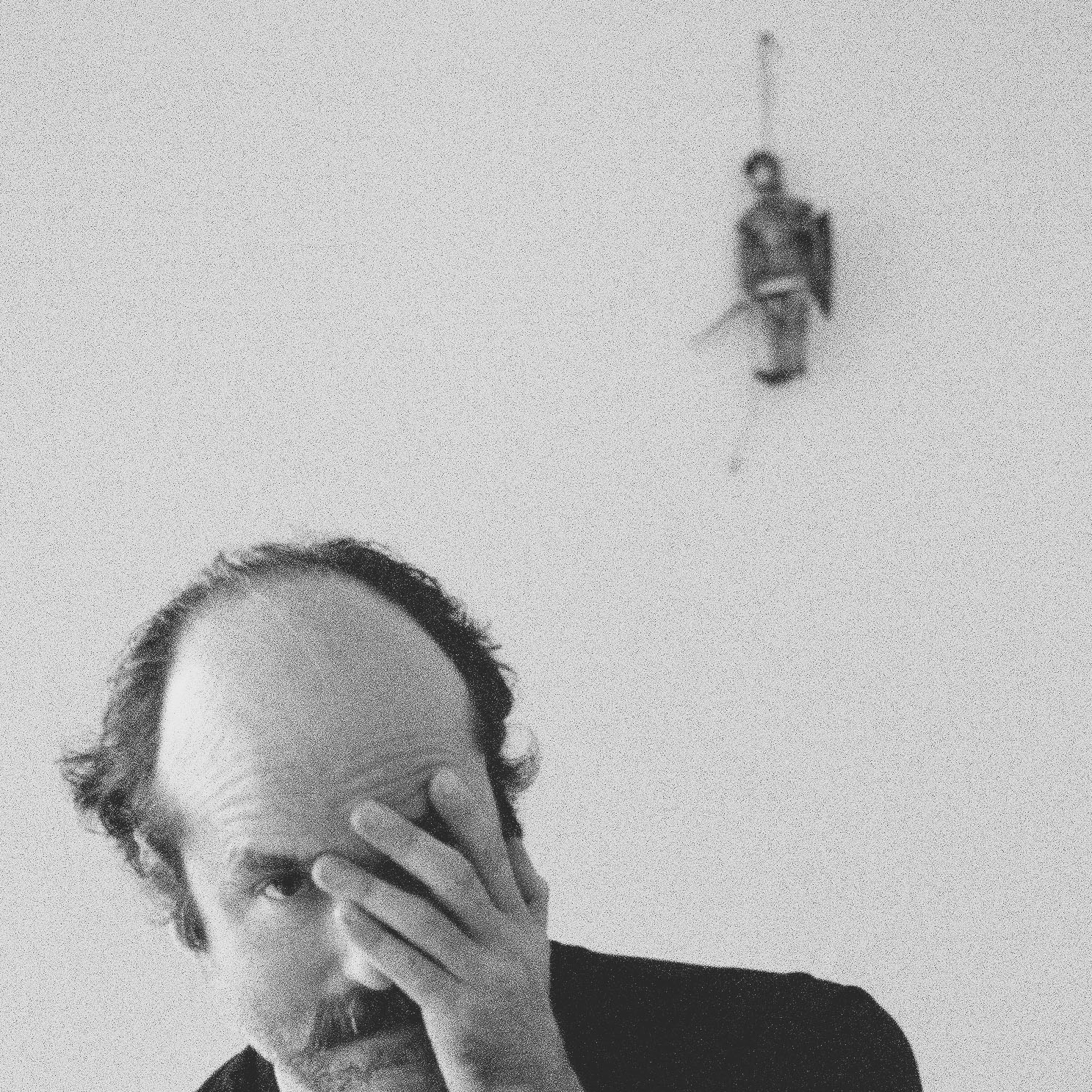 Photo by Corey Poluk
JB: You described a rapid recovery from your OCD struggle, followed not by relief, but by a sense of dread and alienation. On ‘Waxworld,’ is there a specific song that captures that exact “What now?” moment or the feeling of being a different person after hitting the ground? From your experience with OCD, is there any advice you could offer to others in the management of the condition?
JC: I guess I’d say “Another Time, Another Place” or “Maybe in a Different World” partially describe the “what now” sentiment, but maybe more in spirit than explicitly. Advice? I’d just say that recovery takes time, therapy, medication, and commitment. You do have to do some work, maybe a lot of work, maybe a lot of changing of lifetime habits and ideas, if you want to function normally. It sucks to hear that. It sucks more to have to do it. But there is help. It looks a little different for everyone. I spent two years stuck in my head with obsessions and (mostly mental) compulsions, barely able to leave the house. I relapsed on booze and pills to cope. I had to end a promising romantic relationship. It was as debilitating a case as any in the books. I thought a lot about killing myself, because I didn’t know how much longer I could endure the inner torture and the inability to have a life outside of the basic functioning to ensure I didn’t lose my job. But I recovered. Eventually! Since then, I’ve played in bands, I wrote and recorded and released this album, I’ve traveled overseas twice, I’m touring Europe this year. Not to mention I work a full-time job and all that boring stuff. It really can get better. But you have to ask for help and accept the help!
JB: Going back to “Two Arrows,” I understand it was modeled on ‘Give ‘Em Enough Rope’ era Clash but featured a lyrical nod to ABBA’s “The Winner Takes It All.” How do you balance those two seemingly opposite poles; the gritty, propulsive punk energy and the drama of high-gloss pop, without one neutralizing the other?
JC: I personally wouldn’t put The Clash and ABBA in two opposite poles. The Clash were great pop songwriters, and they had great ambitions in the studio (‘London Calling’ and ‘Sandinista!’ testify to this). They simply vary in style and precision from ABBA. I’m muddying your premise, but I agree that I love to contrast a bit of nastiness, edge, darkness, what-have-you with pop sweetness. It creates for me a sublime dissonance. Apollonian and Dionysian. That aesthetic conveniently plays to my strengths and limitations as a vocalist and guitar player, so there’s that too. Part of being a successful artist is understanding your strengths and limitations. And don’t tell anyone, but I think you can get away with overly sentimental, or just plain bad, lyrics if they’re drenched in noisy grit and wry delivery. A little hack.
JB: You’ve admitted to being grumpy after recording sessions because of the tedium. On ‘Waxworld,’ which track was the one where the obsession with detail felt most like a battle against the song itself?
JC: I certainly agonized over the chorus riffs in “Mary Katharine,” which were not written until the song was in a fairly complete rough mix form. Listening back, the dynamics seemed to flatten during the chorus. The song had this incredibly immediate opening riff, these weaving riffs and melodic bass lines happening in the verses, and then a chorus where the instruments were simply chords being strummed. I probably tried out a couple different ideas before I decided exactly what I wanted those riffs to be. I made things worse for myself because I recorded the riffs on a 6-string when I should have just done it on my 12-string (which I use for the main riff!). I believe there are four tracks of 6-string playing those riffs in a way that resembles two tracks of 12-string (Note: I almost always double my guitar tracks). Why did I do it like this? I have really stupid Brian Wilson moments like that sometimes. The doubled 6-strings posing as 12-string method served no purpose here other than to make me want to claw my skin off! Additionally, the first pass at these four 6-string tracks ended up being too noisy because of the DI method (Direct Injection – JB) I used to record them, so I had to re-do them at the last minute during the mixing process. I still didn’t think it sounded right and basically thought I had ruined the song until I sat with the final mix for a few weeks.
JB: Critics like labeling you as the “foundational architect” and “secret weapon” for bands like Body Double and R.E. Seraphin. Now that you’ve stepped into the center, do you find yourself still writing “guitarist’s songs” (focused on the fretboard and tone), or has the solo artist in you completely taken over the arrangement process?
JC: I’d like to thank those critics again for such flattering descriptions. Your checks are in the mail. That said, I don’t know if those two roles are in opposition when I’m writing songs these days. At least as I conceive them. I think my songs are predominantly guitarist songs. I write on guitar. I have scaled back the number of “improvisatory” guitar solos I do these days (as opposed to a solo that repeats or narrowly iterates on a vocal melody). But I did that because I’m bored of improvisatory guitar solos. I’m always just thinking what serves the song, period, whether I’m playing in R.E. Seraphin (college rock), Body Double (industrial), or my solo band. Sometimes that means an ego-stroking, balls out solo, and sometimes that means something subdued and rhythmic.
JB: You’ve praised the back room at Little Hill Lounge in El Cerrito. How does the vintage decor and intimate scale of the East Bay underground influence the way you want ‘Waxworld’ to be experienced live? Are you trying to recreate that “room” sound on the record?
JC: I love the sound in Little Hill Lounge, shout out to all the engineers who make that place so fun to play! But I can’t say I was trying to recreate a live room sound on the record. Honestly, as much as I love all of our cozy smaller venues in the Bay, I’m ready for the big time. Shoreline, Greek Theatre, Warfield — get at me!
JB: You mentioned that by the end of “Death-Wax Girl,” the narrator and the subject become (Gaetano Giulio) “Zumbo’s contorted, corrupted wax figures.” Is this a metaphor for the way recording a song freezes a personal trauma in place; turning a living, painful emotion into a static, aesthetic object for others to look at?
JC: To be honest, it was a narratively cheap way to end the song on a note of dramatic irony. The narrator who was attempting to manipulate and control the death-wax girl ends up destroyed by her. Predictable stuff but it works in a pinch. I do think there is power in aestheticizing painful experiences. That was part of the process of writing and recording this song. I’m more zen about everything on the other end of it. I think?
Find out more by visiting: Dandy Boy Records | Instagram
2026 Tour Dates
Jan 24: San Francisco, CA at The Knockout (with Latitude and R.E. Seraphin)
Feb 26: Oakland, CA at Thee Stork Club (with Galore)
Europe with The Goods
Sept 24: Berlin, DE at (To be confirmed)
Sept 25: Hamburg, DE at Komet
Sept 26: Köln, DE at Sonic Ballroom
Sept 27: Dortmund, DE at Traforaum
Sept 28: Bruxelles, BE at Le Chaff
Oct 2: Spain – Basque Country
Oct 3 – Oct 6: Spain
Oct 13: Heidelberg, DE at (To be confirmed)
Oct 17: Leipzig, DE at Noch Besser Leben
More European dates to be confirmed.