
Images courtesy of Painted Air
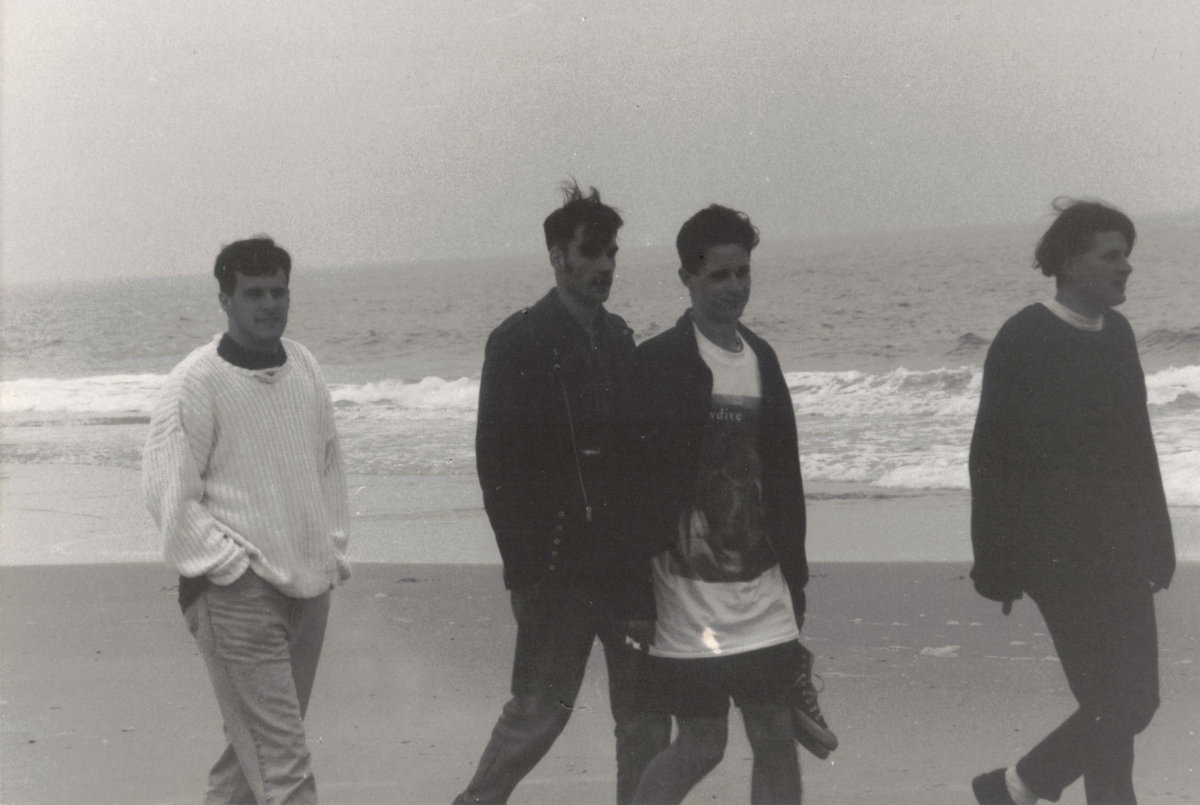
Formed in 1993 by Jay Bouchard, Ron Kuba, Mike Kuba, and Dave Carpenter, Blueshift Signal rapidly established itself as a seminal force within the independent music scene of Rhode Island. Their sonic signature, characterized by an ethereal shoegaze aesthetic, distinguished them from their contemporaries and cultivated a dedicated following.
In 1994, the band independently issued their inaugural album, ‘Seven Natural Scenes’. The track ‘Oceans’ from this release garnered sustained rotation on local radio, augmenting their visibility within the regional music landscape. Following the 1995 departure of Mike Kuba, the composition ‘Halo’ was featured on the Bedazzled Records compilation, ‘Woke Up Smiling.’ This DC-based release situated Blueshift Signal among similarly inclined dreampop and shoegaze collectives, including An April March, Lanterna and Ultracherry Violet.
A significant reevaluation of their body of work occurred in 2017 when Manufactured Recordings (an imprint associated with Captured Tracks) curated ‘Silhouette’, a digital-only anthology compiling a substantial portion of the band’s recordings. This initiative effectively redirected scholarly and popular attention to the previously under-recognized output of Blueshift Signal.
Now, Painted Air has released ‘Eventide’, marking the band’s first authorized physical release, aggregating eight of their most compelling tracks spanning their active period. Side A features four selections from ‘Seven Natural Scenes,’ commencing with the title track—a piece defined by its bombastic guitar textures and driving percussive force. “Oceans” is characterized by the confluence of woozy synthesizers and intricate guitar layering. Side A culminates with “The Secret Garden,” featuring vocal stylings reminiscent of The Ocean Blue, particularly in its stirring choral structure. Side B transitions with the atmospheric, almost foreboding nature of “Ullswater,” followed by the dynamically charged “Halo.”
The sequencing of ‘Eventide’ affords the listener an opportunity to discern the evolutionary trajectory of the band’s compositional prowess, noting the increasing complexity of arrangements and songwriting as their tenure approached its conclusion. Drawing upon the sophisticated sonic architectures of predecessors like Kitchens of Distinction and Slowdive, Blueshift Signal’s oeuvre merits the critical acclaim and peer recognition that has, until recently, proven conspicuously absent.
Thanks to Michael Vitrano at Painted Air for connecting us.
JB: My wife and I were just playing ‘Eventide’ that Painted Air put out and she immediately asked, “Who the hell is this and how did you not know about this band?” There was so much going on in the 90s, especially in underground alternative/indie scenes that bigger names really receive more recognition compared to bands like Blueshift Signal. You guys formed in 1993, right? Some online sources say 1989.
Ron Kuba: So, yeah, between ’89 and ’93. ’89 is when I moved to Rhode Island from New York. I was playing with Kip Savoie, it was just a duo, (called Grace Mansion). We were putting some music together … that sort of thing. Somehow that segment of three or four years was turned into Blueshift Signal. I’m not exactly sure how, but that would be the starting point with me coming to Rhode Island. Kip had lived in Rhode Island at the time, and of course, Jay and Dave being from Rhode Island. That’s a quick overview of probably why you’re seeing some of those dates.
JB: Yeah, I’ll stick with ’93 then.
RK: Yep.
JB: Back in the early 90s, I had a friend who was attending Brown (University), and he came back raving about having seen Velvet Crush in Providence. To me, that seemed the scene back then over there. What was the musical landscape like in Rhode Island back in the early 90s?
Jason Bouchard: It was tough. Providence is a great place. We had some great clubs, but our type of music wasn’t popular. For some reason, there were only a couple of bands who played our type of music. The area was renowned for being very rock-oriented. There’s still some guys out there playing that type of music. Not shoegaze, but more rock with a little punk.
JB: Jay, you’re right. Shoegaze was completely unpopular in the 90s. I was born and raised in Cleveland, so talk about a rock town. There were some good venues, and it had a good underground scene, but back then, classic rock seemed to be popular and always on the radio, not to mention all the cover bands playing the same songs over and over. So, discovering college radio and things like that helped me turn the corner. Is Rhode Island still stuck in that rock mindset?
Jay: Kind of, yeah. Ron, correct me if I’m wrong, but we were always overlooked and booking a show was very difficult. They would put us on a bill that didn’t make sense. It’s funny now, but it wasn’t then. Once we had a bunch of people at a show who were looking forward to seeing us, and the club said, “oh, we added one more band to open up.” We asked, “Okay, who is it?” I don’t think I can repeat the words of what the name of the band was, but they were a screaming death metal band. Not anything against that, but it was awful screeching and half the people left. We couldn’t make any sense of a bill like that. I would take anybody. I would take anything but that! So, it always was challenging for us in Providence. We would try to travel up north a little to the Boston area to Worcester. We actually had a lot of luck up there, believe it or not. Another event we played with Curtain Society. That’s a band to check out. If you haven’t. I am good friends with Roger (Lavellee).
JB: I know them. I used to play ‘Life Is Long, Still’ (Bedazzled, 1996), all the time. They’re still playing, right?
Jay: They did something about a year and a half ago or two years. I’m terrible at timetables. He works for a recording studio right now. Um, I got, I haven’t had to do any recordings. I would probably go up and see him. But I haven’t seen them play recently, though, yeah.
RK: That was a thing, too, about Providence at the time that we were playing the clubs. As Jay was saying, it was tough to get some shows, but eventually, I think we kind of broke the mold and were able to start playing a little more frequently. Between Lupo’s, Club Baby Head and shows in Boston as Jay was saying. I think too, there was a lot of unknown energy with some of the other bands that were playing at that time. One that always strikes me is Difference Engine.
JB: Yeah, say no more (all laugh)!
RK: I mean, it’s an interesting area for us to be putting our music out there for a local fan base. But again, I think there were a lot of undercurrents of what we were producing at the time in terms of sound. I think college radio really is where we were able to get exposure and start to be able to travel to some different areas. We had some good promotions happening from a couple of folks that we knew on the college radio circuit and that really gave us a little bit of better footing because of that exposure. We played some shows up and down the east coast and in some different cities at different times. I would say in the mid-to-late 90s is when we started picking up as a band and getting a little bit more of that exposure. People were hearing it and realized the sound that we were producing. At that point people were equating us to the shoegaze scene. Although we love all those bands, I don’t know that we ever thought of shoegaze as a genre classification for us. I think we were just creating the music. It was just emanating from the four of us and that chemistry just came out as Blueshift Signal.
Jay: I definitely agree with that. And you’re right, Ron, I feel like I might have been dissing Providence and I’m not. As Ron said, as we started to get established, we played Lupo’s, Met Café, etc. Then there was a local radio station 95.5 WBRU operated by Brown Broadcasting Service that started putting us on their regular schedule. We got invited to one of their parties. I was, like, oh my God, I’m like, I’m going to a beer you party.
RK: We made it!
Jay: Right? It was just really cool when we started getting that recognition.
JB: Seems to me the sound that you guys developed was completely at odds with what was considered “good” music back then! How did the band form and how did you develop such a distinct sound?
Jay: I love this story.
RK: As I mentioned, I had settled in Rhode Island after meeting Kip at school in New York. Kip and I were playing for a while, and he had other things to do in terms of his life priorities and that sort of thing. So, honestly the way things started was putting an ad in one of the local music and art scene papers at the time. Jay, I don’t remember if it was The Phoenix? I know I was looking into what was going on – who are the musicians and what are they into. So, I just popped an ad in there looking for some bandmates and Jay, I think, was the first one to respond. I forget exactly where we met the first time, but I feel like we had a phone conversation before we met, and we had a lot of similarities in terms of the music we were listening to at the time.
You know, different influences, that sort of thing. Which again, it was all college radio, out of New York. I was listening to a lot of WLIR, which became WDRE. So, The Smiths, New Order, Love and Rockets, that stuff from the early-to-mid 80s. I think Jay and I just hit it off with the sound that he had going on with the band that he was in at the time. I loved the bass with the chorus and some of the melodic bass lines that he was playing. So, I think with that, we just sort of hit it off. From a musical standpoint we had chemistry.
Then David answered the ad as well not too long after Jay and I got together. We were seeing what was happening between us because we all had similar music interests, and we just started playing together, getting a feel for each other’s talents and musicianship. Basically, that was the start of it. My family is originally from upstate New York near the Adirondack Mountains, and my brother Mike was always interested in going out and experiencing other places in New England. So, he came and settled in with me in Providence for a while. He was an excellent drummer. He and I played drums since we were children, at five or six years old, so he came down. It was an interesting situation because Dave was playing drums and had some keyboard experience and Mike was playing drums and had some guitar experience. That’s how Blueshift Signal rounded out in ‘93, with the four of us with Dave and Mike switching back and forth on drums, keyboards and guitar.
Jay: Pretty much sums it up. I was in a band, like Ron, in the late 80s, like ’88 or ’89. I was playing in a “rock” band. I was establishing my sound, and I was playing with my brother. The thing was, he was also a bassist, so we started, never arguing, but clashing on ideas. We decided you do your thing, and I’ll do my thing. I joined this other band called Euthanasia, with some local musicians. I was only 20.
These guys were in their late 20s and early 30s. I was with them for a couple of years, and then when that band split up, I saw Ron’s ad and I thought, “Now that’s my type of music!” We did have a nice phone call, and I showed up, we practiced and it was great. They came to my job and said, “Hey, we want you to join us!” It was nice. I was very excited. I jumped on that opportunity and here we are.
JB: I take it, the bands listed in Ron’s ad, you latched onto pretty quickly?
RK: Oh yeah!
Jay: You know, it was great, too, when I joined Blueshift, I had not heard of Slowdive yet. Mike Kuba, Ron’s brother, we were all living together in a little apartment and one day he goes, “I’m going to give you an experience you’ll never forget.” We shut all the lights off in the room and he puts in, ‘Just For A Day’ (Creation Records, 1991) and I just sat there mesmerized. I asked, “Who is this?” Then I knew I had met my group, you know? So, they introduced me to a lot of these other bands that I hadn’t heard of at the time and was missing out on.
JB How did you guys develop your sound? Did you always have more of a dream pop sound in mind when the band formed?
Jay: So, my brother was into a lot of other bands, like I was. Basically, I taught myself how to play bass listening to Joy Division and New Order. Then I got introduced to the Cocteau Twins and a bunch of other bands. I was a big U2 fan when I was younger, so I was always into that sound, but I could never find those types of bands around me. So, being a self-taught bassist, I would learn these bands, and the more they would introduce me to and it just opened up from there. I’m not trying to be cocky here but I kind of had that already back in the 80s. I was playing guitar with the DSP (Digital Signal Processor), the Digitech DSP. My friend had one, and I’m making all these sounds that I thought were great. People said, “You’re not gonna get anywhere making music like that!” (All laugh) Where’s the solo?” (More laughter). I loved experimenting with it and thought it produced great stuff. That’s where I think my brother liked it. My brother’s into the same music, but he just had his own thing going. That’s how we, kind of dispersed. As soon as I discovered that music, I knew I found my thing, and it just opened me up. With these guys it was like a blank canvas for me. And that’s the other thing, not only were we good friends, but they were also open to my type of music. I’d come up with an idea, I was in another band still, and they didn’t get it.
JB: Something different? What are you doing? (All laugh).
Jay: Oh, I’m different.
RK: I’ll agree with that (laughs). It’s interesting Jay, you mentioned the Cocteau Twins and reflecting on the other part of your question James, I think for me, I was listening to so many different bands at that time and I was involved with college radio as well, but I think the first time I heard the Cocteau Twins and I listened to Robin Guthrie, I think at that point and what’s interesting about this is, I was really playing drums in cover bands during college. So, similar to Jay, I was playing guitar more from the aspiration of creating sound. And you know, Love and Rockets were a big influence on me at the time with Daniel Ash and Kevin Haskins and everything they were doing as a band out of Bauhaus. Then, Cocteau Twins hit the scene and Robin Guthrie just had something that so inspired me that my drumming really dissipated quickly after that, and the guitar just took hold. I think that’s where a lot of my sound came from in terms of more dream pop, the layers, the sense of or depth of what a guitar with x amount of effects could emanate. I love Johnny Marr of The Smiths. He was a big influence on me as well. But yeah, I would have to say, once the Cocteau Twins were there, and rolling into Ride and the Slowdive came about. So, there was that gradual evolution for me for a guitar sound of what these bands were doing, what these guitars, what these musicians were creating. Like Jay said, the canvas completely opened up and I think that’s where the chemistry between the four of us really started to come together.
JB: Then there is always the discussion of what band or bands started that diversion to shoegaze. You can catch elements with The Chameleons in the 80s, Jesus & Mary Chain, Kitchens of Distinction, and make an argument there. (Both agree) But the conversation inevitably steers towards My Bloody Valentine.
Jay: It’s funny you talk about bands you hear but it is also about bands you see. So, when I turned 17, I was going to clubs to watch bands. Anybody who came into Rhode Island, we were going to see. And I’m just trying to find which band I like and the one band that really opened my eyes in wanting to be in a band was Galaxie 500. I saw them at The Living Room in Providence. I want to say 1988-89 around there, and it just blew my mind. I said, “Okay, this is what I need to do!” So right then and there, I got in a band right away. I loved it.
RK: They opened up for The Throwing Muses.
Jay: I’m getting goosebumps now just thinking about it. I’m not even joking.
RK: Yeah, you’re bringing me back … both of you!
JB: I had a similar experience when I went and saw Smashing Pumpkins in 1993 at The Agora in Cleveland. There was a band called Swervedriver opening. I never heard of them and thought the name sounded cool. They completely blew my doors off. Back then, those were the types of things that you would never hear about unless you went to a show early, listened to college radio or picked up a magazine.
Jay: There’s just so many bands I could, and I’m not going bore you to death on this stuff, go to a show and just catch a band and it would open up doors. I still love it to this day, dragging my poor wife to shows, and you know, she’s, like, “Oh, who are we going to see now?” And she ends up liking them.
JB: You mentioned earlier, that exposure on college radio was that the opening for you guys as far as the amount of exposure in developing a fan base? How did that experience influence or shape the band moving forward at that moment in time?
RK: We did get a fair amount of exposure. I think it was a really good experience, and it was really good for what we were doing at that time. It was really the only outlet other than playing live to get the sound out for other folks to hear. We had a kind of a marketer/distributor that we were working with when we put the CD out, ‘Seven Natural Scenes’, and she was able to get it to a bunch of college stations. She would make the weekly calls to see how things were going and watch the college charts and see how much airplay we were getting. As it turned out, for the Mid-Atlantic States, we had some great airplay. The Pacific Northwest we had some great airplay and then little spots in between. I feel like it really gave us the opportunity to have our music heard by, I guess, listeners who really appreciated the sound. I mean, Boston was great with some of the clubs that we played (Jay agrees), but again, it was always a little bit of a challenge because it wasn’t as popular, I think, in New England as in other places. So, that gave us the opportunity to play some of those other places. We played college campuses too. We played Rutgers and URI, a couple of times. Did some live radio shows from University of Rhode Island.
Jay: I still have that on tape.
JB: I want to hear that (all laugh).
RK: Yeah, the college music scene really was good for us. It was that fresh air and those currents that we needed just to just to get the sound out there and keep us going.
Jay: She hooked us up with a couple good shows, especially in the Boston area. I remember we did that Tanqueray concert at The Paradise in Boston. That was just a great show (Ron agrees). The place was packed. It was just wonderful. We had a lot of things going on that day. That was fun.
JB: You mentioned ‘Seven Natural Scenes’ and correct me if I’m wrong, but was that self-released?
RK: Yes, it was.
JB: Did you even bother shopping around to labels back then or were you on your own at that point?
RK: That was pretty much it. You know, none of us really had much music business experience, if any. So, we were like, “You know what? Let’s just do this.” So, we all got together and we funded it. Frank Gardner, he was kind of a recording engineer that I had run into early on in me landing in Rhode Island. Turned out he did a lot of recording and a lot of live sound with Throwing Muses and a host of other bands in the area at the time. So, I think with Frank being able to capture our sound the way he did in the recordings, and with us wanting to put something out there on our own, that was really our first step in our primary goal. I think everything that we were looking to do we accomplished really well. I know we all were thinking at the time, how do we crack the record industry and get that label exposure. I don’t think any of us ever really came up with a formula other than let’s just keep putting our music out there, keep doing what we’re doing, and we’ll see if it picks up, and if it does, that’s great. If it doesn’t, we’ll just continue doing what we do because we love it as musicians, as artists, as creators … that was our thing. Just keep going.
Jay: We did.
JB: Kudos to you guys for keeping at it, because a lot of band back then depended on a record deal as opposed to now where a lot of artists are able to self-release all their stuff digitally (Jay agrees). Back then, it was a totally different animal.
RK: Exactly!
Jay: Oh my God, if that was around, it would have been so much easier let me tell you. I remember trying to mail stuff out, just to get somebody’s attention and? I think it would have been great if we got on a label. We had a couple of label interests at one point and all of a sudden, I just remember it was at the same time we went to go see Slowdive in Providence at Club Baby Head, and we were, like, “Oh my God, we’re going to open up for this band. We’re going to go to the show, it’s going to be the most epic thing ever!” Nope, Providence blew us off. That’s when I was very mad at Providence.
JB: Still!
RK: Knocked on the mayor’s door (all laugh).
Jay: So, anyways, we didn’t get to open up. So, I’m going to the show, and I remember Slowdive was just struggling on their tour, because that’s when shoegaze started to really go away. We were getting some interest from the label Nine Inch Nails was on, I think TNT, then all of a sudden, it’s like somebody flipped the switch. It was done. Nirvana came in and then Pearl Jam. Don’t get me wrong, I love Nirvana, actually, but as soon as grunge came in, it was like the curtain went down on everything.
JB: The UK press didn’t do Slowdive any favors either. That is a good point because when you think when grunge hit the airwaves back then it wiped out it a lot of stuff people were sick of all the cock rock and hair bands and all that, but you don’t think about, the smaller bands that were even struggling back then. The genre in general was just completely gutted.
RK: Right.
Jay: There was one point we were planning, we weren’t sure how we were going to do it because we never got that far, but we were heading to Columbus, Ohio to play there, and we were going to set up some shows on the way there and on the way back. We’re like, “Okay, we’re going to do a little mini tour!” We were so excited and it just went bad. No one was interested and we realized this is not going to happen. I think that was towards the end, right before we called it quits at that point in time. Remember, that was roughly around the time we were planning that tour and suddenly, we realized that it wasn’t happening. So, it was pretty sad.
JB: Yeah, I still love Nirvana to this day. We were fortunate enough to see them in Akron, Ohio on Halloween in 93 during the ‘In Utero’ tour, and still to this day it is one of my favorite shows I’ve ever been to.
Jay: Never saw them live. You know, they put out some great stuff. I was always a fan.
JB: Ron, I’ve got a note that your brother quit Blueshift in 1995? Is that right?
RK: Let me think back to that. I think that was probably around the time ‘95 into ‘96. From the conversation earlier, he was interested in getting out and exploring a little bit, you know, being in a different part of New England. Providence was an easy move for him because I was there. We had the band going on. I think after a few years of the city life, I’ll say, he was just ready to to get back to the mountains, the Adirondacks where we had grown up. He just needed to get back to his roots and feel grounded. He ended up departing the band around that time. For all that would bring about, it definitely changed the sound and the vibe of what we had going on at the time.
JB: How did that shape the sound of the band going forward after that?
RK: So, Jay? How did that …? (All laugh).
Jay: Honestly, I think I can answer it. When Mike went to the guitar almost like full time … we were moving around, like how Ryan was mentioning earlier. You know, you might play a little drums, play a little whatever. Dave moved to the drums and Mike moved to the guitar. I felt that was the final moment, “Oh my God, this is it. Here’s our thing here!” Mike would complement Ron so well, they worked well together. At one point, we lived together. There was one day I’ll never forget it. It was the song “Between The Night & The Day,” (from ‘Seven Natural Scenes,’ 1994), I hear Mike playing it out in the living room where we lived and I ran out there and I’m trying to hook up my bass. I’m like, “Keep playing, keep playing that is a beautiful song!” and that’s how that song was made. Mike was great with that stuff. Ron and Mike just complemented each other so beautifully, so it’s like what Ron makes is gorgeous, you know, but not hearing Mike’s additional guitar to that. That’s where it kind of changed, but when Mike left, I think we were still making good music, and we had some great songs, and there’s some that I’m trying to save. I’m working with a guy right now who wants to master some of the live stuff I want to try to do something with it because there are a couple songs we made that never made it onto CD or record and they’re some of my favorite songs, and we’ve got to save those. I love them. They’re my favorite ones. Although it sucked losing Mike again, I still say, we were refining our sound, and I’ve just got to recover that stuff. I mean, we missed him, don’t get me wrong but we were still making great music.
RK: I feel too as, going from a two guitar band to a single guitar on stage. That was the thing, we always tried to create the live sound and then capture the live sound in the recordings. Even when we were recording with Frank in Newport for pretty much all the tracks, we always played live. When Mike departed, I guess I took on sort of a personal challenge and thinking back to Robin Guthrie and some of the layering that he would do. I was thought, “How can we fill in the second guitarist role without a second guitarist?” and that’s where I started to get a little bit more creative with some of the effects, the processing, routing to different amplifiers for different sounds while playing at the same time.
Jay: You had a great setup (Ron laughs).
RK: So that kind of brought us into the next stage of Blueshift at that point. Just creating more guitar sound from a single guitar in any creative way possible. We had a lot of fun with that, like Jay was saying, we had so many different ideas that we captured from practice sessions, from songwriting sessions, you know, whatever it might have been, that were really good at that time. I also think with Mike departing, it put a different energy into the band at that point, too. I think we were looking for, “Okay. Now, what? What is our next step?”
JB: Did the band play a lot of live shows no matter what you were doing on the recording side?
Jay: We did.
RK: Yeah, it was always live. Yeah, wherever we could play, even if we put our own shows on.
Jay: We put our own shows in Blueshift (Ron laughs). We played at an art show and they asked, “Can you keep your level of music volume down?” We said, “Yes, we can.” That was actually a really show (Ron agrees).
JB: But it’s meant to be loud (all laugh).
RK: Right?
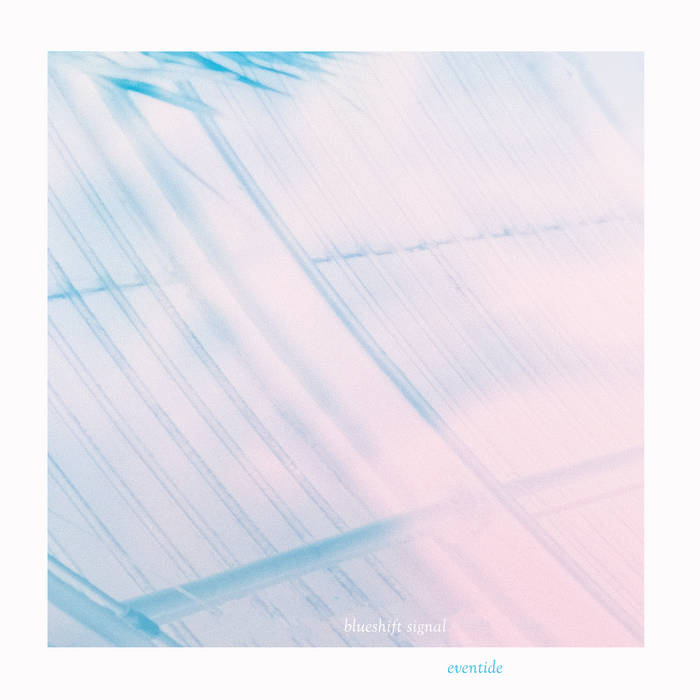 Eventide cover art
Jay: That’s one thing I’ve always respected about everything they do live is U2. I was a big U2 fan as a kid and that’s what I loved was that we could capture that sound live. We mentioned Frank Gardner. Not only was he an engineer, he was an unbelievable live sound engineer for our shows. He’s like the fifth Beatle. He’s part of the group. He would make us sound so good and we always found a way to get that captured live. Whether it’s loud, quiet, yeah, we figured a way around it.
JB: I had a really good conversation with Highspire and one of the one of the points that they were making was back in the 90s, how important it was to have just one song featured on a compilation. They said, back then, that was crucial because it helped open up their exposure to a label in Germany that ended up putting their stuff out. I wanted to get your take on Blueshift and compilations. How important was getting a track featured on a compilation?
RK: I think, for us, when we were asked if we wanted to contribute to a Bedazzled compilation, I think that was really like a milestone of what we were doing at the time. We were thinking of what we would do for a compilation. We felt like ‘Seven Natural Scenes’ was a statement on its own, and we had a lot of new music that we were writing. I think, “Halo” just somehow found its way on there. I don’t recall the exact path that it took, uh, but that for us too was definitely a milestone and a highlight just being a part of, I’ll say on a canvas with other bands and musicians of our genre? It felt good. It felt like an accomplishment where you’ve reached that next plateau.
Jay: Yeah, I thought when we were on the Bedazzled compilation, the hope was those guys would get things going and sign us on, I had visions of a lot of things. This could be it!
JB: Great label!
Jay: They were doing such wonderful things, and I loved it all. I still have that CD, and I listened to it all the time, all good stuff (all agree). I used to be a part of something that was growing. I don’t know if you have any contacts from Bedazzled. They should get going again! (All laugh).
JB: You never know that it seems like the genre is enjoying its best days yet. I think it would be a great time for Bedazzled to come back. I also really loved Burnt Hair out of Detroit. Do you remember that label?
Jay: No.
JB: They were releasing singles by Grimble Grumble, Windy + Carl, Mahogany, Auburn Lull and stuff like that. It was one helluva label. I think you would both like their releases.
RK: Yeah, definitely.
JB: I want to talk about ‘Eventide,’ Painted Air and how this project came together. The compilation is incredible. Speaking of labels doing great things.
Jay: Right. I love what Mike is doing. You might laugh but one of the things I, for some reason, am one of those record keeper type of guys. I don’t throw any music away. I don’t throw anything out. I keep things forever. One of the things I kept was my email. I’ve had it since the the day email came out (all laugh). People take a shot and they reach out and they catch me and it’s always worked. This project actually started with another label back, almost eight years ago. I don’t know if you’ve heard of Captured Tracks?.
JB: Yep, out of Brooklyn.
Jay: Yeah, they were interested in re-releasing our stuff. We started with a double album. They’re going to do this whole story thing on us. I was so excited, this is unbelievable. I think they took a different direction at some point, and they did still release our stuff they did on one of their sister labels called Manufactured Records. They do it digitally, but they did not do what they were hoping to do with the double vinyl and all that stuff. I was a little disappointed on that. So, that fizzled away. Then suddenly out of the blue Painted Air reached out to me through my email. We touched base and started talking. It took a while but we made it because he finally got it going. He had some things going on, and once he released it, we were just so excited. I just didn’t know what was going to happen, but it finally did.
JB: Did you work with Mike and track sequencing for what was eventually pressed on the record?
RK: That’s an interesting story, as well because I think Michael at first wanted to release ‘Seven Natural Scenes’ on vinyl in its entirety. And Jay and I, through different conversations with Michael and then separately asked ourselves, “Is there an opportunity here to get some of our later tracks onto more of a compilation?” So, Jay and I bounced some ideas back and forth then brought that back to Michael and he was totally open to it. We didn’t know what to expect. We figured it was going to get shutdown. Straight away he said, “You know what guys, that is a great idea!” He was all in from the moment we put the thought on the table.
That was a great opener for us, knowing that Michael, as an independent producer, was so keen on the band, on the sound, and it just really loved what we had out there and was willing to work together as a trio to curate this album for Painted Air.
Jay: Yeah, I love that.
JB: Was there a lot of back and forth as to what tracks were ultimately selected, ultimately or was it pretty easy?
RK: Kind of (laughs).
JB: A little pain?
Jay: I wouldn’t say pain. I gotta say, a lot of thought went into it. Like what represents us. You look at side one and that’s kind of ‘Seven Natural Scenes.’ Side two is more of what was supposed to be ‘Surround’ (2008), and picking the right songs. At one point, we had it one way, and then we’re like, “I don’t know, let’s switch it out with this one. It might sound even better”, and then here we are. We finally figured it out, and I love it. I love the whole transition from side one to side two.
JB: It’s pretty seamless. I think it came together beautifully.
Jay: I think so too.
RK: I feel like with the artwork, we left that in Michael’s hands. The physical look and feel of what was going to be created for the album, we kind of let him run with that. He threw a couple of ideas our way and we gave him some good feedback, but for the most part, his original ideas from what he envisioned for the album cover and artwork to be really is the final product that you’re holding now. The whole product that he created. So, I think that was really a big piece of it for us, too, because we were always creating our own tangible product like CDs. Whatever it might be, our own marketing, our own press so for somebody else to actually be a part of that creative process of putting us out there and creating something tangible was, I think, a big highlight for us, too. We never had anybody else’s creative input from a producer’s standpoint, right? It was a lot of fun.
JB: It sounds like you guys had a lot of fun when you were writing, recording, and playing live. But were there any standout moments back in the 90s that come to mind?
RK: I would have to say, Jay had mentioned that Tanqueray show at The Paradise in Boston. I think that was definitely a highlight. It had such a good energy and was something that I think we were striving for and we were able to get there and do our thing. It was almost a showcase sort of event. That was a real standout moment or standout show, at least for me, and then also playing the URI radio station studio there, they would do live shows. I think being able to get into a college radio studio and play live to a listening audience. That was, uh, that was really good getting feedback during the live show from the listeners.
Jay: Yeah, that was great.
RK: It was really good. We got some great feedback, great comments and people just loving the music that we were playing there in the studio. I think, for me, that was another one of those highlights that really stays with me.
Jay: I think for me it was opening up for Luna at Lupo’s in Providence, just coming out and there was a wall of people. I still go to that night. It was just unbelievable. I’m not sure if this is where you’re going with the question, but maybe in the studio having those types of moments. I think some of the songs from ‘Surround’ I felt in the studio was probably the most fun I’ve ever had. When we were making that, you’d sit there, and you’re getting goosebumps over what you’re coming up with. It was so much fun. You know, “Ullswater”, I think, was probably one of my favorite songs in the studio. We were just like, “Oh my God! This is so great!” The making of ‘Surround’ was one of my favorite times in the studio.
JB: In the time we have left, what’s next for Blueshift Signal? Please tell me you guys are going to get back together and play live? (All laugh).
RK: You know, there’s so much going on right now. Jay and I, and I know other people, it’s a big thing just to get your music out there now, over the Internet, there’s just so much exposure. I think with Slowdive being that keystone of shoegaze coming back, and you know, I think stronger now than before, probably in some aspects of what’s going on in that genre. I’ll speak for both of us on this, I feel like we, we do want to get together and play as Blueshift Signal, or as whatever comes out of the chemistry of whoever the musicians are playing with us. Jay has always had ideas. He’s always been recording since the band disbanded in the late 90s. I’ve been doing the same thing and more recently, grabbing some tracks and recording here and there. I feel like the creative juices are flowing, and I feel like there could be a get-together at some point in the very near future.
Jay: I think now, especially with the technology that I need to learn how to use … I’m old school, I still use cassette tape when I record (laughs). Down in my basement, I’ve got a little studio. I would love to exchange tracks and start coming up with stuff. Like he said, ever since seeing some of these bands I saw back in the 90s, it’s just like, “Oh, I gotta get going, I feel it.” I’ve gotten together with other musicians from back in the 90s, just having fun. I’m ready to do this again. I am, but it’s tough. We both have lives here, and we’re trying to work around that. He is about what an hour, an hour and a half away now?
RK: About an hour, yeah.
Jay: So, I think we’re going to take advantage of this technology. I think I gotta get on board with it.
JB: There’s bands that have members in different parts of the world, and they’re still trying to find ways to put stuff out.
Jay: I saw an interview and I won’t take long with this, but I saw an interview with Slowdive bassist (Nick Chaplin). He said when they started doing electronic, he said, “Wait a minute, where’s the tape?” (All laugh) It was still around, and I thought, “Thank God,” because that’s me. I’m still looking for the tape!
JB: Jay, you’ll be happy to know I was running around with a Super 8 camera on this last trip I went on. I had people come up to me in national parks asking, “What the hell is that thing?” as they listened to the film wind!
Jay: That’s right. I love it. That’s awesome!
JB: You mentioned going through some of your archives and and live recordings. Is that something you’re working with Painted Air on getting released? Will we see another Blueshift Signal release anytime soon?
Jay: To be honest with you. I’m open to it with Painted Air. I know he’s got a lot of projects but I would be open to it. Obviously, I wouldn’t mind doing it as self-released either. I’ve got some connections that I can use for that, so we’ll see what happens. I’m the archive guy from the band so I’ve got all the tapes. I’ve got everything from my first bands too. So, I don’t let it go and it drives my wife nuts! I’m definitely interested in the lives because I feel like there’s music that’s been missed and it needs to be shown. For me, you don’t feel good. I was a personal thing.
I wouldn’t care if it made money. I’m not into making money. I’m into getting this music out.
Just keep an eye out. Something else might come up. You never know. I’d love to keep playing and maybe some other old stuff getting released. We don’t know. We’ll see. I’m working at it.
RK: And I’m right there with you Jay. I guess the other thing, too, I’m just going to turn my camera around here for one sec (Ron turns his camera toward the coast).
JB: Wow, that’s gorgeous.
RK: Yeah, and the reason I did that is the song “Oceans” (from ‘Seven Natural Scenes’)? We’re sitting right now. Today, for this interview is where that song was written.
JB: No kidding?
Jay: Wow!
RK: The point is in Stonington Borough (Connecticut), looking over to Westerly, Rhode Island and Watch Hill. I’m looking out over the Atlantic. This is actually where that song was written, so just figured I’d share that a little bit with you.
JB: I appreciate that Ron, that’s awesome.
Jay: That is really cool.
JB: I love history of music. That’s one of my one of my things, when I go on cross-country trips is stopping by graves and historical ties to music. It is important to me to make those connections, those physical connections. Ron, with you sharing that, where you wrote ‘Oceans’, these places are sacred in a way.
Jay: Right?
RK: Absolutely!
To have a listen to ‘Eventide’ or to purchase, please visit Blueshift Signal’s Bandcamp, Website or label Painted Air. Keep tabs on Painted Air’s socials Instagram, X and Facebook.