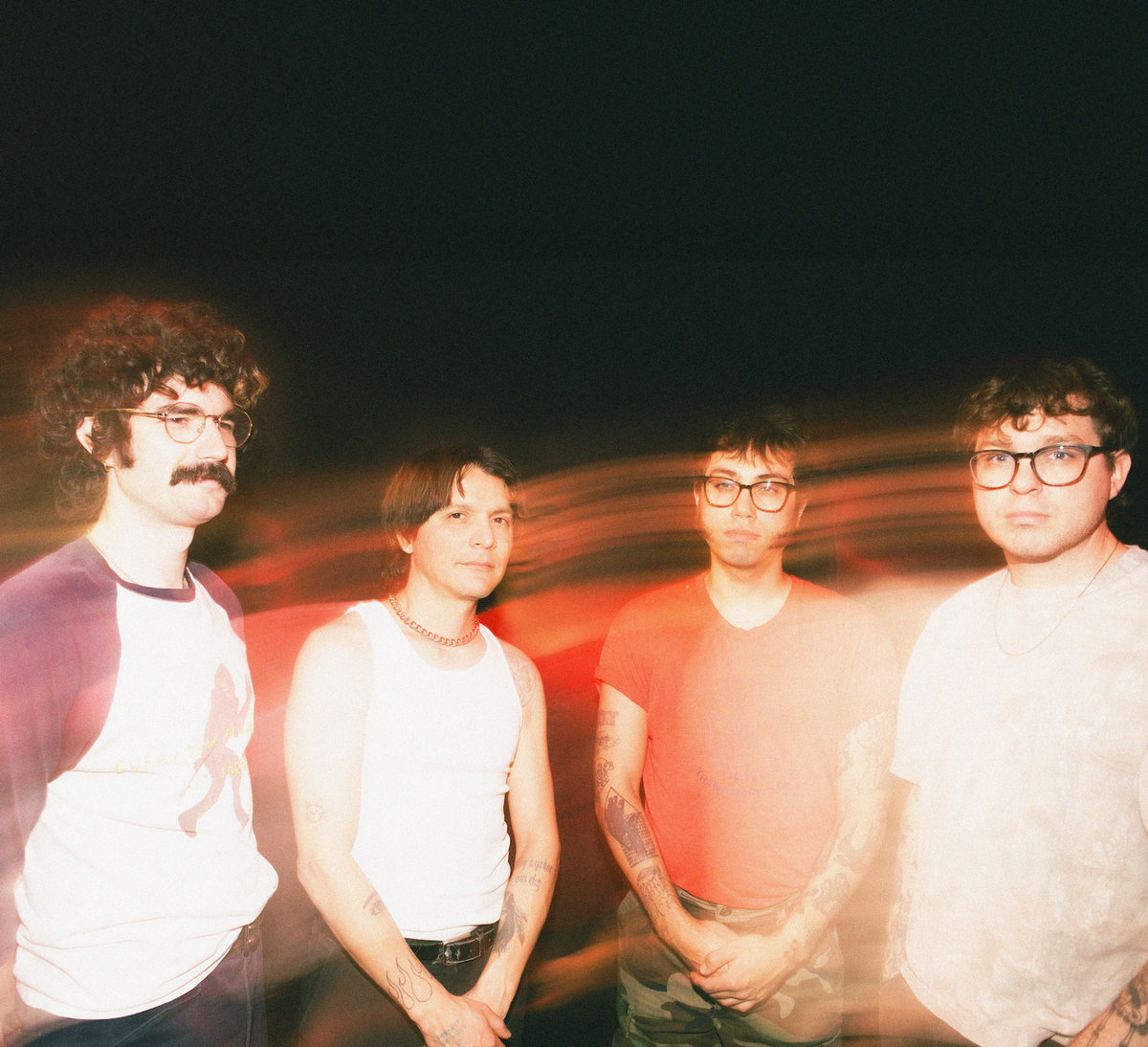
Photos courtesy of Buckets
Los Angeles-based indie punk outfit Buckets return with their sophomore album, ‘Horse To Water,’ out via Slouch Records. Known for balancing explosive sonic energy (especially live!), with vulnerable songwriting, the band, comprised of Tanner Houghton (vocals/guitar), Mitch Rossiter (bass), Sasha Massey (guitar) and Hiram Sevilla (drums), delivers a more richly textured record to the Buckets story. The album represents a major turning point for the quartet in shifting from their roots in strict self-production toward a collaborative wisdom that redefines who they are as a band.
For ‘Horse To Water,’ Buckets stepped outside their bubble by bringing in Kyle Biane and Peter Recine to assist with production and mixing. This choice has allowed the band to break away from the insular and obsessive tendencies of recording themselves. The production team encouraged the band to embrace imperfections by tracking raw emotion, and as a result, capture the immediacy of their live performances. To harness their underlying live urgency, the band tracked a majority of the album live before layering sonic details over top.
‘Horse To Water’ further expands the band’s sonic palette with a jarring contrast between heavy dynamics and delicate, folk-tinged arrangements. The band’s experimentation with sub-bass, various analog outboard gear, and effects pedals assisted in crafting moody textures, while simultaneously embracing a distinct country-style twang. This promptly opened the door for instrumentation such as slide guitar, lap steel, piano, and banjo to be incorporated into their melodic punk landscape. The songwriting itself is a wide-ranging collection built over several years, mixing resurrected B-sides with road-tested bangers and fresh ideas forged in rehearsals.
The collaborative spirit of the album extends to a notable guest appearance by Priscilla Parada (New Misphoria, Priscilla Priddy), who contributes vocals to the track “Mabian Hell” after a spontaneous jam session. With the use of outside perspectives, ‘Horse To Water’ reflects the deep trust and natural chemistry the band members have built over five years together. By balancing distinct individual influences with clearly-defined roles, the band is able to navigate creative compromise without losing any of their collective identity.
Ultimately, ‘Horse To Water’ is a testament to a band evolving naturally without losing a sense of their playful and infectious camaraderie. Named partly out of an obsession with a “horse theme” during the fire horse year (Chinese zodiac), the album balances serious artistic growth with a refreshing lack of pretense. By letting their acoustic origins transform into loud, powerful full-band statements, Buckets have crafted a record that is as physically powerful as it is emotionally resonant.
Many thanks to Tommy Newman at Slouch Records and to Mitch & Tanner from the band for their time.
James Broscheid: ‘Horse To Water’ arrives as a long-awaited sophomore album after the band’s first full-length established the band’s identity within the indie punk landscape. How did the experience of writing and recording this record change your understanding of who Buckets is as a band?
Mitch Rossiter: The process of piecing together ‘Horse To Water’ was definitely a different experience than our last two records (‘Buckets,’ 2021 and ‘Good Luck Bad Dog’ EP, 2023, both on Broom Closet Records), for a few different reasons. The writing of the album really happened over the course of a few years. A song or two were basically B-sides from our self-titled album that were never fully finished until now, some were written two years ago and have been played to death on the road, and some were put together in rehearsals leading up to our studio dates; truly a wide spanning collection of tracks. This is also the first album of songs that we didn’t self-record and fully self-produce. It was nice to have some top-notch engineers/ producers (Kyle Biane, Peter Recine), working with us. I think more than anything it taught me that the band’s songwriting chemistry has developed and strengthened over the last five or so years. It also taught me that we can trust people outside of the band to help develop and execute our vision without having to sacrifice ourselves or our art.
JB: The album expands the Buckets universe through greater instrumental variety and sonic depth. What new sounds, textures, or approaches did you explore on ‘Horse To Water’ that would not have felt possible during the band’s earlier work?
MR: The new album definitely has a darker/ louder overall tone than most of our earlier stuff. We implemented some sub-bass, various pedals and analog outboard gear to build textures across most of ‘Horse To Water’. I think the largest difference instrumentation-wise from our past work is the twang we brought to a lot of the new songs. We utilized slide guitar, lap steel, piano, and even banjo to lean a bit into the folk realm on some of the more melodic songs. It was a lot of fun to play around in the studio.
JB: The title ‘Horse To Water’ carries a strong sense of resistance, choice, and human behavior. What does that phrase represent to the band, and how did it influence the emotional or thematic direction of the album?
MR: We became a bit obsessed with a “horse themed” record when trying to put a name on the album. It’s the year of the fire horse, we have a few country-tinged songs on the record, and it just felt like the right vibe for this era of Buckets. I think there’s a lot we could say about the meaning behind the name, but we’ll leave it up to the listener to decide what it means to them and how it ties into the tunes.
JB: Buckets have always balanced explosive energy with vulnerable songwriting. How do you approach writing songs that can feel physically powerful in a live setting while still carrying deeply personal emotional weight?
Tanner Houghton: The songs being written in a more personal intimate setting, at least at the birth of them, definitely helps. I come to the band with what starts as softer acoustic songs, and because of our inclinations towards loud powerful sounds when we’re together it ends up landing in that in-between spot.
JB: All of you bring different roles and perspectives to the band. How has the chemistry between the four of you developed over time, and how does each member’s personality shape the final sound of a song or record?
MR: With a few albums and a handful of singles under our belt, I think we’ve really developed an organic flow in the songwriting and recording process. We’ve each carved out our place within the band, and I think that’s led to a lot of trust between all of us. There’s definitely a lot of back and forth on decision making while we’re in the studio crafting a song, and a lot of compromising when needed, but again, we’ve learned to trust each other and the process, and at the end of the day we won’t release anything that we all aren’t 100% proud of. We also all have a ton of our own influences, which is helpful, so we don’t necessarily pigeonhole ourselves into sounding a specific way from track-to-track or album-to-album.
JB: The production team of Kyle Biane and Peter Recine along with the band played a major role in shaping ‘Horse To Water’. What was the creative relationship like during the recording process, and how did working with Kyle and Peter help you push beyond your initial ideas? Further, what ideas did they bring to the table?
TH: First I’ll say that Pete and Kyle’s goal from the get-go was to take a record we were already proud of and make it shine sonically. We had a few meetings beforehand about wanting to keep it relatively raw and live sounding, and they stuck to their guns. They insisted I use a SM7B (dynamic microphone) for vocals when they had much “fancier” and more expensive mics laying around and ran them through a guitar distortion pedal during tracking. I think that’s a good analogy of how they helped us keep it simple and raw throughout the recording process. As obsessive people, they also helped keep us on track and encouraged me to accept little imperfections. The first two records we did were all self-produced, and when I’m sitting alone in a room it’s easy to want to re-record everything one billion times until I lose the plot. They were also endlessly supportive no matter what instrument or idea we wanted to try. Basically, gave us the confidence to execute and try ideas out efficiently. Other than that, they are both incredibly musically inclined, and were super helpful when it came to articulating how to execute certain ideas, I might just be able to hum at first, for example. All around good people, good hangs, and amazing at what they do.
JB: Indie punk often thrives on immediacy and rawness, but this album also embraces more detailed production choices. How did you find the balance between preserving the urgency of a live Buckets performance and exploring more layered studio possibilities? TH: We started by recording the whole record live, which sounded great as is, but gave us the time and room to play around with details and texture afterwards. If we thought something might sound cool, we’d try it. But the bones being us playing live I think helped preserve that energy that we felt wasn’t quite there in the previous records.
JB: The album features guest vocals from Priscilla Parada on “Mabian Hell.” What inspired bringing another voice into that song, and how did her contribution change the emotional character of the track?
TH: Priscilla, Sasha (Massey) and our friend Gibson were sitting in a living room jamming on this song and I asked her if she wanted to write a verse. Being the incredible musician that she is, I think it took her two minutes to write the third verse, and it ended up being Mitch’s favorite section of the song. Shout out to New Misphoria and Priscilla Priddy! As a band, we’ve always admired Priscilla’s talent and songwriting.
JB: The band’s music has a reputation for capturing intense emotional moments without losing its sense of fun and unpredictability. How important is humor, spontaneity, or playfulness within the creative process behind Buckets? How do you balance not taking yourselves too seriously while still taking the music itself seriously enough to continue growing as artists?
TH: We want to make music we love, period. Growth has come naturally with continuing to write and play. We never aim to be the best musicians in the room; we just love what we do and love each other. Life is so much more fun that way!
JB: When writing ‘Horse To Water’, were there specific moments, experiences, or shifts in your lives that pushed the band toward a different creative direction than the one listeners might have expected?
TH: I think in general, getting older our tastes are inherently going to change, while still having nostalgia and love for the kind of music we grew up on. But truly no rhyme or reason, we make what we want to, and think is cool at the time. I never want to be stuck to a certain formula, and we always want to stay inspired and innovative. If you love songs like “Looking” on our first record, you can listen whenever you’d like.
JB: The album expands the boundaries of what listeners might associate with indie punk. Are genre boundaries something Buckets actively thinks about challenging, or do those expansions happen naturally as you follow the songs where they lead?
MR: Having been playing together for 5+ years, I think anything we develop collectively will end up sounding like a Buckets song at the end of the day. We never really have the conversation of “This song isn’t indie punk enough so we can’t play it.” We write what we like, and each put our own spin on things, which has allowed us to explore and expand past what people may have thought of our sound in the past.
JB: You enthusiastically embrace physical media (as do I), but younger listeners often discover music through playlists before they ever experience an album from beginning to end. The new record features thirteen songs, which gives it the feeling of a larger statement rather than a brief collection of ideas. How did you think about sequencing the album and creating a complete experience for listeners from beginning to end?
MR: Thirteen songs is definitely a few more than we had in mind when we first decided it was time for a new record. But as we sat down to really figure out the energy and flow of the record, it all came together pretty organically from what was already written, or already in the works. The sequence that ended up being the final cut of ‘Horse To Water’ was actually our original sequence when rehearsing and recording the songs – it just felt so natural to us. On demo/pre-production day, we played the album straight through with no real stops, and we agreed then that it should stay as-is. While we’re living in such an increasingly digital world, I do think it’s special to be creating collections of music that are made to be listened to as a whole and specifically on physical media. We try to put everything we release on some sort of physical media, ideally vinyl.
JB: Your music often feels nostalgic without sounding like it’s trying to recreate a specific era. When you’re writing, how do you distinguish between honoring the music that shaped you and finding a voice that belongs entirely to Buckets?
MR: I’m sure people would be pretty surprised to hear our extremely wide array of influences, and probably the happenstance of how they all come together to help formulate the sound we have. We’ve gotten the “nostalgic” and “90’s” thing a lot when people describe our sound, but I think that’s really just the intersection of all our musical experiences, not necessarily a sound we were aiming to create while writing. If anything, we’ve had to rewrite certain sections of songs after-the-fact because they ended up sounding too much like a 90’s or early 2000’s band that we really wouldn’t want to be compared to.
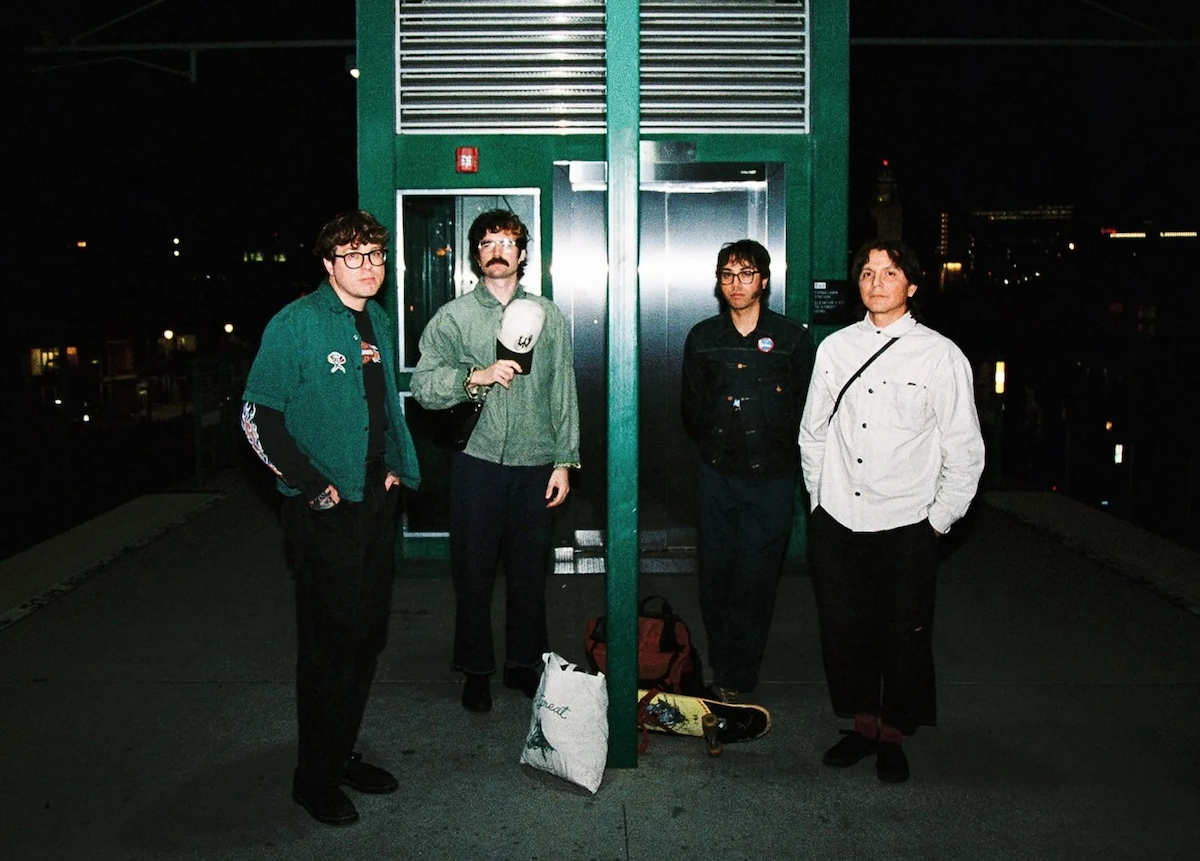
JB: Every member came to Los Angeles from a different place, carrying different musical histories and personal experiences. How have those contrasting backgrounds changed the way each of you hears the same song during the writing process, and can you think of a track where those differences became its greatest strength?
MR: I actually think the biggest strength for us as a group of musicians is that while we came from different places, we all had similar experiences in playing music growing up, just in different parts of the country/world. We all played DIY shows, were large parts of our small music scenes, and kind of had the same ethos about music. The contrasting backgrounds has definitely led to different influences when it comes to songwriting, especially when referencing obscure bands (which happens plenty) and different experiences with touring, etc., but I think at our core, we work well together since we have all been plenty at different levels for a long time.
JB: You’ve spent years building your audience through touring rather than chasing trends online. In an industry that increasingly rewards constant digital visibility, what have you learned about the long-term value of real-world community compared to algorithm-driven success?
MR: I think the main thing that we’ve realized is that you really do need to do it all and hit people from all angles to stay relevant. I’ve always thought that touring and playing shows was the most important way to gain real-world and lifelong fans, and while I still believe that, it’s obvious that a band needs to have some sort of digital footprint to get seen by people outside of their hometown bubble, and to keep up with their fanbase in different cities/states. While I think we’ve solidified a following and gained a TON of friends from road dogging it over the last few years, the internet and algorithm has certainly helped us keep our foot on the gas when we’re not able to be on the road. I’ve seen a lot of folks gain some traction on the internet over a viral clip or TikTok trend, but if you don’t do the work to actually get in front of people physically, I think that traction is relatively fleeting.
JB: ‘Horse to Water’ represents your second full-length record, which often becomes the album where a band either solidifies its identity or deliberately challenges it. Looking back on the creative process, what assumptions about yourselves did this record force you to reconsider?
MR: One of the biggest conclusions we came to as a band when it came to creating ‘Horse To Water’ was that we wanted to work with some outside engineers and producers. While we love doing things as DIY and as self-sufficiently as possible, we felt strongly that this collection of songs needed the full-on studio treatment. As mentioned earlier, from a songwriting/ development standpoint, we definitely allowed ourselves to get a bit heavier with the new tunes and also lean more into some twang-tinged melodies for certain songs. I don’t think the album strays away too much from the sound we cultivated with our first full length, but it definitely pushed us to get a bit out of the box we had built around ourselves in order to expand our sound.
JB: The band has mentioned how much you genuinely enjoy each other’s company, and that chemistry definitely comes across onstage. Beyond friendship, what are the difficult conversations or disagreements that have ultimately made Buckets a stronger band?
MR: It’s always a delicate balance of how full-time we’re able to be as a band. Living in LA, the cost of living has gotten insane, and we all work at least one job, some of us 2-3 to make ends meet. We wish we could tour constantly, play more out-of-town shows, etc., and I think it does become frustrating when we aren’t able to take every big opportunity we’re offered because of work/life obligations. A lot of the more difficult conversations have been about what we’re actually willing/able to sacrifice for the band, but I think that’s probably true for most active bands going for it right now.
JB: Your influences span indie rock, reggae, punk, African music, classic pop, and heavier alternative acts. When you’re creating together, is there ever a moment where an unexpected influence completely reshapes a song, even if listeners might never identify where it came from?
MR: I would say that happens a lot, actually. We’ll be taking a song idea from Tanner or Sasha and building it out full band, trying out different parts and doing some trial-and-error with song structure, etc., and then someone will say, “That sounds a lot like a
JB: Touring across the United States and northern Mexico exposes you to audiences with very different musical cultures. Have there been any cities or venues where the crowd responded to your music in a way that surprised you and changed your perspective on your own songs?
MR: I wouldn’t say any cities have changed our perspective on the songs, but more so changed our perspective on touring in general, basically that we could load into any venue in mostly any town and probably have our songs resonate with at least one person. We’ve played sold out clubs in LA and to nearly empty bars in the middle-of-nowhere Idaho, and we’ve gotten better responses from the crowd at the latter. It’s a lot more nerve wracking to play for a small crowd of people you don’t know than to a big room full of people who have seen you before – and luckily, we’ve been well received 99% of the time. I guess that just means the songs have legs no matter where they’re performed.
JB: Los Angeles has a reputation for constantly reinventing itself, and neighborhoods like Echo Park, Highland Park, and Silver Lake have become symbols of broader cultural changes. As artists who have watched the city evolve over the past several years, how has Los Angeles influenced Buckets creatively, and where do you see its music scene heading next?
MR: Northeast LA neighborhoods like the ones you mentioned have certainly been symbols of change. Unfortunately, with that type of constant change comes a lot of brutal gentrifications, and with several rounds of gentrification comes a nearly total lack of independently owned businesses, especially those who support the arts. LA is ever evolving and unfortunately that means losing a lot of small-to-midsize venues/ bars that allow emerging bands to play, which I’d say is the most important part of a “music city,” or anywhere that wants to boast being a creative town. It’s forced Buckets to try and carve out new places to play. We’re hoping to see a bit of a resurgence in the DIY scene with the loss of so many small rooms over the years. RIP Lot 1, Pehrspace, Rec Center, The Satellite, The Hi Hat, and all those who came before.
JB: Many independent bands reach a point where they must balance artistic ambition with the realities of sustaining a career. Have there been moments when practical limitations unexpectedly pushed you toward more creative decisions instead of restricting you?
MR: I truly think that limitation breeds creativity. Whether that be money, time, technology, or anything else, real, honest art comes from what’s available to the artist. We’ve had to sacrifice plenty due to needing to make a living outside of the band (e.g. turn down tours, self-record and produce, DIY print our merch, etc.), but I ultimately think that if we had unlimited time or resources, the band wouldn’t be nearly as genuine, creative, or ultimately real. I’d say the biggest result of this was our first two albums (self-titled and Good Luck Bad Dog EP) – we recorded everything ourselves in our apartments, at our rehearsal space, and/or in borrowed studios. While things didn’t come out completely polished, those limitations and processes pretty much helped to create the Buckets sound that we’ve leaned into.
JB: Buckets have now existed long enough for fans to have memories attached to your music, whether that’s a road trip, a breakup, or discovering your band at a festival. Has hearing those stories from listeners changed the way you think about the responsibility and longevity of the songs you write?
MR: It’s always kind of a trip to hear people talk about our songs to us in any shape or form. Like it’s wild to me that anyone even remembers the names of our songs, (laughs). But it has been happening more often that fans or other musicians will bring up aspects of certain songs, or lyrics, that have stuck with them. I know there are at least a couple of Buckets inspired tattoos out in the world, some bands have referenced how our production or song structures have influenced their writing, and I don’t think I’ll ever get over signing a vinyl LP after a show and hearing about someone’s favorite song from that record. I’m not sure it’s changed the way we think about the songs, but it’s certainly validating.
JB: Looking back to the band’s formation in 2020, what advice would today’s version of Buckets give to the four musicians who were just releasing that debut EP, and what lessons would you deliberately let them learn the hard way?
MR: My main advice to anyone who wants to play music as more than a hobby is that you need to be down for the peaks and the valleys of your career. No one’s music career is linear, and while you might play for a packed room one day and an empty room the next, you need to be okay with it, because that will likely never change. Also, if playing music is what you really want to do, you need to invest in yourself and your art, because no one else will care as much as you. As far as learning something the hard way – I’d say get in the van and go on tour A LOT without thinking too much about it. There are many challenges that will pop up along the way, but you’ll never make it in music if you can’t figure out how to road-dog it.
JB: Independent music often thrives because of genuine connections between bands, labels, venues, and local scenes rather than major industry infrastructure. As Buckets has grown, what responsibilities do you feel established independent artists have toward the next generation of musicians trying to break into the same communities?
MR: Active indie artists have a responsibility to keep the scene going, which means booking new bands as support for shows, lending gear out, passing along contacts, and attending shows they aren’t a part of to support emerging acts. Big cities like L.A. are known for being very competitive when it comes to the music scene, but I think independent bands do have a duty to each other to help lift one another up, rather than try to ‘big dog’ each other. A thriving independent scene is good for everyone.
Upcoming Tour Dates:
Thu, Oct 22, 2026 – Nashville, TN at The Blue Room
Fri, Oct 23, 2026 – Chattanooga, TN at JJ’s Bohemia
Sat, Oct 24, 2026 – Atlanta, GA at The EARL
Sun, Oct 25, 2026 – Birmingham, AL at The Nick
Tue, Oct 27, 2026 – New Orleans, LA at Chickie Wah Wah
Wed, Oct 28, 2026 – Houston, TX at White Oak Music Hall
Thu, Oct 29, 2026 – San Antonio, TX at The Lonesome Rose
Fri, Oct 30, 2026 – Austin, TX at Mohawk
Learn more links:
Buckets
Slouch Records
Bandcamp
Instagram