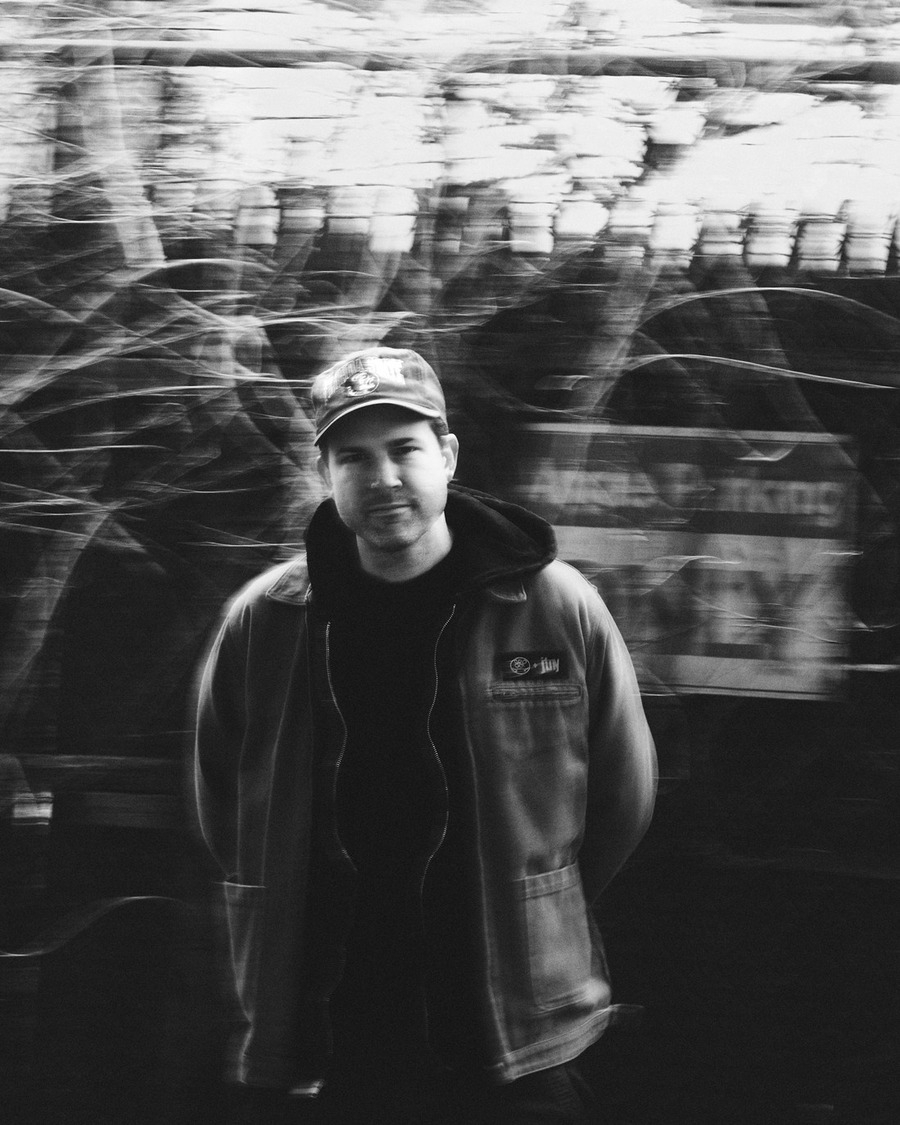
With every new release, Wild Pink submits another “album of the year” candidate. The band’s latest, Still Coming Down, will surely top many lists as John Ross continues to write observational songs that paint pictures of everyday life, set atop a musical score that carries the familiar refrains of the songwriter’s Florida upbringing alongside his relationship with the Asheville, North Carolina sound. With Tom Petty and Bruce Springsteen as touchstones, and contributions from MJ Lenderman with bandmates Xandy Chelmis and Landon George, and Meg Duffy (Hand Habits), Still Coming Down plays like a weekend afternoon in the rural countryside that leads into a late night at a dive bar on the outskirts of town.
Ross has lived in New York City for most of his adult life, and that’s where he joined me, keeping an eye on his young son, who played just off-camera throughout our conversation.
I picked up the Wild Pink discography starting with ILYSM, so I’m three albums deep into your catalog, not six. Knowing that, can you fill in a blank for each of the last three records: what era were you in for ILYSM , Dulling the Horns, and now the new one, Still Coming Down?
JOHN: Oh my god, I don’t have a good answer. I don’t know. I’m in my rock era, I guess. I think that record started on Dulling the Horns. ILYSM is a very different album, in every way. I feel like ILYSM was pretty precious, emotionally heavy and sentimental, and the music didn’t really lend itself to playing live. So I just wanted to make music that was fun to play live, starting with Dulling the Horns, pretty much.
Do you go into each album with a template, ready to go, or is every album almost like you could change the band name after each one?
JOHN: I would say each one is kind of informed by how I feel about the last one. I think this record is pretty much on the same wavelength as Dulling the Horns. But Dulling the Horns was a big attempt to get away from ILYSM.
ILYSM was my introduction to you, and it definitely hit a vibe, I was very into the whole sound of it. But then Dulling the Horns came out and I’m like, “Is this the same band?”
JOHN: Yeah. I had considered ending the band after ILYSM, or just coming up with a new name just because they were so different. I felt so incredibly different after that record. I’d considered changing everything.
I don’t know much about the people who play with you. Is it always the same lineup, or are you constantly bringing in different people to record?
JOHN: My drummer, Dan Keegan, has been with me since 2016, he’s played on every full-length record. He’s definitely the drummer of Wild Pink. Otherwise, it’s a pretty rotating cast of characters, there’s usually a lot of guests joining for a song or two on each record.
This record was recorded in Asheville. Was that the first time you’ve recorded there?
JOHN: Yeah. Alex Farrar, who runs that studio down there, mixed Dulling the Horns, but I recorded that one in New England with my friend Justin Pizzoferrato. Everything’s been recorded in New England, except 2021’s A Billion Little Lights, which I did in LA with an engineer-producer named David Greenbaum.
So how did you end up in Asheville for this one?
JOHN: The label I’m on, Fire Talk, Trevor, who runs it, suggested Alex Farrar for mixing when I turned in the Dulling the Horns mixes. That’s kind of how the connection started. I really liked how he mixed it, I liked his approach, and I just wanted to try recording down there for the next one.
When you’re there, are you hunkered down recording the whole time, or do you get free time?
JOHN: There’s business hours, I guess. Alex has hours he likes to work. But if you stay in the Airbnb attached to the studio, you also have access to it after hours, so it’s pretty much as much as you want to be in the room making music. While we were down there I wanted to bring in a piano player, an accordion player, extra instrumentalists I had no connection to, and Alex just made some phone calls and people would show up and play on the record. There’s definitely a very strong community down there. I didn’t go outside of walking distance of the studio, though. It’s in West Asheville, which is a small enclave with kind of a small-town feel. There’s basically just a main strip, with bars and restaurants, and after we’d wrap up I’d get dinner or something.
I can’t place where you’re from at all by listening to you. Are you born and raised in New York City?
JOHN: No, no, I’m from Florida, I grew up there. I moved to New York fifteen, sixteen years ago and got a job working in music as a composer of TV commercial music. That’s kind of what brought me to New York, I wanted to be a film composer, TV composer. I really like Thomas Newman, who scored a bunch of great movies, like American Beauty and Road to Perdition. I moved to New York and got a job doing TV promo music, commercial music, and then just kind of washed out of that, and worked a bunch of odd jobs while I started writing my own songs.
Was there ever any point where you thought about packing it in and moving back to Florida?
JOHN: I went home for a couple months, right before I started Wild Pink. It’s a long story, but I moved back and was walking dogs, worked at a film digitization lab, just kind of getting by and trying to tour and write songs.
Did you have bands that sounded like Wild Pink back in high school?
JOHN: Definitely. I started writing songs when I was like twelve, just nu-metal instrumental riffs. When I got into junior high I was in a punk band, and I was in bands all through junior high, high school, and college. But when I got to college, I just thought, I really love film music. I don’t really identify as a New Yorker, even though I’ve lived here longer than anywhere else, but if there’s any region in the music, it’s probably Florida. I guess I’m thinking of Tom Petty. He’s like a North Star songwriter for me, someone from Gainesville, Florida.
Was Petty sort of in your musical blood just from being in Florida, or did you go through the nu-metal phase, the punk phase, and then come around to him?
JOHN: It was definitely the latter. My first obsession that I can remember was Nirvana. I was very deeply obsessed with Nirvana growing up. By the time I picked up a guitar at age twelve, my interest in Nirvana had expanded into what was going on at the time, which was Korn and Limp Bizkit, that’s why I was playing nu-metal riffs when I started playing music. Then, when I got a little older, my mom turned me onto Jackson Browne.
I grew up on the radio too, so Tom Petty was never unfamiliar, but I think I was in my thirties or forties before I really sat down with his stuff. You take him for granted as a kid because he’s just always on the radio, and then years later you go back and the deep cuts are amazing.
JOHN: Totally. Tom Petty was big, Bruce Springsteen very important to me too, Jackson Browne, Bruce Hornsby as well. The classic rock guys and their second act, I guess. That’s a special sweet spot for me.
When you’re writing lyrics, are you more first-take-final, or do you spend a lot of time revising?
JOHN: The words are definitely the hardest, most laborious part, it’s what holds up the whole writing process, it just takes forever. I write, then edit. I’m pretty tough on myself with lyrics, so it definitely takes the longest. I’ll play around with musical ideas without getting too deep, just to have something at the ready, so that when I’m able to string together some words I don’t despise, I can get a spark of creativity going.
I’ve talked to other songwriters like Aaron from Fust and Justin from Sluice about their lyric writing, and I’d describe both of them as, like, NPR’s “This American Life,” snapshots of the everyday, just what they see around them. I feel like that’s sort of the way you write too.
JOHN: Yeah, I think that’s fair. I kind of vacillate between mundane slice-of-life and something more vague, impressionistic, describing things that are maybe purposely vague, at least to the listener. But yeah, definitely some “This American Life” in there, for sure.
Do you think of yourself, as a lyric writer, as an observer, just passing along stuff you’ve noticed? Or a storyteller, setting a narrative?
JOHN: The former, definitely, more than the latter. I don’t feel like a storyteller or anything like that, I just don’t know how to do it and not hate it. I think Bruce Springsteen is a storyteller, and there’s plenty of great storytellers, but I don’t even know how to do it. Wouldn’t even try.
When I interviewed Aaron from Fust, I asked him about the names he drops into his songs and I assumed those were real people. He told me they’re not; he writes those songs to convey an emotion, and it makes more sense with names attached, because then the listener assumes it’s real. Do you ever do anything like that?
JOHN: Yeah, I’ve certainly written a lot of songs where I say “you” instead of “me” when I’m writing about myself. But even when I’m being vague, I’m still drawing from stuff that’s real in my life. I think it’s hard for me to get attached to a song if it’s not directly from my life.
I was thankful for Bandcamp having the lyrics to “Box Store,” because I was trying to figure out the name you mentioned, William Fichtner.
JOHN: Fichtner, yeah, William Fichtner. He’s in The Perfect Storm, I watch it all the time. He’s in Black Hawk Down too. He’s just a very cool actor.
That goes back to what I was saying about the small, observed detail. You drop his name into a song, and it makes me wonder why. There’s probably nothing special about him other than that he’s someone you recognize from movies you like.
JOHN: Yeah, I don’t know what emotion it elicits to talk about William Fichtner in a song. I think it’s just very much documenting something that’s mundane and true, and often, after the fact, I’m kind of surprised to find meaning in a song. I’m like, “oh, I guess that was on my mind for some reason.” It has happened many times where afterward I find something that was maybe subconscious, that I was trying to communicate.
Three songs are already out ahead of the record, the ones people are already familiar with. Are there songs you hope people catch on to that aren’t going to be singles?
JOHN: Yeah, well, we’re releasing the final single, the week the record comes out, and it’s the title track, “Still Coming Down.” I think that’s my favorite song on the record. I’m most excited for people to check that one out.
“Plates Keep Spinning” and “Like Water,” back to back. I think that’s my current favorite stretch of the record.
JOHN: Oh, amazing. Thank you.
I always think of it like when you go to see a show, and everybody knows the hits, but as a fan you’re hoping they play that one deep cut.
JOHN: Totally, yeah. I’m bad at playing songs that maybe are streaming better than others. When we’re supporting a record, we’re often playing songs we’re hoping to get ready to record that aren’t out yet. But if you come see us in the next six months, we’re playing most of this record, most of Dulling the Horns.
What does the touring schedule look like from here?
JOHN: We’re doing a headline tour in Europe starting the end of this month, then a U.S. run supporting Shaky Graves. When we get back from that, we’re doing headline shows in the eastern U.S. in December, and then we’ll be announcing a big U.S. headline tour for the spring.
How old is your son?
JOHN: He’ll be three next month.
Does that make touring harder now?
JOHN: Yeah, it’s pretty brutal. It definitely makes me second-guess it all. He’s just growing so much, so fast, the thought of being away for a night, or four weeks, is really tough. I wake up every day so excited, we just play, it’s so fun, I don’t want it to end. And I hate going away, by my own design. Kind of crazy.
Do you think of album covers as representative of what people will get when they listen, like a movie poster, where what you see is what you get or are they just images you liked?
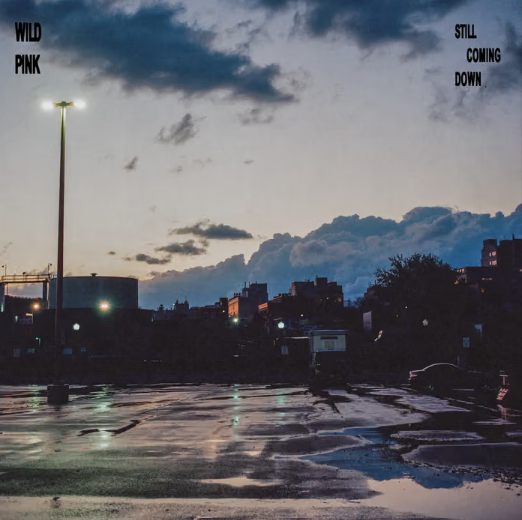
JOHN: I’d say it’s a mixed bag. ILYSM is probably the most representative of the music. It’s me, with a little light on me in a very dark room, pretty accurate to what was going on. I had cancer at the time, it was a pretty crazy time. This record, and the last one, were photos and art that friends of mine made, that I felt worked well with the music, but maybe not the way ILYSM was, where the music and the art really informed each other. For this one, my friend Catherine Rehwinkel took the photo, and I really loved it. Maybe it does play with the idea of Still Coming Down. It looks like it just rained, you can’t really tell what time of day it is. It could be six in the morning, or six at night.
In terms of the title, what comes first, the title or the song?
JOHN: I like, on a record, to have a song where the title is a lyric in the song, and the name of the record is the name of that song. Yolk in the Fur does that, A Billion Little Lights does that. I guess they all do. I like Still Coming Down for this record because it’s not very obvious what it’s about. It is a lyric from the song, but it’s talking about love, like rolling thunder. The big one is still coming down, like a big thunderstrike. It’s got some kind of infinite foreverness to it. It could also just be about rain, not really sure.
Was there a song that didn’t make the record this time?
JOHN: We had a song cut from this record, first time that’s ever happened. I was still pretty bummed about it. Julia Steiner from Ratboys sings on it, it’s called “Mask,” and it’s about the movie Mask, from the early eighties, with Cher and Sam Elliott. The chorus of the song is basically the chorus from “If I Could Turn Back Time.” We used the chorus, but we wrote new music around it. We had to get permission from Diane Warren, who wrote that song, and she was not having it. So we cut it from the record, but if you catch us on tour, we’ll likely be playing it.
I close every interview with the same question. There are songs that, when you hear them and close your eyes, take you somewhere from your past. Is there a song like that for you, something that instantly puts you back in Florida, maybe skating down the street or something like that?
JOHN: When I hear Korn, I’m taken back to seventh grade, for sure. If I hear the song “Despicable Dogs” by Small Black – it’s Small Black and Washed Out, they did the song together – it takes me back to a rooftop in Brooklyn, ten, fifteen years ago.
Do you ever think about how someday somebody’s going to have that same relationship to one of your songs?
JOHN: That would be so cool.
That’s what’s so cool about music, right? Once you put it out, it’s up for grabs.
JOHN: Up for grabs. The listener’s, yeah.