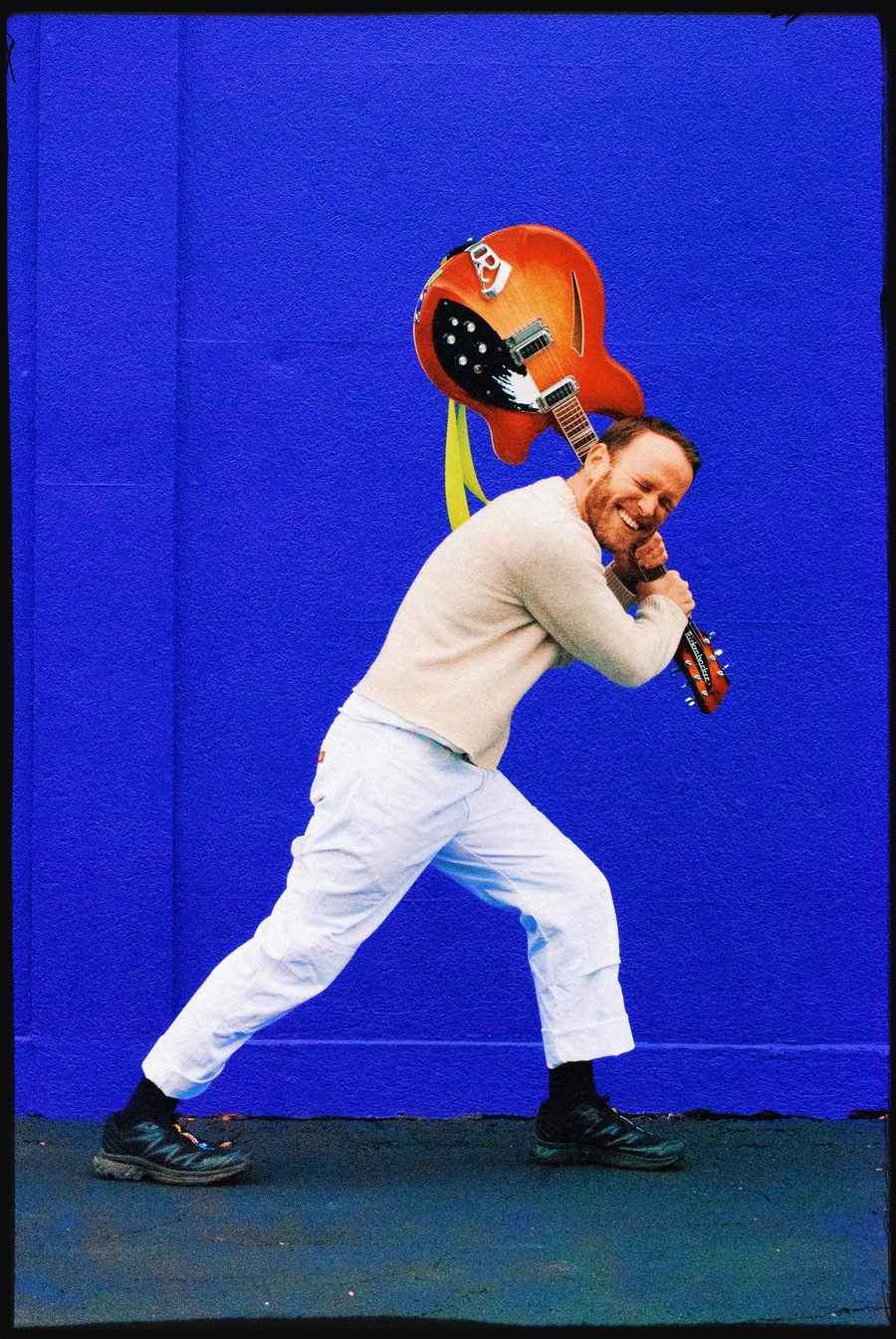
Photo by Nick O’Reilly
Real life took an unexpected turn for Museum Mouth’s Karl Kuehn in 2018. After years of playing the dual role of singer and drummer in the South Carolina emo trio, Kuehn was called home to take on the most important role of his life – caregiver. Kuehn’s mom, Karen, had suffered six grand mal seizures in a row resulting in permanent brain damage and a very grim prognosis, leaving her only child to put everything on pause and focus on his mother’s comfort. While doctors had initially said Karen had anywhere from a week to a year left to live, she made it to January 2021. During those compacted years – which may have felt like eternity due to the shutdown caused by a global pandemic – Karl was able to spend quality time with the woman who had raised him, often through difficult times, and experience a rollercoaster of emotions.
It was during these early days of Karen’s illness that Karl began writing songs that appear on his first full length using the Gay Meat name. The songwriting allowed Karl to work through the complicated feelings of watching your closest friend slip away and being powerless to do anything about it. And while the nine tracks that make up Blue Water were written in isolation, when it came time to record, Karl was joined by friends like Jeff Rosenstock, Chris Farren, Illuminati Hotties’ Sarah Tudzin, and Rnie’s Lamont Brown.
The grief journey never ends when losing a close family member. I’ve experienced my own devastating loss, my 17-year-old daughter Liv passed away suddenly in 2018. While Karl has mixed emotions in celebrating the release of this extremely intimate and personal collection of songs, talking about the circumstances that led to the album has been therapeutic. The album is more than just music, it’s an open book into Karl and Karen’s life and relationship, a view into the three final years the mother and son had to spend together, the moments of humor, the moments of heartbreak.
I appreciate the candor and conversational tone this chat with Karl had and while I’m never happy that others have to experience the grief associated with losing a loved one, I’m glad to get to know Karl on this level.
When the album comes out, there are going to be those who listen who haven’t gone through any sort of grief journey like you’ve gone through and they’ll like it because of the music. But, for people who have experienced grief, I think it’s going to mean a lot more.
KARL: From the get-go, when I decided that I had enough songs for it to be a record — when I decided I was going to do the whole thing, not just release demos of these song ideas, but track it for real and release it and really make it something I put my whole guts into — I was very much like, this record is gonna be for the people that get it. That’s all I can ask for. It’s kind of a mountain in and of itself in terms of subject matter, so not everyone is gonna scale the mountain, and some people will scale it for different reasons. With any luck, they’ll just like the songs and be drawn in sonically. But for the people that see the woods for the trees — I’m just very excited for those people to hear it, because I don’t think I could have navigated all of this that I experienced without having already consumed some art about this sort of thing. It’s for the girls who get it. It really is.
Are you prepared for people to come up to you after shows, want to talk to you, and want to share their grief with you?
KARL: I am. I fully am. I was filling in on drums for my friend Chris Farren two summers ago, and we were listening to the roughs of the record then. He’s a veteran in the music industry and one of my best friends, and he was like, “are you prepared to talk about your dead mom from now until the end of time?” And I was like, “I honestly am.” My mom was an icon. She was everything to me. I’m always saying that the things about me that people love right off the bat are all just because of her. Of course I’m ready to talk about her for the rest of my life — she was the most important person in my life for so, so long, and honestly, probably forever. And then it’s also because grief is such a crazy topic. Calling it taboo is almost not doing it justice — I do think there are conversations about it that exist in the mainstream, but the way people talk about it is so complicated. It really is one of those specific things that you have to have experienced, at least to some degree, to understand. Grief is one of those things where the more you’ve actually lived there, the more you can really explain it, or understand it, or just speak its language.
After losing my daughter, I attended two different Child Loss support groups. Those who have gone through a loss the way we have, we speak a common language that other people who haven’t been through it don’t speak. I would often say to people in my groups that I hated that I knew them, but I’m so glad I knew them. I felt closer to some of the people in those groups than I do to some of my own family.
KARL: Anytime you experience something like this and you put the wheels in motion to seek help, I think it’s so unbelievably important. So many people don’t try. I think from the outside looking in, when all this happened with me and my mom, I thought I was never gonna recover — but I feel so proud of myself for having recovered. I’m fully on the other side of a crazy pendulum swing, and I feel so much stronger for it. It’s so freaky when you’re deeply in the throes of it, and you hear someone vocalize the way that you feel in a way that you could not put into words. It’s so jarring, but then it’s like, “okay, unfortunately you and me and everyone else here in this group — we’re bonded for life because we’ve experienced this.” I had a lot of people in my life when everything first started happening with my mom — before she even passed — who were just afraid to interact with me because they couldn’t relate to the feeling. It got worse after my mom passed. You send your condolences, and then you’re afraid to run into me. I think it’s really important to try to isolate the grief that you’re feeling, process these new insane feelings you thought you’d never have to experience, and then get out in the world with a new set of tools. That’s just the smartest way you could do it.
Did you find that there were people coming out to support you that you didn’t expect, and then people you did expect not being there for you?
KARL: That’s such a great question. My mom passed in 2021, so it was kind of a simulation of reality to begin with. I had made a bunch of new friends during COVID because I’d started playing Mario Kart online three times a week with a bunch of people who were strangers to me, and it was wild how quickly they all mobilized to be there and so supportive. It was shocking and very beautiful, and I felt very lucky for it. But then, maybe a year after my mom had passed, it was interesting to analyze how quickly they all mobilized — and yet people I had known for years still hadn’t really touched base. I don’t judge the people that were slow to respond, because it’s such a complicated thing.
We have a neighbor who I’m friendly with, but not someone I see regularly. After I lost my daughter, he asked if I’d like to go grab a cup of coffee. We went to a restaurant and talked for about five hours. He really stepped up and gave me a safe space to talk. We haven’t gone out for coffee since then, but his timing couldn’t have been better. On the other side, I had a few close friends say that my loss made them look inward at their own families and reprioritize things. In doing so, it took them a while to reach out to me and I totally understand that. I didn’t hold any hard feelings against them. My loss was sudden, yours played out over a few years. I can’t imagine what you were going through every day, watching your mom’s condition worsen.
KARL: With loss, it’s so hard to quantify what is good or bad about the scenario, because it’s obviously such a net negative. It’s so heartbreaking. But I do think that from the outside looking in, a lot of people would be like, “you experienced this for years, that must have been so hard” — and it definitely was. But what’s interesting is that now that it’s years in the rear view, I loved that time, and it’s so crazy to say, because it was my rock bottom. It was the worst thing I’d ever experienced. But my mom being who she is, and me being who I am — someone she raised — we really made the best of it.
Something that’s come up a few times in the press cycle for the album, but that I don’t really lead with, is that before my mom got sick, before she suffered her brain damage, we were in a pretty bad way as a duo. My whole life she was the most important person in the world to me, and she lost her husband in 2013. From probably 2014 through 2018, when everything happened with her, we were on a really rocky road, because I think her grieving her husband had really broken her and turned her into a person I didn’t really recognize. I was trying so hard to be the best son I could to her, but she was just in a bad way. After she suffered her brain injury, once she got stable — after about a month and a half in the hospital, and then a couple months into being in the nursing home — it just felt like a bonus round. It felt like all this time that when she was in the hospital, I didn’t think I was ever going to get. We had doctors saying, “she has maybe a week,” and I’m like, “that’s the craziest thing you’ve ever said to me.” But then fast-forward six months, and she’s still here, and we’re having fun, and that’s so beautiful. A lot of that time I documented in photos and videos and audio recordings, just because I think I knew, as it was actively happening, how important it would be to me forever. It was tough — it was excruciating — but we made the best of it.
Recordings of your mom both open the album and close the album. I really like that you did that. It adds to the powerfulness of the album. My kids grew up in the digital camera era and we have thousands of photos of them all growing up. Though we’re nearing the eight year mark of losing our daughter, I still have a very hard time looking at photos of her as it just breaks my heart.
KARL: Chip, I get it completely. It’s hard. It’s really, really hard. There are a thousand adjectives that better describe it, but hard is just the one I always come back to, because it is just complicated. It’s insurmountable sometimes.
We also have a lot of video, including over 200 interviews she did as the host of Kids Interview Bands that are on YouTube. And, I haven’t been able to watch any of them since we lost her.
KARL: I totally get it. An artifact like that just has its own aura. It feels almost like a fantasy — movie or novel-esque — where it’s kind of like, the glowing rock will call to you when you need it, but you know it’s there. That’s how I view a lot of the stuff with my mom. A day or two can go by where I don’t interact with anything involving her, and then I’ll open my camera roll and it will show me a memory of her, and I’m just temporarily sucked back into these feelings — “God, where am I today on my journey of mourning this person?” It’s so visceral. I do have all these photos, all these videos, all these audio recordings, my mom’s all over my record — it’s definitely something I’m interacting with constantly. It’s how you choose to interact with it, and the fact that you have all these artifacts, I think, is really beautiful. It’ll call to you when it calls to you.
I recorded a podcast episode where I spoke with Ben Kweller and Rocky Votolato about child loss and grieving. We found a number of coincidences that seem to mean something more than we can comprehend. When reading about your mom, I discovered that she had her stroke in 2018 which is when we lost our daughter.
KARL: I immediately clocked that when you were telling your story on the Ben and Rocky episode. I was just kind of like, what a year, you know?
Obviously, our circumstances are a little different. I moved back to my hometown, which was only an hour from where I was living. Like, people like to think it’s, like, I moved cross-country. I’m like, no, it’s right down the highway. But I moved back to my hometown when my mom was in the nursing home, and I was kind of in isolation already, so when lockdown hit with COVID, everyone’s like, “oh my god, this sucks, my community’s gone and I’m just existing now in digital spaces.” I was like, “Well, that’s all I’ve been doing for the last two years.”
Was your mom in care during COVID? How difficult was that?
KARL: My mom entered the nursing home probably spring into summer of 2018. She was in the hospital for six and a half weeks — four weeks in one hospital and two and a half weeks in another — and then she entered a long-term healthcare facility for rehab. So we did the back half of 2018 in the nursing home, all of 2019 in the nursing home, and then come March 2020, it was kind of like, “okay, we’re shutting down to visitors for the next week, keep in touch, we’ll figure something out.” Then fast-forward a month and it’s like, “okay, we’re closed to visitors for this endless amount of time — we’ll let you know when.” That was really hard.
During that time I’d also inherited my mom’s senior pets, and they were facing some health issues, so I took a job — demoralizing as hell — at the coffee shop I’d worked at in my early 20s, fully as someone who was 29, turning 30. The messaging at work was very similar to the messaging at the nursing home, and I was just angry, because I have this job that’s not shutting down — we’ve figured out a way to become quote-unquote essential — and I’m desperate to just spend time in the same room as my mom, not sitting outside of her nursing home window. That was still in effect when she passed, this no-visitors policy. Through a really funny series of events, probably a couple months before she passed, I was able to see her inside the nursing home, but it was one of those situations where I was dropping something off and there was a whole kerfuffle about it. I’d gotten one shot of the vaccine, so it was a whole thing. But we’d been sitting outside for almost a whole year, and then to have a moment where I could be in the same room with her — it really did hit so different. It breaks my heart that we never really got back to that place.
Some days I wake up and I’m like, it is so crazy that we experienced a global pandemic and I couldn’t be in the same room as my mom when she passed. Other days, maybe it was easier that I couldn’t. In the grand scheme of everything happens for a reason, I just have to convince myself that that happened for a quote-unquote reason.
Was the first year after losing your mom tough?
KARL: It was so surreal. It was so unbelievably tough. It was interesting to experience this at the age of 30, turning 31. I was so unfamiliar with how much paperwork there was in losing someone — it completely floored me. I shouldn’t have been shocked, because everything with me becoming my mom’s legal guardian was just paperwork city. I’ve never had health insurance, and here I am spending four hours on the phone with Humana, trying to get my mom’s Medicare plan changed, and applying for long-term Medicaid — doing all this stuff I would never have known how to do or wanted to do. So I shouldn’t have been shocked that when she passed, there was this mountain of paperwork and all this legalese stuff I’d have to navigate. The week that she passed, I was so out of it and still having to tap in for all of this paperwork and red tape. I’m like, “this is absolutely the craziest thing in the world. I’ve never been more of a shell of a human, and you’re asking me to show up in all these ways that I’m already bad at showing up in.” There are so many things about 2021 that, someone will tell me that happened, and I’m like, “oh yes, I think I remember that — it’s all coming back to me now.” Someone will do something or say something, and I’ll have this memory of my mom doing something similar, and I’m like, this is so walled off in my brain — I have to access it through codes I’ve forgotten or something.
I think I read that you started writing these songs around 2018. Talking about what we just talked about — do you go back and read lyrics and think, “I don’t remember writing that?”
KARL: With some of them. There’s a song — the penultimate song on the tracklist — called “Cheat Death,” that I don’t remember writing at all, but I have a video on Facebook of me playing it on my electric guitar, not plugged in, that I just posted the day I wrote it. I could not tell you anything about that experience. I couldn’t tell you anything about even finding those chords, or why I put the capo on that fret. If I didn’t have this video, it would be lost in the sands of time in my brain. There were certain songs where, in 2023, I was like, “are we gonna have to go back and re-record this rhythm guitar I tracked in 2019? And if we do, how will I ever be able to tap into the person I was when I wrote that riff?” Now it’s just, “oh, I have to do that anyway because I have to start playing them live.” It’s funny how it feels like a totally different person made those parts of those songs.
Was it difficult lyrically? Did you think of it as a document as you were going? There are some very specific call-outs on some of the songs — you could have done metaphors and made it less obvious. As you were writing them, was it almost like a diary, just for you to get stuff out?
KARL: I don’t think I’ve ever been a songwriter who would shy away from personal details in the interest of metaphor. I think that personal writing — whether it’s in music, in literature, or even visual art — something that is so uniquely you is always going to resonate more. I love details. My friend Kory, who played bass on Museum Mouth’s Forever, would always talk about how some of the most effective writing in country music is just the use of nouns, because it gives you a time and a place and a setting. I was like, “you’re absolutely right,” and I just didn’t have the words for knowing that was something I loved in music. Museum Mouth was such a diary-esque project of mine. I do look back at some things we wrote where I’m just like, “God, I wish I wasn’t such a bleeding, heart-on-my-sleeve kind of person” — if only 22-year-old me would know these songs were still streamable and people would still find them. But especially with this record, I didn’t set out to make a record, so a lot of the really personal things were just for me. And selfishly, even now this deep into the press cycle, I still view them as just for me. This album is mine. For as much as I want the public to receive it and love it, I made it for me — to remember this thing I went through with my mom, and to always have her, this part of her journey, be something I could look at, because it was deeply the two of us going through it.
Were you a kid who loved reading books and poems? How did you end up turning words into music?
KARL: I love this question, because I think I’m one of many people in my generation who would just say: I was a music video kid. I was really raised just on the TV, scrolling through channels, stopping on — for us, MTV and VH1 were back-to-back, channel 60 and 61 — and just discovering those one day and being like, “what is this?” From there, the rest is history. That was truly the key to Pandora’s box, and me pursuing this insane career. I went from music videos to then loving CDs and having friends who were into music.
Of course, we all had a Tony Hawk era, where that introduced us to skate punk. I think it all culminated with music moving online. MySpace was a huge kick in the ass for me to be like, “I can do this. I’m seeing people who are not on TV — they’re just making music and uploading it online, curating a vibe just through the computer. I have a computer. I love music. I can totally do this.” I joined a band in high school that was mostly friends — they were all upperclassmen, I was a sophomore. One of my childhood best friends, Taylor Haag, is a drummer, and he kind of saw me as someone who had good taste, and was like, “you should play instruments,” so I started playing guitar. Taylor played drums on all the full band songs on this record. He really kind of changed my life, and I feel very lucky to have had him be a cheerleader early on — to just keep making music. Even after that high school band went defunct, we stayed so close.
My parents were music fans but have no creative bones in their body. My mom was so funny, and my dad has great music taste, but the idea of me writing a song — even to this day, sometimes at age 35, I’ll write a song and be like, it is so crazy that I just did that, because the history books would have never predicted I could do that.
That’s what I was sort of wondering. If I went back to your sixth grade teacher and showed them your album — would sixth grade Karl have done this? What would they say?
KARL: My eighth grade English teacher is someone who, in 2014, Museum Mouth was putting out our third record or something, and the local paper had written about it. He messaged me on Facebook being like, “I just read the article about the record, I’m so excited for you,” and I ended up leaking it to him. That’s twelve years ago, and he and I still stay in touch. When “Blue Water” came out in November, he hit me up being like, “hey, do you want to send me the record again?” And I was like, “not this time — I have a publicist who would not love this.” But I do think the groundwork was laid back then for me to have done something creative, especially with writing. I would hope they would just be proud and say, “yeah, we always saw it,” you know? Wouldn’t that be nice? I think it’d probably be 50-50 for me. The people who knew me would probably be shocked I’m still doing it, and the people who observed me would probably be like, “yeah, there was always something up with him, and he was gonna go places.” All my math teachers growing up would be like, “thank God he did something artistic, because he was horrible at math.” And I think my English teachers would be like, “yeah, it was interesting, and I’m glad he cultivated that interesting into something hopefully marketable.”
So you started writing in 2018. When did you finish — when was the final master?
KARL: The record was mixed and ready for mastering in August of 2025, so I shopped it to labels pre-mastering, because I knew who I wanted to master it and I knew I didn’t have enough money to have it mastered before then.
And the person who mastered it was the person you wanted to do it?
KARL: Yes, it all worked out exactly how I wanted to. I will say, hunting for a label to put this record out was — I thought I had experienced the low part of what making this record would have been, and then to have gotten back to almost just as low a place in 2025, just trying to find a label — it was so demoralizing and so painful. But I couldn’t have landed in a better spot. Sean and Mo from Skeletal Lightning are two of the sweetest people in the world. They bent over backwards for me in ways I never would have asked them to — they just willingly did — to make this album something that I will love and cherish forever, and to get as many ears on it as possible. Everything happens for a reason.
When you’re sending it out, is it people just not responding? Is it people coming back saying, “yeah, this doesn’t fit in our catalog”? What kind of rejections are you getting?
KARL: “Sorry, this isn’t it,” I can live with. Not responding is so cruel. And I guess if you’re sending it to people you don’t know, you’re kind of cold calling — you’re sending your shot in the dark: hey, I work in music, you’re a label I love, here’s kind of my resume, here’s this insane thing I made, I’d love if you’d give it a listen and let me know what you think. If you don’t get a response from that, that’s one thing. But if you send it to friends, or people you’ve worked with, people you know and have already had relationships with, and they don’t get back to you — then it’s kind of like, “bro, what the fuck? This is crazy!” So I had a beautiful mix of all these things in the stew of hunting for a label for this album. But I kind of won the lottery, so I’m not complaining.
Did your mom hear the songs as you were working on them?
KARL: I remember playing her the instrumental demo of a song that’s not on the record called “Leslie.” It’s the only B-side from the album — it didn’t really fit anywhere — and it’ll come out after the record. I played her that song because it’s about her sister, and it’s a very pretty song, and I knew she would like it. I don’t think I had settled on final lyrics for it when I played it for her. My mom had listened to my bands forever. I started playing in bands in high school — the first tour I went on, I was 15, I couldn’t drive, I didn’t even have my permit. She listened to that band, she listened to the one after that, she listened to all the Museum Mouth stuff.
I think, especially pre-2018 with everything happening with her getting brain damage, she was just very much like, “you’re doing your thing, I don’t even need to listen to it.” But I think if she listened to the final version of the record now, she would lose her mind at how much she’s in it. She would love it. She’d be elated by the fact that she is such a character on this record. The fact that she has a literal writing credit for one of the songs, because she made it up — she would get her whole life knowing that. My mom was always so funny about attention, and me getting attention, and how all those things fell into a little rhythm.
What is there about your mom that you carry forward to other people?
KARL: I don’t think there’s messaging that I’m leading with — her M.O., her way of moving through the world. Something about losing my mom that I really do carry with me is that she was so shamelessly herself. Especially when you work in entertainment, you get molded into showing up how people want you to show up, or in a way that you think will yield the best results. And that’s not even just in entertainment — that’s just life and meeting new people. Something about my mom that I’ve really glommed onto and learned a lot from is just that that doesn’t matter. It’s RuPaul’s Drag Race 101 — you gotta be yourself to love other people. It’s so corny and cheesy, but my mom just did it in a way that made sense to me, because my mom wasn’t perfect. My mom was crazy. She was hilarious. She was out of her mind. She was constantly taking the piss out of every serious situation she was in, and constantly deadly serious in situations where she should have been having fun. When I look at it now in the rearview, I’m just like, God — the map was always here for how to be me, and I just had to draw some really crass lines on it at first to realize that there are no shortcuts. You just end up there, where you’re inventorying who this person was and how this person was. I mean, 50% of my DNA is hers, so I’m like — I should just lean in. I gotta stop trying to be more sane than my insane mom. I need to just be myself.
Being human is so hard. I’ve lost friends to suicide, I’ve lost friends to other things. They could be the best person in the entire world, but I still fought with that person — we still butted heads. It’s all part of the human experience. So long as you’re going through the world trying to be a good person, and you have that at your core, I think it will show. Sometimes the loudest acts are the things you’re not broadcasting.
The record is visually striking. Like, at a record store, it would have caught my eye. I like the color blue that was used — it’s visually appealing. Did you design the cover, or did somebody else design it?
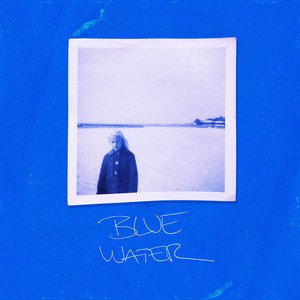
KARL: I did all of the art for the album — the layout for the vinyl, the layout for the CD, all the single art, all the merch. I am a graphic designer by trade. I’m entirely self-taught. I just started making stuff for my own bands back in the day, and now I do it for tons and tons of bands. This was one of those projects where I was like, I love to pop off for friends, but it’s my time to pop off for me, and I’m gonna go as hard as I can. I’m really proud of the visual language I made for the record. I used that photo of my mom — the original iPhone photo of that photo — as the cover of the demos when I posted them on SoundCloud in 2018. That photo has just been part of the album art for so long. When it came time to make a new album cover, I was like, it just has to be this. It’s always been this. So retooling that and finding that Pantone color blue, really finding the shade I thought would look best in 12-inch vinyl — it was a very fun process. Blue is a color that, when you’re printing, so often most print jobs are just CMYK, and a really saturated blue is really hard to create with cyan as your base. I spent so much time on forums trying to figure out the actual hex code for the best CMYK blue. What’s funny is that if you look at the vinyl next to the CD, they’re a little different — this one reads the best on the screen, but everyone’s saying this will be the best in print, so I’m kind of experimenting there. With all the merch, it is this kind of gradient of blues, because blue is just such an emotional color to me. I really appreciate the fact that you think the art is striking. I’m very, very proud of it.
And it all ties together with Blue Water. It feels weird to say, but I love the fact that you have your mom’s voice on the record — I really like how that’s how you end it. I think it’s a really special way to close.
KARL: Thank you. I discovered that I had that audio message on my phone in 2021 or 2022, and at that point, Brett (Scott) and Alex (Thompson) and I, who made the record together, had talked a lot about what we would call the record. Finding that audio message, I was like, “Oh, here it is. It has to be Blue Water.” I grew up in coastal North Carolina — I lived in southeastern North Carolina for 30 years of my life. Moving away, I didn’t realize how important being near water was — being able to drive to water when I just wanted to collect my thoughts. My boyfriend and I briefly lived in Chicago, and that was beautiful because the lake is right there, but we spent two years in Champaign, Illinois, and I was like, “this is so crazy that there’s just no water for me to go be by.” I need to be near the ocean.” Experiencing that in real time, in 2022 into 2023 into 2024, just made the record make even more sense — it was something I was learning about myself, even though I’d already committed to having my mom singing her little song at the end of my record. It all just really started to click in ways I wasn’t even aware of when I first made that decision.
What kind of music are you listening to these days?
KARL: I very declaratively told a friend over the weekend that the new Grace Ives record, Girlfriend, is my favorite album of the year so far. It’s very cool to hear an artist carve out their own niche, their own lane, their own sonic palette that’s so unbelievably unique to them, and then to watch them level that up in ways that still feel unbelievably true to them. It’s like a Pokémon evolution — two records ago it was Squirtle, and Girlfriend is Blastoise. I’m obsessed with that record. The new Lala Lala record, Heaven 2 — that was the first record I bought new here in Oshkosh, where I marched down to the record store on release day. I love Lily so much, and I’m so proud of her putting out new records. She’s entering a very funny, crazy era of her life, and it’s fun to just watch it from the outside and then text her every now and then being like, “Debra, are you good?” There’s also a new Dari Bay song called “We’re Gonna Be Okay” that I loved. It kind of enters a little bit of a psych rock territory — there’s an instrument playing a solo and I don’t know what it is. I love when I hear a song that does that and I’m just like, “oh, I love this — is this my next foray?” I do a lot of graphic design for bands and a few labels, so those things always enter my rotation whether I like it or not. I don’t want to play favorites among them, so I’ll table all of that for now.
I listen to a lot of new music but every once in a while, I have to go back to my safe space, which is ‘80s music.
KARL: We all have a reset button. When my partner Nicky and I first moved to Oshkosh, we started going to the gym together, and then our schedules got really different, so we started going separately. The first day I went by myself, I was like, “what can I listen to that will just put me in the right mindset?” And I revisited Turn on the Bright Lights by Interpol. It’s such a time and a place record for me, and I could listen to it for the next eight hours straight and not complain. Next day, did Antics, and was just kind of like, “God, this is one of the best bands of all time!” I was hitting up all my group chats being like, “we need to put some respect on this band’s name.” I know they’re still active and putting out new stuff, but if no one has stanned Antics today, let me be the one to do it.
I’m so happy you brought up Interpol. There are some bands that have been around a long time that I missed the first time around or didn’t spend enough time with. The National was one of those bands and in the last 3 years, I’ve done a deep dive and have become obsessed. Interpol is on my list of bands to go back and dive into.
KARL: You can cast off a band when they’re popping off for any number of reasons. What’s really important to me about making music, consuming music, and being someone who participates in music discourse is that albums aren’t going anywhere. The push in the mainstream press cycle of “it needs to be new” is so crazy to me. One of my favorite records from last year was technically from years before, but it was the thing I burned into the ground. When year-end lists came around, people were like, “what were your favorite albums of the year?” And I’m like, “unfortunately, this random record that blew my mind — I can’t put it on your list because you want new.” It’s not going anywhere. A band can click for you anytime. Museum Mouth — as we kind of leveled up, we clicked for more people, but we had this massive back catalog. It’s hilarious, for a DIY band with 10,000 monthly listeners on Spotify, to have people being like, “I remember when Sexy But Not Happy came out, I was in then.” I’m just happy people are listening at all. If you’re having your Museum Mouth phase in 2026, I love that.
Do you have long-term 2026 plans?
KARL: I want to do it all, but the thing is, when Museum Mouth was kind of winding down — even though we didn’t know that’s what was happening because a global pandemic was looming — I was very much tapped into music in a way that felt right for someone who was, at the time, 29. Now I’m 35, turning 36 this year. I could not be less in the loop of, if I wanted to book a DIY show, who do I hit up and where? And also, college kids don’t want me in their basement. It’s just kind of like, I’m at this funny crossroads. I feel lucky that I do have an audience — people who have loved my music for the better part of a decade, or even two decades depending on how early you got on the Museum Mouth train. But it’s like, I have this audience and they’re not rapid and they’re not multiplying. These very sweet, die-hard people have let me sell 120, 130, 140 records in pre-orders, but the streaming numbers are low. So how do I make myself available to the broader music ecosystem? Having gone from two booking agents to no booking agents who want to work with me, I’m in this limbo. I currently have one more show left supporting Will Wiesenfeld of BATHS on his Cerulean 15-year tour — I never expected that. It kind of fell out of the sky onto me, and I willingly accepted it. Anything could happen in the back half of 2026, but currently, if you know a booking agent, send them my email.
I’ll circle back to the record: I’m glad I clicked the link that I was sent. And this is a weird thing to say, but I’m glad you have your story through this, because that made it connect even more for me. I listened without knowing any of your story, and it already hit. But it means a lot more to me having this conversation with you, so I really appreciate it.
KARL: Thank you for clicking the link, and thank you for being, unfortunately, someone who gets it. We really are in a community of people where all of our experiences are different, but they all hurt. I’ve been so moved by this. I’ve loved getting to hear your story, because it is relatable to a degree that I find so rare. We just spent the last two hours talking about this — it’s hard to find the people that really get it.
I say it all the time — we’re all part of the worst club that none of us asked to be in. And it’s better to be in a club than be alone, I think.
KARL: Totally. And comparing the different levels of grief, or who the grief was to you — at the end of the day, the feelings are what matter. It’s so sad. The fact that you, Rocky, and Ben have such a specific lane was mind-blowing to me, and that conversation just really rocked me. I was driving to Chicago to start the second leg of tour with BATHS, and I was just like, “my gosh, I’ve loved getting to listen to this.” It moved me in ways I couldn’t even imagine.
It’s not unlike what you said about the record. I actually didn’t care if anybody heard it. I wanted to talk to them. I wanted to have that conversation. If I only get one listen to that episode, that’s good enough for me. It’s accomplished what I wanted it to do.
KARL: It worked on me — big Ben Kweller fan. My grief is different, but it’s similar. And thank you for doing what you do. I hope that one day you can record a really fun episode of your podcast that has nothing to do with any of this!