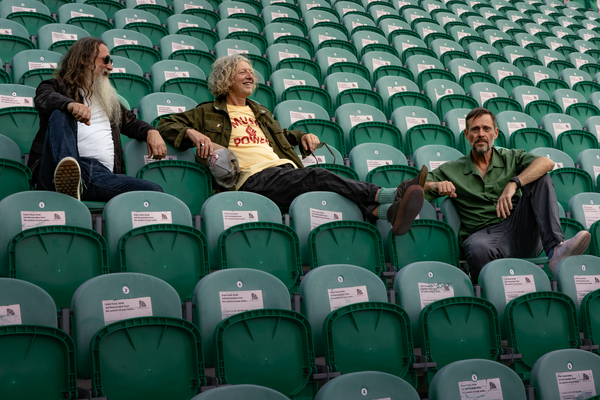
Photo by Jim Mitcham
There’s a certain kind of band that doesn’t just survive time, it absorbs it, reshapes it, and then sends it back out as something sharper, more reflective, and oddly defiant. Cast have always occupied that space: born in the afterglow of one era, resisting the clichés of another, and quietly building a catalogue that feels less like a timeline and more like a conversation with themselves.To understand where ‘Yeah Yeah Yeah’ (Scruff of the Neck) comes from, you have to trace the fault lines back to The La’s and Shack, two groups defined as much by their mythologies as their music.
When John Power stepped out from the long shadow of the former, and Peter Wilkinson regrouped after the collapse of the latter, Cast didn’t just begin, they continued something unresolved. There was always a sense, even in those early days, that this was less a fresh start than a second attempt at getting something essential right.
That restless energy powered ‘All Change’ (Polydor, 1995), a debut so immediate and self-assured it felt like it had been waiting to happen. But what’s striking now is how ‘Yeah Yeah Yeah’ (arriving decades later), taps into that same feeling of instinct over calculation. Not nostalgia, not revival, but a kind of creative déjà vu: lightning striking not in the same place, but with the same voltage. The difference is perspective. Where the younger band chased transcendence, this version of Cast seems more comfortable letting it arrive unannounced.
Tracks like “Poison Vine” and “Way It’s Gotta Be (Oh Yeah)” pulse with a renewed sense of purpose, while “Calling Out Your Name” and “Free Love” carry echoes of the emotional directness that once made “Walkaway” feel so universal. There’s history in the sound, but it’s worn lightly. Recent years have only sharpened that sense of renewal. The acclaim surrounding ‘Love Is the Call’ (Cast Recordings, 2024), the catalytic presence of collaborators like Youth (Killing Joke) and P. P. Arnold (the soul legend collaborating on “Poison Vine” and “Way It’s Gotta Be (Oh Yeah),” and the visceral response to their appearances on the recent Oasis stadium tour have all conspired to place Cast back in a space that feels both familiar and strangely new. Not a comeback, exactly … more a realignment.
And then there’s “Birds Heading South,” the album’s closing statement, where time itself seems to become the subject. With its sweeping arrangement and quietly devastating refrain, it lands like a reflection on everything that’s led here: the ghosts of past bands, the roads not taken, the improbable endurance of it all. “You can never predict what comes next in life,” Power says. It’s less a lyric than a thesis, one that could just as easily apply to his journey from the fractured brilliance of The La’s to the hard-won cohesion of Cast in 2026.
Huge thanks to Jo Murray for the coordination and to John for his candid answers.
James Broscheid: How does it feel to release ‘Yeah Yeah Yeah’ at this point in your journey with Cast, knowing that ‘All Change’ once set a benchmark for you and your audience, and did you consciously measure this new record against that early lightning-in-a-bottle moment or did you resist that comparison entirely?
John Power: You just accept the magic that comes with the songwriting and recording, and that’s what ‘All Change’ was and now I think ‘Yeah, Yeah, Yeah’ is too. There’s been a long and colorful journey all the way 30 years ago from ‘All Change’ to ‘Yeah Yeah Yeah’. A lot of people are saying it’s the best record we’ve recorded. I don’t need to get into comparisons, because there are certain things that you write at certain times in your life, certain times give you certain feelings, like you’re immortal when you’re younger and you don’t try and replicate that because you know ultimately, it’s going to become a parody and you’re not going to do that. ‘Yeah Yeah Yeah’ expresses the same understanding, the same sort of inspiration as ‘All Change,’ but further down the line. You don’t write an album like ‘Yeah Yeah Yeah’ when you’re 19/20/21, when you’re young. You only write an album like ‘Yeah Yeah Yeah’ when you’ve left that part of yourself behind, but you’ve continued on the journey and ‘Yeah Yeah Yeah’ is the culmination of the band and me personally as a songwriter finding that wonderful fertile inspirational kind of place where you find the confidence to allow it to form. I knew ‘Yeah Yeah Yeah’ was going to be a fantastic record, because ‘Love is the Call’ was the bridge, I would say, between the dynamics and energy of ‘All Change’, because I called ‘Love is the Call’ the debut record of Cast’s renaissance. That was the album that kind of went back. But ‘Yeah Yeah Yeah’ has an anthemic kind of gospel pop and soul feel, whilst in a big psychedelic majestic backdrop. Youth (producer) has allowed us to find that majestic psychedelic feel and if you’re lucky enough to rise to it and to record an album, and to get everyone to grasp the vision, (from the producer to the band to the songwriter to the family around the band, the manager), we all knew what we were going to do with the ideas. The songs were still being written in the recording session and it was unlike anything I’ve ever done before, because once we got all the songs down and recorded them, we knew we had it. Then this was the session that kept on giving. Normally, when you finish your record, everybody moves on, the producer goes off to do something else. Well, we came back to the album to add on to it.
We have P.P. Arnold singing on it, it didn’t have the gospels on it, it didn’t have to the string arrangements on it. There was still a load of things that were flickering in the light and after the recording session we continued and this helped us reap inspiration, where you get to bear fruit. We kept harvesting and the sound just kept getting richer, deeper and broader. I mean it’s a very forward-looking album, but it doesn’t turn its back on our history or where we came from. It doesn’t lean back trying to grab the best of us, it leans forward because we know about ‘All Change’ and weirdly it was recorded in the 30th anniversary year of that so it’s 30 years later we recorded ‘Yeah Yeah Yeah.’ I’m the songwriter and it’s difficult sometimes to ask me what I think of it. I mean, I just think it’s the most complete sounding, the most anthemic sounding album we’ve done. It’s also very soulful. The lyrics, the grooves, the backing singers all have that. The arrangement of all those things are coming perfectly formed. I’m genuinely kind of happy and relieved with what we’ve done with that record. It’s been calling me for a long, long time. This record is the culmination of many sources, urges and inspirations, where the whole journey’s been leading up to ‘Yeah Yeah Yeah’ and that’s where we’re at. I think it’s great, after the musical highs and lows, and the musical journey and the character of the band. It just feels so kind of, I can’t really explain it, but when you’re in the right place in the present time and all these things come back, the value that we feel from this record, it’s a rich giver. I haven’t had one person, I haven’t heard anything but positivity about it. Some people may like one song differently to another, but they seem to like all of it, and it seems to run like an album should do. It kicks off and it goes all the way through, but there’s a wide vista, and there’s a richness to it. It’s more than a digital sound on a kind of musical platform, it’s a record, you know it’s something you can touch, something you can hold. I mean that in the sense of sonically in a sonic sense.
JB: You have spoken about the album arriving out of the blue. In practical and emotional terms, what does surrendering to that kind of spontaneity demand from you as a songwriter, especially when the songs were not fully finished before entering the studio?
JP: I wrote this whole album, apart from maybe one song, which was “Teardrops,” within six months. ‘All Change’ was written over a lot longer period, from the end of The La’s into the beginning of Cast. I didn’t have those songs, any of those songs, when ‘Love is the Call’ was released in 2024. We recorded ‘Yeah Yeah Yeah’ in February/March ’25. All through the recording, post the ‘Definitely Maybe’ tour (with Oasis), is when I started the last song on the ‘Love is the Call’ album, and that’s “Tomorrow Call My Name,” and when I heard that back when I recorded it, I just thought wouldn’t it be amazing to record four or five songs with that sort of anthemic sort of emotion, you know? So “Tomorrow Calls My Name” is not on ‘Yeah Yeah Yeah’ but it was the seed for that album. I just started writing choruses because I then realized that the album I wanted to write was like a move on from the last song on from ‘Love is the Call.’ And then I realized for the first time in a very, very long time that I knew exactly what type of record and what type of song that I needed to allow myself as a conduit to write.
So, I started to write those choruses like ‘don’t look away, you know the clouds, free love’ that were somewhere in the back of my mind and I brought them to the fore when I started writing and they became these anthemic things. They all came from the little folk songs. These songs were written in six months before we recorded that album. During that time, we got the shout that Oasis wanted us to support them, and I thought we definitely have the gods on our side here and so it’s, you know, just keep going. I started playing the songs to Alan McGee; I hadn’t played them to the band yet. I played them on an acoustic. I knew they were good, but Alan is the sort of person who will be listening and he’ll recognize that too and he knows that before anything becomes a song, it’s the promise of one. He knows you’ve got something that’s yet to be fully formed but you know what is the embryo, shall we say. I just kind of had that thing where provenance did dictate and when you submit, so that then you don’t get in the way of the song and you allow that. Then we took the leap of faith to go and record the album in February 2025. I was still writing “Free Love,” I’ve got it on my dictaphone, the first time I got the idea for that was something like December the 20th, 2024, and we only decided to go in the studio around December. That was when I said to Alan we’ve just got to record a new album and it’s going to be fucking magical. I got the other bits for it in many different forms before, but you know you kind of doodle with them and then somewhere along the line you get it right. So, until February I didn’t even have some of the main songs. Some of the lyrics were there, some of the chord structures were right, but I was writing in the recording session. I’d be working with Youth in the morning and he would say “What have you got?” and I’d say “Well, I’ve got this …” There is a moment where you think “I haven’t got the lyrics for this and I haven’t got the fucking thing finished” and Youth would go “We’re gonna record this tomorrow, we’re gonna do that one idea,” so I took another deep breath in the session and I remember thinking, “Right John, stop thinking about anything more than today, you’ll deal with tomorrow when it comes.” Because I had that attitude, I just started allowing myself to write and it didn’t matter. There was a wonderful kind of belief and understanding. We arrived in Spain to Youth’s studio Space Mountain (last time we were there was to record ‘Love is the Call’), and the landscape was full of these burnt out trees. They look just like burns marks on the landscape. When we got there half way through February, these trees, they were all in blossom and it was like some Japanese scene, and I took that instantly as a good omen.
Youth knew exactly what we needed to do he also knew exactly what I wanted from the album. He knew exactly how to coerce and cajole the band into the right understandings and arrangements. Keith’*s (*O’Neill) drumming is amazing; Skin (Liam Tyson, guitar), is everywhere, all over the album. Everyone gave of themselves, submitted completely to the album. Even the title is cheeky, you know, I would never have called any of my other records this. They would have always had the titles they had. The whole thing about ‘Yeah Yeah Yeah’ was we just knew that some sort of energy, some sort of providence, was dictating and you gotta believe in that. You gotta believe as an artist because you haven’t got anything otherwise, you don’t know if you’re gonna write something or create something. You’ve gotta believe in it before it’s there, if that makes sense, so you draw it to you. I think I was at a point in my life where all roads have been leading to Rome, and ‘Yeah Yeah Yeah’ was our Rome. I just started singing the songs and it’s just I’m only at a point now where I am so looking forward to playing them live. “Poison Vine” is such a joy to play and everybody who’s listening and watching the band at the moment, they know that this is something really exciting.
JB: Speaking of Youth and working with him again seems to have unlocked something expansive and majestic in the sound. What did he challenge you to do differently this time around, and were there moments in the studio where you felt pushed beyond your comfort zone in pursuit of that scale?
JP: Working with Youth unlocked something with me. Youth was the first producer that I fully gave myself too. I allowed Youth to enter my world and I’d always been scared to do that really. I think as a songwriter I’d always kept people at bay. I knew best about these songs, this is the way I’ve always looked at it. I know about these songs because I wrote them. When we started recording with Youth, he introduced me to a way of working where I could be open and I think at first I found it daunting, I was a little bit scared, not because of his personality, but because of my personality, because I had to give away some of my ideas which are very, very dear to me. I had to give them away and let someone else go, “I think I know what’s best for this little thing” that they do in their job and that was a whole new creative relationship.
I will always have a love and respect for him because of what he’s brought to the recording sessions on ‘Love is the Call’ and definitely ‘Yeah Yeah Yeah.’ He provoked what he knew I could do, when to be bold. He was provocative you know, he does poke you in certain areas when needed. He knows we were a tightly coiled band, that we had that energy and that it was just ready to be released and he needed to navigate those stormy waters, and knew when we had to push hard across still waters. I mean, when the pressures on you, you know you can do it. What was so beautiful about this, there’s never any fear or any doubt. I was playing, I was writing, I was arranging with Youth then I would throw down all the acoustics. And then he’d go, “Come on let’s do a bass line.” This is strange after I’ve just thrown all the acoustics. It was all that sort of quick spontaneous sort of stuff that was happening, that bass lines, if you ever get the chance to hear them isolated, they’re forming their funky groove and you just gotta go with that and let it take you. I think I finally found that confidence in the studio, because I still find in the early days in a studio quite daunting because things get analyzed, where live it’s a performance where studio people like to play it back to you and you know he can hear different things, “Oh you didn’t quite get that where it’s meant to be” but on these two sessions, especially Yeah Yeah Yeah,’ working with Youth I discovered a freedom and a fearlessness in the studio. I mean my singing, I’m belting it out like I’ve never belted it out before. There’s no falsetto notes in any of the songs, it’s full voice and that’s a leap of faith in itself.
When you’ve gotta go for it you don’t play safe, you just gotta jump off like you’ve just jumped off the fucking cliff. You gotta hit it the same with the bass lines. We were bouncing all the way, we had the wind in our sails, and we didn’t question where we were going. We were following the stars in our own musical sky. It was a wonderful journey. The session just kept on giving, I mean we were adding little things. Youth was still very much invested and involved, months after the album was recorded in Spain. We were still touching little things, putting bits on this and a little string arrangement there and he really is a big wealth of knowledge and recording. The experience of knowing how to work with a band like ourselves made it a joy. It was fruitful and it was rewarding. When I say it wasn’t fearful, that doesn’t mean that we didn’t have moments where you’ve got to make the right decision, but it was okay when provenance dictates and your belief is so true to it, you can’t take the wrong decision because you are following the path of faith. This recording is an ocean storm; you know it’s fast and wide and deep, and it’s unfathomable in parts.
JB: The recent Oasis stadium tour must have placed you in front of vast, multi-generational audiences night after night. How did those experiences reshape your understanding of Cast’s legacy and influence the ambition or confidence behind ‘Yeah Yeah Yeah’?
JP: First and foremost, it was an unbelievable experience to be part of that massive, beautiful communal gathering, which is what those shows were, but I didn’t feel out of place there. I was very humble that we got the call, but not when I say not surprised, although that sounds not very humble. The thing is, I know this band, I know the reason I wrote ‘Love Is The Call,’ the reason we wrote ‘Yeah Yeah Yeah,’ the reason we got on with Oasis, and the reason why people rediscover, is because we found our musical mode again, because we have something unfinished within ourselves to express. It shouldn’t have ended the way it did, but it did. When we disbanded 20 years ago, I was at some strange sort of crossroads with myself and I didn’t get to express the part of me that I’m expressing now. Now with Cast, there’s a looseness in my stance, there’s a looseness in the way I talk about my music. I feel confident in front of an audience, whereas in the old days, I used to hide behind the song. The whole arena thing with Oasis, I just walked on stage and I just thought, “Isn’t this fucking beautiful?” It just felt like the right thing to do. And you are quite right, we knew we were doing the Oasis shows when we were recording ‘Yeah Yeah Yeah’ and we rose to it, I guess. The point is our legacy, it kind of made it complete, a bit of a circle, because the Oasis thing is where we were 30 years ago or more. And then here you are, having, I dare say, the greatest band of our generation, undoubtedly, saying, “Here’s a band who represents a part of that!” It was a massive nod from our musical peers. ‘Yeah Yeah Yeah’ is a similar record to ‘All Change’ as it is looking forward. ‘All Change’ is dressed in its regalia or whatever, it’s got its medals on show, you know what I mean, and I think it just came up to it. When I sing the songs on ‘All Change’ I feel like they were written just the other day, just yesterday. They feel fresh and valid, but I do think that is because the band are fresh and valid with ‘Yeah Yeah Yeah’ and ‘Love is the Call.’ I think ‘All Change’ now sounds like a classic album and ‘Yeah Yeah Yeah’ shows us as a band who are who are comfortable with their past whilst looking forward.
JB: When ‘Love Is The Call’ was released, it was widely praised as a creative resurgence. In what ways did that record lay the groundwork for this one, and where did you deliberately seek to break new ground rather than refine what had already proven successful?
JP: ‘Love Is The Call’ was the spark that lit the fuse. It was the beginning of everything that has happened recently. If it wasn’t for ‘Love Is The Call’ I don’t think we’d be the band we’re talking about now. ‘Love Is The Call’ is the space between the end of The La’s and the beginning of Cast. It was fertile ground that I’d never ploughed or never trodden. I had these two separate people, John Power the bass player of The La’s and John Power the lead singer of Cast and you know I’d never let them meet, really. I think ‘Love Is The Call’ was where I just thought, “It’s just me.” I can play bass, I can play some rock and roll drum beats, and I can make the guitars jump, without it being a parody of anything. So ‘Love Is The Call’ was a massively important event for the band. It was a bit like a debut record if the band were going to make a debut record, you know, in 2024, that’s how it would have sounded. It’s full of life.
It’s a psychedelic pop record, it had the vibe, it gave the band back its mojo, and I think when we released it, it got played a little bit on the radio, but most importantly it connected us with the grassroots. Do I think people thought, “Wow, this is fucking great?” It’s got a vibe, I think. It was a vibe and the game was back on I and that led to many other things. I mean if it wasn’t for “Tomorrow Call My Name” and Liam (Gallagher) hearing that song, we wouldn’t have got the ‘Definitely Maybe’ tour. I mean that was fantastic by the way, and we had brilliant energy. Liam must have known about the Oasis thing, I think that’s why he looked at us and watched the band every night and thought, “Fucking hell, these arseholes rock!” So, ‘Love Is The Call’ is a massively important start for bringing us to the fore again. It gave us the belief that we were a band again with something to give. It proved to ourselves that we can make exciting, energetic psychedelic pop. “Tomorrow Call My Name” is the bridge to ‘Yeah Yeah Yeah.’ It’s the anthemic emotional song that when you play it to people, it gets them you know. They get it. So, once I see people getting it and it got me, that’s where I went. I need to do some more of that.
JB: “Poison Vine,” “Way It’s Gotta Be (Oh Yeah),” “Calling Out Your Name” and “Free Love” each carry a distinct energy, from swagger to tenderness. When sequencing the album, how intentional were you about crafting an emotional arc, and what story do you feel unfolds between those contrasts?
JP: Trying to get the albums to run and flow with some sort of energy, or from one song to another, sort of leads to an arc. I thought “Poison Vine” was the first single and it was a great opener. It’s a funky and sassy track. It’s just seemed like a great start of the album. Those three songs seemed to be together. “Poison Vine” showed me where I was going, “Don’t Look Away,” that’s the first song we recorded and when we did it, it had all of the pieces that I was hoping for and I thought once I got that, that really gave me the confidence that we were going to get “Free Love” and “Teardrops” and some of these other anthemic songs. So really once I put “Poison Vine” as the opening track that was the single, people thought it was a really great introduction to the record. I think it sets the tone for what sort of album is to come. “Calling Out Your Name” comes after “Don’t Look Away.” It’s a slower anthemic idea. It simply turned it into more of a Cast track as it’s got a massive chorus. Each track runs after each other in a really cool way. I wanted to give a lot away, I wanted to capture the listeners attention, let them know what type of record they were dealing with and I think “Poison Vine” is this big groove and sort of soul track and then it goes into the vocal “Calling Out Your Name.”
I think with the album, you can see where they always go. I changed it a little just to lighten it up a bit. “Way it’s Gotta Be” really opens the second side of the vinyl. It’s a very funky psychedelic tight track without realizing it. P.P. Arnold is singing vocals on it, so her and my voice are singing on the opening track on each side. It’s about finding salvation within yourself, don’t turn away from you, from your true nature, and then “Calling Out Your Name” is this reminder that you’re not alone. It’s difficult to analyze songs, but they are in a specific order I think. I did try a few different sorts of running orders. This one kind of picked itself a bit. “The Devil and the Deep” is a little folk song and that is the breather on the album really before we continue. There’s quite some energy in those four songs that you mentioned. “Free Love” is the answer, I think. It’s a pop song, but it’s got gospel and soul within it. It’s the type of thing you dream, and really it’s got all the right movements and key changes. It’s so full. It’s got all sorts. It’s anthemic, it’s slightly spiritual and gospel and it’s uplifting. I wanted people to get a feel for the album without trying. It’s some sort of natural source of movement within itself and so I think subconsciously the album opens and then gets straight to it. By the end of side one, you get ‘Free Love’ and you’re aware that this is a majestic epic sound going on here. You have strings, you have had gospel, you’ve had a taste of the character of the album.
JB: “Birds Heading South” closes the record with a sense of reflection and acceptance. When you sing about changing seasons and the ghosts of yesterday, are you looking back at specific chapters of your own life in music, or are those images meant to be more universal meditations on time and impermanence?
JP: It’s not about some experiences in my life or something, it’s more about universal sorts of statements. The song itself is about those times from the past using the seasons. “Birds Heading South” as an analogy for at one time in your life you were close to certain things, you know, you’re idealistic, you thought you were gonna change this and you were full of great hope and your dreams were fresh and you kept them close to you. Then in all our lives, where we notice the changing of the seasons within ourselves and that time has passed and that we no longer stand with our hopes and dreams in front of us. They may well be slightly behind us and the moment may have passed, because all things keep passing and I think this song is about that sort of acceptance. The moment might have passed, but the taste and the memory of what you wanted is still very much there. A kind of making peace or not making peace with it all. Sort of making your own source of peace with it.
I mean we’ve all had certain points and we think, “Oh God if we let it slip, all those things I thought I wanted to do or all those things I believed in, where are they now?” and I think this song is just more about that, the fact that everything is moving, everything is constantly changing, including ourselves including what we may hope for ourselves and what we hope for others too you know? As the great John Lennon said, “Life is what happens to you when you’re busy making other plans”. If you’re not careful, then it’s very easy to let these things fritter away without you even knowing, so I suppose it’s about self-awareness. It’s reminding you to have an awareness for those things but ultimately everything does pass. We’ve all experienced those times. Some of us pick it up or find new shoots the next spring. We’ve all had great hopes and great loves and things we wanted to achieve in life. We’ve had them all fritter away at some stage you know in our lives and I think this song is just about that. It’s not a bitter song, it’s not looking back and it’s all over, but I think by recognizing the continual upheavals and the troughs and the continual movements of time, then you realize that it’s actually all right as long as you start to be more present because of your experience of losing things over time just passing . Those lucky enough will pick up the new shoots in the next season, they’ll let that experience guide and inspire them for something else.
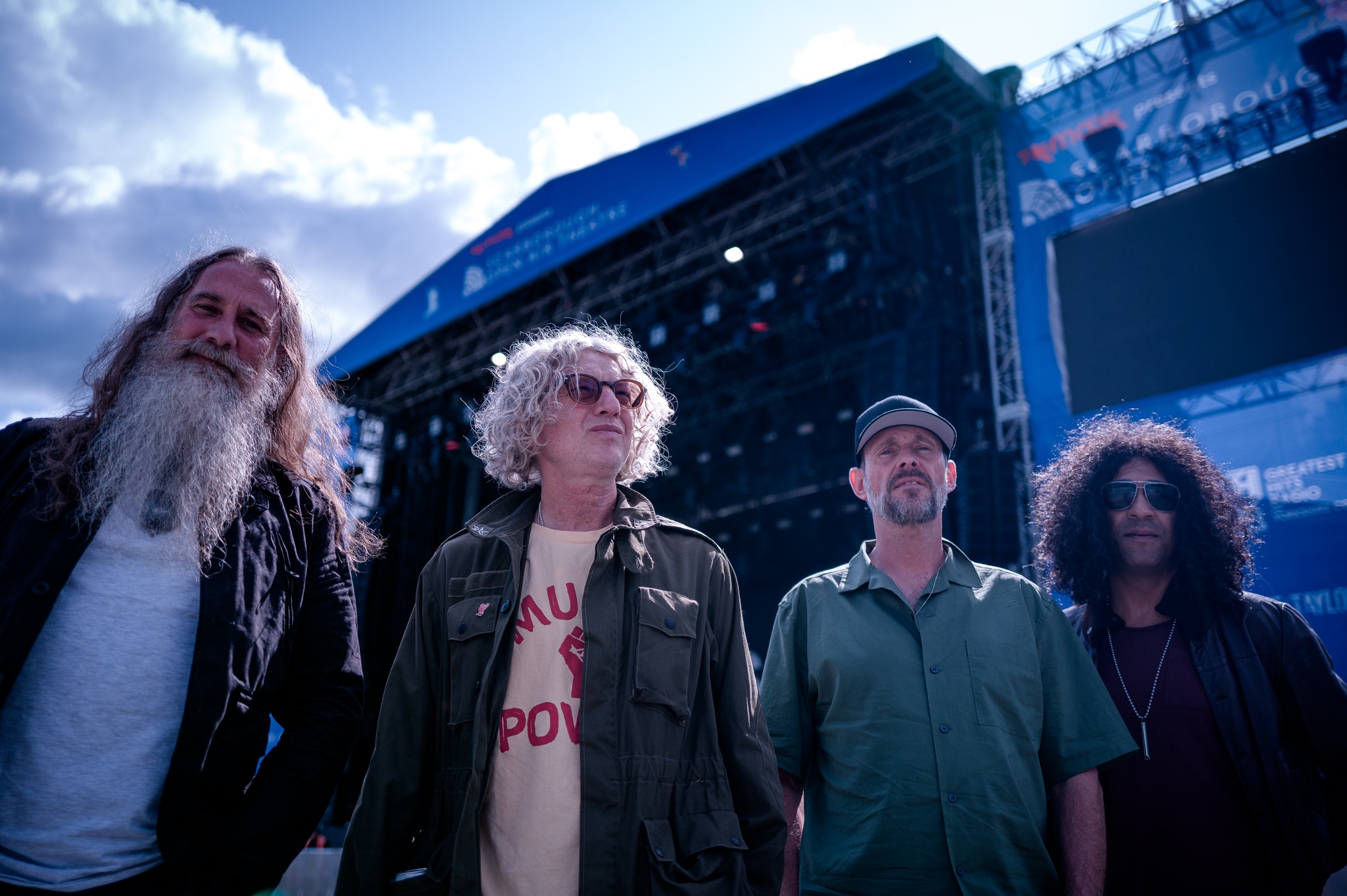 Image courtesy of Cast
JB: Having been part of The La’s before forming Cast, and later witnessing Britpop’s rise and fall from the inside, how has your relationship with nostalgia evolved, particularly as younger listeners discover your music for the first time through these new singles?
JP: I don’t feel I’m nostalgic in the least. It’s not my style to look back. I’ve always believed, even when after something big, like obviously I left The La’s, but I was forward-looking into Cast. After the demise of Cast last time round, I did wander nomadically, musically picking up the pieces. I did solo albums and then I did little grassroots shows. I didn’t play any of the Cast hits or songs. So, that’s not nostalgic either. I’ve always been looking forward. I’ve always been believing that the journey is ahead of me whilst being in the present. When people ask me about The La’s, I’m happy to talk about it with great fondness, even though the experience wasn’t all rosy. There were a lot of tough times within that, but I’m happy to talk about it now. I don’t look back and wish I could go there or change anything. Yeah, there’s things I would have done differently in hindsight, but the beautiful thing about the way I seem to view it all is that I’m going to do it differently if I ever get the chance again. I always believe this, something is ahead for the band, and ahead of me as an artist and songwriter. Who knows what can happen. I’ve picked up an energy to reshape 3 or 4 times. This one being the sweetest renaissance of Cast.
I’ve got all that experience behind me and I really know how to sing, I really know what it’s like, I’m not missing these moments that I’m experiencing now where I was such a young lad in The La’s and it was so intense, but it didn’t bother me, that intensity. In Cast in the 90s, was it the best time of my life? No, I don’t think it was. I was probably paranoid and stressed out. But it was good fun, but maybe as a young kid now they’ll be looking back and looking at the music that I’ve been involved with and they can see it. Hopefully kids will listen to it and find it uplifting and inspiring. We’ve got music that’s very much of today. ‘Love Is The Call’ and ‘Yeah Yeah Yeah’ should speak to them. We do have a big lineage that maybe one day they’ll find. I’m still learning the guitar, I’m still learning to write songs, I’m still trying to make sense of the whole incredible massive journey of life. I’d rather be here now, I’d rather be right where I am now, than anywhere on the trail behind me. That’s probably one of my strengths, I feel like striding ahead and embracing the present and that’s exactly where I am. I think young kids may be discovering our music and hopefully you can be nostalgic, but young kids can discover music, older music, and just be inspired by great music, and great music is timeless. The 90s’s did the full 30-year cycle and it seems to be 30-year cycles. I looked at the 60s as this amazing kind of mythical epoch of songs and music and vibe, and I’m sure kids maybe looking back to the 90s as the same. I’m not a social commentator, so I’ll leave that for people who are, but nostalgia, it’s got a nice glow to it.
JB: You once downplayed the connection between the band’s name and the closing line of The La’s album, only to later confirm it. Do you see ‘Yeah Yeah Yeah’ as another moment where the past and present collide, where the change is cast yet again in a new form?
JP: When Cast got together, when we started happening, I didn’t really wanna talk about The La’s just because . . . the analogy I use is like when you’re going on a new date with someone, you don’t spend all dinner talking about how great your old relationship was. So, I felt slightly prickly, I didn’t feel comfortable talking about it, but as time’s gone by, obviously I’ve made a lot of peace with myself. It’s well documented that I’m very happy to talk about these periods of my life. I’d be standing on stage with the last song of the gig reverberating, the last lyrics of the gig reverberating, “The change is cast.” When I hear that at a certain point in my life, when I was writing songs that turned out to be ‘All Change,’ and the La’s were slowly hitting the self-destruct button, then I heard those words differently to maybe how I heard them when I had all my dreams within The La’s. So yeah, I do feel like ‘Love Is The Call’ really was the debut album of Cast’s renaissance. It was the record that made the band. We got the vibe, we got the energy, and we got all those things that we needed. It was a psychedelic pop record.
I have said before if you wanted to know what a debut record by Cast would sound 30 years down the line, well then ‘Love Is The Call’ is that record. I did go back to the space between the La’s and Cast first time round to be inspired to write ‘Love Is The Call’ which then obviously inspired me to write ‘Yeah Yeah Yeah’. The last song on ‘Love Is The Call’ is “Tomorrow Call My Name” and that was the seed that runs through the whole album. “Tomorrow Call My Name” could easily be on ‘Yeah Yeah Yeah.’ It could have the strings, it’s anthemic, it’s got all the emotion. That was the song that was moving people in an emotional way and I knew that I needed to go, subconsciously or consciously, and decide that I needed to write an album with three or four more “Tomorrow Call My Name” type of songs, so strangely maybe it’s like “the change is cast” from The La’s inspired ‘All Change’ and the last song on ‘Love Is The Call’ definitely inspired ‘Yeah Yeah Yeah.’ It lit the fuse for our renaissance, but “Tomorrow Call My Name” planted the seeds for ‘Yeah Yeah Yeah.’
JB: Cast have often been described as having a spiritual or almost religious intensity live. When you step onto the stage now, do you feel that sense of communion more strongly than in the 1990s, and has maturity deepened your understanding of what that shared experience really means?
JP: Yeah, absolutely, 100%. I feel the sense of communion and unity. I feel that it’s far more present now than I ever did and I think that’s down to my openness as a conduit, I feel it now. I let it flow right through me and I’m not scared of it , whereas when I was younger, if you look at Cast shows from the old days, I didn’t say anything to the crowd. I hid behind the songs. I was quite nervous. The minute a song finished, I had to start another one there quick, because I didn’t know what to do and it’s like the song was my shield but now, I feel very comfortable. I was always meant to be on stage, so I’m far more relaxed but far more focused, not a sort of blinkered way. My point of view is wide, panoramic and it’s far reaching in depth. I feel it massively now, much more. I feel far more comfortable with what I’m singing and I can really let it come out and I feel the audience. I mean, I think without realizing it they pick up on how I am and my natural sort of messages to them. I can see it in the way I stand, by the way I’m seeing them, by the way I’m talking. Then they let their guard down and lowering their shoulders and I feel like that’s like a two-way thing. It’s like a communal gathering.
JB: The decision to record songs that were still taking shape suggests a trust in instinct over perfection. In an era where many artists labor over microscopic details, what does embracing imperfection give you creatively, and did any song on the album transform in unexpected ways because of that openness?
JP: This is something I’ve learned, you’ve got to allow it, to feel itself, to direct itself, to shape itself. You’ve got to believe in provenance, and we had that belief on this record. It wasn’t about perfection, because there is no such thing. If you want to go down to a quantum level of looking into things you’re always going to find space. I’ve never been one for that anyway really, I’m not overly analytical. I’m probably over emotional if anything so the emotion in the song, then the groove, all these things go hand in hand really. Lots of the songs changed. I didn’t have one demo on ‘Love Is The Call’. I had been working towards it for about 3 years, but this album (‘Yeah Yeah Yeah’) was about lighting a flame and just allowing it to burn. When I spoke to Youth about the new album before we went to record, we talked about allowing the freedom, and allowing it to form, to let it be sort of malleable. The musicality, the performances of the band are stunning on this record. It was such a beautiful session. I would sit with Youth in the morning and I would be spontaneously playing one of the ideas that I thought were going to be on the record and they’re still to be done, so I will have to start going through them. It’s just that, they’re just ideas. I would play Youth maybe another idea that was still half-finished and it just happened, through faith or whatever, that we chose this one idea and the other one just kind of got left behind on that one day. Maybe it will be added on a different day. Youth would have picked up all the songs and that it was that sort of freedom all through the whole session. We just can’t keep the plates spinning and we just let the river current dictate where we will go. I think the songs changed, they would be finding themselves in the studio. Once we played them, certain instrumentation started forming. “Say Something New” has got a slight *Bowie*-esque feel to it in parts that we never set out to write, but it could have gone in a *Dylan*-esque way, it could have gone anywhere.
“Free Love,” you’ve got these beautiful words that are demanding that you sing it like a hymn. “Poison Vine” was a different type of song and it ended up getting this groove and then P.P. Arnold came and that was going to have to happen for that song to sound as good as it does. I didn’t have any indication of how she was going to sing on it, but when the song was forming, or when I sung the chorus, I noticed with some of my songs that my voice would rise a lot higher, and I noticed it was lower, and whether it was the key we decided to do it in or what, but there was something itching me and maybe we gotta get female vocals tearing into that. That it is going to really make it sound really sassy and groovy and that’s what happened and with all the arrangements. After the session it was, “This is the record!” But we kept on coming back in to record. We kept coming up with ideas that kept calling us. Youth and myself kept on building it. With some recording sessions, for instance ‘Love Is The Call,’ we finished the session and the album was done and we just needed to mix it. But with ‘Yeah Yeah Yeah’, when we finished the session we came home and we just thought that there was more to add.
Youth was still giving creatively to it, I was still giving creatively to it. We were still defining the shapes of the tracks right until the very last. The brass stabs on “Poison Vine” and P.P., they all went on very late, which is actually what the track deserves. So, it’s still happening after the band had finished recording. It really was one of those recording sessions where it’s carefree and you throw caution to the wind and you don’t try and define it, but you don’t try to limit it. Youth allowed it to take you on the journey and I think that’s the beauty of it. It’s got pop, its got gospel, its got soul, its got a groove, its got all sorts going on, but none of them are novelties. All the things we did were all right for this. It was a beautiful experience and I’m just really thrilled for the band. We’ve made a record that was ahead of them. From any time in our past career, we haven’t looked back to reproduce anything, but this is a defining record in a sense. It was just like, when you know something’s happening you don’t have to kind of have to big it up to each other , you just knew. I knew Alan McGee, so you just thought, “Doing this is going to be interesting.” Sometimes you know something magical is happening here.
JB: Liverpool has always been central to Cast’s identity, from early days at the Cavern Club to being honored on its Wall of Fame. How does carrying that lineage affect your songwriting today, and do you feel a responsibility to that city’s musical heritage when crafting new material?
JP: There’s something innate in me, my home and the musical heritage of Liverpool is naturally within me. When I was a child and when I was being influenced by the music around me, I didn’t go looking for that, because it was my natural environment, so it’s within me. I don’t feel like I gotta try and kind of shape something that is true to that, because I don’t believe in that because I just believe that I’m just doing my thing. But I know I’m of a certain lineage, if you want to say that, you know the songwriter, the sound, and we have a certain primary color or DNA, those sorts of traits to the character of the band. But they’re not anything we think about, you know, harmonies and melody, or whatever that adds to my understanding of music. Whether that’s a Liverpool thing or only me, I don’t try to sound from anywhere. In fact, the music we’re making now, ‘Yeah Yeah Yeah,’ I mean it’s got a cheeky title, but I’m not trying to have a Liverpool sound. You got different generations if you talk about you know Mersey Beat, the music that came through rock and roll, I mean that’s American. Then you’ve got folk, you’ve obviously got The Beatles and all that, but there’s Echo & The Bunnymen and Teardrops Explode, you had Eric’s as well as the Cavern, you had The La’s, you had that post-La’s, you have all sorts of different types of genres of music. Is there a natural characteristic to certain bands from Liverpool? I think melody is important, but I wouldn’t say that you have to be melodic. You can be whatever you wanna be. I don’t feel like I’m shaped by my heritage. I’m shaped by where I’m from, but where I’m going is somewhere else. So the music reflects the journey, but the song I’m singing it’s a universal song really. It’s emotional, it’s the emotions that I feel. I feel them so strongly that I don’t have to think about them. It’s a very wide vista on the broad church and there’s a lot of emotions and there’s a lot of things we’re passing through and I’m trying to make sense of the journey. I’m just singing my song.
JB: The band has undergone lineup changes and long periods of silence. Looking back at the abrupt split after ‘Beetroot’ (Polydor, 2001) and the eventual reformation, what inner shift allowed you to return with renewed purpose rather than simply revisiting old glories?
JP: There are some great songs on there, but I was so bored with what I was doing with the band, I wanted to do something different. I don’t know whether the band wanted to do something different, so that was the kind of what happened there and then obviously I didn’t play any Cast songs for about 9 years, so I kind of lost my way, fell out of myself. I did some solo stuff, then we got back together for ‘Troubled Times’ (Cast Recordings_/_Absolute, 2011), but then post ‘Troubled Times’ we had, whether it was synonymous of the record’s title, but we had troubled times with the band. Peter (Wilkinson) left post-‘Troubled Times’ and pre-‘Kicking Up The Dust’ (Cast Recordings_/_Absolute, 2017).
So, even after the reformation, if you want to call it that, there was nearly splits again. I mean, to be honest with you, by the time ‘Kicking Up The Dust’ came along, that was just me saying that we’re still a band, because Skin was off with Robert Plant and Keith was tour managing, so I wanted to prove we were still a band. Jay (Lewis, bass) came on board so we could pull it out of the ashes again. I just really felt like that there was some unfinished business really with the band and that it shouldn’t have ended the way it had. I just felt there was more to give from the band. I never stopped believing that if you write the right records, you record the right albums, and you know that luck will come your way. ‘Yeah Yeah Yeah’ gave us a whole new lease on life really, because we started believing that it was such a fucking great record that we just thought, “This is great, we’re good!” and things started coming our way, so they all come hand in hand really. It’s just a continuation of ‘All Change.’ When you believe in things and you raise your frequency then I think the universe reflects it. ‘Yeah Yeah Yeah,’ I’ve learnt, is not being desperate, not being needy. It’s just doing and accepting that what you’re doing will create some sort of reaction, response, and I’m sure that’s what we’ve been doing really musically, wave after wave. We started a legacy, we have a history, we have a long and winding and colorful history. We’re looking forward, but it’s great because I’m a better singer, the band are better musicians. Some people say we’ve just written and recorded the best album of our career.
Being back on the radio I mean, that’s almost as big as everything. I could tell you that having radio play was important. If we wouldn’t have recorded any of these new materials, we would have been barely played. If you’re looking at mainstream (UK) radio, “Love is the Call” didn’t get played, but I think what happened is, we recorded 2 brilliant new albums within two years (less than two years), and I think that just kept knocking at their doors. “Poison Vine” was just the right track for the summer. We had Oasis going on as well, so we had this amazing song, a summer anthem, and now we’re getting “Free Love” on the radio too. It wasn’t just a little luck, that was the second single and I think getting a top ten album, that kind of said to all those people in radio, putting us back on the air, they must have felt it was right, like we were doing the right thing, we’re major players again. It’s been amazing, I mean all it says is that we’re back, we’re definitely back and we’re got something new. We’re not a legacy band, we’re back with new material and that new material is good, and sounds great on the radio. “Free Love” and “Poison Vine,” they were massive. To make a great record, then make another great record, things get on the train. We topped out at the Oasis and our own tour, because everything is perception, reality is in the perception. And we are now seen as something bigger than we were five years ago. It’s all part and parcel of the present. We are independent, yeah I get that, you put your faith that a good song can be a pop song. Also, the times are dictating that too. “Free Love,” some say, has a spiritual, hymn-like feel to it, but it’s only a pop song on the radio, on daytime radio. To me it was just sort of, I took it as a really good omen and it felt great, it felt really good you know, so it feeds the next steps that we take. It makes me continue being very optimistic about where we are, about the journey and that journey is ongoing. It’s good fun being back on the radio, it has been a long time (27 years!), since we’ve been play-listed like we have this time.
JB: There is a line in your comments about recording something majestic rather than simply capturing a vibe. What does majesty mean to you in the context of rock and roll, and how do you avoid tipping into excess while reaching for that grandeur?
JP: I just knew we needed to make something rich, and the songs I was writing, the choruses, everything felt like it was going right. We just thought we needed something anthemic. So, it was a deeper energy, a rich longing on this record, if you want. It pulled me and it was there. It was like, “Here I am, and I’m ready to write that record.” When I was writing it, I wasn’t thinking I want to write a majestic one, it’s just, as Youth said, “It’s like a majestic psychedelic masterpiece,” that’s what he calls it. So, you start going with that majestic sound. It’s great, it’s what we were trying to maybe do, but to be honest with you, I was just wanting to write something with soul, something that was hymn-like, soulful, anthemic, and better than what I’ve written previously. I wanted to go into an area that I hadn’t taken the band before. There’s musicality in there. Skin and Keith play amazingly.
There’s the bits of organ, there’s bits of strings, there’s gospel vocals. You don’t go in with all those in your suitcase. We didn’t open them up and then we’ve got all this. What happens with songs in the sessions is that we started pulling all those things in, so then maybe the song inspired something. We’d look at the rest of the album then we started to get inspired about how we’re going to do the track and then you do maybe get this picture, but it’s an unfinished sketch, and you start thinking, you can start to see these amazing string arrangements and these gospel vocals and you can hear them. Then you can start seeing the answer form in front of you, in the session in real time. You get a great feeling. I just thought, “I’m gonna go with this. I’m not good at over analyzing. I’m gonna go very natural, I’m gonna just do it, see how it feels.” Let the songs speak themselves, let the performances speak, let the production shine, and the shape becomes deep and rich and widescreen when needed. We didn’t put any limitations on it so that’s quite big and majestic and its broad, with no limitations.
JB: With summer festival dates and high-profile support slots ahead, how do you envision these new songs evolving on stage over time, and are there particular tracks from ‘Yeah Yeah Yeah’ that you suspect will take on a different life once they meet a crowd?
JP: They really found their groove and we found our way of seeing them. I mean obviously “Poison Vine” and “The Way It’s Gotta Be” were already going to be live classics, yet I haven’t played “Birds Heading South.” I can’t wait to play “Say Something New.” We also played “Devil and the Deep.” The one thing I notice is the way people listened to them, the way people have a reaction. There’s a depth to these songs. They are big songs, you know? I think they work amazingly well so far. I can’t wait to play them. I really think it’s gonna claim new ground. I just feel like people are gonna love singing these songs back to us. They’re songs that everyone can join in and you don’t even need to know the lyrics, you just have to kind of put your hands in the air and go, “Free love!” So let’s see what happens there.
JB: Finally, when you consider the arc from ‘All Change’ through the present day, do you see ‘Yeah Yeah Yeah’ as a culmination, a rebirth, or perhaps a new departure altogether, and what would you like listeners to discover about themselves as much as about Cast when they sit with this record from start to finish?
JP: There’s no doubt the subject matters are emotional subject matters that flow through all our lives. The arc from ‘All Change’ to ‘Yeah, Yeah, Yeah’ feels beautiful because I do feel that ‘Yeah Yeah Yeah’ represents fully where the band are now. But obviously ‘All Change’ was the album that was the spark, like catching lightning in a bottle. I feel very, very serene about the journey. It’s not over by a long shot, but I feel ‘Yeah Yeah Yeah’ is a culmination of all our journeys, all our good times, all our hearts. So as an artist and a person, you don’t write something like that without having the experience because the whole journey is led and I think it’s a beautiful thing.
I think ‘All Change’ and ‘Yeah Yeah Yeah’ are perfect for where we are at that time. ‘Yeah Yeah Yeah‘ is perfect for where I stand today, it’s the record that brings everything into focus, everything up to date, and everything into the present. ‘All Change’ is the beginning of the journey. I don’t feel like I know where I’m going, but I feel okay about it. I feel like I’m just for a moment or two enjoying the still waters, enjoying the calmness because it’s been very changeable. As I said, the journey from ‘All Change’ to ‘Yeah Yeah Yeah’, it’s been active. I’ll just see. In fact the Odyssey, the Trojan wars, were only 20 years, only traveling for 20 years. Trying to get to this has taken 30 years. So I feel like, “Wow, we’re back!” and that is something that really I’d rather just enjoy the experience. We’ll just carry on.
To find out more information, please visit Cast | Scruff Of The Neck | Instagram | Facebook | Apple Music | Spotify.