This week brings the first new album in over a decade from the offshoot of L.A. punk band The Bronx. While many of their peers drift toward country on side projects, The Bronx go all-in on the celebratory sound of Mexico as Mariachi El Bronx.
I recently spoke with singer Matt Caughthran about the band’s commitment to mariachi music, how each member works to honor the style’s authenticity, the decision to make this a true long-player (12 songs in 48 minutes), and why AC/DC still sparks vivid memories.
If you had a dollar for every person that said to you, “I’ve never listened to a mariachi album before this one,” how rich would you be?
MATT: Pretty rich. I wouldn’t be able to retire, but I’d be able to have a lot of fun, let’s say that.
I owe you that dollar as well. I’m familiar with mariachi music, because how can you not be? But I never actively sought it out. When I first heard about this band years ago, I assumed that it was a mariachi cover band that played Bronx songs. I didn’t realize it was you guys doing this. I’ve been pleasantly surprised by what I’ve been hearing. I love it. Lyrically, these songs aren’t fun but something about the music makes me smile. I’m also a fan of the Bronx, but that’s more aggressive. This is a complete flipside. When you’re singing and recording, are you taking on two different Matts, or is it the same Matt?
MATT: It’s definitely two sides of the same coin. With the Bronx, it’s more straightforward aggression, raw energy. In both bands, my job is very much a reaction to the music. With the mariachi music, there’s a lot more instrumentation, there’s a lot more depth involved, there’s a lot more beauty, and everything’s really cinematic. It calls for a different style and a different approach vocally. It’s cool for me as a singer and a lyricist because I get to serve both masters.
With the Bronx, writing about certain things or trying to tell a story with made-up characters doesn’t feel right; it doesn’t fit. With Mariachi El Bronx, there’s such a lineage of storytelling, heroes, and villains. That’s where a lot of the excitement, growth, and challenges for me as a singer and a writer come from—stepping into that role and doing the music justice. I got the easiest gig in the band, but I also feel a lot of pressure because the songs are so beautiful.
I imagine you flex a completely different writing muscle?
MATT: Absolutely. Yes and no. It’s still coming from my heart and my soul. Everything starts and is generated from the same place. But writing for El Bronx scratches a deeper layer. A lot of these songs I tend to write and rewrite and rewrite because there are a lot of different ways you can go with them. I lean on the band for what feels right and what truly connects. Most of the time, everyone has that same feeling across the board, but sometimes I’ll write a song and it just won’t fit. It’ll be too personal, or just off. Writing for this band can drive me insane sometimes, but I love it.
When you’re writing, do you pull from different influences between the two bands, or is it the same well of information? Are movies and books and other music influencing your writing style?
MATT: A little bit. With El Bronx, I very much like to start by sitting with the music. I’ve got lyrics for days and melodies logged in my iPhone, but an important part of the process is being able to sit with a demo—a guitar idea from Joby or Ray—and closing your eyes. You try to visualize the song and where it is taking you. It is super cinematic, and you’d be cheating yourself to not allow yourself to feel that and try to express that. That’s my first go-to: what kind of picture does this paint? There are a lot of Western Bolero-type grooves on this album. There’s a lot of “cowboy” in this album. Songs like “The Takers” and “Gambler’s Prayer” were dictated by the music. I feel that and think, “Oh, this sounds like this,” and I’ll just start writing.
I just marvel at the fact that instruments only have a certain amount of strings and keyboards only have a certain amount of keys, and yet you can create something that sounds so different from what you do in your day job. It’s amazing to me that we will never run out of ideas and songs.
MATT: It blows my mind, too. I’m an extremely novice guitar player—caveman style. I’ve been singing in the Bronx and El Bronx for 22 or 23 years now, and I still am just blown away by where songs continue to come from. When you think you’re out of ideas, or all the melodies have been sung, or all the riffs have been written, it just continues to unfold. The human part of it is what continues to push everything forward.
You said some of the guys send you demo stuff. Is El Bronx a collaboration? Is there a “most valuable player” that helps you form these songs?
MATT: There are kind of three key songwriters in the band. It would be primarily Joby Ford and myself. Joby plays guitar in the Bronx as well. Joby’s the visionary. He’s the generator of the band. He started the Bronx; it was his idea for El Bronx. He’s just a super creative guy, a great songwriter, and a workhorse. He’s the guy who says it’s time to start writing an album and starts sending ideas. Him and I go back and forth the most. On this album, Vincent Hidalgo, who plays guitarrón, wrote a song called “Songbird” that happened in the studio. He’s an incredible musician and the backbone of the band. His dad sings in Los Lobos, and he’s grown up playing music his whole life—especially mariachi and Mexican music. He’s the authenticator for us. He makes sure everything we’re doing is feeling good and sounding right. Then you have Ray Suen on the violin, who is another big songwriter and a monster player. He helps with scoring, horn writing, and things like that. Ken Horne plays rhythm; he’s the guy who glues it all together in the studio. Brad Magers and Keith Douglas on the horns are tremendous players; the horns are almost like accents, one of the last pieces of the puzzle. It’s funny because I don’t really realize it until I say it, but obviously, not a lot of mariachi bands have drummers. The fact that we have Jared Shavelson on the cocktail kit—this was his first record with El Bronx—is huge. He’s a great drummer, and he really went above and beyond on this album because the drums are a big part of the rhythm and vibe.
So, Vincent’s dad is David Hidalgo? He’s the singer and guitar player for Los Lobos?
MATT: Yeah. He’s great. When we started this thing, the sound of his voice and the way he sings with so much compassion made him one of my all-time favorite voices. I definitely try my best to take after him when I approach El Bronx. He sings from the heart.
I’ve been looking at the names of the instruments everyone plays on this record, and I don’t recognize most of them. Are they mainly string instruments?
MATT: Yeah, it’s mainly string instruments. I’ll preface this by saying you’re talking to the singer, so I’m not going to be able to go into too many details. But the vihuela is like the super small acoustic guitar, and the jarana is the same. Vince plays the big one—the guitarrón—which is basically the bass. It’s a huge thing and it takes a special set of skills. You’ve got to be Liam Neeson to play that thing; it’s incredible. The instruments are a big part of it—part of the sound and the tradition. Those guys put in the work. Vince has been playing that stuff his whole life, but Joby and Ken put in a lot of hours to make sure they have the right strumming patterns, rhythms, and feel. It’s not like punk rock where you can just plug in and go nuts. There are rules and history to this music. They took it seriously from jump street to make sure what they were doing was the real deal. Those instruments are beautiful, though every now and then something fucked up will happen, like one will get cracked on an airplane.
I saw an interview with you recently on a website and there was also a feature on Joyce Manor. Their new album is nine songs in 14 minutes. Your album is about 45 minutes, and I’m actually not used to that anymore—everything seems to be getting shorter. Was it just because it’s been a while? Did you want to have a full plate of material coming into this?
MATT: We wrestled with that because when we were writing the album and the songs were coming together, the thing about this band is you’re always adding parts in the studio because the songs just keep building. There’s a song on there called “All Things” which is close to five or six minutes, and “The Takers” is another longer track.
When we were done, we were figuring out what to cut and we realized, “Holy shit, this album is long.” But it feels good. For us, if it feels good, we’re just going to let it go. You’re not really going to get the opportunity in a punk rock band to write these kind of long, intricate, beautiful songs. You go where the music takes you. We have a little bit of both, but we’re really proud to put out a true full-length album. It’s one that you can definitely sit with.
I think in many cases it’s what the music necessitates. Joyce Manor’s style—quick in and out—works for them. But going back to the cinematic quality of your record, these songs deserve that space.
MATT: You’ve got to go where the songs take you. It’s actually really cool because our drummer, Jared, played on some of that Joyce Manor record, too. I just went and saw them in Long Beach. But for us, one of the things we love about this band is leaning all the way into it. If you’re going to write a super cinematic song, go all the way with the structure, instrumentation, lyric, and melody.
I also appreciate that there are a lot of different flavors, even though it falls loosely under “mariachi.” I literally love every song on the album. On my most recent listen, “Songbird” is my favorite.
MATT: Awesome, thank you! I love “Songbird.” “The Takers” and some of the accordion stuff is more norteño, like “Bandoleros.” It’s all over the place, but I’m proud of the whole record.
When you started, was there ever any thought of using different names or wearing masks to hide the fact that you’re the same guys from The Bronx?
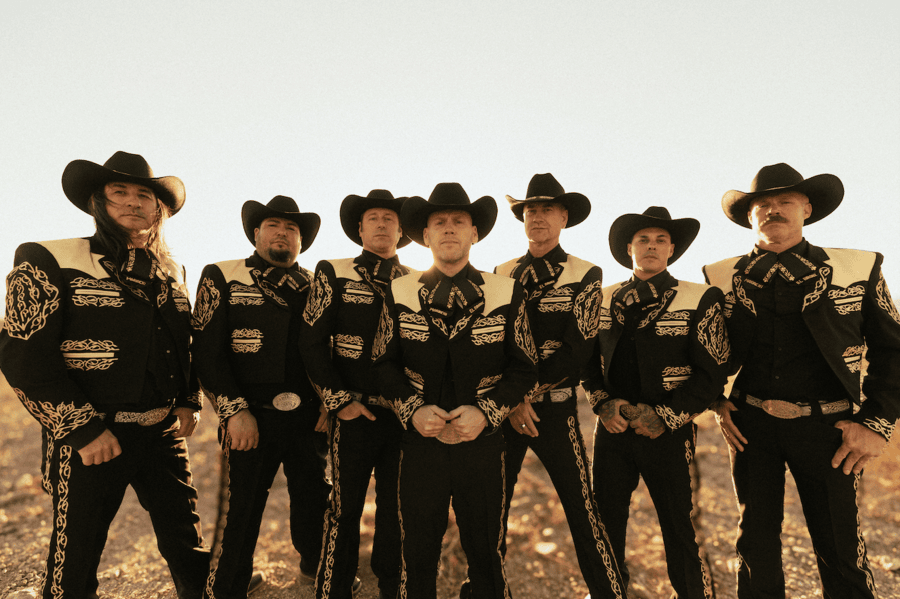
MATT: No, because we always thought the connection was cool. There is a careful line you have to appreciate with the charro suits because there’s a history and a culture there; you can’t mess with that. For us, it was all about: “this is who we are.” We’re this punk rock band jumping into this new genre because we love it and it’s exciting. We didn’t want to hide. For better or worse, we were just going to put it out there. Luckily, people responded the way they did. To be four albums in is crazy to me.
It has been ten years since the last one. Is this something that’s always on your mind, or did you just decide a year ago that it was time to start working?
MATT: As a writer, you’re always writing, but I wasn’t specifically putting away lines for an El Bronx album five years ago. I was just writing to write. When the opportunity comes to make an album, you go back through everything you’ve saved and cherry-pick a line or a melody that fits. Because it had been ten years, there was the pressure of a “comeback” album. Everyone in the band has gone through so much, and the world has changed. You have an overwhelming amount of material to choose from. We’re actually already working on another album because it’s like uncorking the bottle—there’s so much we want to do. Once you finish an album, you’re warmed up. We’re going to tour and promote this one, but behind the scenes, we’re already working on the next one. Once we start, it’s such an exciting process.
Is there always going to be a next Bronx record and a next El Bronx record? I’ve interviewed many bands that tour for a year and a half, the tour ends, and they just lose interest. Are you always thinking there is going to be another one, just a matter of when?
MATT: Yes, I am, and I think we are, too. It definitely gets more complicated the older you get. You want to be able to stick to the crazy schedule of write, record, tour, repeat, but that’s not really us right now. We’ve been a band for so long that you don’t ever want to force things. That’s one of the great things about having two bands to bounce back and forth between: it allows us the comfort to not have to choke it out or do it until it’s exhausted. When we’re doing El Bronx, we do it until it feels like it’s time to switch back to the Bronx. The older we get, the more records we want to write. We’re still in this to win it; this is our life and our livelihood. Can we tour like 25-year-old savages anymore? Not really. Playing live is a big thing for us, and we’re always going to do that, but the shift moves toward continuing to write music and putting out albums and songs that you’re proud of. It’s about doing cool things along the way that people remember.
Are tour plans already set in stone for this year?
MATT: It’s very fluid. Right now, we have a couple of festivals in July over in the UK and Europe. We’re working on a Cinco de Mayo run on the West Coast that’s going to go from probably Tucson to Vancouver. We’re heading to Australia at the end of February, and we’re working on a Texas run and maybe even a headliner in the fall. We’re definitely going to play. You write these songs to play them; that’s a big part of it for us. Just because we have to be a little bit more strategic about it doesn’t mean we’re not going to do it.
Is there a song, artist, or album that takes you back to something super specific when you listen to it?
MATT: There are a bunch, but one that comes to mind is “Highway to Hell” by AC/DC. There was a time when I lived with my brother and we were partying a lot in this fourplex apartment building. We had almost the entire AC/DC catalog on vinyl. For about three months of summer, almost every night at midnight, we would put on “Highway to Hell” and just blast it. It would drive everyone crazy, but everyone kind of enjoyed it, too. We never even had the cops called on us. That song reminds me of just having a great time—the classic feeling of turning it up, fading out the rest of the world, and just rocking out.
When I was in college, my neighbors downstairs were annoyingly loud. I put my huge speakers on the floor pointing down and put on Slayer’s Reign in Blood. As soon as I cranked it, I heard a “pop, pop” and I blew my speakers out. It was a terrible moment.
MATT: Damn. That would have been a great moment, though. That’s a good track to do that to.