While a student at Ohio University in Athens, Ohio during COVID, Nate Wilder used stipend money to buy microphones and turn the basement of his off-campus, bedbug-infested house into a makeshift studio where friends and roommates would record. “We all would sleep until noon, go to class, go to the studio until 3 in the morning,” Wilder recalls at the corner deli that we met at a few weeks ago. It wasn’t his first foray into making music, that was in high school where he played in a band with (New Bomb Turks, Divine Fits, Operators drummer) Sam Brown’s son, and it wasn’t even his first college band, but it was an educational time that would help plant the seeds for what came next.
After moving back to Columbus (about 70 miles northwest of Athens), Wilder and his girlfriend, Olivia Stefanoff, had thoughts of forming a band together. “Olivia learned how to play bass, which is really my instrument, and I started learning guitar to keep the playing field even,” Wilder says. “We’re kind of to the point now, like five years in, where we kind of almost sort of know what we’re doing on those instruments. But, I’m not a virtuoso.”
Big Fat Head was born in 2021 and quickly became a staple of the Columbus music scene, following closely behind their friends Villagerrr and Golomb. The four-song Villain Pop EP was released in 2022 with the full length, Bobo Rising, coming two years later, showcasing the band’s evolving indie-psychedelic-pop sound.
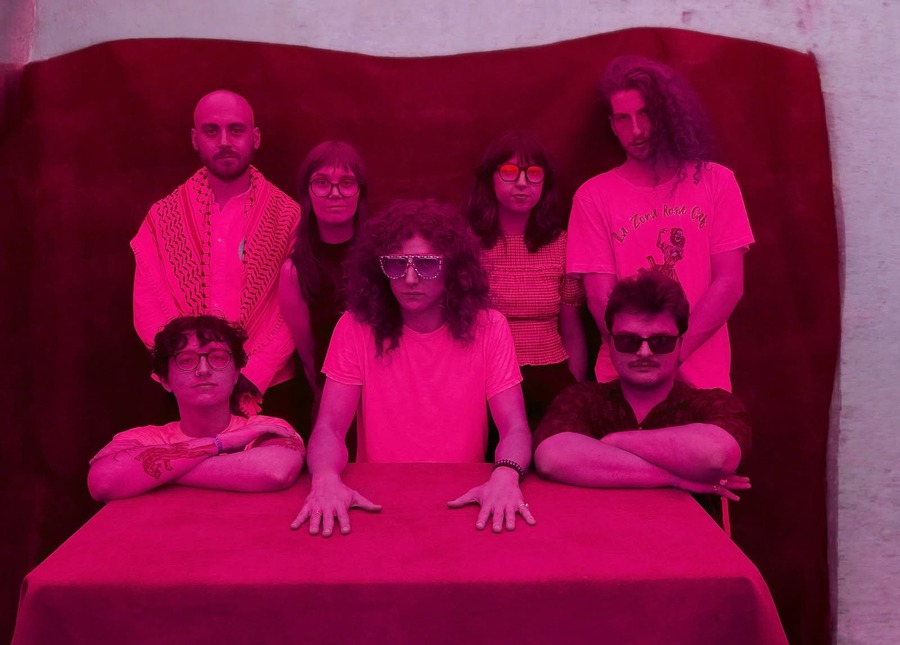
In late July, the band celebrated the release of its latest album, Global Voyeur, with a release party at Rumba Café, one of Columbus’s premier smaller venues. More touring is planned this year with Wilder, Stefanoff, Jordan Latas (guitars, drums, keys) and Stanic Russ (drums, guitar) welcoming Tory Loux (keyboards) and Henry Ross (saxophone) to the lineup.
To get to the heart of Big Fat Head’s sound, I asked Wilder about the local and national artists who’ve shaped his songwriting, then dug into why Global Voyeur took longer than expected to finally land in listeners’ hands.
What were you listening to when you went to college?
NATE: When I first started getting into the rock and roll thing, I sort of assumed that everyone who made it was dead. I thought that guitar music had died because of my birth. In a sense it felt true. I grew up with Backstreet Boys and crunk blasting constantly, and there was a lot of nostalgia radio, so it just felt like it wasn’t happening anymore.
When I first saw Mac DeMarco’s album cover, I thought he was a rapper, so I didn’t listen to it. When I went to college, I finally got into what was cool at the time, this was like 2017, Connan Mockasin, and Mac DeMarco and Ty Segall and the Osees, and a lot of that psychedelic kind of rock and roll stuff that was happening at the time. Tame Impala was exploding at that time too, Currents had been out for a year or two. There was this idea that you could actually do everything that you wanted to do and it didn’t matter if anyone else cared, as long as you gave a fuck about it. If other people catch on, then that’s cool, but there were not really any guarantees that things would happen, and it seemed like people in those bands weren’t holding their breaths. When it did happen for those bands, they just kept doing what they were doing. That was really inspiring.
While you grew up in Columbus, you went to college – and started bands – at Ohio University in Athens, which is about 70 miles away. You returned to Columbus after college rather than moving somewhere like New York or Chicago. Why return home?
NATE: My parents are artists, and I always just kind of wondered why they stuck around Columbus, because I grew up here, and I didn’t really think it was anything super flashy. But after doing some touring and seeing other places, it feels very manageable to live here and conquer an art scene. There are a million people that live here, and that wasn’t necessarily true in the ’80s or ’90s or early 2000s, when these people were making their art. I think there were just about as many venues to play back then, maybe even more. There were more record stores, or just as many as there are now. While there are a million people here, there’s really a thousand to 10,000 making cool art. And, of that, there’s like a hundred that you really need to know and connect with, that you can make stuff with. The odds of anyone getting famous are only good if everyone works together. The best art you’re going to make is when you do it together with others in the scene. The idea of uprooting and being a corn-fed boy in New York seems awful. Going on the subway there, it just feels like everyone’s riding to hell. It’s like the most capitalist place you can imagine.
I don’t know if there is something special happening in Columbus, but there are several bands who are not content with playing the same local venues every couple of weeks and self-releasing music. It’s encouraging to see bands like Villagerrr, Golomb, DANA, and Snarls touring nationally, and, in many cases, internationally, getting record deals, and being recognized by the media outside of Ohio. How did you decide that you didn’t just want to be a Columbus band?
NATE: Mickey from Golomb used to be in two bands. One was called Inner Mikey. I was 15 or 16. I don’t know if I ever saw them live, but I listened to them. And then he was in Stems, who I would go see all the time. Eventually, I was like, “Dude, I like your music.” I did this over and over and over, until eventually I was in a band and we played shows together.
Villagerrr used to be called Mitch Mitchell and they played a show right next to my house. That was the first time I saw them. At first, I was like, “What is this racket?” It’s been super dope to see them explode.
I drew a lot of inspiration from DANA. Chris Lude and those guys are just such punk rock diehards that they always figure out a way to do things. I think that (Columbus music venue) Café Bourbon Street is a super sweet spot. It’s shifted hands a number of times, but it’s always been cool. I don’t know how it fell into Chris’s hands, but I feel like it’s in good hands. The spirit is still alive, and they’ve used it and not abused it and allows bands to keep that circuit going. They book bands with intention, and they keep in touch with the bands they book so that if DANA is looking for a show in another city, they’ve already got a contact. That’s the way a community is formed. Keeping in that same mind, when I go see a band at Bourbon Street, and they’re from Philly, I’ll be like, “Where do you get a good cheesesteak?” Then, if we’re playing Philly, I’ll hit them up.
Have the other bands I’ve mentioned helped lead the way and make things easier for you when it comes to touring and booking shows outside of Ohio?
NATE: It’s nice that Villagerrr, Golomb and DANA are a couple steps ahead of us, because then we can just follow in their footsteps. When I went to SXSW, I was just hitting people up being like, “Yo, you know these bands from Columbus, but you don’t know me yet.” And that seemed to work. I know those bands aren’t going out there and bombing or being dicks so that helps. I’m sure that the people that I hit up that already knew those other bands and put them on SXSW bills were like, “There must be something in the water in Ohio. Why not just add Big Fat Head to our bill?”
Did you just play a ton of shows at SXSW?
NATE: Yeah, maybe too many. I can’t say I regret anything in life, but we got in officially, but we didn’t know that was going to happen until a couple weeks before it happened. We kind of had to make plans like we were going to be there. We were probably not going to have more than one official show, so we tried to fluff it up with some unofficial ones, and all the unofficial ones were sweet. We collectively decided to follow the SXSW rules: you couldn’t have a show after 7 p.m., because that would interfere with the official SXSW time. We kept all our unofficial stuff in the afternoon, which was cool. I did notice that, on some days, we’d hang at the same spot and all of a sudden everyone shows up. It was like, “Why are all these people showing up on a Wednesday afternoon?” But, people in Austin have normal jobs and don’t want to be out late seeing official shows so they come to day parties.
You finished most of the songs on the album in 2024. Why didn’t you release the album last year?
NATE: The band started, basically, in 2021/2022, and then played around town for a year. In 2023 we started playing out-of-town shows. We did a fall and spring tour, I think, in 2023 and 2024. In fall of 2024 we went on our biggest jaunt yet, we went up and played in Montreal and Toronto. When we got back, our keyboard player, who went to school for printmaking, decided that that translated well to becoming a tattoo artist. She was like, “I’m making money doing tattoos, I don’t need to go on the road just to sleep on floors.” Respect. That makes sense. She bowed out right before we were going to record.
We had been slow to the punch about recording since people were traveling a lot that year. We probably should have canceled the recording session after she left the band but I was like, “Everything has to keep going.” I hear about famous bands who, when recording, don’t like the mix or don’t like this or that, but they have to keep going because there is money on the line. When I think about us, there’s a lot less on the line, but that gives me even more reason why we have to do it.
We blew through the recording. We threw down like 14 or 15 songs. The way that we like to record is that we set up on Friday night, maybe track a thing or two, then on Saturday we track all day. On Sunday, we do vocals and some overdubs all day, and then we pack up drive home from the studio in Cincinnati. We had watched the Beatles documentary where they do that, and it was like, “How cool would it be to pretend to be the Beatles for two days and just get things done?” We inherited that vibe. It was awesome.
We ended up not using all of the songs that we recorded for this record. We might have even recorded a few others that we didn’t track in the studio. I think we did at least two songs that were recorded at home and I had someone mix them later. I was really focused on the lyrics more than anything, trying to get them to be as cohesive as possible. Shamefully, the sonics took a backseat for a bit, and it’s noticeable on the second half of the album. But, I think the whole album is tied together pretty well.
So you finished it in 2024?
NATE: We started it in November 2024. We overdubbed it all through 2025. It was pretty much done last summer, and we put out an EP in the fall. At the time, we didn’t know how we were going to package the whole album. Once we locked that in, that’s when we figured everything out, finalized the artwork, and decided what we were going to do. We wanted to try to find someone to pay for it, but that got put aside after getting into SXSW, and after life stuff threw wrenches into the mix. After we found out we got into SXSW, that was a weird four months of, “How the hell are we going to pull this off?” I ended up buying a car to be able to get us to Austin. I was tired of renting.
We just kept plugging along on the songs, and eventually we got it remastered and had enough in the bank that we could pay for it ourselves. We put it out on Clean Demon Records, which is our homie Mario’s label. He used to live in Columbus and he played in bands like Hydrone, Tetnis, and Pal, but he moved back to Cleveland. He’s keeping all this punk rock shit alive. I want to see Clean Demon grow. I want more people to submit stuff. I want to do more tapes. But, like you said, people are always on this four-year cycle of quitting so it’s hard.
I was telling someone about our upcoming album release show and they were like, “Do you actually have the vinyl in hand?” and I was like, “Yep, I actually have it.” They said, “Wow, that’s a first.” That’s a local tragedy. No one ever has their shit together. Honestly, I don’t even think we’re that great of a band. I think it’s just that there are other great bands around here that are too buttoned up, not flexible.
Is everything on the album from last year’s EP or did you rerecord or remaster anything?
NATE: We ended up remastering it. I got hooked up with the guy at Relay Recording, Jon Fintel. He redid it for me, which is cool. I was stressing about it. We’d had someone else in town do it, and they didn’t do a bad job, but I felt like I was maybe hoping something in the mix was going to be fixed in the master, and it didn’t happen. I was like, “Golly, this is just over.” Then Jon did it, and it was exactly what I hoped for.
For local bands, the album release is the end of the cycle. They put all their time and effort into finalizing something that documents what they’ve been doing the last couple of years. In your case, I’m guessing that the album release is just the start, that you’re going to be doing some touring.
NATE: Yeah, in the past, I would definitely say that’s true. I was always trying to put out the album, immediately tour, and get the next album cooking. But with everything that happened last year, and how long it took, there were so many times where it was like, “This album is never going to come out. We’re never even going to be a band.” And then it did, against all odds. The fact that the tour kind of broke the wheels off the bus, and then being able to finish the album and have a cool local show with our friends, it’s like counting my stars and realizing what is actually good, what is tangible out of this thing. At the end of the day, the album release show is really just a cool local show with my friends. It’s not like my goal was trying to be the coolest dude ever in New York. It was, for a while, but then again, I kind of feel like I did some of it.
Playing at the Nelsonville Music Festival was a big goal for us. We’d say, “We’ll never play this.” I’d been rejected like 10 times. But then we got accepted. Well, it was a post-rejection exception because they needed another band. That was super magical. I was crazy stoked about going to the festival because we were playing. I was happy that I was able to check out Geese because we’re kind of an armchair philosopher band. We just bitch about stuff all day instead of practicing. There was a thing where we were like, “Is Geese good or are they not?” Then the whole psyops thing came out which turned out conversation into “Are they a psyop band or not?” I guess, after seeing them, I’m not really ready to dig my heels in either way. I think the good songs they have, they played well, and I can see why people are freaking about them. But, a lot of their songs seem like endless bridges and outros. I love Alex G’s albums, at least the first couple of them, but when we saw him at Nelsonville, it was the same deal. I was like, “Dude, if this were a free show, I don’t even know if I’d watch it. It’s crazy that this is a headlining act.”
Our whole album is dealing with this hypocrisy of my own. I do this all the time, looking down on music, and then I throw together the laziest shit ever and play it. It’s like, who am I to talk about other artists?
I was in college during the birth of ‘90s alternative and indie rock. This album sounds very much like something I would have listened to during that time. If you were ordering coffee at a local coffee shop and someone asked, “How do you describe Big Fat Head’s sound?,” what would you say?
NATE: When someone asks what it sounds like, I say “It sounds really, really good.” The other thing, genre-wise, we like to say “post-post-post-punk.” There’s a lot of ambiguity about the year post-punk started, because it’s basically the same time the punk rock explosion happened. Then there’s got to be post-post-punk to follow that. And because that happened a long time ago, we have to be post that, so we’re post-post-post punk. That’s kind of my thinking.
I would describe your sound as “surfer space pop.”
NATE: My dad said it’s like “psychedelic punk,” two things that naturally shouldn’t go together.
We’ve kind of opened the sound up. I’ve tried to make everything anti-surf-rock in the past. When we started the band, I would go to the guitar player’s amp and turn off the reverb whenever he wasn’t looking. But now he’s got a lot of pedals, and I’ll just let him soak in the reverb. After Felicity, our keyboard player, left, it was like, “Let’s not kill ourselves making this record, let’s just have fun and do it. Let’s see which songs are good enough to release.”
My favorite songs on the album are “Forget It,” “Questions,” and “Paradox.”
NATE: “Questions” is maybe my favorite. That was the one where we walked away and we were all like, “Damn, we made that song?”
We were kind of afraid to put it out too, just because we are kind of ferocious and boisterous and other rambunctious adjectives and that song is not any of those. But yeah, I’m glad we did. It felt good to be a little bit more honest on a lot of this album. I’ve been pretty facetious in a lot of my past lyrics.
I love the saxophone on “Forget It.” I was not expecting that at all so it was a cool surprise.
NATE: It was hard not to just throw it all over the whole thing. I had him record a lot of the saxophone, and we went to the studio with John Hoffman, our engineer. He was sort of like, “Do you really need this one? Do you really need this one?” We whittled it down to where it pops, which is a good thing. I’m happy to have everyone involved. I guess the reason I brought all this up is because Owen, Tori, and Henry have been with us for about a year, but they haven’t slept on floors with us and had the dirtiest, dingiest moments of the band yet. I’m not totally sure what things are going to look like. That’s why I’m really hunkering down on just this release show is going to be cool, we’re all going to be there; the shows that are booked, most of us are going to be there, and we’ll just keep chugging and doing the album, until someone’s really knocking on the door and saying, “If you do this, I’ll give you this.” Then maybe I’ll know exactly what’s going on.
Are there any songwriters that inspire you when you’re writing lyrics?
NATE: I like Beck and Moldy Peaches. I can appreciate Bob Dylan, I just don’t listen to him too much. I like Connie Converse and people who tell stories that are weird. When I listen to folk and rap, I’ll hear words where I’m like, “I’ve never heard anyone say that word or that phrase or that whole sentence.”
In terms of how I’m going to sing or perform live, James Brown, Ray Charles and even John Cale are interesting because they are known to botch lyrics but have energy. The Butthole Surfers are a great example. They’ll make a record and be like, “We do whatever we want on it. We play live and do whatever we want. You’re never going to get what you paid for, so just deal with it.” We try to play the song live the way we recorded it, but I’m also not a perfectionist in that regard. I like to change things up a bit when we play shows. I’ve started recognizing which songs I sing by myself, and can change words to, and which ones other people in the band sing with me. If I start changing words to those songs, they look at me like, “What are you doing?”
That energy comes through in your live performances. I saw you open for Goon and had no idea what was coming next. You kept things interesting.
NATE: That was awesome. I’ve loved that band forever. We used to listen to them when I was in The Wastemen, my college band. We saw they were coming to town, and at two in the morning, day of the show, Goon was like, “You want to come open for us?” I think they just somehow found us, or maybe I had emailed. I think their tour opener had dropped.
We played, but it was a situation where Stan (Russ), our drummer, was going to see White Reaper because they were playing at another club in town. That’s a crazy story within the story. Years ago, we met at the train tracks before a White Reaper show, before Stan did his bands, or I did mine, while we were in high school. We were like 15 or 16, sneaking beers before the show. We might have DM’d White Reaper and been like, “Hey, come hang out with us.” And they did! They showed up at the tracks. That was a pretty pivotal moment for all of us. It was like, “Wow, they’re just real guys. They came and drank beer with us and then went and played a show in front of 300 people.” We were all moshing together at the show and White Reaper saw us and were like, “Hey, there’s Jake. That’s Stan. That’s Nate.”
So, yeah, Stan had to go see White Reaper the night of the Goon show, of course, just because of all that lore. And I had to play the Goon show from all the lore that I had with that band in college. We had our friend Owen Cogburn come and fill in on drums. He literally learned the songs while he was at work, came over and we ran through the set once, showed up at the venue, and the first time we all played it together as a band was on stage. I guess we were decent enough because Goon was like, “Want to come open for us tomorrow in Cleveland?” We went and did that show but Jordan couldn’t do it so Mickey from Golomb filled in on guitar and Stan hopped back in on drums. Goon was like, “We’ve seen you twice, but we feel like we haven’t seen the actual full band at all.”
And you handle everything, from the music to the business stuff?
NATE: This year, right before we opened for Water From Your Eyes, Stan rolled his ankle. It was like, “Oh my god, who could come fill in and save our lives again? Owen did it that one time.” He came in again and saved the day for that show too. Stan’s earned his stripes, and he’s part of the band. Just because he can’t drum doesn’t mean he shouldn’t get to be there in some capacity. Maybe an LA, Nashville, or New York band would operate differently, because it’s business savvy and logical, but I’m none of those things. He’s coming on, playing tambourine and bongos and stuff like that. Now we’re like a month or so into it, and we’re kind of working that into the set. We’ve got Tory (Loux) replacing Felicity on keys, and Henry (Ross) playing saxophone.
Is the dream to get picked up by a label?
NATE: It changed a little bit with the new-school way of everyone doing it by themselves in their basement, but even that’s gotten crazy. The idea of our band being mainstream is impossible for me to imagine. It seems like people are only chasing individuals (solo artists), not bands, and I don’t really want to do that even though I could. There’s the idea that maybe if I become big, then the band will become big at the same time. It’s sort of the Tame Impala public confusion tactic where Kevin Parker is Tame Impala, but he continues to use the band name. At the end of the day, it’s like, “Do you like the music? If so, show up when we play, buy the record.” That’s really all there should be to the thing.
If a label wanted to sign you, would you be able to do that or would you have to work out a deal with Clean Demon?
NATE: Yeah, we can do whatever we want. We paid for this record ourselves. When I made the first tape, and moved to Columbus, I liked the band Hydrone. I saw they were on a label and I was confused about what the label was. Brian Damage debuted as a band around that time and put their thing out on Clean Demon. I think I texted Mario when I figured out that he was the one behind the label and he was like, “Come over to my house, let’s talk about it.” I did and he was like, “I think it’s cool. I’ll put it out if you want. If you want to pay me like $50, I’ll order the cassettes and you make all the profit.” He just did that for me, it was never a for-profit situation. When we did the Bobo Rising album, it had gotten to the point where the label was established, and we had people who wanted to buy it. We had a mutual deal with Mario where he made whatever we sold on the internet, we made whatever we sold in person, and it would just grow together. It’s still that way and now he’s putting out music by Winston Hytwr and Spitcurl and a bunch of other bands that people are listening to so it brings attention to all the bands.
Don’t get me wrong, I would sign the shittiest deal in front of me so quickly if it meant I could go on the road and make another album, even if I didn’t make any money on it.
We’ve only gotten as far as we have from doing everything that we’ve done. I think it could have happened quicker, could be way bigger, all that stuff but I’m not upset about that, because the shows we play here in town are still cool. I’ll just keep making the records, and if I can hype it up and tell people to listen to it somehow, then I’ll do the same thing over and over and over again, forever.
You mentioned Water From Your Eyes. What other touring bands have you performed on bills with?
NATE: Off the top of my head: Being Dead, They Are Gutting a Body of Water, we did that in Athens, Sweeping Promises, Bunny from Chicago. We played Athens Community Festival a couple years ago, and we played an after-party at the end of the day, so we played within an hour’s proximity of those bands, but we didn’t technically share the stage but Guerilla Toss and Os Mutantes were the headliners.
Is there a local band that’s maybe a step or two steps ahead of you that you think to yourself, “I’d like to be where they are some day”?
NATE: Yeah, I like what Golomb’s doing. They’re in the ultimate sweet spot: never being a headliner, always opening for someone that everyone loves, and those people are probably going to love you too. The odds are pretty good, especially when you’re playing with bands you enjoy, which I think they’re doing often.
I’ve only seen Golomb once, they were opening for Robber Robber. I think you were there too.
NATE: The Robber Robber folks kind of helped us when we went to Vermont. They turned us on to a band or two. The show we played there was fucking insane. There were hundreds of people there, and they set up a little table and were selling tickets, and everyone made like a thousand dollars. This is the most we’ve ever made, especially at a house show. Burlington was crazy. It was definitely a cool, hippie escape. I loved it.
If we meet back here in December and I ask you what has been going on since the first time we talked, in a perfect world, where everything you’re hoping will happen actually comes to fruition, what will you tell me?
NATE: There’s like two routes I’m thinking of. We’re going to try to get out of town a little bit, so hopefully we’ll be able to do a jaunt in October, here and there. We have so many songs that we’re sitting on. Sometimes we do this alias thing where we’re called PP and Nemo, and we have like three songs out under that alias. I have like a full 15 songs or more that I could pump out. They’re all pretty short, and they’re all sort of in the same style, with me demoing them at home. They’re meant for just guitar, synth, and two drums. I kind of want to shop that around. I don’t know if it’ll be out by December, but hopefully I’ll know more about that by then.
The other alternative is we have at least 10 songs that were basically supposed to be for this album. I had already demoed them, and when we took them to the studio and added live drums, or added live guitar, I was like, “Eh, no. I don’t want to invest more time in this. I like my demos more. We’ll come back to these songs when we know what’s going on.” Now I think I know what’s going on, and I can see how they’re going to glue together. I’ve been pouring over it all day, like yesterday, and trying to decide whether I’m going to finish it myself or give it to somebody. I guess both of the things I’m talking about are right on the edge of “I think that they’re good, but I’m also the only person who’s heard this,” so I don’t really know what other people are going to think. Everything we’ve done in the past, except for the first album, which I did entirely myself, we had someone else mixing it. For this new stuff, there’s at least another set of ears needed to help me figure out if this acceptable.
You brought up the Beatles documentary earlier. The thing that blew my mind was seeing how they took parts from a few different songs to create something entirely new.
NATE: The weirdest part is when Paul is like, “Oh yeah, have you heard that band Canned Heat? I really like the way he sings.” Then they do “Get Back” and Paul’s like “I’m going to sing like him.” I’m like, “Why, dude? You’re one of the most famous singers ever, why would you do that?” But they just didn’t really give a shit. I just watched the John Lennon documentary, Imagine, with the rest of the band. It’s pretty crazy too. John Lennon’s like, “I want to make a record with the best fucking band ever.” Everyone in the band has a crazy rap sheet. Like, the guy who plays keys for Elton John, the guy who was the drummer for Jimi Hendrix after Mitch Mitchell quit. He gets his first version of the Plastic Ono Band together and this crazy, nutty Motown guy shows up – Phil Spector. He shows up and they have this whole thing going on. Some hippie dude shows up and is like, “Can I live here?” and they’re like, “No, but you can come inside and eat.” A lot of weird shit happens. Miles Davis comes over and plays basketball. They play a song like 50 times, do it different every time, and then eventually give up. Or, they’ll do a song where John sings, “She loves me like a cauliflower” and then says, “I’m not going to ever play this song again.” It was really inspiring.
What was also doubly awesome about that documentary is, we watched it for days straight, watched the whole thing in our house, and then when we were done, we were like, “What band should we move in with next?” Metallica’s documentary was on Netflix, and obviously Metallica is probably the most successful rock band of all time, so anything I say about it doesn’t even matter, but we kind of like to poke fun at how serious they are. The documentary is so hilarious, because they have the same preface as the Beatles. They’re one of the biggest bands of their time, everyone wants another record, they’re facing inner turmoil, and they don’t have the songs together at all. Now they’ve got to get together in the room, they’ve got to crank it out, everyone’s looking at them. The Beatles kind of fumble through almost making an album, and then just play on the roof and quit. They basically fail and quit multiple times through the documentary, but Metallica rises to the occasion and makes one of the shittiest albums ever, and they quit multiple times. They quit and rejoin, and have to find a new guy, and go through all that. It’s just so funny, because it kind of shows what you need to be successful. Everything the Beatles do is something I feel like I wish I could do, that’s the way I like to do it, versus watching Metallica ad-libbing their lyrics and just making shit up on the fly. The Beatles kind of were doing that too, but it’s just the way they’re doing it. It’s so interesting to see them back-to-back like that. I just somehow feel like I learned more out of the Metallica one.
There are songs that, when you hear them, you close your eyes and you’re transported. What song is that for you?
NATE: I’d say two kind of take me back to the same place: “Come Together” by the Beatles, which is up there because they’re the Beatles and it’s one of the most popular songs; and “Birmingham” by the Wolfgang Press, which is probably my favorite song of all time. Maybe I’ll throw in “Buena” by Morphine too. All three of those songs make me feel like I’m four years old, like I’m at a barbecue with an RC car or something. It’s a big nostalgia thing for me. As a kid, I could never really fathom that they were making this music in real time; they just kind of lived in the record and the art to me, musically. I’d seen people play guitar, I’d seen concerts, but I’d never been to anything crazy, because, again, it’s Columbus.
Those are the three songs, but a similar memory from a couple years ago is “6:30”: if I hear “6:30” by Snoop Dogg and Wiz Khalifa, I smell weed in the air and start looking around.
I have to imagine that years from now, someone will say, “This one song by Big Fat Head reminds me of the time I was driving down High St. when I was in college.” I think that’s what’s so cool about music. Every song means something different to every person. Listeners will assign their own stories and memories to something you wrote.
NATE: My old bands were kind of hung up on, like, “I just hope someone listens to this after we die.” The older I get, the more I’m like, “It would be nice to know someone liked it right now.”