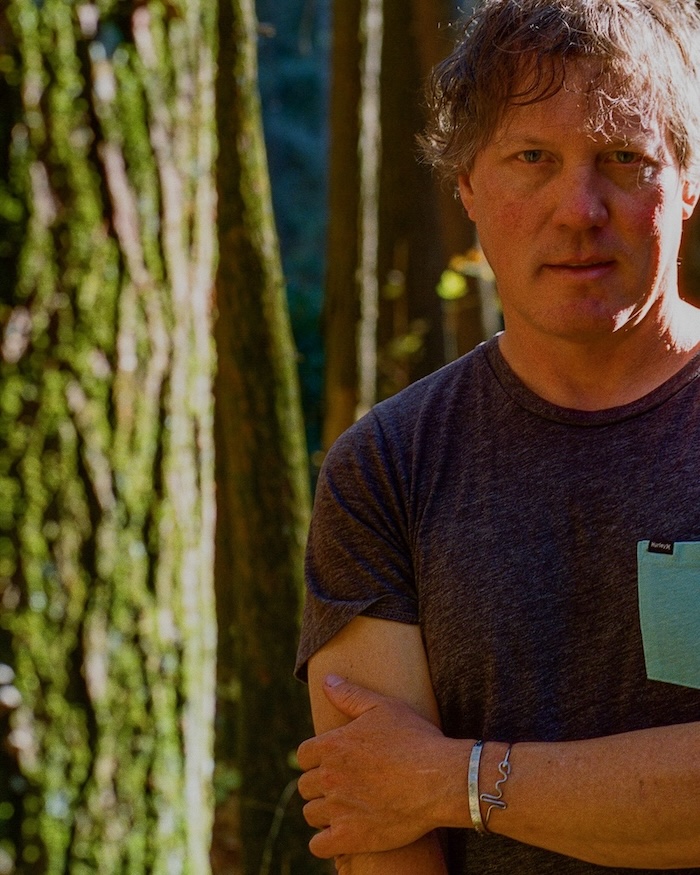
Photo by Sam Johnson
There’s a certain kind of musician who gets more interesting as they get older, not because they’ve given up on anything, but because they’ve gotten clearer about what they actually want. Hunter Morris is that kind of musician. Nowhere, NW, his debut for Strolling Bones Records, is his most personal record to date, and it sounds like it.
Morris runs a fly-fishing guide business up in Georgia. It pays the bills and, when the season slows down and the money’s right, it buys him time in the studio. He’s been releasing music since 2010, when his first band, Gift Horse, put out their only full-length record, Mountain of Youth, an album title he never quite let go of. Gift Horse did what young bands do: they toured, slept on floors, played whatever rooms would have them. It wasn’t glamorous and it wasn’t making anybody rich, but it was the kind of formative, figure-it-out-as-you-go experience that leaves a mark. When the big time didn’t materialize, or maybe when Morris stopped measuring things that way, Gift Horse ran its course, and he moved on.
Morris kept writing. In 2017, he launched Hunter Morris & Blue Blood, a project that gave him room to experiment, a little more pop-oriented, a little more collaborative in spirit. Blue Blood’s 2021 record, Give In to the Livin’, was a solid entry, but by the time Morris had a new batch of songs ready, something had shifted. These songs didn’t fit the Blue Blood name. They were quieter, more direct, less likely to hide behind a clever turn of phrase. He describes this as the most true-to-self album he’s ever made, and talking to him about it, you believe it. He sounds unburdened in a way that’s hard to fake.
So he went back to the Gift Horse catalog and pulled out a name he’d been sitting on for years: Mountain of Youth. The meaning, he’ll tell you, has changed as he’s gotten older: more reflective, more earned. For this project, for where he is right now, it was the right name. The only name, really.
The music itself lands somewhere between Tom Petty and Kurt Vile, not Southern rock in the Skynyrd or Allman Brothers sense, but that other kind of Southern rock, the American kind, the kind that doesn’t announce itself. There are no big choruses here, no flashy guitar solos, no bid for radio play. These are songs for the working man whose idea of a good weekend involves a fishing rod, a back porch, a cold beer, and maybe a bonfire if the neighbors are around. Simple life music. Unhurried. Unimpressed by its own ambitions.
Morris knows the math. The days of coast-to-coast tours and label showcases are behind him. He’s got a business to run, clients to guide down rivers, a life that doesn’t pause for rock and roll dreams. But he’ll keep making records as long as there’s an appetite for them and, if we’re being honest, even if there isn’t. Because for Morris, the songs aren’t really about being heard. Being heard is just the bonus. Along with this feature, we’re premiering the video for “Only in the Wild,” directed by Cartter Fontaine. You’ll find it deeper in the conversation, where Morris talks about the song.
All conversations with musicians are interesting, but this one I won’t forget. Morris was on his friend’s porch when a lawn mowing service showed up and, naturally, made a beeline for the side of the house where he was sitting. We pushed through it, and despite the interruptions, it turned out to be a great conversation, starting with a question that had been itching at me in the days leading up to the call: Morris isn’t an uncommon last name, and given his Georgia roots, I had to ask.
Are you related to T. Hardy Morris?
HUNTER: Yeah, that’s my cousin. We grew up like brothers, we’re very close.
I had the chance to talk with him 5 years ago. I was a big fan of his band, Dead Confederate, and got to see them live a few times. I was big into grunge in the early ‘90s and Dead Confederate was like a Southern grunge band without sounding like they were from Seattle.
HUNTER: I think that resonated with a lot of people. It was very clearly an homage to that, but without being just a rip-off. They were a great band. I used to live with all those guys, and my old band, Gift Horse, would play with them a lot. Obviously the connection is Hardy, but I’m still friends with everybody that was in that band.
Was Gift Horse a similar style of music?
HUNTER: Yeah, it was in that same vein, but I’m a keys player first, so I played Rhodes and organ as the frontman of the band. The songs were written a lot differently because they were all written on keys. There was a lot of Rhodes-based stuff, but kind of grungy, kinda heavy. I write everything on guitar most of these days, so I write songs a lot differently, which is why I’ve had multiple projects, creating different ways to come up with song ideas.
Gift Horse only did one full-length album. Is it streaming anywhere?
HUNTER: I need to get it streaming, because I’ve been thinking about it a lot lately [Note: The album is streaming on Bandcamp]. I love to write songs, and so I’m bad about it. Even right now, with this album about to come out, I’ve got a solo gig tonight in Atlanta, and I need to run through the songs, but I spent all of last night writing, because once it’s out, I’m ready to write and record the next album. Once I moved on from Gift Horse to my next band, Blue Blood, I just never played one of those Gift Horse songs ever again. I’ve been thinking about that lately. I should re-learn some of those songs and play them if I’m going to be playing a lot more solo shows.
It sounds like you’re able to put songs on a shelf after you’ve released them in order to move onto something new.
HUNTER: That’s a great way of saying it. The work is making the record, and then once the record’s out, it’s time to go back to work. I love playing the songs that I put so much work into. It’s just that I’m obsessed with writing the next album’s worth of songs. The obsession is in the creation, you know?
What was the timeline on writing and recording Nowhere, NW?
HUNTER: A lot of these were written in the year or so before recording, so pretty recent. There’s one song in particular that I’ve had for years but just never had the right setting for it. Most of it was written within a year or two before recording, and then it was recorded over the course of about a year in three or four different sessions, then mixed once we were done with it. The first song on the album, “Automatic Days,” was the first one I wrote for this album, so that’s been a couple of years, and it kind of shaped the concept of everything. Once I had that song, I kind of knew how I was going to form these characters and do a different thing, and I knew also that that was going to be a new band.
I kind of did a crash course, because I write pretty slow compared to a lot of people. I’ll get the chord progression and the melody, and usually the key subject matter, pretty quick — I’m like, that’s a song. But then I fine-tune lyrics over time, and if it’s not right, it’s just not done yet. It might take me a year to finish crafting them. They’ll just come in little bursts.
So I kind of buckled down and wrote a lot more than the ten songs that are on there — some I did something else with, some are sitting on the back burner, some I never quite finished. I put a lot of work in, more so than ever. I was determined not to have any songs on there that are just kind of filler, you know?
And then we recorded it over the course of a year, which sounds like a long time — but just for money reasons and work reasons, because I have a fly fishing company, so I’m not in Athens all the time. When we’re busy, I’m up in the mountains for months at a time sometimes. So I had to plan sessions around when I had saved up some money, when I was going to be home, and could take a week off of work.
With your business, are you always thinking about music, or can you separate the musician from the business owner?
HUNTER: It just depends on the day. Some people need a lot of attention because I’m teaching them how to fish or guiding them as they’re going. Other people have been fishing with me for years and they’re pretty self-sufficient. But there’s definitely moments in every day where I’m going through lyrics in my head. It’s very conducive to that. It’s pretty inspiring to be out where you’re just in the real, natural world, and not tempted to look at your phone or whatever, all the stupid stuff we do.
So the first song you wrote for the album actually wound up being the first song on the album.
HUNTER: That has honestly never happened before, and it was pretty inspiring. The only song I had written before that, which was years before, was the last song, the lullaby, “Until You’re Dreaming.”
I was like, “Alright, now I finally have a place to use this song.” The first song is this couple at the end of their life, lamenting what they didn’t do with their lives, and then the last song is this lullaby of new parents singing to a new baby. I knew before we even did the demos that I had the first song and the last song, which has never happened before. And then when I would show the songs to Ben [Hackett], who I recorded with, to Hardy, everybody was like, “‘Automatic Days’ is definitely the first song, right?” without me telling them that at all. Everybody that heard it, when I sent them the demos, most of them said, “That’s going to be the first track.”
That’s not how it normally works, but for some reason this felt pretty organic and natural. If you’re writing a novel and you know this character introduction and you know the conclusion that wraps up the whole narrative, it’s pretty fun to get in there and create all the stuff that happens in between.
If the album were a book, is it more fact or fiction?
HUNTER: It’s a pretty good blend. It’s probably more fact than fiction, for two reasons. One is that there’s a lot of autobiographical stuff with getting older and picking apart decisions that have been made in life, and looking at my parents and what I disagree with about how they’ve lived their lives. But I also wanted there to be a relatable element, where all fiction is based on some fact. Every character in there, if it might not be about exactly a specific person, it’s based on something I’ve experienced or seen. It was kind of cool to create these fictional characters to have the freedom to say what I really meant to say.
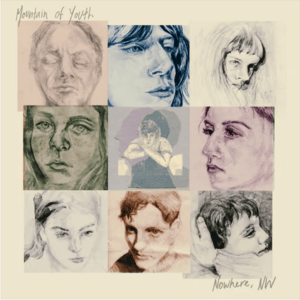
That’s actually where the artwork came from. I commissioned my friend Delaney [Dusch] to draw sketches. She’s a really talented artist who does these sketches that are really beautiful, but not overly precise, so they can kind of be someone that you know. I wanted a bunch of characters, a bunch of sketches of people, black and white, no hair color, no eye color, so it can look like and relate to a bunch of different people. I tried to do the same thing with the characters in the songs.
Growing up and listening to music, were you in awe of artists that seemed untouchable, or were you more the type to go see your friends playing at local clubs?
HUNTER: I did kind of look up to them as untouchable. And then I think once I figured out the relatability … that’s honestly a really good question, because I think that’s a lot of what shaped me. With Gift Horse, I was kind of following influences pretty closely, because I was not sure of myself. Imposter syndrome, you know what I mean? And then Blue Blood was the opposite. I was just trying things, and it ended up being kind of a polished pop sound thing. I would take these weird ideas for songs and put a sheen on them and make them a pop song with a good hook. It was cool, but weird. A lot of the songs were really hooky, but you didn’t know how you got there, and I was just trying to be too different, almost.
With Mountain of Youth, it’s kind of “be what you are, man.” This is the first time I’ve told anyone this. I’m playing a solo show tonight. I’ve released a hundred and something songs on four full-length albums and a bunch of EPs, and I’ve never been able to do a set, just me and a guitar. I wrote all the songs so I could play the album front to back and have it resonate. I’m not some shredder guitar player, by any means. But I wanted these songs to be where I can literally sit there with an acoustic guitar and play all of them, and it still hits.
So you’ve always written songs with the band in mind?
HUNTER: I always would write songs based on the belief that I was a good songwriter, but not a very good player. So I was writing songs with the band in mind always. I’ll leave space here for this, I’ll leave space here for that, and let the drummer figure it out. Even though it was my project, I would enlist my friends who are really good musicians. Ben, who produced and engineered the album and played on I think every song, I would still just come in with the bare bones of it and let him figure it out. We’d get different people to come in. I got a ton of different friends to play on the album, like, “Oh, you know who’d be perfect for this?” But the bones of the song were still pretty based on being able to play it on an acoustic guitar. Everything that we added was accenting what was already there, as opposed to filling in a gap.
I wrote the song around the melody versus just having the melody and letting the other stuff fill it in. And then a lot of times we would add stuff and be like, “Nope, take that back out.” Some of these songs are definitely the sparsest arrangements I’ve ever done, and I love it. There’s a couple of rockers on there where there’s a lot going on, and I feel like even those have the effect of making the other ones more impactful when it steps back and it’s real sparse.
Are you going to stick close to the record arrangements in your live show, or do some songs take on longer excursions?
HUNTER: We stick pretty close to it. I’ve only played with the full band a handful of times, and it’s been a little different lineup every time. We’ve played them pretty much to the arrangement and structure that’s on the album, and I feel like we’ll stick with that moving forward. Now that the album will be out, I haven’t really tried to book full band stuff, I’ve just been playing solo or duo sets, just to have those dialed in.
This band, Mountain of Youth, really didn’t exist until that first single came out a month or two ago so for me to be trying to book shows for my new band. It’s been tough. I’m going to get through release week, and we’ve got a couple of shows. We’re going to play AthFest (in Athens, Georgia) in June and I’ll work on some Atlanta and Chattanooga and Athens shows. Once the album’s out, I’ll dial in the full band arrangements.
When I first got a press release about the album, I didn’t know if Mountain of Youth was a band that you were collaborating with or if you were Mountain of Youth.
HUNTER: Yeah, a lot of people wanted me to do it that way because I’ve had twenty-some years of making music with other bands. The album says Mountain of Youth, that’s what I book shows under, it was a good way to list it on the streaming platforms. From an artistic standpoint, I just wanted to be Mountain of Youth. I don’t care if my name’s in there.
What’s the difference between Mountain of Youth and Blue Blood?
HUNTER: They’re separate projects. I wanted to write these songs differently, it’s about real stuff. Blue Blood was too, but I kind of masked it. It just felt like a different project. I wanted to call it something different. And the one album that we did for Gift Horse was called Mountain of Youth. When I came up with that concept, it was the beginning of my series. Making a proper album and touring was like embarking on a daunting journey. Now, fifteen years or more later since I came up with that idea, it means something a lot different. Mountain of Youth was kind of like the collective acquisition of the knowledge and experiences of youth piled on top. It’s a concept I’ve had with me for a long time, and it just means something very different than it did when I first came up with it in the first place.
At some point, a Mountain of Youth album’s going to have to be called Gift Horse, sort of the full circle moment.
HUNTER: That’s kind of what the album’s about. It’s this journey that you go on, don’t treat it like it’s just going to always be one thing, it’s always changing, you’re always growing until you’re not. The full circle thing is kind of a pretty big part of it. I know you’re joking about that, but that wouldn’t be out of the realm of possibility. It’s your experience, it’s not just little projects, it’s your life. I heard an artist say that one time, I think it was Sufjan Stevens – “This is not an art project, this is my life.” You’re writing about your life. You pay attention as you’re going along and see where it takes you, and do the best you can with where it takes you.
When I interviewed Adam Elk of The Mommyheads, he jokingly said that he wished he hadn’t started writing songs until he was in his 40s because he has so much more life experience than he did when he started writing music in his early 20s. Does that resonate with you?
HUNTER: That is so true. I’ve thought recently about how excited I am about the Mountain of Youth thing, mainly because it’s real, and I’m still doing it, and I’m so thankful that I’m still doing it, and I have so much more to say. I feel like it would have been a waste to have used up a shot when I was younger when I didn’t really know what I was trying to do. Now this feels real, this feels like me. Nothing big may ever come of it, it probably won’t, because I’ve got a company to run and a mortgage payment. Going out and being in your twenties and just being willing to sleep on a floor and live out of a van, that was fun. But I’m glad I didn’t go for it so much that I burnt out on it. I definitely did enough that I was like, “I can’t do this anymore because I’m losing money doing this.” But it’s cool to still have that hunger to say something and have so much more experience and knowledge and perspective to be able to properly say what I used to have in there but just couldn’t convey. It was hypothetical then. This is real. These are things that I’ve seen in the world. I’m more proud of this than anything I’ve ever written.
I imagine early on, you’re like, “How many albums am I selling?” And then once you get past the idea that sales numbers may never be what you hope, you can then concentrate on making music that you’re happy with rather than trying to write for an audience that may or may not be there.
HUNTER: Absolutely. I’ve always done what I wanted to do musically as far as recording and performing, but still, the motivation has always been, “How do I get people to listen?” I care way less now about how many people listen. I care a lot more about having people listen because I want them to get something from it, not because I want to see the numbers. It’s truly art for the sake of art. And the response so far has been the best I’ve ever had for anything I’ve done. I feel like that’s not coincidental. I feel like that’s because it’s coming from the most real place. Some of the stuff in those songs, although it’s quote-unquote fictional, it’s not, you know what I mean? It’s pretty heavy, and I’ve always had that, but I’ve always buried it in a happy-sounding song. “Automatic Days” sounds like a happy song, and it is not a happy song. It’s about two people that wasted their lives and have nothing to show for it. I didn’t do that little ironic thing on all of the songs, but I did it on that one because it just set a weird, dark tone, like, “Wait a minute, I don’t think this is a happy song.” And then the rest of the album proceeds to show you that these aren’t really happy songs.
To this day, I will always try to make the first listen to a new album a full album listen. As you mentioned, I really like how the opening song and closing song really are the bookends and there’s a really good story between those two songs. There are a few songs I’d love to learn more about: “Only in the Wild,” “Invisible Boy,” and “Until You’re Dreaming.” Let’s start with “Only in the Wild.”
HUNTER: I’d love to talk about any of them, but especially those. They’re three that mean a lot to me. “Only in the Wild” is … I kind of had a little bit of a mental deal. I love solitude, I love being outdoors, that’s what I do for a living, and when I need to get right, that’s where I go. But on the flip side, when I’m up here working for weeks or months at a time, I’ve had some pretty self-destructive habits over the years. And it just kind of occurred to me that I do this extreme thing – being in the wilderness and being a wild, crazy person – and they’re kind of the same thing. It’s searching for that meaning. Me partying like an insane person for days at a time comes from the same place as me just wanting to be alone in the middle of the woods staring at a river by myself for hours. “Only in the Wild” is me covering the whole spectrum of what this is all about. There’s that line in the bridge, “Precious days and endless nights.” It’s like, you have so few days, and you should get the most you can out of all of them, but yet I’m partying all night, and I could be writing a song. Where’s the balance? I thought that was a pretty integral part of what the album’s about. If you’re asking these questions, that’s good. You’re never going to find the answer. But I’m just pushing myself to the edge always, trying to find what I’m all about, what we’re all about. I want to live my life, I want to be around, and I want to experience as much as I can, and I want to get just as close as I can to find out how far I can push it. That’s kind of scary, but it’s kind of invigorating and exciting, too. I’m going to live this life while I’ve got it to live.
Thanks for sharing that insight. What about “Invisible Boy”?
HUNTER: “Invisible Boy” is a fictional boy who’s now a man, kind of giving himself the advice that his dad never gave him. I didn’t get a lot of parenting, and I kind of had to learn a lot of lessons the hard way. So that’s me talking to a younger me, trying to give that advice that I never got. Just telling myself, “Hey, when you grow up, you’re going to figure this all out, and you’re going to not be invisible.” And the other part that’s really important in that song is to keep your childlike curiosity, because we’re all just kids. We’re all just at different stages of childhood, basically. Always be curious, always take joy in all the little things that made you happy when you were a little kid, that’s the stuff that should still make you happy. It’s important not to lose that as you get older. So I think I’m saying: it’s all going to work out as best as it can, just hang in there. And then even when you become the thing that you think you want to be, still remember the simple things. You’ll figure it all out, but don’t ever figure it all out. Don’t ever think that you’re actually going to figure it all out, because then you don’t have that childlike curiosity and wonder.
You already told me a little bit about “Until You’re Dreaming” but do you want to talk more about it?
HUNTER: It’s kind of a really similar theme to what I was just talking about with “Invisible Boy.” You start the album with the older couple at the end of their lives, wishing they had not just sat around and done nothing their whole lives. Don’t be those people. And the last song, “Until You’re Dreaming,” is about a new baby and thinking about how no matter how old you are, you can start a new life. There’s also a little bit of sadness in it. We always wish we could go back and kind of do it all over again and do it better. But that’s a happy sentiment that’s not really real. I just thought it was cool to start with lives ending, with no hope, and to end with life beginning, and hope, and all the wonder and all the joy and beauty in the world that’s still yet to come.
What do you listen to while you’re driving? What about when you’re at home?
HUNTER: I travel between the mountains and Athens a lot. Home and music are in Athens, but I work a lot. I listen to Sirius XMU. That’s all that’s ever in my car, because it keeps throwing new stuff at me. As far as when I’m home and I’m going to play something, I love John Prine, Neil Young, Tom Petty. I like Modest Mouse a lot, I like Isaac Brock’s songwriting a lot. I like for a song to paint a picture. The internal rhyme and the alliteration and just cool rhymes, that’s what draws you in. And then you’re like, “Damn, those are powerful lyrics.” I love lyrics, and I put so much effort into them, but if the song doesn’t feel right, if it doesn’t paint a picture, it’s not working. That’s what I like: when a songwriter paints a picture and just uses the words of a song in a way that sounds really good.
At home, if friends are over, that’s when I use the record player. If I’m there by myself, I rarely play music because I listen to a ton of music while I’m driving, and a lot of times at home I’ll sit down on the piano or the organ and just play, or work on a song, or pick up the acoustic guitar on the couch. That’s my music when I’m at the house.
I love the band Fust and really like the way Aaron Dowdy writes songs. He told me that he will use people’s names when he’s trying to convey emotions because if the listener can put a name and face to it, they’ll hopefully pick up on what he’s singing about even though he’s not really singing about real people.
HUNTER: That’s crazy. That’s exactly what I did on this album. I just didn’t give them names. But when we talked about this a little bit earlier, I was like, “I want you to hear it and be like, ‘I can see that guy.’” That “This Lonely Home” song, I can see this old lady sitting there just staring at the heater, wondering where her life went. Or “Invisible Boy,” I want you to be able to see this kid just kind of staring out into the abyss, wondering why he hasn’t figured this out. I want you to see the hopelessness on his face. I don’t want you to see me, I want you to see yourself as a kid. Or your child. And without giving names to the people, I was trying to do something really similar.
If I call you in December and ask how your last 6 or 7 months have been, if things go the way you’re hoping they will, what will you tell me?
HUNTER: I can’t just go on tour. I mean, I would if it was to go open for some band that I’d love to open for, but the days of me going on a month-long tour just because I want to say I did are kind of over, you know what I mean?
So I’m not gonna sell records that way. But I’ve got my fishing business, I’ve got really good friends that love music and are always asking when they can come see me play, when they can buy an album. And at least the last few years, I haven’t really toured or played a lot of shows because I didn’t have a new album out to promote. So it’s really fun to be doing that again.
But a lot of the success will be a slow burn, is my point. If this album hits, it’ll probably be more the word getting out over a longer period of time, just because I’m not touring a bunch. It’s just gonna be word getting out and people hopefully catching on.
If I feel like there’s an appetite for another album, that’s what’s gonna motivate me to be like, hey, get to work, because by the time I’m done writing, it’s probably gonna be a year, year and a half before the album comes out. So if things are going well, it’s gonna motivate me to get to work writing and keep this whole thing going. That’s kind of what this album is about.
I’ll ask you the same final question I ask everyone I interview. What’s a song that, when you hear it now, takes you back to a specific time and place in your life?
HUNTER: I was probably still a teenager, I had only a handful of CDs, and I had had a couple of beers, and I was driving my old Blazer, and I was listening to the album Where It All Begins by the Allman Brothers. The song “Back Where It All Begins,” if my memory serves me correctly, was playing, and it had just rained, and I was going too fast. I probably had bald tires, and I basically hydroplaned and did a complete 360, and just ended up facing right back where I was supposed to be. My buddy was in the car, and I just looked at him, and we didn’t even say anything. We’re going like 50 miles an hour, and did a complete 360. It could have flipped and killed us. And we just drove off and never talked about it. I’ve never even told anybody that happened, until now. I also remember two albums that I just remember being like, “I want to do that.” One is Lonesome Crowded West by Modest Mouse, and the other is that Shins album, Oh, Inverted World. I’m not even a huge Shins fan or anything, but I just remember being like, “I want to put that many good melodies in a song.” The way those Modest Mouse songs talk about life, and the way those melodies in the Shins album just never leave your ears, as a songwriter, I can remember the first time I heard Lonesome Crowded West and being like, “Oh, so you can do the melody thing and the paint-a-picture thing and have some oomph to it.” That’s life-altering.