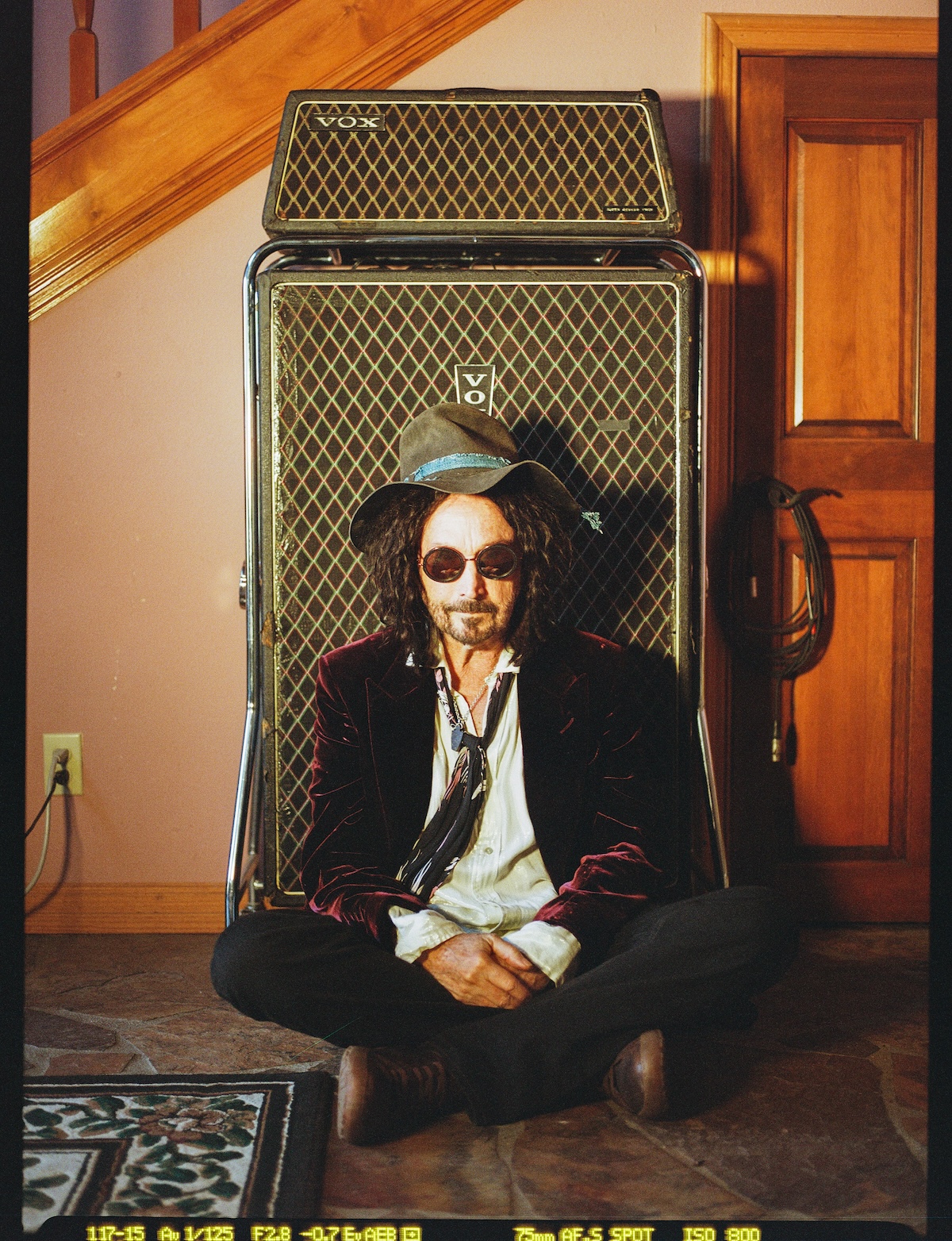
There was never any reason to doubt Mike Campbell’s chances of making a frontline success of his one-time side project The Dirty Knobs. On top of being one of rock and roll’s most tuneful guitar soloists, he wrote or co-wrote piles of great rock and jangle-pop singles including “Refugee” and “A Woman in Love (It’s Not Me)” during 40 years as co-captain of Tom Petty and the Heartbreakers. He scored hits elsewhere with songs including Don Henley’s “The Boys of Summer,” Stevie Nicks’ “Stop Draggin’ My Heart Around,” and Lone Justice’s “Ways to Be Wicked.”
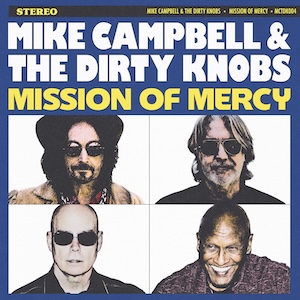
Campbell has been a reliably loyal team player, though. As a result, it wasn’t until after the untimely loss of Petty in 2017 that the guitarist released his own album. The Dirty Knobs have been around for 25 years, but 2020’s Wreckless Abandon was the first collection released under the band’s banner. Now comes fourth album Mission of Mercy, a veritable jukebox of styles centered upon classic pop, rock, and roots music.
The Dirty Knobs will tour extensively in 2026 with stops including the Vic Theatre in Chicago on Thursday, July 9 and the Town Hall in New York City on Wednesday, September 30. Campbell spoke by phone with The Big Takeover’s Jeff Elbel with a week to go before launch.
Big Takeover: How are The Dirty Knobs different now than in the beginning?
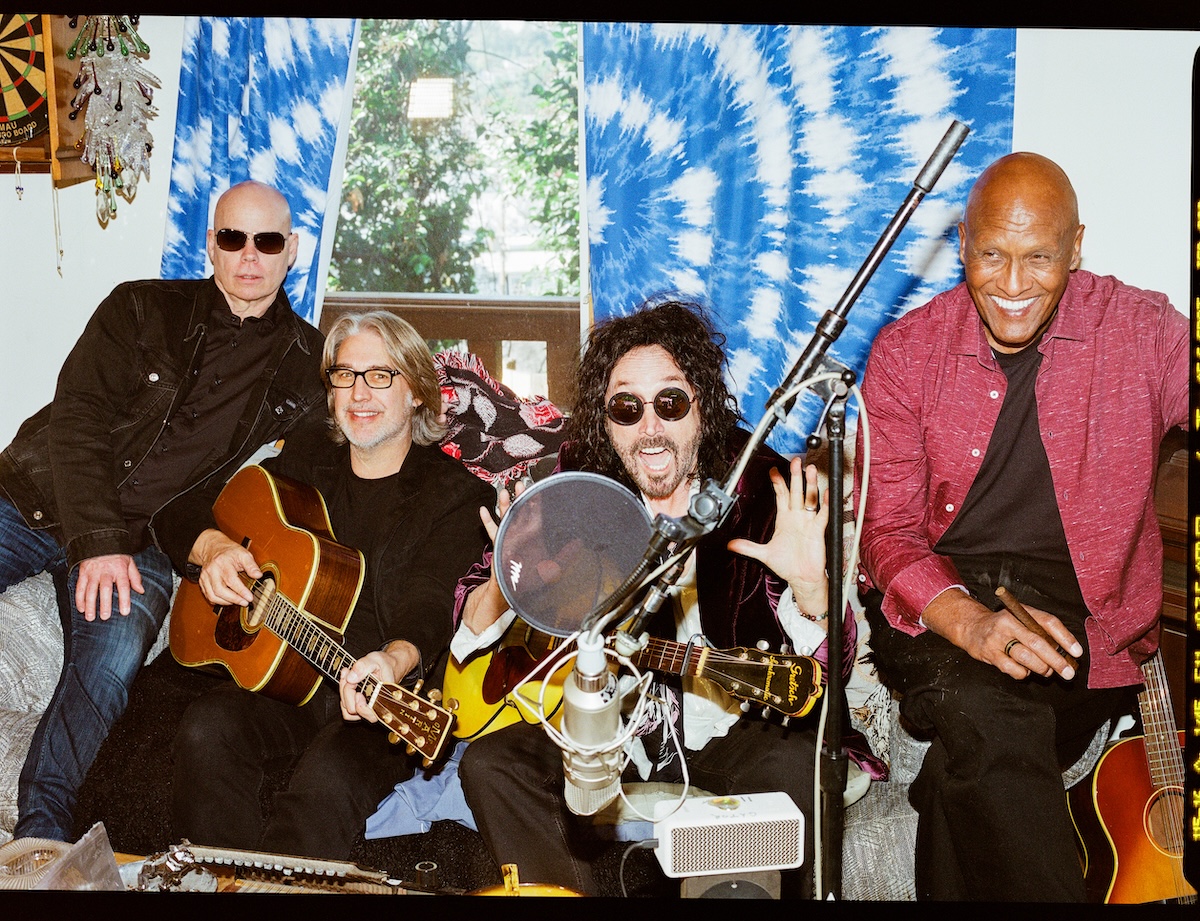
Mike Campbell: I finally settled on a great lineup with [Heartbreakers veteran] Steve Ferrone on the drums and a guitar player-singer-keyboardist from Texas named Christopher Holt. He’s been subbing with the Eagles for a while at the Sphere this year. We finally have guys of the right caliber that understand me and don’t argue too much [laughs].
BT: Was Lance Morrison the bass player in the band’s early days?
MC: Yeah, Lance has always been the bass player. I call him Crawdaddy. He’s a badass.
BT: How does the interplay with Christopher compare to what you had on the first two Dirty Knobs albums?
MC: Chris is just more in sync with me. He sings incredibly well. He makes me sound better. He’s a great guitar player and a pretty damn nice guy. He also plays keyboards, which gives our band a little more dimension.
BT: Is he playing piano on “Done to Me?” That playing adds a great New Orleans stroll vibe to the song. I thought of Fats Domino and Doctor John.
MC: Yeah, that would be him. I’m so lucky to have him.
BT: Is there a particular satisfaction in bringing out a fourth album under the Dirty Knobs’ name, or is it just the process of being a prolific writer and getting on with the work?
MC: Oh no, I’m happy to be here. I love the music I’m making now, and I respect my legacy from the decades before. I’m in a good place. I get to write and record my own songs, I get to front my own band, and I get to play theaters, which I love. I’m very blessed.
BT: I think of you as having roots in bands like the Kinks, Zombies, Yardbirds and Animals. What portion of your musical foundation would you say is drawn from those British Invasion acts?
MC: I’m a total child of the ’60s, which was a real renaissance time. It was so wonderful to be learning guitar when you had the Beatles and the Kinks and the Rolling Stones, the Zombies, the Animals, and all those great bands with great guitars. It was a very inspiring time. That’s my DNA, and that’s what filters through the way I play.
BT: On the American side, I hear the Grateful Dead in your playing. Other players might include Eddie Cochran or Scotty Moore. Are those barking up the right tree?
MC: Oh, yeah. And Elvis, Johnny Cash, the Beach Boys, plus the blues greats like Howlin’ Wolf, John Lee Hooker, and Muddy Waters. I love that first album by the Paul Butterfield Blues Band with Mike Bloomfield playing. I studied that album when I was learning how to play, figuring out how to do vibrato and certain things. It was a great time for a guitar player to be coming up.
BT: Do you remember the first song you learned to play on the guitar as a kid that made you think you were really onto something?
MC: Probably [Chuck Berry’s] “Johnny B. Goode.” That was one of the first songs I learned, and I kind of took to it relatively easily. I thought, “There’s something here. I’m going to follow this thing and see how far it goes.” I had no idea it would take me where I am now.
BT: As a songwriter, it seems like you generally avoid politics and opinion with the aim of drawing in a larger tribe of people. I do hear a few gentle statements embedded into Mission of Mercy, though. The character in “No Regrets” is an outsider who has experienced prejudice and division. “Armageddon” reflects the consequences of bad stewardship. Do you like to spread an occasional message? It seems like it would be natural for a child of the ’60s.
MC: That’s a great question, because I noticed after the album was done that there were a lot of … maybe “political” isn’t the right word, but comments on the wicked world we live in nowadays. I don’t wanna be a preacher, and I don’t wanna take a side per se in politics, because I don’t think that’s my job. I’m here more to take your mind off of that stuff. I did find some lyrics creeping in — “the inmates have taken over the asylum,” and stuff like that. It’s not anything specific, but just a comment on the way everybody feels right now.
BT: Those songs also make me think of the range of musical styles on Mission of Mercy. “No Regrets” reminds me a little of “Learning to Fly,” and “Armageddon” hits hard like Led Zeppelin’s “Kashmir.” “More Than Gold” is a sweet country-folk duet with Morgane Stapleton. Did you intentionally choose material to show the band’s range?
MC: The albums take shape song per song. Even with the Heartbreakers, I haven’t approached an album with any kind of concept thinking, “We’ve got to do this and this and this.” It’s just, “What song do we have today? Can we make it great?” Once you’ve got 12 songs or more, you look at them and go, “Okay, do these songs fit together? Can we sequence them into a program that makes sense?” That’s the way I still do it. When I’m writing, I don’t think, “This has to be a rocker.” I just follow the muse, and when it’s done, I try to figure out what to do with it.
BT: The title cut has a different kind of intentionality. It’s obviously a love letter to Brian Wilson, and the melody sounds like an homage to Carl Wilson. It seems to go deeper into the Beach Boys, though. I hear affection for Surf’s Up and Holland, and maybe a hint of “Child is Father of the Man” from Smile. Is any of that true?
MC: It’s absolutely true. I loved the Beach Boys and Brian’s writing from day one when I was a teenager, and I heard the Beach Boys’ “Fun, Fun, Fun” and stuff. I totally bought into the California dream and the fantasy of it.
“Mission of Mercy” was an old track. It was on an analog two-inch tape that my tech found. He said, “Have you heard this one lately?” I had almost forgotten about it. When I heard it, it sounded like I was in a headspace where I was influenced heavily by Brian that day. I wanted to see what I could do production-wise and song-wise to try to emulate the genius of Brian. Of course, I can’t get too close, but I enjoyed trying. That inspiration is definitely there in the way it’s produced with the guitars and arrangement and rhythm and all. I had a lot of fun with it.
I brought the song in and I showed it to the guys and said, “Do you think this will fit on the album?” because it’s so different for us. It’s more commercially poppy sounding, but it’s still got a strong melody and a good message. The guys over-dubbed on my demo, and we ended up putting it on the record.
BT: Lance’s bass part sounds like he really went for the Carol Kaye vibe.
MC: Yes, he did. He’s our secret weapon. If you listen to the album for the bass alone, it’s like a whole show. The guy is amazing.
BT: I think of the closing track “Vagrant” as a bass feature, too.
MC: When we played “Vagrant,” I remember Lance looking kind of confused, like, “What is this? This is not us. What are we doing here?” I’m glad you brought it up, because it’s way different. It’s not even really a song. It’s more like a beatnik tone poem. I had all these lyrics that I had written the night before, just messing around. I came into the session and said, “Why don’t we just warm up? We’ll get our microphones set up, and I’ll play these couple of chords. Follow this, and I’ll just talk over it, just to warm up.” I didn’t really take it that [seriously].
As we were putting the sequence together, it popped up. And we thought, “Wow, that’s really different.” It shows the stretching of our capabilities as a band. I hope it doesn’t alienate too many people; it was just something we did for fun, off the cuff. The recording is the one time we ever played it. It reminds me of Tom Waits or Frank Zappa or Dylan a little bit, here and there. I think it’s a nice closer for the record, and it shows that we’re doing different stuff.
BT: Even though the vagrant is down on his luck, his song sounds like the band are having fun telling his story.
MC: You gotta have a sense of humor, you know? It’s certainly got that.
BT: “I Remember” is brooding and stormy sounding, but the words are about devotion. That contrast draws you in. I also think the solo has the kind of personality and emotion that people associate with your best playing.
MC: Well, thank you very much. It’s a very simple song. I wrote that on piano. I did a rough demo, and the guys came in and made it better. I didn’t spend a lot of time on the words. It’s an interesting song because it starts with a chorus, and there’s really only one verse, in the middle. It’s an odd arrangement, but I love the feel of it. It’s just got a mystery about it.
BT: I thought I heard a trace of “Catch Me Now I’m Falling” from the Kinks’ ’70s era in the sound. Were you still heavily invested in the Kinks during that time of their career?
MC: To some extent. I do love their older stuff more. Ray Davies never crossed my mind on that song. I was just thinking, “What can I sing over this?” and trying to find something that fit rhythmically with the piano. I came up with “I still remember,” and just repeated that ad nauseam [laughs].
BT: ““Bongo Mania” is such a scream, with Steve’s crazy percussion running through the whole thing. It has some of that “Running Down a Dream” garage-rock energy.
MC: Yeah, I think it has that adrenaline to it. It was a lot of fun, and you know, we don’t use bongos very often [laughs].
BT: I can’t imagine anybody more perfect than Kate Pierson to have joined you for the duet.
MC: When we finished it, I thought, “God, this reminds me of the B-52’s,” who I love. “Wouldn’t it be great if Kate Pierson would sing on it?” So, I sent it out through the office, and she liked it. She made the song twice as good with her falsetto and her humor and her energy. That’s one of my favorites on the record. It’s just so much fun.
BT: It’s terrific character acting.
MC: [Kate’s] amazing, and I was so lucky that she did it. I can’t wait to meet her in person and thank her. I just sent her the music. She did her bit and just mailed it back to me.
BT: Will you get a chance to perform it with her somewhere on the tour?
MC: Well, you know what? I hope we can perform it at all! Steve’s got his hands full back there. We’ll figure out a way to arrange it. But yeah, I want to do that song live because it’s just such a riot.
BT: “Vicious Hangover” borrows a little from the Stones’ “It’s Only Rock ‘n Roll (But I Like It)” and maybe “Telegram Sam” by T. Rex. It’s got great band interplay that sounds like you knocked it out in one go.
MC: That’s a three-minute song that was a three-minute write. The guys played it once. You may be too young to remember this, but it reminds me of this song called “Double Shot of My Baby’s Love” [by the Swinging Medallions], which sounded like a bunch of drunk fraternity guys singing together. I thought it would be funny to do that. Christopher Holt played the solo on that, and he’s a badass.
BT: What were you going for when you made “Let Me Back in My Dream?” I imagined something like the Beatles’ “I Want You (She’s So Heavy) but revved up.
MC: Oh, that’s a nice compliment. “Let Me Back in My Dream” is one of my favorites. Of course, I’ll say this about every song, but it’s real special. It’s a great rocker, it’s got interesting chords, and it’s got some of my favorite lyrics, like “I got a lie stuck in the back of my throat, and it’s so hard to swallow” or “living in a digital world, and I’m an analog tape.”
When you dream, everybody does this. Well, I do anyway. You get these movies in your mind. When you wake up, if you don’t [try to] remember it right away, it’ll just drift away, and you won’t know what it was. So, the idea was, “I was enjoying that thing, and I wanna get back to it.”
BT: That’s a fair reaction to reality these days, too. Maybe it joins those other not-quite-political songs.
MC: Yeah, you can say that. Let’s get back to the dream of what America really is!
BT: The Heartbreakers had a huge audience, and I’m sure first-timers arrive from that community at every Dirty Knobs show. With four albums of Dirty Knobs material to showcase, what should those fans expect?
MC: A Dirty Knobs show is like going to church for rock and roll soul healing. We have a good time. It’s loose, but it’s tight at the same time. Like you said, we now have four albums to pick from. We’ll be doing a handful from the new record and highlights from our other three. I always throw in a few Heartbreakers songs, especially if they were co-written by me. I change them around from night to night because it’s a way to celebrate the past, and the audience is familiar with those songs. It’s a great night.
BT: “I Should Have Known It” and “Fault Lines” were favorites of mine that you co-wrote for the last two Heartbreakers albums. I hope those are in the mix.
MC: I love those songs and I’m proud of them. The Dirty Knobs do play those from time to time. “Fault Lines” is a little tricky. If I’m going to pick a Heartbreakers song for the night, I sometimes like to pick a deeper track. There are songs like “All or Nothin’” [from Into the Great Wide Open] or “Can’t Stop the Sun” [from The Last DJ] that didn’t get much attention, but I think are really good. We might do “Refugee,” but we might do it as a waltz. You know, change it up a little bit. I love doing those old songs, but I don’t want to make that my whole career. I want to respect it and still move forward. (thedirtyknobs.com)