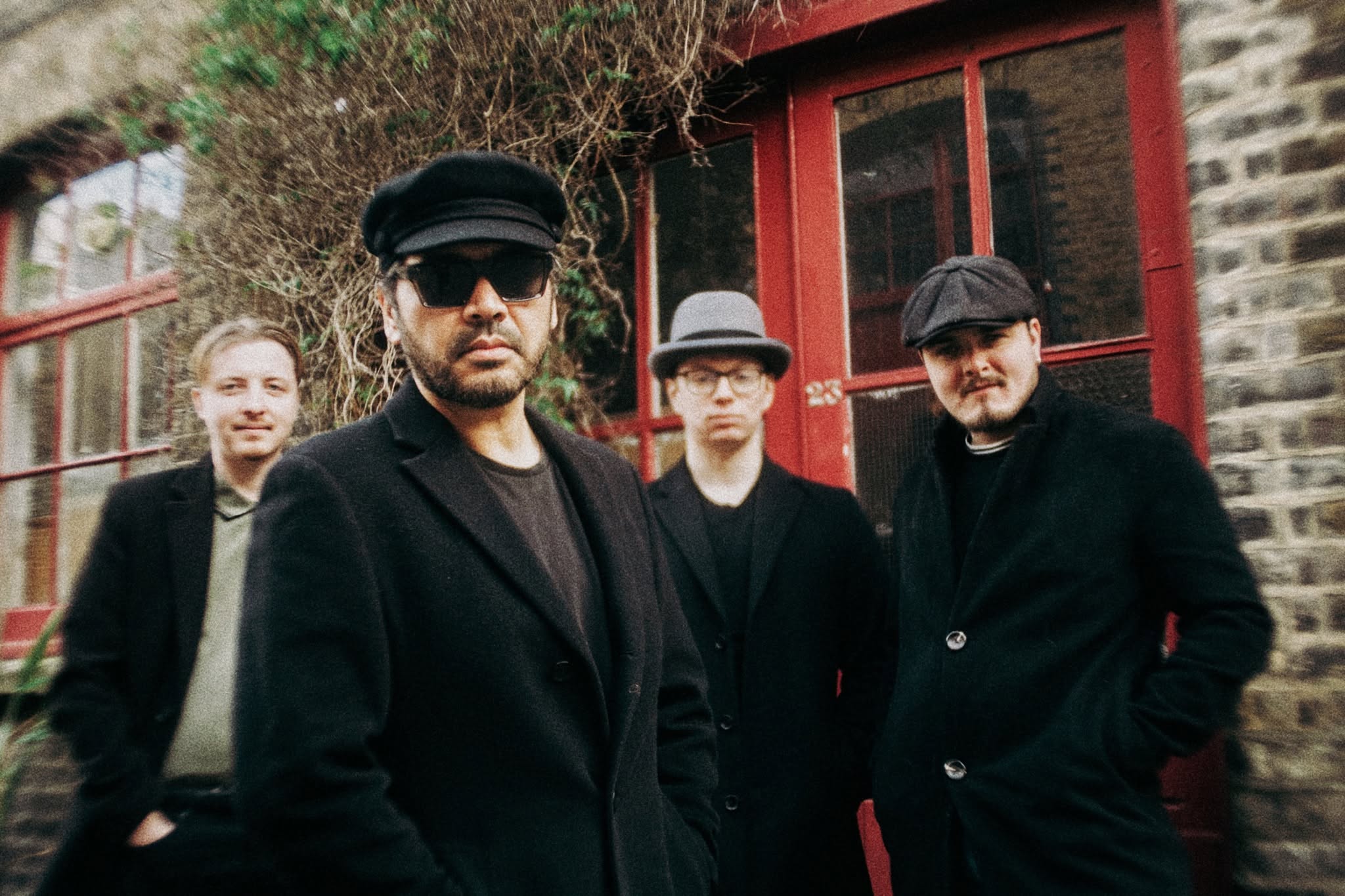
With the debut album about to drop, it was the perfect time to sit down with The Early Swerve’s main man, Dave MacKinnon and find out all about where the band came from, where it is at, and where it is going.
Can you start by telling me what musical path led you to form The Early Swerve?
The first thing Essex ever said to me was, “I hear you can gut a pig in 20 minutes.” We were doing some acting improvisation as part of an ice-breaking exercise. A bit of a strange way to start a songwriting partnership, but there you go. Twenty years later, we’re still at it.
We soon realised we liked a lot of the same stuff. Music, films, comedy, books. We were both into good songwriting, people like The Beatles, Dylan, Paul Simon, Ian Dury, Madness and Chas & Dave. We loved a good melody, but the lyrics had to be interesting too. Essex was really into rap as well.
We had a similar sense of humour. We both loved Bill Hicks, characters like Alex Higgins, the snooker player, and the books of Magnus Mills. That’s actually where the band’s name came from: one of his novels. At the time, I was going through a break-up and ended up sleeping on Essex’s sofa. We’d go down the pub, supposedly for inspiration, then come home and write songs. That’s pretty much how The Early Swerve started. I wrote the music, Essex wrote the lyrics, and somehow it’s taken us twenty years to get an album out!
I’ve never been that interested in following trends. I just wanted to make music that sounded like us, taking bits from everything we loved and seeing what came out.
Who else is in the band, and how did they join the project?
There’s Jaydan Toomey on acoustic bass and backing vocals, Bill Snowden on drums and backing vocals, Andrew Liddell on violin, and me on vocals and acoustic guitar.
The band’s been around since 2006, but it’s been through a few different lineups. I recorded loads of demos over the years, tried different things, and then it all went quiet for quite a while.
I’d worked with Jaydan and Bill on various musical projects before. Then one day Jaydan found some of my old demos on SoundCloud, played them to Bill and started pestering me to get the band going again. We were using the same rehearsal space, so they came in, and we started playing through the songs. The funny thing was, they already knew them! They’d obviously been listening to the demos and genuinely liked the music. That was the push I needed to give it another proper go.
Andrew came along later. He’d played violin on some of the album sessions, and I really liked what he was doing. About a year later I asked him to join. We went back into the studio to record ‘Past the Post’ and ‘Horrible People’, and he ended up adding violin to the other tracks too. It’s taken a while, but I think we’ve finally got the right people together. The violin’s become a big part of our sound, and there’s something about the way the four of us play that just works.
Even after seeing you play live, I struggle to describe the band’s sound concisely… how would you describe it to someone who hasn’t seen or heard you yet?
Ha! You’re not the first. We’ve been trying to work that out ourselves for years!
We came up with Gangster-Folk and Nu-Skiffle because we genuinely didn’t know what else to call it. It was a bit of a joke really, but people started using those descriptions, and they stuck. These days we tend to say folk-punk, although I’m not sure that tells you everything either.
There are acoustic instruments, driving rhythms, plenty of violin, three-part harmonies and big melodies. Some of it’s pretty raucous, some of it’s quite delicate. We like messing around with arrangements too, so a song might start in one place and end up somewhere completely different.
I suppose it’s very British rock ‘n’ roll with a bit of folk and punk thrown in. Or folk-punk songs about ‘orrible bastards. That’s probably as good a description as any!
Lyrically, there are all sorts of wonderful characters and odd situations running through your songs, perhaps reminiscent of Ian Dury; where does the lyrical inspiration come from?
You’d probably have to ask Essex that one, as he writes all the lyrics! Some of it’s based on real people and things that have happened, and some of it he’s completely made up. I’m not going to tell you which is which!
I can definitely see the Ian Dury comparison. There’s that same interest in characters and the darker, sometimes ridiculous side of people. A lot of the people in our songs aren’t particularly likeable. You probably wouldn’t want them living next door, but they’d make for a decent story down the pub.
What I love about Essex’s writing is the detail. You can really picture these people and the situations they get themselves into. Some of it’s funny, some of it’s quite dark, and often it’s both.
The way we write is probably a bit unusual. I always write the music first, including the vocal melody, then hand it over to Essex. He counts all the syllables and writes pages and pages of lyrics trying to make everything fit. It’s a bit like doing lyrical Sudoku!
And I love it when you’ve got a really cheerful melody with lyrics about something absolutely horrible. There’s something quite funny about that contrast.
You’ve been building up to this album, More People Than Teeth, via a run of excellent singles. What can we expect from this album?
Twelve songs and a cast of questionable characters, basically! I think it’s a pretty good representation of what we do. There’s dark humour, some thoroughly unpleasant people, big melodies and a few surprises.
‘The Barn Dance’ is basically a Friday night down the local, with all the drunken nonsense going on around you. Every line is another little scene, something you might see or overhear. Then there’s ‘Father of the Chapel’, which starts off telling this story about loyalty and betrayal before turning into this huge, almost cinematic ending with strings and loads of voices. We’ve got an instrumental in 5/4 called ‘Extra Time’, which is a bit different, and ‘Release the Hounds’, which is full of strange sounds, reversed tape and all sorts of analogue messing about.
We recorded the whole thing to tape and brought in strings, piano and extra harmonies. It’s got a lovely warm sound, a bit rough around the edges in places, which is exactly what we wanted.
We wanted to make a proper album, rather than just stick a load of singles together. There are quite a few different musical directions on there, but I think it all hangs together.
And hopefully you’ll come away having met a few people you’re quite glad you don’t know in real life.
There is something very street-wise, perhaps even very London, about the vibe of the band, from the band’s look to the themes of the songs to the punky-skiffle sound. Was this planned, or does it just reflect who you are and the world you see around you?
No, it’s not something we’ve deliberately set out to do. I think it’s just who we are really.
There’s definitely a South London feel to it, but that’s just where a lot of our influences come from. The humour, the attitude, the characters. It’s all stuff we’ve grown up around.
My parents came to this country in 1982. My mum was Filipino and my dad Anglo-Indian, but I grew up surrounded by very British, particularly London, culture. My childminder was a Cockney lady, and I spent loads of time with her family. I’d stay with them in their caravan on Canvey Island, listening to Chas & Dave and Madness. I remember knocking about with her son wearing parkas and sporting shaved heads. So I suppose that whole culture got into me pretty early!
The way we dress is a bit of a mixture of the sixties and late seventies, early eighties. The Beatles, Madness, Ian Dury, that sort of thing. Dr Martens, Fred Perry, Spring Court G2s, big coats and bad haircuts. It’s just stuff we’ve always liked.
We’ve never sat down and said, “Right, let’s make a band that sounds like London.” It just comes out that way, probably because we can’t help ourselves!
What was the recording process like, where did it take place, who else was involved, and what were the highs and the lows?
We recorded it at Gizzard Recording in London with Ed Deegan, who also mixed and mastered it. It’s an analogue studio, so we recorded everything to tape. We wanted that warm, slightly imperfect sound you get from recording that way.
We brought in a string quartet, some extra piano and backing vocals too. Romain Malan helped with the string arrangements, which was brilliant.
One of the biggest highlights was hearing the quartet play the ending of ‘Father of the Chapel’ and the arrangements for ‘I’m Not Walter Mitty’. I’m a massive fan of George Martin, Ennio Morricone and John Williams, so hearing those parts played by real musicians was quite something.
As for the lows, I discovered I’d been singing ‘I’m Not Walter Mitty’ wrong for years! Part of the chorus melody was clashing with the music, but I’d sung it that way for so long that my brain just wouldn’t let me change it. Meanwhile, the clock’s ticking, you’re paying for studio time, and everyone’s waiting for you to get it right. No pressure!
We also wanted to have the full analogue experience, so we got quite carried away experimenting. We were reversing tape, digging through old vinyl records for sound effects, messing around with tape echo and even using varispeed on ‘We Take Our Time’. There’s something brilliant about actually getting your hands on the equipment and physically manipulating sounds rather than just clicking a mouse.
Release the Hounds was probably the most ambitious. We spent ages layering weird sounds and trying different effects. It took longer to record than anything else on the album, but that was half the fun. Sometimes we’d stumble across something completely unexpected and end up keeping it.
Do you plan to tour the album, and if so, where are you looking forward to playing?
Absolutely. We want to get out and play these songs to as many people as possible. We’ve had a great time playing gigs and festivals this year, and the nice thing is we don’t really fit into one particular scene. We can play a folk festival one week and a sweaty little pub the next, and it somehow works in both.
Hopefully the album will open a few doors and get us playing further afield around the UK. We’d love to get over to Europe at some point too. And Glastonbury, obviously! That’s definitely on the bucket list. I reckon we’d go down pretty well there.
And where next for The Early Swerve?
First of all, we’d like to get More People Than Teeth out there and heard by as many people as possible. It’s available on vinyl and CD, so hopefully people will pick up a copy, give it a listen and spread the word. We’ve already pretty much written the second album, so there’s no shortage of songs. Hopefully it won’t take another twenty years to get that one out!
We just want to keep making records, playing gigs and getting in front of people who haven’t heard us yet. There’s plenty more where this came from, and we’re only just getting started.
Thank you so much for taking the time to show me around your musical world and best of luck with the album release and whatever comes next.
Bandcamp
Instagram
Facebook
Spotify