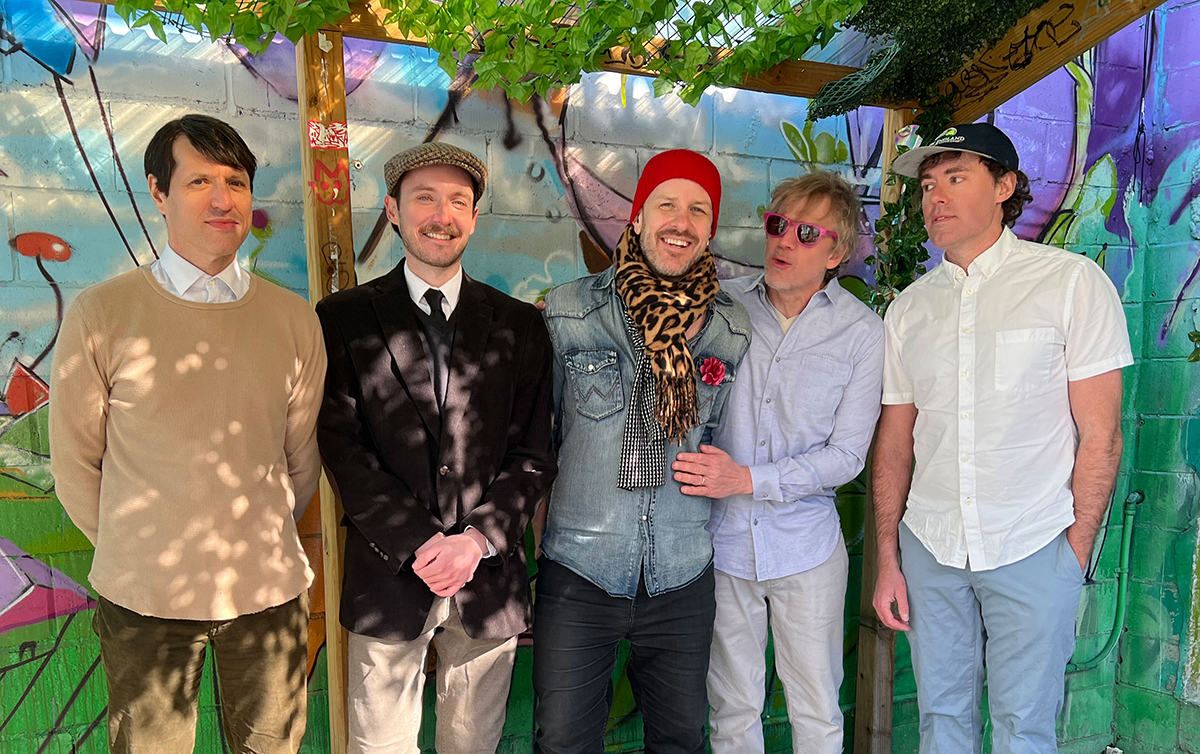
Ceylon Sailor Photo credit: Angelo Ross
Nudging slacker indie-rock forward is a delicate matter. Many a shambolic shaman has been cast out of the secret society for getting too clever with production, orchestration, or arrangements.
On its latest release, the tiny wave EP, Brooklyn-based 1990s indie-rock savants Ceylon Sailor take the risk, and edge outside the safe harbor. However, the six-piece band manages to somehow safeguard its ramshackle roots all the while sneaking in blow-your-hair-back country-rock vocal harmonies, a toxic threshold amount of yacht rock, and a hefty helping of 1970s power-pop. The title track single with its sunshine-flooding in choruses, pummeling drums, and balmy harmonies hints at what’s to come.
“I live in fear of prog,” laughs main songwriter KM Sigel. “We tried some new songwriting techniques and thought more carefully about melody. We worked hard to stay in that sweet spot where the songs aren’t too simple, but are just a little more interesting.”
Ceylon Sailor is KM (vocals, guitar), Kieran Kelly (drums, producer), Andrew Wood (keys), Dave Long (trumpet, guitar), Paul Brodhead (trombone), and Seth Ondracek (bass). The sextet takes cues from the scuzzy brilliance of bands such as Elephant Six bands (especially Neutral Milk Hotel and Olivia Tremor Control), Pavement, Built to Spill, Guided By Voices, and Superchunk and the surrounding Chapel Hill, North Carolina scene. KM came up in the “Southern Part of Heaven” and has nurtured a similarly-spirited indie-rock community around the Brooklyn venue Gold Sounds (yes, named after the Pavement fav “Gold Soundz”), which he co-founded.
Since releasing its first album, Here We Lie, last summer on boutique indie Stunning Models on Display (The Fictionals and Sheffer Stevens), Ceylon Sailor has amassed an impressive amount of radio play for a micro-indie release. The band has built an engaged audience both nationally and internationally through playing regional shows and word-of-mouth buzz. Select career highlights, so far, include opening for alt-rock legends Soul Asylum, surpassing 300,000 cumulative Spotify streams, and steadily selling vinyl worldwide, including Europe, Japan, and parts of the US Ceylon Sailor has yet to visit.
Every sound on a Ceylon Sailor record is analog. Even the gnarly guitar tones come from an acoustic guitar mic-ed and overdriven far beyond humane limits. “Kieran pulls his hair out with the terrible guitar sounds I give him, but its rules like this that force us into interesting places,” KM shares. Aside from Seth’s bass, the only instrument regularly plugged in, the band achieves its weird, woolly textures using something close to the instrumentation of a Dixieland jazz combo.
the tiny wave EP boasts the distinction of being the first Ceylon Sailor release to feature the band as creative collaborators. Previously, KM wrote all instrumental parts (including horn lines) and played many of them himself, with Kieran producing. On the new EP, KM still wrote all the songs, and Kieran (whose credits include work with Sufjan Stevens and Angus and Julia Stone) again produced and mixed, but every member contributed ideas throughout the process. “Not to overly editorialize, but I feel like it’s necessary for a band to stay together that everybody has skin in the game,” KM says. “That was really important to me.”
The titular single, “The Tiny Wave,” was unearthed from KM’s pre-pandemic songwriting annals. Back then, it was earmarked for a new band Kieran was putting together that was set to rehearse in April 2020—we all know what happened next. Years pass, and KM wants to reconvene the band to record for a new release to keep up the group’s momentum. Kieran reminds KM of “the tiny wave.”
At the time, “The Tiny Wave” was positioned to be a scruffy Pavement-esque track, but collaborative creativity had other plans. With Kieran’s new rearrangement, Dave’s horn parts, and Andrew’s counterpoint keyboard lines, “the tiny wave became something different. It emerged a balmy, 1960s pop-rock anthem embroidered with chiming guitars, banjo licks (!), harmony-drenched choruses, and pounding drums. The songs loud/soft dynamics might be the only vestige of its slacker rock past. Its lo-fi take on an orchestral rock sound helped achieve KM’s ideal of creating something that feels both “small and big.”
The song takes place during one North Carolina winter while an ill-fated relationship sputtered along. “The overarching idea is that we often realize things aren’t going to go well from the beginning (‘the tiny wave’), but we often push forward thinking that we can overcome these things, but probably shouldn’t,” KM explains. The region’s landscape provides fodder for metaphors with a theatrical flair—KM wasn’t lying outside in the snow every night. His lyrics here exude an economic but visceral, literate flair. One standout passage is: empty dreams most every night and waking broke the key that could have locked the chain around us both that you could never see/but the tiny wave that wrecked it all was always right outside.


New music on the way? Pitch Big Takeover Exclusives.