
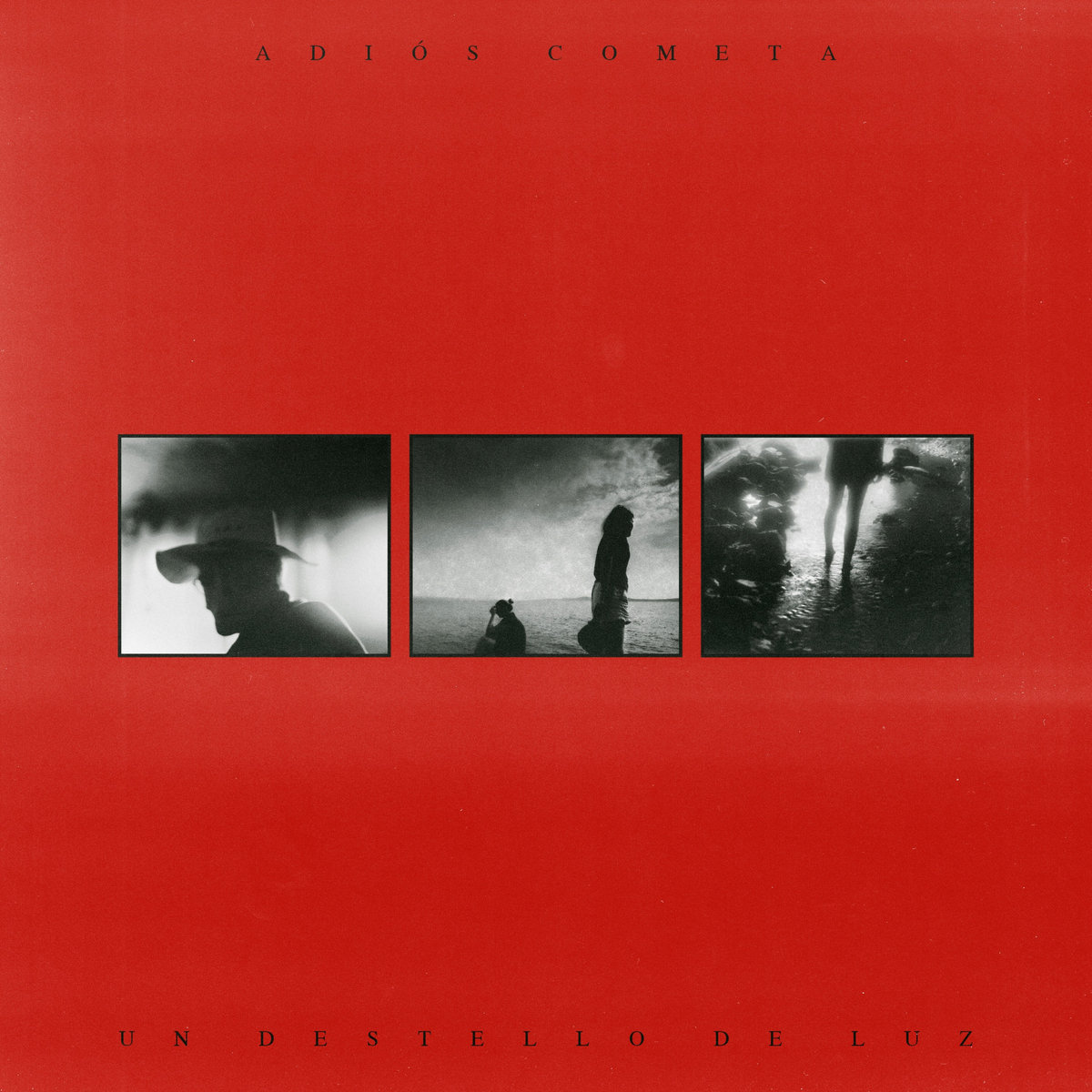
There is something calmly defiant about “Un Destello de Luz,” the latest release from Adiós Cometa. It does not beg for attention with spectacle or excess. Instead, it glows from within, sustained by a band that understands how to build atmosphere through restraint and how to let melody carry emotional weight without succumbing to sentimentality. Recorded and mixed by Pablo Ocampo at Miut Audio in San José, Costa Rica and mastered by Alberto Ortiz at Jungle Sound Studio, the album sounds cohesive and deliberate, yet alive with subtle risk.
Adiós Cometa is Pablo Matamoros (drums), Emanuel Mora (guitar, bass and vocals), Mark Murillo (bass, guitar and vocals), Gabriel Piedra (guitar), and Jonathan Villalobos (guitar and vocals), and they have crafted a record that feels less like a collection of tracks and more like a meditation on memory, fragility and illumination. Each song seems to ask how light behaves when filtered through doubt. The opening, “Y de reojo, un resplandor,” feels like the sensation of catching brightness in peripheral vision. Matamoros’ drumming is measured and patient, allowing Mora and Murillo’s interlaced guitars to radiate rather than overwhelm. The arrangement resists the urge to crescendo too quickly. It expands. That sense of spaciousness carries into “Luminosa,” a track that balances propulsion with introspection. The vocal harmonies from Mora and Villalobos hover over the instrumentation, suggesting hope without overstating it.
“Una vida en otra parte” deepens the album’s thematic core. The bass lines here are particularly resonant, grounding the song’s wistful melody in something corporeal. Piedra’s guitar textures provide a gauzy backdrop, evoking distance and displacement. It is a song about longing that does not indulge in melodrama; instead, it lingers in the quiet ache of imagining alternative lives. “El mundo en mis brazos (Leonor),” featuring Lucía Masnatta of Fin del Mundo, introduces a striking contrast. Masnatta’s vocals add a luminous counterpoint to the band’s timbre, widening the emotional palette. There is a generosity in the arrangement, as if the band deliberately makes space for her voice to alter the song’s gravity. The result feels communal rather than collaborative for its own sake, reinforcing the album’s preoccupation with shared experience.
“Candelaria” flickers with understated urgency. The guitars here carry a slightly rawer edge, while the rhythm section locks into a pulse that feels insistent but not forceful. “Detenerse” offers a necessary pause, an inward turn that emphasizes the band’s capacity for stillness. Matamoros’ percussion is especially nuanced, accenting silence as much as sound. In this track, stopping becomes an act of clarity.
The album’s most striking shift arrives with “Quema la memoria,” recorded and produced by José Acuña under his Contradicta alias. Featuring Amanda Murillo of A Su Ladera and Acuña’s synth textures, the song introduces a different sonic vocabulary. The electronic elements do not displace the band’s identity; they refract it. Murillo’s voice weaves through the arrangement with quiet intensity, while the synth lines pulse like distant signals. It feels both intimate and slightly disorienting, appropriate for a song preoccupied with the act of burning away recollection.
“Mala memoria,” with María Paula Vásquez of Encarta 98 and saxophone from Joaquín Vanrafelghem, further expands the record’s tonal range. The saxophone does not function as ornament but as commentary, answering the vocals with breathy phrases that blur the boundary between clarity and distortion. Vásquez’s performance adds a delicate vulnerability, amplifying the album’s ongoing meditation on how memory falters and reshapes itself.
By the time “Victoria” closes the record, the album’s effectiveness feels earned rather than imposed. The song carries a quiet triumph, not in grand gestures but in its steady confidence. The guitars swell, the rhythm section steadies, and the layered vocals create a sense of collective affirmation. It is less a declaration of victory than an acknowledgment that endurance itself can be luminous.
What distinguishes “Un Destello de Luz” is its refusal to dramatize its own sensitivity. The band trusts subtlety. They trust repetition. They trust that a melody, if given room to unfold, can carry as much weight as any explosive climax. The production remains clear and organic, preserving the interplay between instruments and allowing imperfections to humanize the sound. Adiós Cometa offer something rarer: patience over immediacy. Their light does not blind; it persists. “Un Destello de Luz” stands as a testament to the power of careful craft and shared expression, an album that finds radiance not in spectacle but in the quiet resilience of sound shaped with intention.
Find out more by visiting: Bandcamp | Steadfast Records | Instagram | Facebook.