
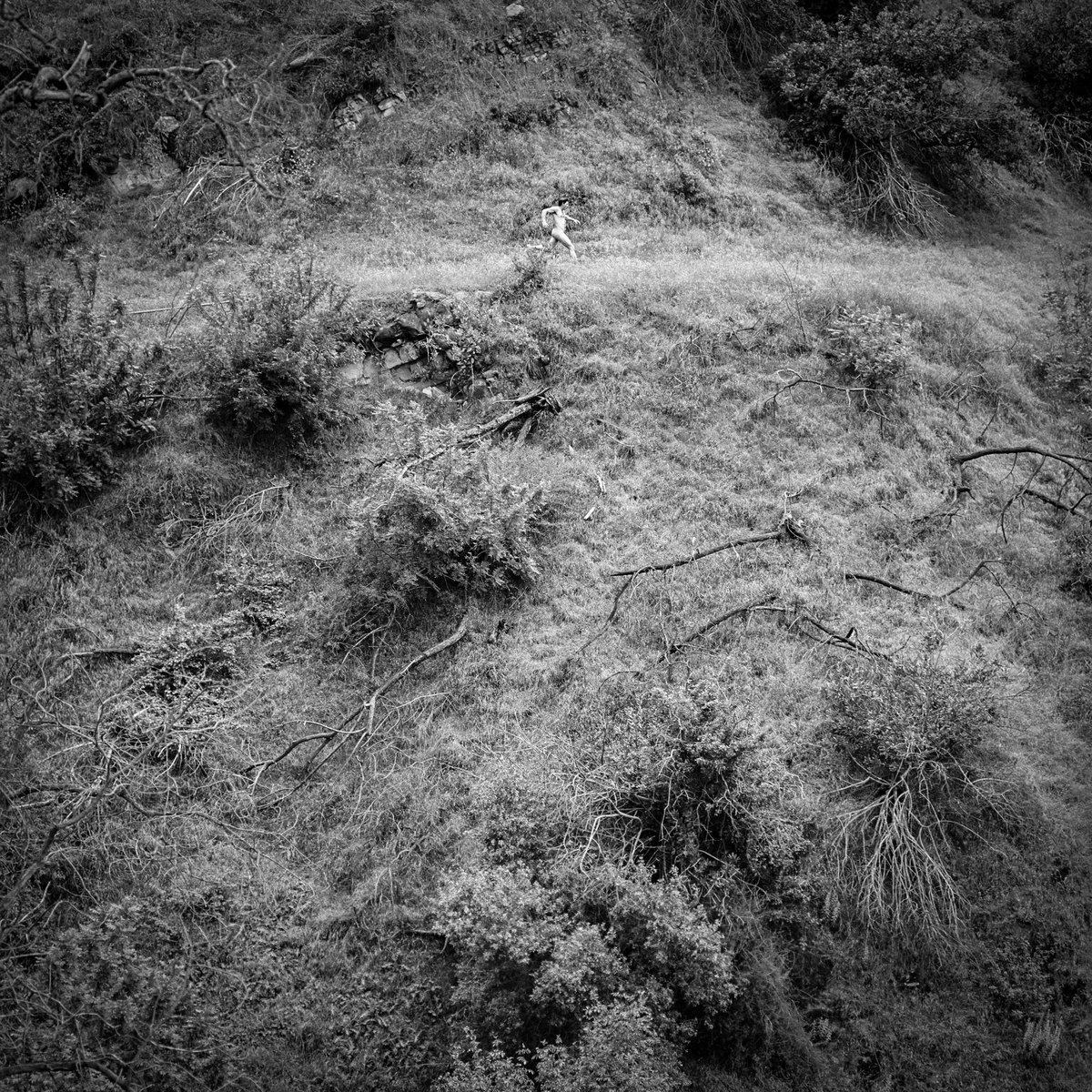
In the quiet opening moments of ‘Animal Poem,’ the sound of breath and the friction of fingers against nylon strings act as a threshold. Anna Tivel’s seventh studio album is less a collection of songs and more a high-resolution lens focused on the overlooked wreckage of human existence. While her previous work established her as a premier chronicler of the marginalized, ‘Animal Poem’ arrives with a newfound feral precision, transforming the everyday indignities of poverty and isolation into a searing, poetic indictment.
The record operates on a “hopeless equation,” as Tivel puts it on the opening track, “Holy Equation.” Here, the grind of survival—busing tables and early mornings—is shadowed by a mournful saxophone that feels like a ghost haunting a diner. Tivel is navigating the space where the spiritual meets the material, questioning the logic of a world where kindness must coexist with desperation. This theme of survival reaches a peak on the title track. Over a rhythmic, weary snare shuffle, Tivel paints a portrait of instinctual persistence. Whether it is a mother holding a cardboard sign or a bird scavenging in the dirt, the song frames the act of seeking beauty amid pain as a primal, animal necessity.
One of the album’s most staggering achievements is “Hough Ave, 1966.” Tivel takes the historical weight of the Cleveland uprisings (The Hough neighborhood was an overcrowded, predominantly Black area suffering from predatory housing and neglect), and shrinks it down to the interior of a taxi cab and the glow of a whiskey glass. By weaving in the spectral presence of Nina Simone’s voice on the radio, she connects personal tragedy to a broader lineage of systemic violence. The refrain—a promise that there is a reason for a senseless death—feels like a desperate prayer, an attempt to use melody to blunt the edge of a jagged reality.
Tivel’s writing often treats nature not just as a setting, but as a character with its own agency. “White Goose” pivots toward a light, jazzy atmosphere to explore eco-paralysis. A childhood memory of a hunt becomes a meditation on what we have lost to climate collapse and wildfire. The slow-motion road song “Badlands” uses images of sandstone and startled birds to mirror the internal journey of aging and mortality. The production leans into a dampened jazz-lilt with echoing guitars and low organ tones on “Airplane To Nowhere,” creating a sense of drifting through a beautiful, golden haze. The inclusion of Nicole McCabe’s saxophone is perhaps the most atypical element on the record, moving the project toward the “nightclub swing” and “French bistro” textures noted in the sessions.
On ‘Animal Poem,’ the shift from traditional Americana to a more experimental, liminal folk sound is driven by specific choices in instrumentation—most notably the rubber-bridge guitar and the saxophone. These tools allow Tivel and producer Sam Weber to move away from the twangy tropes of folk and into a space that feels more like a living, breathing organism. The record emphasizes the fragility of Tivel’s lyrics. It feels less like a performance and more like a private thought. Also on “Holy Equation,” the sax acts as a counter-voice to Tivel’s steady vocal. It provides an off-balance energy that represents the chaos of the world she is describing. It’s the sound of something beautiful but slightly broken, circling the melody like a bird in a storm.By opting for these fractured and sinuous textures, Tivel ensures that the music never feels too comfortable. The instruments reflect the cultural paradigms she is critiquing—they are beautiful, yes, but they also feel under pressure, straining to hold together against the weight of the “mammalian despair” she chronicles. ‘Animal Poem’ is not a work of total nihilism. Tivel and Weber recorded the album in a circle, and that physical proximity is audible. You can hear the strength and frailty in every note, a reminder that these songs are a communal effort to make sense of the impermanence of being here. The album concludes with “The Humming,” a track that retreats into a whisper. It poses a final, haunting question: what if the beauty we find in the “dying grass”—the bright and tender green—is the only thing that actually lasts? By the time the final voice memo fades, Tivel hasn’t solved the hopeless equation of the opening track, but she has proven that the attempt to describe it is, in itself, a form of salvation.
Learn more here: Anna Tivel | Fluff And Gravy Records | Bandcamp | Instagram | Facebook | YouTube | X