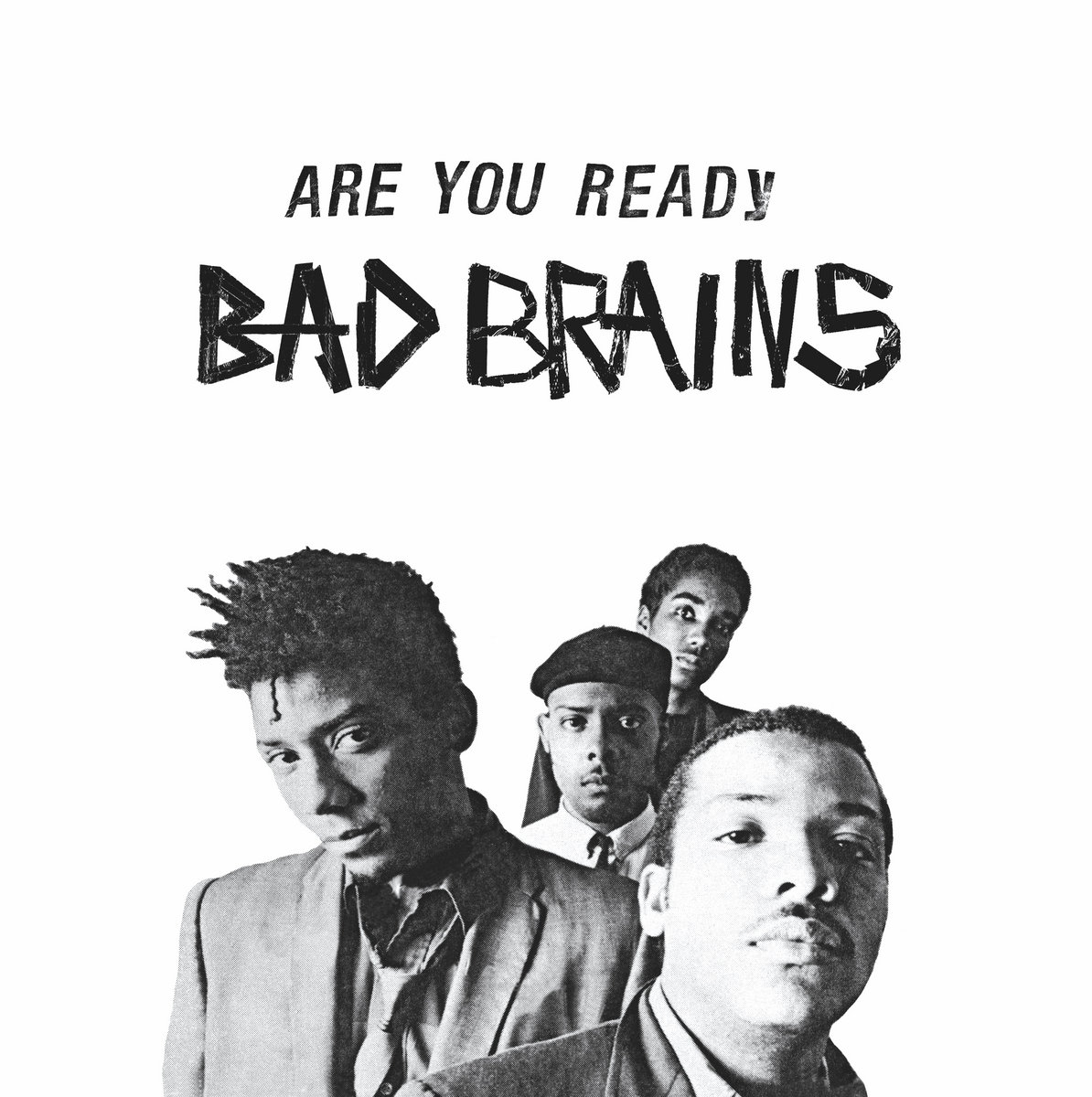
Four young guys from D.C. showed up at an Arlington, Virginia studio with an hour left on the clock. They’d gone to the wrong address first, and it cost them most of their session. It was the perfect setup for what happened next. With no room for second guesses, Bad Brains played like people who had nothing to protect and everything to prove. Nearly half a century later, ‘Are You Ready: The First Studio Recording (Inner Ear – March 1979)’ finally reaches listeners through Trust Records, remixed in 2026 by Ian MacKaye and mastered by Pete Lyman, and it gives listeners a first look at something most people only knew by reputation.
For decades this session lived on dubbed cassettes passed between punks who knew somebody who knew somebody. Official release changes the math. Bootleg hiss and generational tape rot used to stand between the listener and the band, and now the room itself is audible. MacKaye’s mix keeps the rawness intact while letting each player claim space. Dr. Know’s guitar cuts across the frame in bright, stinging runs. Darryl Jenifer’s bass pushes forward with a rubbery confidence that sounds far older than a young man’s first time in a professional studio. Earl Hudson’s drumming is the engine of the whole enterprise, rushing and snapping and refusing to sit still. Over the top, H.R. sings and shouts and darts around the beat like someone chasing a thought before it escapes.
“Jammin’ at the Atlantis” opens the record, and the title tells you what you’re getting. It sounds like a band loosening up, settling into a groove and letting the room hear who they are before the real sprinting starts. Anyone who thinks of Bad Brains as purely a hardcore band should start here. The funk and fusion training that shaped these musicians is plain, and it explains why their punk never sounded like anyone else’s.
Then comes “Pay To Cum,” the song that would eventually become a cornerstone of their legacy, and the version here is a revelation of pure momentum. It’s a simple, slightly cheeky riff, assembled from the same parts the Ramones and The Damned made familiar. The band plays it with more speed and rhythmic precision than those groups ever managed. The breaks and the sudden stop land like a slammed door. Jenifer has described the title as a playful twist of words with no grand meaning behind it, and the performance backs that up. Nothing here is posturing. It is joy at maximum velocity.
“Don’t Bother Me” keeps the pedal down, a brisk, defiant burst that shows how naturally the band could compress an attitude into a couple of minutes. Hudson’s drumming deserves special attention on this one, because the pace he sets would have been dangerous in less capable hands. A few seconds in, the song stops being a performance and becomes a dare.
“Black Dots” carries a different weight. Its structure is more winding, and Dr. Know gets room to show the harmonic curiosity that separated him from nearly every guitarist in the punk scene. The song would reappear years later in other forms, but hearing it at this stage, still half-formed and wildly alive, offers a rare look at a composition finding its shape in real time. Mistakes that would have been polished away in a later session are left to stand, and they only add to the charm.
“Migraine” lives up to its name. It is cramped, jittery and restless, a song that seems to vibrate from the inside. H.R.’s delivery here is especially sharp, spitting syllables with an urgency that makes the lyrics secondary to the sheer physical sensation of the thing. “Send No Flowers” closes the set with a strut and a snarl, a fitting last gasp for a session done at a sprint. When it stops, the silence rings, like a room still working out what it just heard.
You don’t need the backstory, but it helps. Six songs, one hour, one wrong turn on the road, and the band is already itself: fast, elastic, caught between aggression and groove. The reggae and Rastafarian spirituality that would soon define half of what they did aren’t here yet, and that’s part of the appeal. It’s the lightning before the bolt on that famous yellow cover, from a band that would go on to reshape underground music.
The physical package deserves a mention too. Pressed on a 45 RPM 12-inch, the record gets the extra headroom this kind of fury demands. The cover is anchored by Jenifer’s duct-tape logo, and Bryan Ray Turcotte’s layout gives it a sense of history without making it stuffy. Alec MacKaye’s liner notes and a double-sided insert of rarely seen photographs complete a package that was clearly made with care. This isn’t a polished statement. It’s a quick, rough sketch of four musicians figuring out what they can do. That is exactly why it matters. Anyone who loves Bad Brains will treat it as a long-lost relic, and anyone curious about how hardcore found its first real momentum will find the answer spinning at 45 revolutions per minute.
Learn more links:
Bad Brains
Trust Records
Bandcamp
YouTube
Instagram
Facebook