
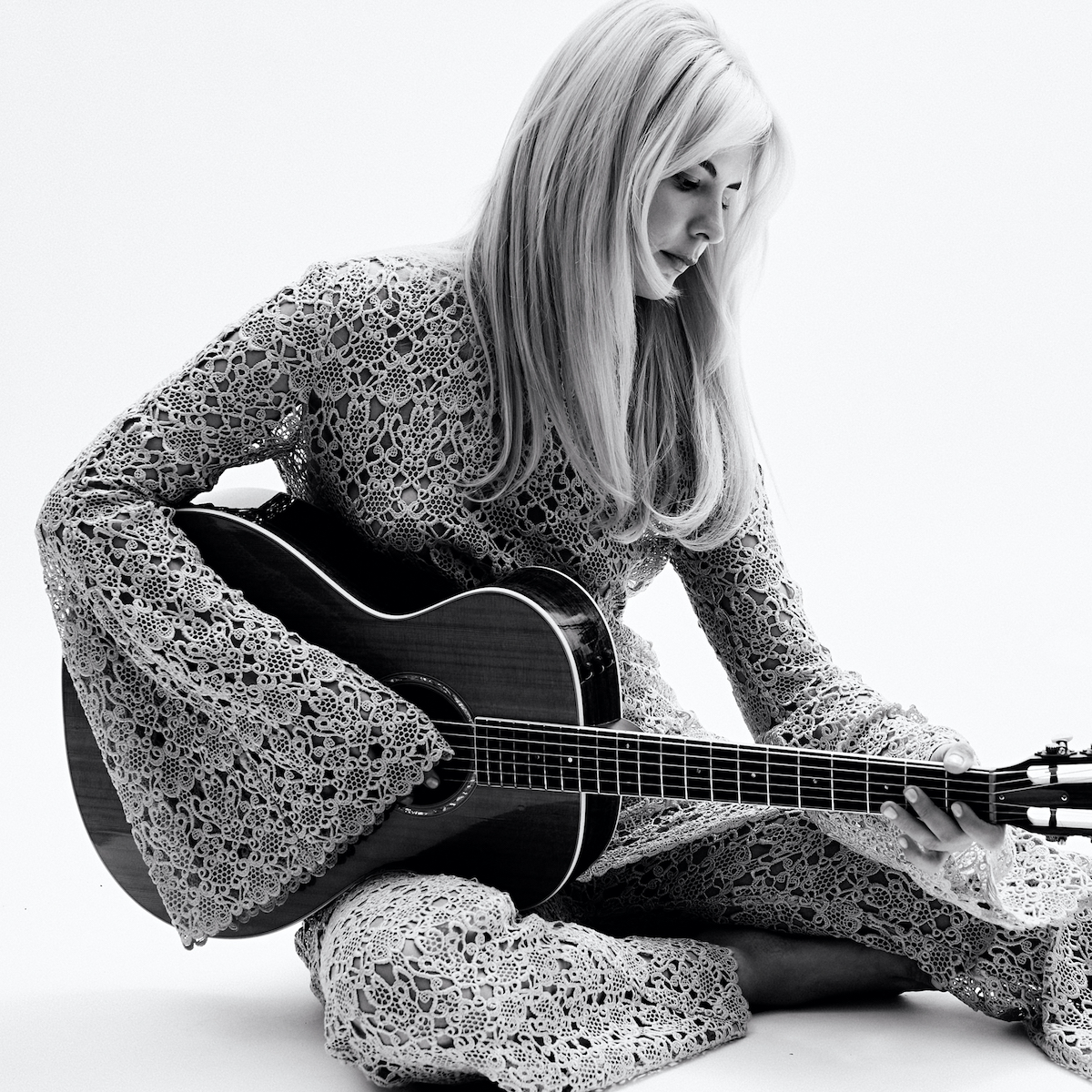
Bebe Stockwell possesses the rare ability to make introspection feel expansive rather than insular. On ‘Volume 1,’ the Massachusetts songwriter resists grand gestures in favor of carefully observed moments that reveal larger emotional truths. Across eight songs, she demonstrates that quiet storytelling can carry remarkable weight when paired with conviction, melodic instinct and lyrical precision. Rather than presenting herself as a fully formed narrator with all the answers, she writes from the shifting ground between certainty and doubt, allowing vulnerability to become the album’s greatest strength.
What elevates this collection is its remarkable sense of restraint. Every arrangement serves the songs rather than competing with them, surrounding Stockwell’s expressive vocal performances with warm acoustic textures and subtle instrumental detail. The musicians approach each composition with admirable sensitivity, allowing acoustic guitars, understated rhythm accompaniment, gentle keyboards and delicate embellishments to support the emotional architecture without overwhelming it. The production embraces clarity, leaving room for every phrase to resonate while preserving the intimacy that defines Stockwell’s songwriting. Wesley Schultz, appearing as both vocalist and collaborator on one track, becomes the only featured musician whose presence shifts the album’s dynamic without disrupting its cohesion.
“When You Know” introduces the record with quiet confidence. Stockwell explores the elusive nature of certainty, examining how intuition often speaks more convincingly than logic. Her phrasing carries an understated elegance, never forcing emotional conclusions but inviting listeners into a conversation about trust, timing and self-awareness. The song establishes an atmosphere of openness that remains consistent throughout the record. “Wild Love” expands the emotional palette without abandoning the intimacy established by its predecessor. The arrangement gradually broadens around Stockwell’s voice, mirroring the exhilarating unpredictability of affection that refuses easy definition. Rather than romanticizing love as an uncomplicated triumph, she presents it as something exhilarating precisely because it resists control. The performance balances hope with realism, allowing both emotions to coexist naturally.
The centerpiece arrives with “Ant Farm,” her collaboration with Schultz. Their voices complement one another beautifully, not because they strive for dramatic contrast but because they share an appreciation for understatement. Schultz never overshadows Stockwell; instead, his measured harmonies deepen the song’s reflective character. Together they contemplate routine, perspective and the human tendency to become trapped within self-imposed patterns. The metaphor remains elegantly understated, allowing listeners to project their own experiences onto the narrative. It is a duet built not on spectacle but on mutual attentiveness, illustrating how two distinctive artists can create something richer through patience rather than excess.
“Hard to Find” examines absence with remarkable emotional intelligence. Stockwell avoids sentimental exaggeration, choosing instead to illuminate the quiet disappointments that often linger long after dramatic endings have passed. Her songwriting succeeds because it acknowledges complexity without sacrificing accessibility. Every carefully chosen lyric suggests that the people and places we struggle to recover often continue shaping us even in their absence. Among the album’s most affecting moments, “New England Regret” transforms geography into emotional landscape. Stockwell captures the complicated relationship between memory and place, suggesting that familiar surroundings can preserve both comfort and unresolved longing. The regional specificity gives the song authenticity, yet its emotional concerns remain universally recognizable. It reflects on home not as a destination but as an evolving conversation between past and present.
“Going to the Country” might initially appear to embrace pastoral simplicity, yet Stockwell approaches the subject with greater nuance. Escape is never presented as permanent salvation. Instead, the countryside becomes a space for reflection, offering temporary clarity without pretending to erase life’s deeper uncertainties. The song’s gentle pacing reinforces its contemplative nature, allowing silence to become as expressive as melody. “Adeline” offers one of the album’s finest character studies. Rather than constructing an idealized portrait, Stockwell sketches an individual whose complexities emerge gradually through carefully observed detail. The writing displays an impressive literary quality, trusting implication over explanation. Every verse reveals another layer of personality, inviting listeners to consider how identity is shaped through relationships, memory and perception.
The closing “Look At Us Now” serves as an elegant conclusion, reflecting on growth without framing experience as a neatly completed arc. Stockwell recognizes that emotional maturity rarely arrives through dramatic revelations. More often, it emerges through accumulated moments of reflection, forgiveness and acceptance. The song closes the album with quiet optimism, acknowledging change while preserving the humility that has characterized the preceding songs. One of the most compelling aspects of ‘Volume 1’ is its confidence in simplicity. Stockwell never mistakes minimalism for emptiness. Instead, she understands that carefully chosen words, expressive melodies and honest performances possess enduring power when presented without unnecessary ornamentation. Her writing consistently favors emotional specificity over broad declarations, allowing individual experiences to illuminate universal themes.
The collaboration with Wesley Schultz naturally attracts attention, yet it never overshadows the larger accomplishment. This is unmistakably Bebe Stockwell’s record, shaped by her perspective, her lyrical voice and her instinctive understanding of emotional nuance. Schultz contributes generously, but his appearance reinforces rather than redirects the album’s identity. ‘Volume 1’ confirms that Stockwell belongs among the most compelling young voices currently emerging within contemporary folk-inspired songwriting. She writes with uncommon patience, sings with unaffected sincerity and demonstrates an impressive ability to transform ordinary experiences into thoughtful reflections on identity, love and belonging. Rather than chasing immediate impact through dramatic flourishes, she trusts the enduring resonance of honest observation. That confidence gives the album remarkable emotional depth and marks the arrival of an artist whose finest work almost certainly still lies ahead.
Learn more links:
Bebe Stockwell
Columbia Records