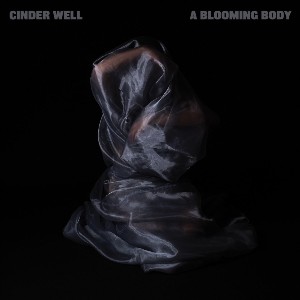
A Blooming Body by Cinder Well (essentially Amelia Baker with supporting musicians) is possibly the saddest record I’ve ever heard. Gloriously sad. Euphorically sad. What makes it so is as much what it isn’t as what it is.
A Blooming Body doesn’t couch itself in ethereality. Neither does it employ the rote breathiness that seems de rigueur in the mainstream minor key music of today. Instead, it is earthy as hell. Baker’s songs have the weight of stone to them, and her delivery is no different.
Likewise, her arrangements accentuate, versus provide egress from, the depths of melancholia. Rather than water down the wine, Baker asks listeners to drink deeply, to fully immerse themselves in the sadness she projects.
As such, Baker doesn’t shift to lofty, major key arrangements, a common practice when attempting to attenuate the discomfort that comes with experiencing problematic emotions. Her arrangements are stark, slightly austere, and perfectly suited.
Not compelled to be familiar, obvious, or formulaic, Baker allows herself to be challenging, perhaps even dangerous. She avoids lyrical tropes like the plague in order to ensure a connection with her audience that is pure and free of cultural baggage. She opts to explore the facets of sadness rather than dance its surface.
And so, by metrics of melancholia, Cinder Well should have fans numbering in the millions versus the tens of thousands.
A Blooming Body is, from an emotional perspective, a fairly staggering work. The album’s songs play with detachment and distance in oblique ways that mirror the album’s themes of distance and alienation. Baker spends a good deal of her time investigating the disconnect between people as well as the space between them and their environments.
These examinations are underscored by a very post-modernist lyrical style. Her words require an explanation from the artist to fully understand, much like a Basquiat painting does. Here, there is a personal mythology at work.
Which isn’t to say that they are inscrutable. Baker’s approach is imagistic yet direct. You get a clear sense of what is bothering her–it just isn’t easy to follow the bread crumb trail home. And I appreciate that. I’d rather sit and puzzle over lyrics than be led by a leash at the neck through something literal. There are exceptions, of course (Catherine Ribeiro can sing as earnestly about peace as she wants and I will affix the leash myself).
All of this boils down to Baker’s unerring exploration of what most people tend to shut the door on. Like Oliver Reed in Burnt Offerings , many of us are terrified to look behind that closed door for fear of finding something troubling. So we stick with the safe stuff: songs about broken hearts, jilted lovers, heartbreak and heartache.
However, broken hearts are an easy business. Existential dread, isolation, alienation, detachment, and the impact of the larger forces that often govern us…these are something else altogether. Yet this is the milieu in which Baker thrives, and I give myself wholeheartedly to the experience.
The music on A Blooming Body, downbeat and downtempo, touches on the ecstatic, an experience we all should be open to regardless of the vessel that transports us there. The album has the sparseness of a Talk Talk record (think Sprit of Eden ), a band, I might add, who threw away pop stardom in order to explore the profound and the deeply poetic.
Baker, who may not have an incredible vocal range, has the keen ability (via a slightly *Karen Dalton*-esque delivery and timbre) to pierce the veil that we tend to hide behind, the bifurcation that keeps us safe. Something profound is happening on Blooming Body, something universal, and transcendent, and unbearably heartbreaking.