
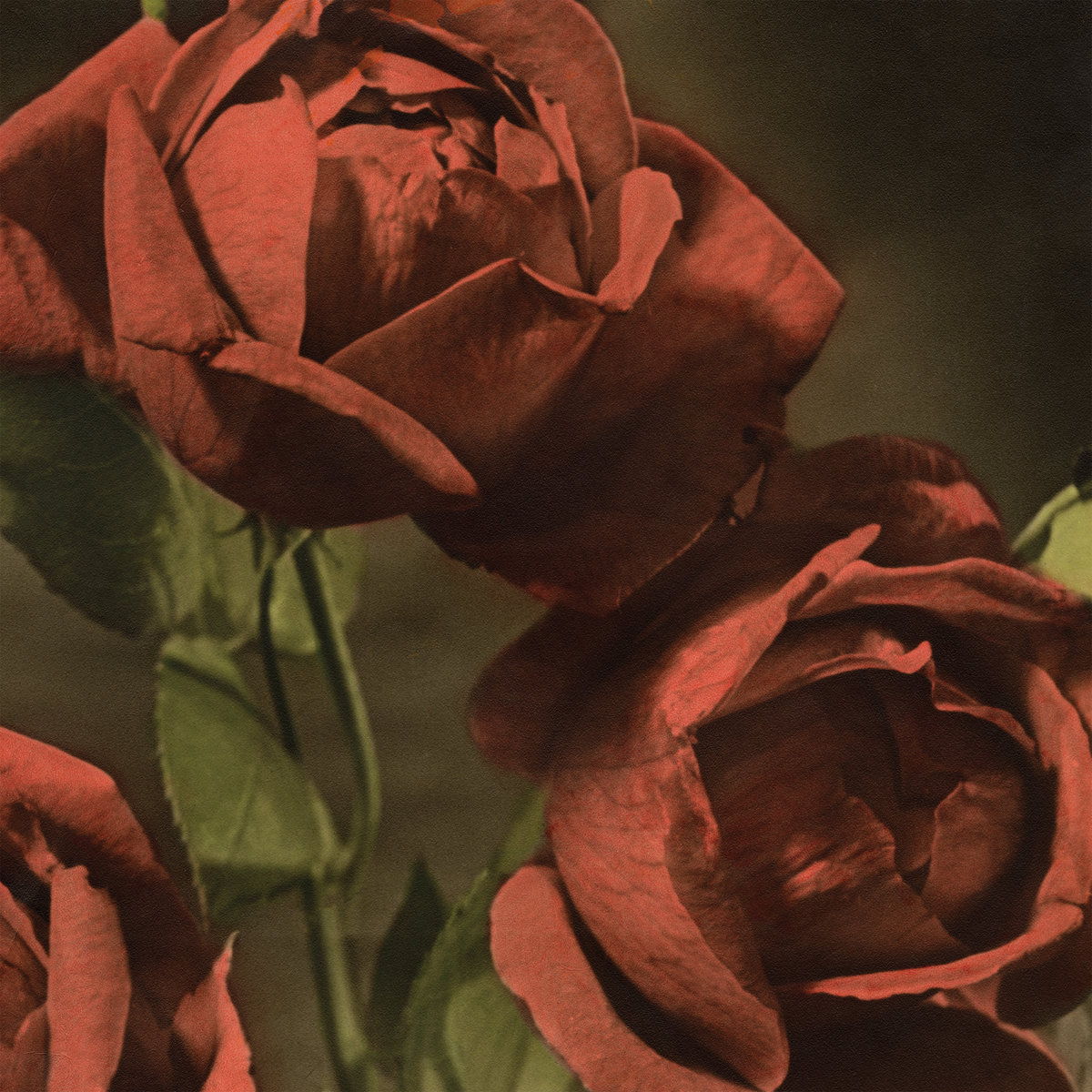
‘Another Country’ occupies a peculiar and deeply affecting emotional territory where intimacy, alienation, romantic longing, and urban observation drift together in blurred yet strangely precise forms. Across nine concise compositions, Cindy constructs a world suspended between memory and immediate experience, where overheard conversations, private anxieties, literary allusions, and fragments of emotional history circulate through songs of remarkable subtlety. The album’s brilliance lies not in grand revelation but in its ability to transform uncertainty itself into a coherent artistic language.
Built around the songwriting of Karina Gill and realized through the instinctive chemistry of a fully stabilized lineup for the first time in Cindy’s history, ‘Another Country’ possesses an unusual sense of emotional continuity. Gill serves as founder, lead vocalist, and principal songwriter, but the album’s understated richness emerges equally through the contributions of Staizsh Rodrigues on tambourine and backing vocals, Will Smith on bass, and Oli Lipton on guitar. Their interplay never calls attention to itself overtly; instead, each musician shapes the album’s atmosphere through restraint, nuance, and an almost uncanny collective sensitivity to space and implication.
The title track, “Another Country,” establishes the record’s emotional vocabulary immediately. Gill’s voice moves through the composition with a calm but searching quality, as though attempting to articulate perceptions that resist ordinary language. Lipton’s guitar lines drift delicately through the arrangement without settling into predictable patterns, while Smith’s bass anchors the song with subtle melodic gravity. Rodrigues’ tambourine and backing vocals add faint flashes of movement and texture, creating a sensation of emotional motion beneath the song’s otherwise restrained surface. The result is quietly hypnotic, drawing the listener into a psychological landscape shaped as much by uncertainty as by revelation.
“Daytime” condenses an astonishing amount of emotional complexity into barely two and a half minutes. Cindy’s gift for understatement becomes especially apparent here. Rather than building toward cathartic climax, the band allows tiny gestures to carry enormous significance: a brief guitar inflection, the hesitant pacing of Gill’s vocal phrasing, the understated pulse of Smith’s bass. The song captures the peculiar loneliness of ordinary daylight existence, where emotional realities persist invisibly beneath routine surfaces. “Soft Inheritance” emerges as one of the album’s most affecting compositions. Gill’s writing circles questions of memory, emotional inheritance, and private psychological residue without forcing fixed interpretation. The arrangement remains sparse but deeply evocative. Lipton’s guitar work here is particularly striking, creating soft melodic shadows around Gill’s vocal lines while Rodrigues’ harmonies subtly widen the song’s emotional perspective. Cindy understands that intimacy in music often derives not from confession but from suggestion, from the careful preservation of ambiguity.
The album takes an intriguing tonal shift with “Killer Kid in the Camaro,” whose title introduces a flash of menace and mythic Americana into the record’s introspective atmosphere. Yet the song never becomes overtly dramatic. Instead, Cindy treats the image as fragmented social observation, filtering violence and alienation through detached, almost dreamlike narration. Smith’s bass performance gives the composition a low-level propulsion while Lipton’s guitar phrases create fleeting moments of instability beneath the song’s deceptively calm exterior.
“Procession” may be the clearest example of the band’s extraordinary chemistry. The composition drifts forward with solemn elegance, each instrument occupying precisely the necessary emotional space without overcrowding the arrangement. Rodrigues’ tambourine work is especially effective here, introducing subtle rhythmic movement that gently destabilizes the song’s meditative pacing. Gill’s vocal performance remains remarkable throughout the album precisely because of its restraint. She never forces emotion outward, allowing vulnerability and uncertainty to emerge naturally through phrasing and tonal inflection.
“The Violins” condenses melancholy into miniature form. Lasting barely over two minutes, the song feels almost impossibly fragile, suspended between disappearance and revelation. Lipton’s guitar textures shimmer faintly beneath Gill’s voice while Smith’s bass lines provide understated emotional grounding. The composition demonstrates Cindy’s unusual understanding of proportion: nothing lingers longer than necessary, yet the emotional residue remains immense. “The Thousand First” expands the album’s melodic vocabulary slightly while preserving its elusive atmosphere. The song carries a muted romanticism reminiscent of overlooked private moments rather than dramatic declarations. Gill’s lyrics continue to resist literal interpretation, functioning instead through emotional association and psychological texture. The band’s interplay throughout the piece feels almost telepathic, every musical gesture arriving with understated precision.
“Talking To Mary” functions as a brief but essential interlude, capturing the sensation of overheard intimacy or fragmented recollection. Cindy consistently excels at these miniature forms, creating songs that feel less composed than discovered, fleeting emotional transmissions preserved before they disappear entirely. The closing “Another Country II” serves not as resolution but as deepened reflection. Returning to the thematic and emotional atmosphere of the opening track, the song suggests memory revisiting itself in altered form. The reprise structure becomes psychologically resonant: experiences recur, but never identically. Gill’s vocal delivery here carries a quiet exhaustion tempered by acceptance, while the band sustains the composition’s delicate emotional equilibrium with extraordinary discipline.
One of the album’s greatest strengths lies in its resistance to interpretive closure. Gill’s songwriting acknowledges the inadequacy of easy explanations for emotional and social experience, searching instead for truths embedded within mood, gesture, and fleeting perception. Her invocation of Baldwin proves meaningful not as literary ornamentation but as philosophical orientation. Like Baldwin’s work, ‘Another Country’ concerns itself with the invisible emotional structures shaping human behavior — longing, estrangement, desire, and the inability of conventional language to fully account for lived reality.
The album’s production further reinforces this atmosphere of intimate ambiguity. Nothing feels overstated or artificially enlarged. The arrangements preserve fragility and immediacy, allowing silence and negative space to function as active compositional elements. San Francisco seems embedded in the music not through direct representation but through atmosphere: fogged emotional distances, muted beauty, and quiet psychic dislocation.
Few contemporary indie records possess this level of emotional intelligence and compositional restraint. ‘Another Country’ succeeds because Cindy understands that mystery need not obscure feeling; instead, ambiguity can deepen emotional resonance by preserving the complexity of lived experience. Karina Gill, Staizsh Rodrigues, Will Smith, and Oli Lipton have created a record of remarkable subtlety and depth, one that lingers in the mind like partially remembered conversations, private realizations, or emotional truths glimpsed only briefly before receding again into uncertainty.
For more information, please visit Tough Love Records | Bandcamp | Instagram