
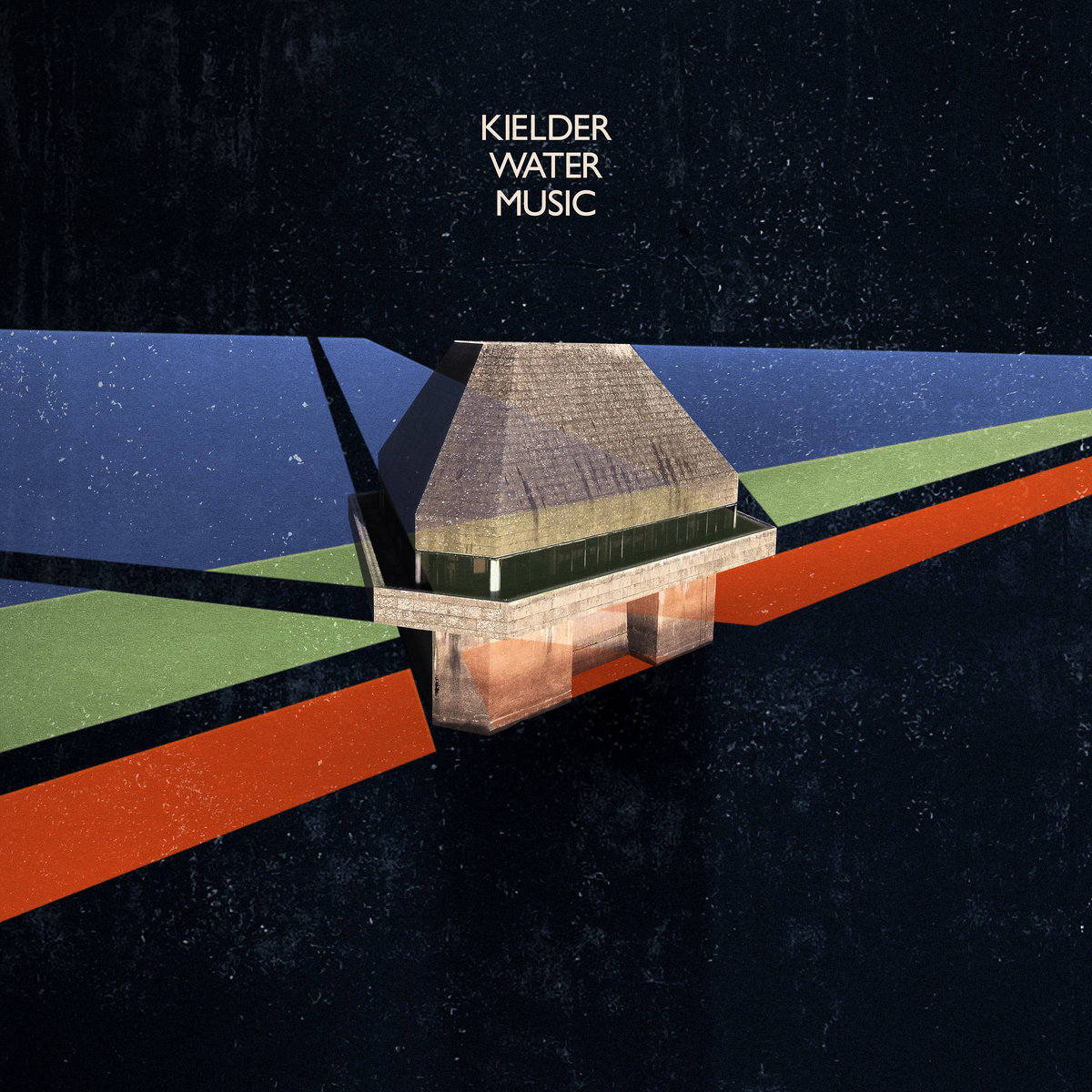
If there is a place that perfectly typifies where sound and psychogeography meet, where music attempts to encapsulate the idea of a place, is its mood and its memory, then it is found at the heart of Dan Moore’s Kielder Water Music.
It may help to know that the landscape in question, from which this four-track ep takes its name, is a development “built for an industrial expansion that never came; Kielder Dam in Northumberland, UK, is a monument to a forgotten future.” After research at the British Library and a three-day trip to record found sounds and interview residents there, Moore brought this all together as a way of exploring the strange beauty and nature of such post-industrial spaces.
“The Architect” is perhaps the least ambient, most vibrant piece here, yet such deft, delicate sounds still weave their way through the kinetic, fraught, energetic beats on which the track runs. “VT-15” is more representative of the rest of the album, fashioned partly from processed field recordings made in the submerged tunnels under Kielder Waters valve tower. Those who were captivated by Hildur Guðnadóttir’s score for the TV series Chernobyl will recognize the same sense of dread running through the piece, the same indescribable feeling of loss that hangs over such places. Perhaps music can voice such a feeling better than words ever can.
“A Shift in the Land” is Moore capturing the feeling of an artificial landscape masquerading as a natural space; it’s dissonant, ever-changing, and fractured sounds capture something of the diverse nature and melancholy of an abandoned place and a project that never came to fruition, that was never needed. A place where the speed of the modern world outpaced mankind and left only pathos.
Similarly, the titular “Mike” of the track that plays us out has his story told through long, droning, electro-classical sweeps, haunted and heartfelt, a site engineer whose job is soon to be taken by automation, his voice being the last thing we hear, the sound of humanity in this artificial place before a return to silence. Very poignant.
If the Kielder Water project, past and present, is a story of the rush of progress, of failure of such large engineering projects and of the broader idea of individuals “being replaced by technology in an already artificial landscape,” then this EP is that idea’s sonic elegy, its final, funereal hymn, its delicate dirge.