
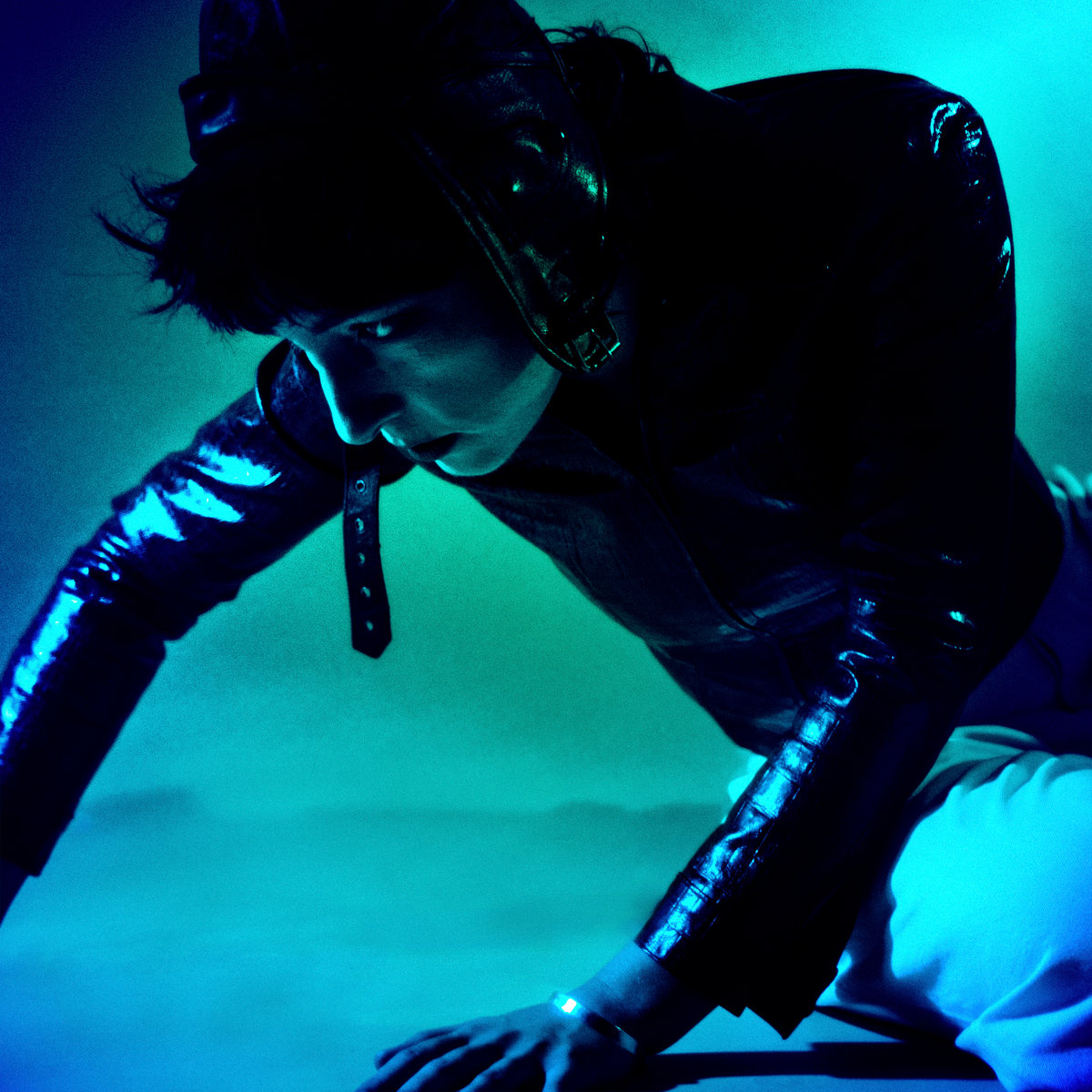
Somewhere in the second half of ‘Mammoth’, a voice sings about creatures too large for the street they’ve wandered onto, and the image sticks because it describes the whole record. Flora Hibberd has made an album about the oversized things that walk quietly through ordinary life: grief, history, dread, the sense that the past never fully leaves the block. Her previous album ‘Swirl’ wrapped itself in acoustic warmth. This follow-up opens the windows, plugs in the modular synthesizers, and lets the neighbors see everything.
Behind the console sits Ben Lanz of The National, who produced, engineered alongside Stew Crookes, and quietly became the record’s busiest instrumentalist. His keyboards, brass and modular synth lines thread through nearly every track, while Étienne Caylou’s mix gives the arrangements room to swell without swallowing the voice. Antoine Chabert mastered the album, and sessions took place at Mini Pond, Le Vésinet, and Studio Ferber. A small, close circle of players handled the rest, and that intimacy shows how naturally the parts lock together.
“Bowling Ball” sets the tone with a title that sounds playful and a sound that proves anything but simple. Victor Claass drives the guitars, Nils Sørensen holds down the bass, and Lucien Chatin’s drums keep a steady, rolling pulse, while Crookes slides pedal steel across the top like light moving over a wall. Backing voices from Lonny, Claass, Sørensen and Lanz lift the chorus until it feels less like one singer than a small congregation, with Hibberd’s clear, unhurried lead at the center, a narrator who has already noticed everything.
“Silent Movie Baby” turns lighter and stranger. Emma Broughton’s flute gives it a breezy, flickering quality, like old film stock caught in a projector’s beam, with Lanz’s brass and keys swirling underneath. “Perfect Ripple” brings in Sufjan Stevens on backing vocals, a soft, doubled shimmer around Hibberd’s line, a gentle disturbance on the surface of a pond. The modular synth drifts with a patient, rippling quality that matches the title, and the guest feels like part of the weather rather than a marquee name.
“Deltaplane” is the record’s longest piece at just under five minutes, and it uses the room. Crookes’ pedal steel returns, and backing vocals from Kate Stables and Lonny glide like wind currents. The title evokes a hang glider, that gentle, precarious floating above the ground, and the arrangement understands the assignment: instruments rise slowly and stay aloft, never rushing the descent.
Then the energy pivots. “Mythic Figure” is the album’s most compact transformation. JT Bates takes over on drums, while Lanz plays the bass, keys, piano, brass and modular synth himself. Backing singers circle the lead like an uneasy crowd. Here, apocalyptic shapes seem to crouch in the hedges, the sort of thing you catch out of the corner of your eye at dusk and can’t quite make yourself believe. Bates plays looser and more restless than Chatin, lending the track a slightly feral edge. “Ache” follows, its title as plain and direct as a bruise, with Stevens and Stables returning on backing vocals and an almost homemade sway. It’s a record’s worth of feeling pressed into a little over three and a half minutes.
“Mammoth,” sounds as it should, enormous without getting loud. Claass and Hibberd share guitars, Sørensen and Chatin keep the low end solid, and Lanz fills the corners with keys and brass. Backing voices turn the refrain chantlike and communal, the kind of melody a whole street might hum without knowing why. “Dew Pond” slows the pace, named for the small man-made watering holes dug on English hillsides to catch rain and mist. J.E. Sunde joins Lanz and Claass on backing vocals, Crookes’ pedal steel returns, and the piano lends a hushed, early-morning feeling, droplets gathering in a hollow.
“Shelley” is the shortest track and carries the plainest warmth, a song with a first name for a title and an air of close friendship. Three guitars weave through it like a conversation between people who know each other too well to talk loudly. The closing, “Hares On The Mountain,” drops the brass and the backing singers, leaving Hibberd’s voice more exposed than anywhere else. It’s a quiet, slightly mystical farewell, the kind of image that lingers after the last note, a flash of animal movement in the dusk.
That appetite for sound drives the record’s best moments, the sense of a songwriter stepping outside a comfortable room and discovering how large her voice can sound against bigger, brighter machinery. Hibberd sings about monstrous things in a calm, neighborly voice, and the band fills in around her with colors that sound like a whole town waking up at once. It’s a record about the giants hiding in plain sight, and it lets them stroll right down the middle of the street.
Learn more links:
Flora Hibberd
22 Twenty
Bandcamp
FFM
Soundcloud
Facebook