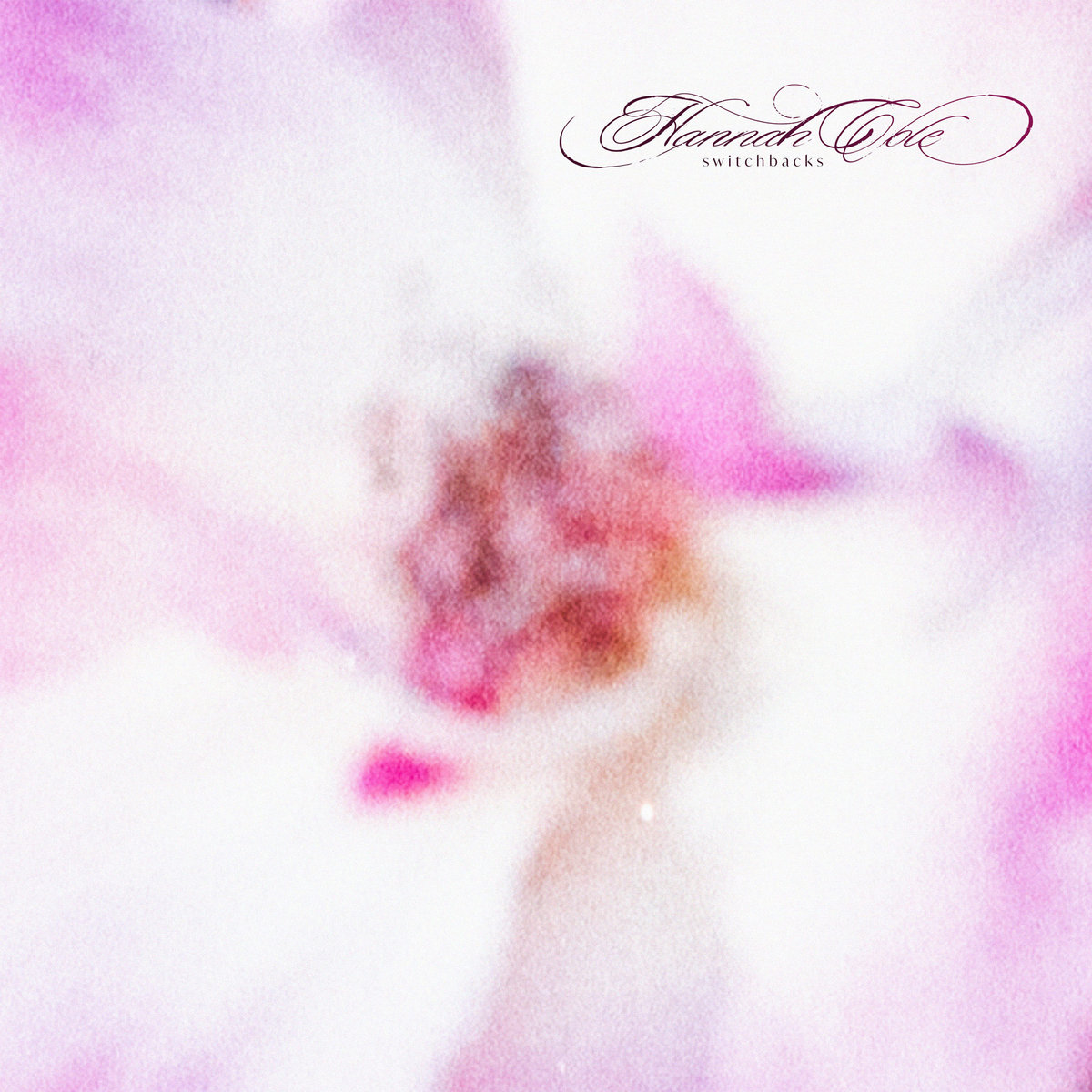
Growth is rarely linear. It doubles back, stalls, returns to old ground with a little more understanding, and often only makes sense after a long stretch of not knowing. Hannah Cole builds ‘Switchbacks’ on that idea, and the title is both the metaphor and the structure. Across ten songs she follows the winding path of growing up, where progress tends to come out of contradiction rather than certainty. She doesn’t glamorize confusion and doesn’t hurry toward an easy release. She stays in the uneven stretches and lets them stay complicated.
Cole wrote every song, and she seems to understand that honesty works better when it leaves space for doubt. The lyrics avoid neat conclusions and offer observations that get you thinking instead of telling you how to feel. The music falls somewhere between indie rock, folk and thoughtful pop, and the variety always works in the album’s favor. Cole, Josef Kuhn and Henry Park share production and while the sound is big, it stays close, with plenty of controlled instrumental detail.
The title track sets the ground. Cole doesn’t treat change as a triumphant breakthrough. For her it’s a cycle where old fears come back looking different. Park’s electric guitar and synthesizer widen the arrangement quietly, in step with the song’s shifting viewpoints, and Cole’s calm, convincing delivery makes vulnerability land harder than any declaration would. “MMA” uses a fighting metaphor for emotional endurance and the private battles that come with growing up. Kuhn handles production, engineering, guitars, drums, percussion, bass, keyboards, sampling and background vocals, and he plays with a light touch. None of it crowds Cole’s writing, and tight rhythm and open melody sit together easily. Resilience here means being willing to keep going back into the fray after a setback, not being unbeatable.
“Pitcher” turns everyday imagery into bigger thoughts about identity and expectation. Cole writes economically and lets well-chosen details build weight without much explaining. The arrangement is roomy and favors subtlety over density, and Kuhn’s playing adds small harmonic shifts. “Give” is one of the quietly moving songs. Cole doesn’t treat generosity as a simple virtue. She looks at the balance between giving yourself and protecting your boundaries, and Park’s electric guitar warms up her measured vocal. The song avoids sentimentality by admitting that giving often means facing your own limits as much as celebrating kindness.
“Mechanical Bull” has one of the record’s most memorable images: the exhausting loops people put themselves through for validation, affection or achievement. Cole’s synthesizer adds understated electronic texture, and James Eichman’s electric and acoustic guitars bring melodic clarity and drive. Eichman co-wrote it, and the song mixes humor with a quiet look at how absurd many ambitions are.
“Dancing” shifts the mood without leaving the album’s inward focus. Movement becomes release instead of performance, the idea being that freedom often shows up in the body before you can put it into words. Park’s electric guitar and bass give it a graceful push, and Kuhn’s rhythm work keeps it light without losing depth. Cole catches the brief thrill of dropping self-consciousness, even if only for a while. “100 Bucks” looks at value, both financial and emotional, and questions the assumptions behind how we trade in each. She skips easy social commentary and asks how worth gets measured against arbitrary standards. Her strength is asking good questions and not handing out answers.
“Shooting Star” is one of the most lyrical songs on impermanence. Eichman’s electric guitar adds shimmering lines that fit its interest in fleeting beauty. Cole knows a moment is precious because it won’t last, and she takes that in stride, with sadness and gratitude sitting together. “Mosquito Hawk” turns to small, quiet changes. While the lyrics range from perception and the beauty people tend to miss, keyboard and piano keep the track close and intimate. The title names a creature people often misunderstand, which points toward ideas about mistaken identity and quiet resilience. It’s one of the album’s most understated songs, and each careful image gives you something new.
The closer, “Every New Day,” refuses to end on a triumphant note. For Cole, renewal isn’t a single breakthrough. It’s something you do over and over again every day, and the song admits that hope counts because you keep having to choose it, whether or not anything has been settled. Kuhn’s full instrumental palette supports that gently, letting the arrangement grow without losing intimacy.
Across the album, Kuhn’s range as producer and multi-instrumentalist gives the record an inventive foundation. He plays electric, acoustic and baritone guitars, drums, percussion, bass, synthesizers, piano and background vocals, and each song gets its own personality while the whole thing holds together. Park’s production and playing widen the sound, and Eichman’s guitar adds warmth and melodic polish at key moments. Sonny DiPerri’s mix (with assistance from Zach Capitti Fenton), keeps things clear and deep, so every layer has a job, and Alec Ness’s mastering gives the album a balanced presence.
Learn more links:
Tight Knit Records
Bandcamp
Instagram