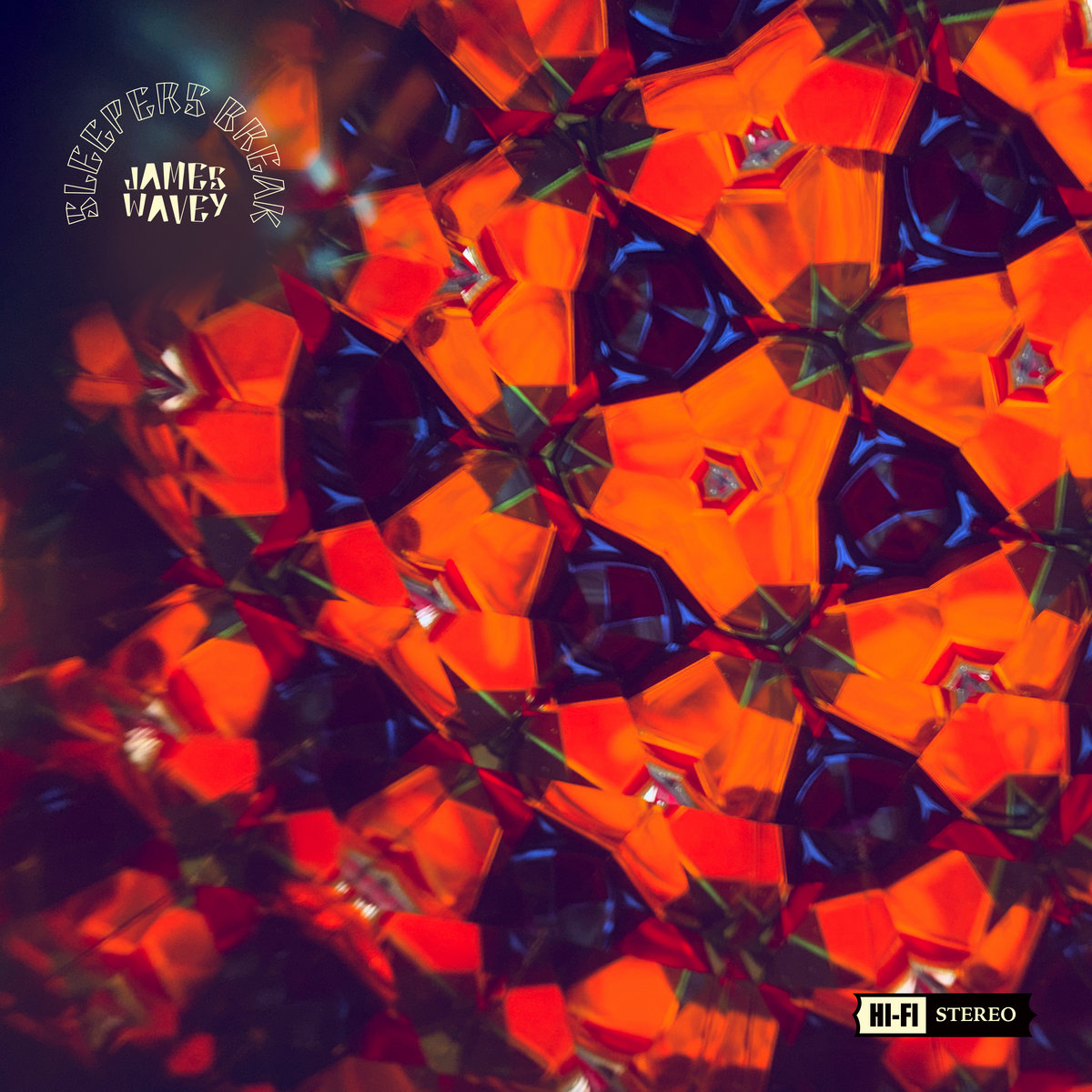
‘Sleepers Break’ sounds like it was cut in a hot room, everyone drenched and nobody minding. James Wavey’s earlier albums lived mostly in hip-hop. Here he’s in a Berkeley studio with a live band, and the six songs make no effort to hide how much that switch cost him.
It isn’t a break with his past work. The restless, argumentative writing is still there, now run through amps and a rhythm section that sounds like it’s in a hurry. Guitarist Jafar Green made the move possible, and his playing holds the record together: loose, fuzzy, always close to falling apart without ever doing it. You can hear the influences. The Stooges are in the lunge of it, Love in the odd sweetness that keeps showing up, and Mick Collins and the Dirtbombs in how soul and noise sit together without a fight. Wavey, credited as Michael Bridgmon for production, lyrics, piano, organ, xylophone and vocals, uses all of that to preach rather than to imitate.
“When Did The Lights Go Out?” opens with a question that works as both lament and accusation. The band was recorded live, so you hear the bleed between instruments, and Colin Howard’s drums and Taylor Christian Roach’s bass are tightly locked. Wavey’s hoarse voice sits on top, asking where the light went and who turned it off. The question is social and personal at once, and he won’t split the two. That’s what the EP is about. “Stand Back” is a warning delivered with a grin, built for clearing a dance floor and then filling it. Green’s guitar snarls over an organ that rumbles like a church service next door. “Creme Brule” turns the mood sideways. To my ear it treats sweetness as something with a burnt crust you have to break through to get anywhere soft, and the xylophone adds an odd, welcome flash of childhood in the grime.
“Flourish” is the longest track and lets the band stretch out. It builds slowly, a murmur, then a swell, then the sense that something is about to be asked of everyone in the room. Wavey’s piano and organ pull the soul and early R&B influences forward, and Howard’s acoustic drumming has a shuffle no drum machine would give you. The song treats growth as work, not a gift. “Today Is Your Greatest Weapon” is the most interesting track because the lineup changes. For this track, Mike Joseph Walti steps out from behind the board to play bass and drums, and Wavey switches to guitar. The swap gives it the feel of a basement jam. It’s rough, direct, and sincere.
“Trustfall” closes the EP, and it’s a smart choice. Falling backward into other people’s arms is about as vulnerable as it gets, and it describes the whole project: a musician leaving his comfort zone and trusting a band to catch him. The playing settles down here, and the revival-tent fervor gives way to something closer to gratitude. Ending an angry record on one more blast would have been easy. Ending it on faith took more nerve.
Wavey writes plainly about the Black experience, and that specificity is why the songs reach beyond it. The anger is aimed at something real, so people recognize it. Anyone who has sat through one indignity too many and decided it was the last will know this voice. The notes call it punk rock through a garage-psych lens. I’d add a gospel pulse underneath, the rhythm of people gathered to testify and be heard. Walti’s production and Bart Thurber’s mastering rightly leave the rough edges alone. The records that inspired this one were never tidy, and cleaning these songs up would have been dishonest.
Learn more links: Bandcamp | Link Tree