
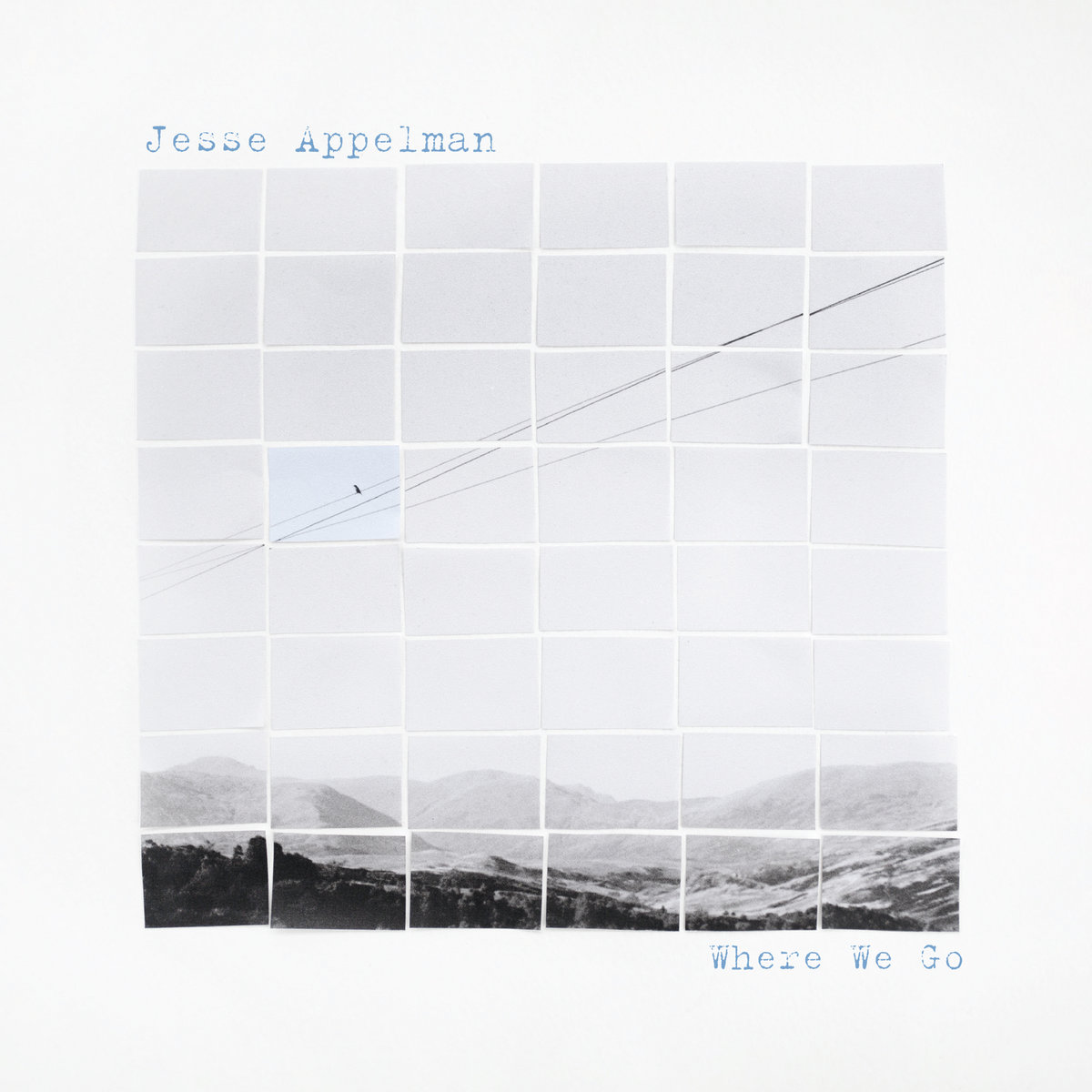
Jesse Appelman’s ‘Where We Go’ is a testament to the quiet power of deep listening and collaborative intuition. From the opening strains of “Valley Springs,” where Appelman’s mandolin arcs gracefully over Allison de Groot’s intricate clawhammer banjo, the record establishes a dialogue between reverence and invention. The melodies feel lived-in, spacious yet intimately detailed, a reflection of Appelman’s California roots where bluegrass, Brazilian choro, and new acoustic music mingle freely.
“The Hills of Isle au Haut,” a Gordon Bok cover, embodies both historical awareness and modern sensibility. Eli West’s guitar and octave mandolin provide a lyrical counterpoint to Sami Braman’s fiddle, while Caleb Klauder and Reeb Willms’ harmonies enrich the narrative, threading traditional storytelling into a contemporary sonic fabric. Drummer Mark Raudabaugh grounds the piece subtly, allowing the ensemble’s nuanced interplay to breathe without constraint.
Original compositions like “Liminal Criminal” showcase Appelman’s gift for restraint. John Mailander’s harmony fiddles converse with the mandolin in an almost conversational way, revealing harmonic layers that reward careful listening. Here, spontaneity guides the performance: each instrumental line reacts organically, producing a sense of improvisational freedom without sacrificing clarity of form. “Glacier Song” and “Lyell Fork” highlight the subtlety of the record’s texture. Emily Mann’s bass and harmony vocals anchor Appelman’s mandolin, while de Groot’s banjo and Eli West’s guitar lines interlace in patterns that are both intricate and airy. The interplay produces a spaciousness that recalls Bill Frisell’s textural sensibility, yet the music remains firmly rooted in West Coast stringband tradition.
The album’s centerpiece, “Anna Lee,” benefits from an expanded palette. AJ Lee’s vocals entwine with Appelman’s and Laurelyn Dossett’s composition, while Jeff Taylor’s accordion and Mailander’s shruti box add exotic yet natural layers. The duet is both intimate and expansive, balancing lyricism and improvisational impulse, and standing as a testament to Appelman’s compositional confidence. “Freight Train,” stripped down to Appelman and West, distills the record’s ethos into pure interaction. Every pluck, slide, and resonance is foregrounded, the pair navigating Elizabeth Cotten’s classic with an attentiveness that allows space for breath and timing to shape the performance. Similarly, “Out in the Valley” brings together Laurie Lewis, Kathy Kallick, and Appelman’s core ensemble in a harmonious culmination of the album’s collaborative spirit.
Closing with “First Notes,” the record affirms its commitment to collective storytelling. Drums, harmony fiddles, and Appelman’s mandolin converge in a finale that feels celebratory without being ostentatious, marking a full-circle moment from the record’s opening. Across these eleven tracks, ‘Where We Go’ is less a collection of songs than a study in responsiveness, a testament to the musical possibilities that arise when musicians listen as much as they play.
Appelman has created a debut that honors the lineage of bluegrass and new acoustic music while asserting a voice entirely its own. Each track offers room for reflection, exploration, and connection, a balance of polished musicianship and human imperfection that gives the album both heart and longevity. ‘Where We Go’ is an invitation to witness music unfolding in its most honest and compelling form.
Learn more by visiting Jesse Appelman | Bandcamp | Instagram | Facebook.