A second chunk of curator/producer Zev Feldman’s Record Store Day releases constitute a trio of veterans at the top of their game via two epic live records and a studio album, all from the seventies.
One of the true greats, tenor sax titan Joe Henderson – much like Dexter Gordon – often seems to be overlooked when compared to his peers Charlie Parker, Sonny Rollins, and John Coltrane. One listen to Consonance: Live at the Jazz Showcase, however, makes us wonder why. Recorded in 1976 with a backing band consisting of pianist Joanne Brackeen, bassist Steve Rodby, and drummer Danny Spencer, Consonance displays the master saxist in full, exciting control of his prodigious talents. Few improvisers could lead a band through near-half hour epics without benumbing the audience, but Henderson does it five times here. On Coltrane’s “Mr. P.C.” (a blazer that challenges anyone to keep up with it), the standards “Softly, As In a Morning Sunrise” and “Invitation,” and his own “Recorda Me” and “Inner Urge,” Henderson keeps the ideas flowing relentlessly, inspiring his bandmates and the audience at the same time. Not everything is so massive, of course – takes on Parker’s “Relaxin’ at Camarillo,” Thelonious Monk’s “‘Round Midnight,” and the leader’s “Isotope” pull back the length (if only by about five minutes in the case of “Midnight”) and still induce thrills. From gently swinging to insistently moving to flat-out roaring, Consonance is a textbook example of how explosively magical a group of harmonious master improvisers can be.
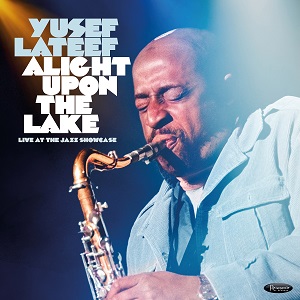
Detroit saxophonist/reeds master Yusef Lateef is known for his absorption Arabic, Indian, and Asian sounds into jazz long before the spiritual jazz movement began incorporating ragas. But he was still loyal to the music’s blues and gospel roots, which helped make him a star in the sixties and seventies. Alight Upon the Lake: Live at the Jazz Showcase documents a 1975 gig with Lateef at the height of his powers. Behind him, veteran drummer Albert “Tootie” Heath teams with lesser-known but equally experienced bassist Bob Cunningham for a killer rhythm section, while pianist Kenny Barron plays his heart out so often that he might as well have co-billing. Barron also contributes a pair of tunes, “The Untitled” and “Into Atlantis,” that stretch out to the half-hour and twenty-minute marks with no loss in thrust or power. Lateef pulls plenty of gems from his own catalog, of course, including the groovy “Mutually Exclusive,” bluesy “Yusef’s Mood,” and soulful Ben Webster tribute “I Remember Webster.” Takes on Roy Brooks’ shimmering “Eboness” and Akira Inoue’s expansive “Opus 1 & 2” let the woodwinder flex his flute muscles, while he swings hard on Nat King Cole’s “Straighten Up and Fly Right.” A generous bandleader, Lateef lets his sidefolks shine often, particularly Barron and Cunningham, who contributes some beautiful arco work. While certainly passionate, his own playing concentrates more on conveying musical and emotional range than intensity. Alight Upon the Lake is a less a showcase for a master leading his group than a great band in full flight.
The only studio album in this group, Pinnacle – the 1975 debut album as a leader from bassist Buster Williams – resurfaces as part of Feldman’s Time Traveler Records reissue campaign for the Muse Records catalog. The highly respected NEA Jazz Master showcases a set of original tunes and a kick-ass band, featuring saxophonist Sonny Fortune, drummer Billy Hart, trumpeter Woody Shaw, and keyboardist Onaje Allen Gumbs. Equally proficient on double and electric bass, Williams builds the tunes on basslines without making them into solo showcases. Opener “The Hump” (the only tune performed on bass guitar) sets up a rubbery groove, but lets Fortune pull the spotlight. “Tayamisha” swings casually, Fortune and guest Earl Turbington on soprano sax gliding seamlessly across the rhythm. The title track settles into measured post bop, with Shaw opening up the sound and Gumb painting the backdrop with assorted colors. The only cuts that really feature the leader up front are “Noble Eagle,” on which Williams sets up a catchy, circular bassline that takes the song into the ethereal, and “Batuki” (composed by Gumbs) with harmonies that give the tune a floating quality – both songs feature bass and keys in conversation with each other. Pinnacle is a strong debut record from an often-underestimated jazz figure.