
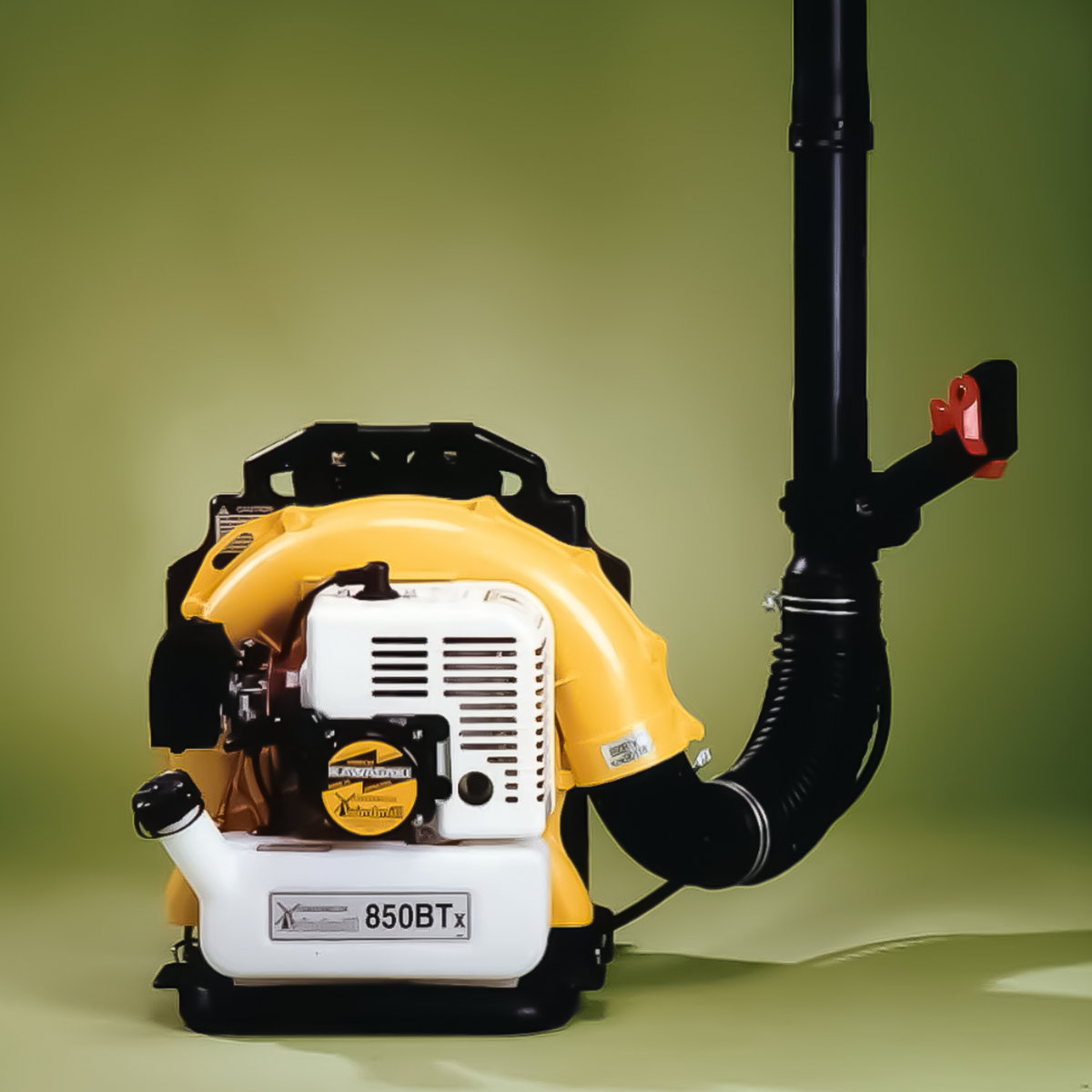
Seven musicians, bananas, carrots, chips, and a long night in El Sereno. It sounds like a challenge for a tape, and it is a challenge that the tape rises to meet. Years of complaints about the gas leaf blower, its noise, and the people using it to maintain the lawns of other people have been the subject of much debate in Los Angeles. This Arroyo Seco septet sides with the machine.
On ‘Neighborhood Statistics,’ Leafblower is *Allen Bleyle on synthesizers, Danny Echevarria on violin, Jenna Thornhill on alto sax, Larry Schemel and Oliver Hall on guitars, Marty Sataman on bass, and Adam Payne, the group’s only original member from 2017, on drums and other percussion. The music on ‘Neighborhood Statistics’ is dense, but the band manages to create a weather system of sounds on the tape, rather than just filling the grooves with noise.
‘Be You Apes’ opens with two guitars grind together, the synths wheeze, the drumming of Payne is swaggering as he hauls a couch down the stairs, Echevarria’s violin slices across the track like a siren that has lost its way home. This is not polite music, but it is played with so much loose-limbed joy that it never becomes a lecture. “Ice Man” is a more sinister, slinky song than the opener. Here, Sataman’s bass takes the lead, walking through a slow, plodding bassline, while Thornhill’s sax plays out a series of honks and squawks, half jazz, half car alarm. “Wimp” is the meaner of the two, the band strutting about with a smirk on their faces as they play out the song’s subject. It’s domination and cruelty on the A-side, but the band play it with a raised eyebrow rather than a clenched fist. In other words, they’re playing cruelty for laughs, letting it flap about in public for the audience to scoff at.
The longest track, “Big Boy,” clocks in at nearly ten minutes. At times, the song can feel like it is dragging, but the band does a good job of switching up the style of the song, from thin guitar driven sections to more dense and layered parts featuring the synthesizers of Bleyle and Thornhill’s saxophone. At times, the entire band can be heard playing the same repeating gesture repeatedly, the song transforming into the sound of a large man slowly stomping around the room, getting more and more ridiculous with each repetition. It can make a room feel smaller.
Invisible Dog remixed the first four tracks on the into four dub versions of each track to make up the second half of ‘Neighborhood Statistics.’ The first of these, “Wimp Man I” strips the wiry “Wimp” back to its bones, with Sataman’s bass left to float in a pool of reverb, while scraps of sax drift past like debris on a slow river. ‘I & I Man’ is even longer, stretching past the five-and-a-half-minute mark. Here, the band allow the sounds to wander, to vanish and to return again and again.
“BiggRhythmBoy” is the biggest track and runs to nearly seven and a half minutes. Here the band take a track of source material and create a slow-motion hallucination. The Payne’s drums have been dissolved into echo and now sound like the heartbeat of someone on the other side of a wall. The violin and synthesizer have been smeared into a pastel wash, and the guitars can only be heard on the odd occasion, like swimmers coming up for air. This is a very different band to the one that is heard through the first four tracks, being soothed by the music rather than being pummeled by it.
“Ape Man Digistyle” clocks in at just over three minutes. Here, the band have traded the sweat of the other tracks for a digital shimmer, and the groove on this track is almost danceable. It is a good way to end the tape and leaves the listener with a dry-eyed wink as the tape is flipped back over. Something about the title ‘Neighborhood Statistics’ resonates. It conjures up images of numbers, lists, statistics, tables of data, all reduced to a series of complaints per block. The neighborhood is reduced to a series of numbers, and the life of the place is reduced to a series of complaints. This band have reduced the life of the neighborhood to the grooves on this tape, and it is a very good thing too. The anger, the absurdity, the long afternoons of other people’s engines are all there on the record’s first half.
The second half then slowly lets out the pressure, as if someone has finally opened a window in a stuffy room.
While there are plenty of experimental groups that equate volume with ideas, the noise on ‘Neighborhood Statistics’ is given a purpose. It’s catharsis, not provocation, that the the band is aiming for on this first tape. And while they ask listeners to endure some wild, sprawling stretches of music on the first tape, the antidote is delivered soon enough. Few first tapes have this much nerve, and fewer still are this much fun.
Learn more links:
Bandcamp
Post Present Medium
Instagram
Twitter