
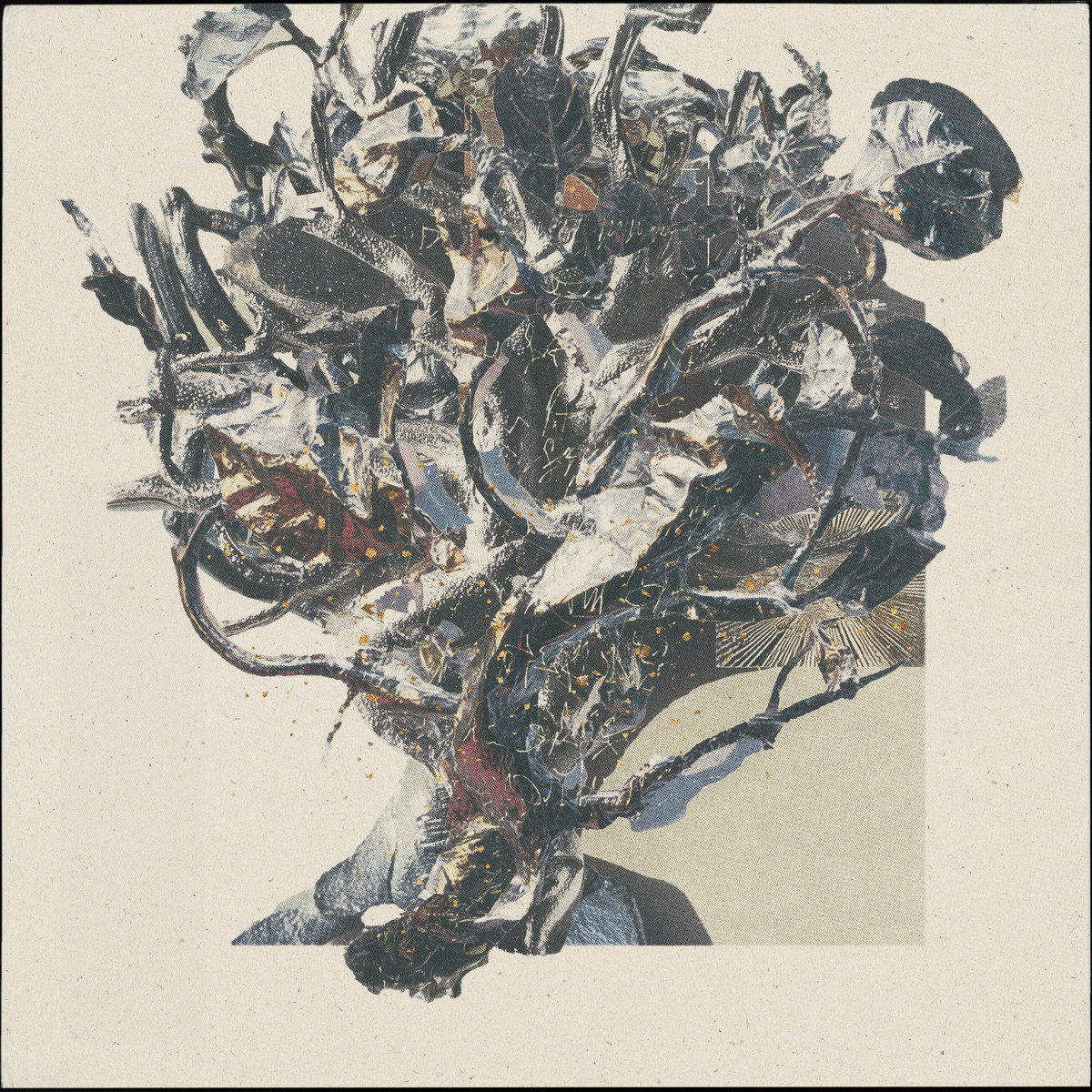
‘Tender Anger’ is work that treats fragility not as the opposite of force but as its most concentrated form. Conceived, composed, performed, and produced entirely by Lueenas, the record unfolds with a rare unity of vision. Yet it is far from solitary. Around Lueenas gathers a small, intuitive ensemble whose contributions feel less like adornments and more like extensions of a central nervous system.
From the opening invocation of “Vølve,” the album situates itself in a space where ritual and immediacy coexist. The absence of drums here sharpens the ear. Maria Jagd’s violin and viola trace fine, tensile lines across a landscape anchored by Ida Duelund’s resonant contrabass. Rikke Emilie List’s voice enters like a half-remembered incantation, neither foregrounded nor submerged. The track feels ancient and contemporary at once, as though the act of summoning were taking place inside a modern studio but drawing from an older well.
“Beatrice” shifts the emotional temperature without abandoning restraint. Jakob Høyer’s drums, present on most of the album, introduce a subtle propulsion, not to dominate but to articulate breath and pause. The composition reveals Lueenas’ gift for dynamic patience. Rather than chasing crescendos, the arrangement allows tension to gather in the negative space between gestures. Strings do not swell sentimentally; they lean, press, and occasionally fray at the edges, suggesting that tenderness is often inseparable from abrasion.
On “Canis Lupus,” the record bares its teeth. The title invokes the wolf not merely as symbol but as condition. The rhythm section prowls with quiet insistence, Høyer’s drumming taut and unsentimental. Duelund’s contrabass becomes almost percussive, digging into the harmonic ground. List returns vocally, her tone at once intimate and feral, while Lueenas layers textures that feel like shifting underbrush. The track does not explode; it stalks, exploring the thin line between instinct and restraint. The anger here is not theatrical. It is contained, watchful, and therefore more unsettling.
“Marianas Trench” descends inward. The metaphor is obvious, but the treatment is not. Rather than equating depth with density, Lueenas carves space into the arrangement. Jagd’s strings hover like distant light refracted through water, while subtle electronic undercurrents suggest pressure accumulating below the audible surface. The mix by Brian Batz preserves this sense of verticality; sounds seem to originate from varying depths, creating a three-dimensional listening experience that rewards close attention. Mastering by Jacob Günther ensures that even the quietest details retain presence without sacrificing the album’s overall intimacy.
“Diana” stands as one of the record’s emotional fulcrums. With additional vocals from Katinka Fogh Vindelev alongside List, the track becomes a dialogue rather than a monologue. The interplay of voices creates a braided texture, at times consonant, at times deliberately misaligned. Høyer’s drums pulse beneath them with a measured heartbeat, while Lueenas threads electronic and acoustic elements into a single fabric. There is something devotional in the repetition of motifs, yet the devotion feels earthly, directed toward flawed human figures rather than distant ideals.
The closing piece, “Ships,” withdraws percussion once more, echoing the sparseness of “Vølve.” Recorded across spaces that include The Village Recording in Vanløse, as well as additional sessions at Mesh Sounds, Kongo Studios, and Koncertkirken in Copenhagen, the album carries a subtle imprint of rooms and air. Nowhere is that more evident than here. “Ships” feels tidal, its motion guided by strings and low frequencies rather than drums. The absence of rhythmic anchoring allows the composition to drift, but never to dissipate. Instead, it suggests departure as a necessary act, a relinquishing that completes the cycle begun at the album’s start.
What distinguishes ‘Tender Anger’ is not simply its meticulous craftsmanship, though that is undeniable. It is the coherence of its emotional inquiry. Lueenas approaches composition as a form of close listening: to collaborators, to silence, to the body’s responses. The anger invoked in the title is not explosive rage but a slow-burning insistence on feeling fully. The tenderness is not weakness but permeability, an openness to being altered by sound and by others. ‘Tender Anger’ finds power in control, in the disciplined shaping of timbre and space. Each track feels considered yet alive, shaped by a guiding hand that understands when to intervene and when to allow the ensemble to speak. The result is an album that lingers not because it demands attention, but because it quietly earns it, revealing new gradations of emotion with each return.
Please visit Bandcamp and Link Tree to learn more.