
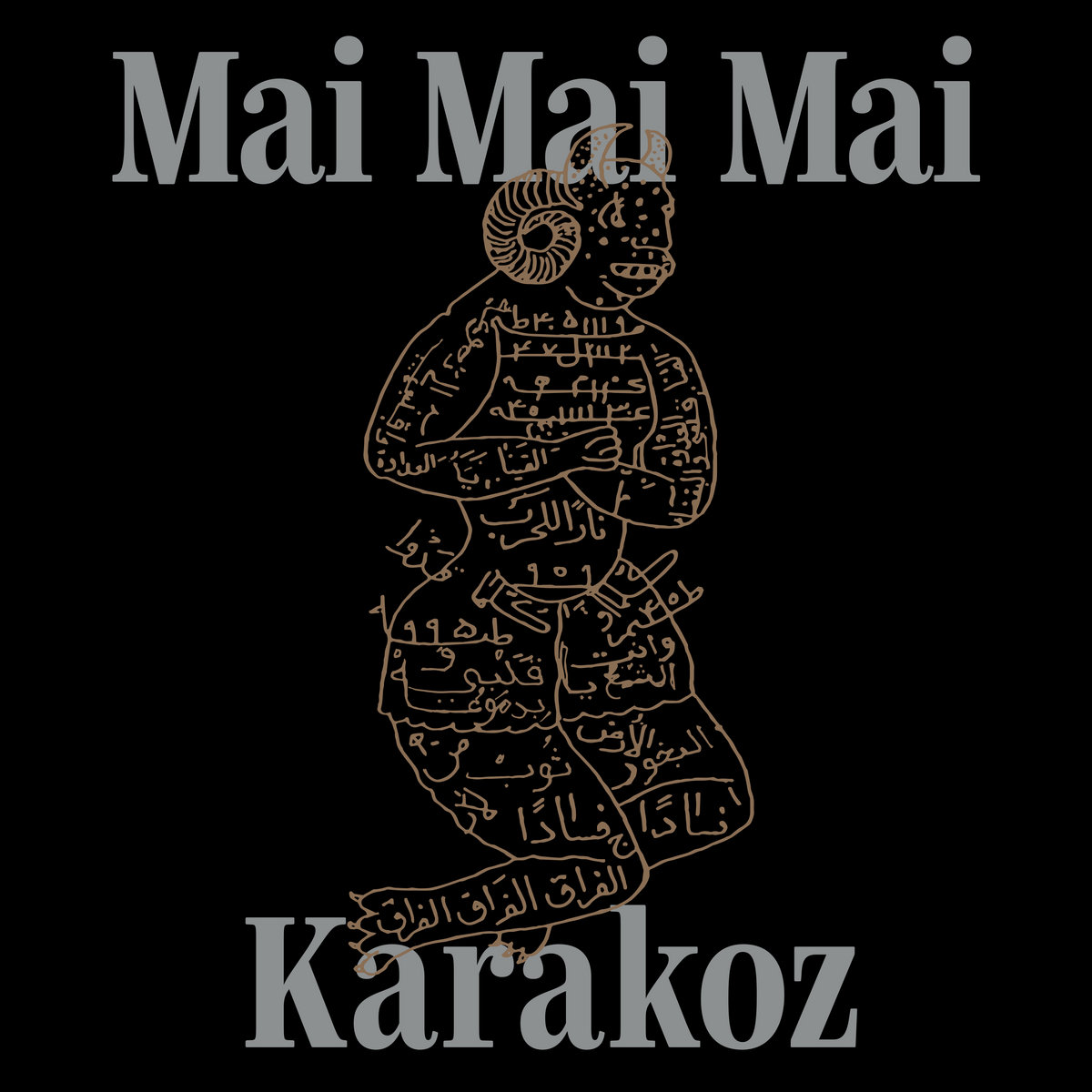
In the profound and often turbulent nexus of ethnomusicology and electronic synthesis, the project Mai Mai Mai has long acted as a conduit for the ghosts of the Mediterranean. With the release of ‘Karakoz,’ this exploration takes a turn toward the visceral and the sacred, documenting a journey through Palestine that is as much a sonic excavation as it is a creative statement. Recorded between the Radio Atheer Studio in Ramallah and the Wonder Cabinet in Bethlehem, the album is a consummate realization of decontextualization, where archival recordings from the Popular Art Center meet cutting-edge electronic modularity to form a bridge across time and trauma.
The record opens with the devastating clarity of “Grief,” featuring the vocals of Maya Al Khaldi. Singing a traditional Palestinian grief chant, Al Khaldi’s voice is met by the rhythmic weight of a Moog Subsequent 37 and beats that feel like an externalization of a heavy heart. The production, handled by Mai Mai Mai alongside Filippo Brancadoro, ensures that the electronics do not overshadow the cultural weight of the vocal, but rather provide a modern vessel for its ancient sorrow. This leads into “Karakoz,” which utilizes a 2020 recording from Tulkarem. Here, the traditional textures of the buzuq played by Karam Fares and percussion by Jihad Shouibi are fractured by the alien effects of the SOMA Terra. The result is a sound that feels simultaneously rooted in the soil and drifting through a digital ether.
One of the album’s most transcendent moments occurs on “Echoes of the Harvest,” where a 1997 archive recording of Hajja Badriya is paired with the contemporary saxophone of Alabaster DePlume. The Buchla Electric Music Box provides a shimmering, unstable backdrop that allows DePlume’s horn to dance around the historical vocal lines. It is a stunning display of temporal collapse, where the labor of the past is honored through the experimental language of the present. This sense of continuity is echoed in “Old Poem Made of Sand,” which resurrects a 1999 recording of a rubab and poem from Beit Ur. Augmented by the iconic pulse of a Roland TR-808 and more SOMA Terra interventions, the track reimagines traditional storytelling as a futurist epic.
The second half of the record shifts into the vibrant, often chaotic energy of the Palestinian landscape. “Dawn of the Cremisan Valley,” featuring the vocals of Julmud, offers a sharp, modern edge that reflects the contemporary resistance and creative fire of the region. This is followed by “Jinn of the Bethlehem Souk,” a track that incorporates field recordings taken by Mai Mai Mai in early 2024. The piercing, hypnotic mijwiz flute of Ussama Abu Ali cuts through the Moog-driven atmosphere, recreating the sensory overload of the Bethlehem market. It is a piece that captures the spirit of a place that remains stubbornly alive despite the pressures of history.
The album concludes with “Wandering Through the Crowded Paths of Al-Hisba,” a sprawling composition that utilizes the Moog Werkstatt and field recordings from the Al-Hisba market in Ramallah. The inclusion of a 1998 archive recording of Abu Hussein playing the yarghul flute provides a final, haunting link to Nazareth. Mixed by Brancadoro and mastered by Giuseppe Tillieci at Enisslab, the album maintains a tactile, physical quality that honors the grit of the field recordings while polishing the electronics to a high sheen.
‘Karakoz’ is an essential document of sonic solidarity. By weaving the voices of the past into the frequency-rich textures of the present, Mai Mai Mai has created a work that refuses to let memory fade. It is an intelligent, deeply moving exploration of what it means to carry a culture forward through the machine, proving that even in the face of immense struggle, the harvest of the human spirit continues to echo.
To learn more, please visit: Bandcamp | Maple Death Records