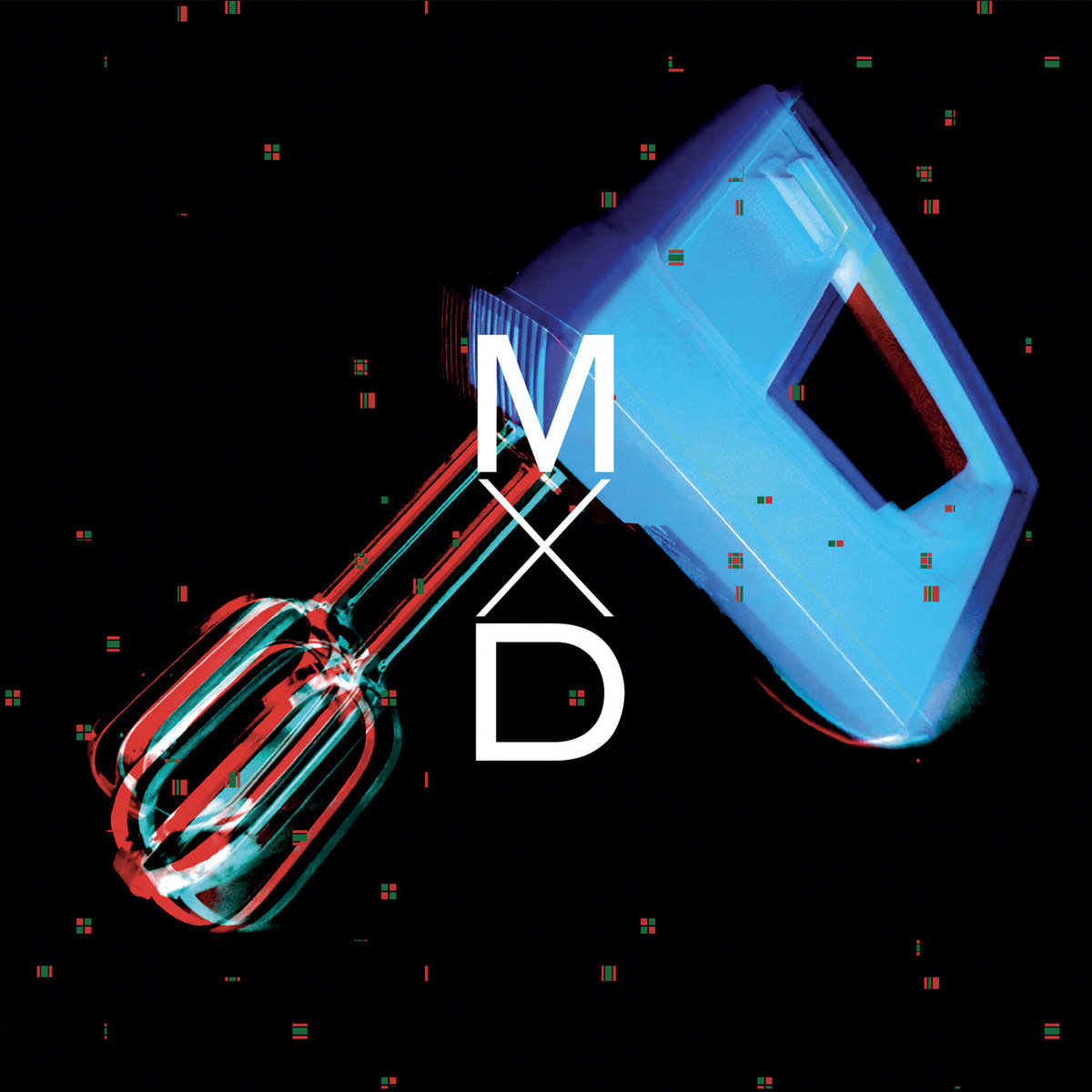
Progressive rock often wrestles with its own ambitions, balancing virtuosity against emotional immediacy and conceptual scope against memorable songwriting. ‘MXD’ refuses to treat those qualities as opposing forces. Conceived through the creative partnership of saxophonist Donny McCaslin and songwriter, vocalist, producer, and multi-instrumentalist Ryan Dahle, the album embraces scale without sacrificing intimacy. Across nine expansive compositions, celestial saxophone lines, richly layered synthesizers, muscular rhythm sections, and emotionally direct vocals converge into a work that constantly shifts perspective, inviting listeners to contemplate modern life through music that is both intellectually adventurous and deeply human.
The opening piece, “Henry Takes The 5th,” announces the band’s intentions with remarkable confidence. Panoramic percussion, elastic bass figures, and shimmering keyboards create a broad sonic canvas before McCaslin’s unmistakable saxophone enters, soaring above the arrangement with lyrical authority rather than technical exhibitionism. Dahle’s vocal performance provides an emotional anchor, preventing the instrumental complexity from drifting into abstraction. The composition suggests a world where innocence and experience coexist uneasily, establishing a thematic foundation that resonates throughout the album.
“Clickbait” transforms the relentless pace of contemporary digital culture into something far more nuanced than simple social commentary. Rather than condemning information overload, the song examines the psychological consequences of perpetual distraction. Dahle’s gift for melody keeps the composition immediately engaging even as the arrangement evolves through unexpected harmonic detours. McCaslin’s saxophone acts almost as a second narrator, responding to the vocal lines with phrases that seem to question, provoke, and occasionally console. The dialogue between voice and instrument becomes one of the album’s defining strengths.
The expansive “Calendar Eaters” examines time itself as something consumed rather than merely measured. Rhythmic momentum propels the piece forward while subtle shifts in texture mirror the quiet erosion of ordinary days. Dahle’s production demonstrates remarkable discipline, allowing intricate arrangements to retain both clarity and emotional focus. Recorded across studios in Los Angeles, Brooklyn, Vancouver, and Toronto, the album never sounds geographically fragmented. Instead, its varied recording environments contribute to a sense of expansive creative possibility, unified through Dahle’s production and David Fridmann’s characteristically vivid mix and mastering.
Among the record’s most intriguing moments, “Dark Matter Talk” embraces mystery without becoming impenetrable. The title invokes unseen forces, and the music responds accordingly, balancing luminous synthesizer textures against harmonically adventurous saxophone passages. McCaslin’s experience as one of contemporary music’s most imaginative improvisers becomes particularly evident here. His playing never overwhelms the composition but continually enlarges its emotional vocabulary, suggesting possibilities that extend beyond the lyric itself.
“Swingin Back To You” introduces an unexpected warmth at the album’s center. The composition blends expansive art rock with an understated sense of romantic longing, demonstrating that sophisticated arrangements need not come at the expense of accessibility. Dahle’s vocal delivery remains refreshingly unaffected, conveying vulnerability with quiet assurance rather than theatrical intensity. The rhythm section provides supple support throughout, allowing the song to shift naturally between reflective passages and exhilarating crescendos without ever losing coherence.
“Whisper Campaign” explores the corrosive effects of rumor, perception, and fractured communication with impressive subtlety. Rather than relying upon dramatic contrasts, the arrangement accumulates emotional weight through carefully layered instrumental details. Bubbling synthesizers drift beneath the surface while McCaslin’s saxophone introduces flashes of brilliance that punctuate the song without dominating it. The result captures the uneasy atmosphere of conversations shaped as much by implication as by fact.
The reflective “Astrid” serves as one of the album’s most emotionally resonant compositions. Here, McCaslin’s saxophone adopts an almost vocal quality, extending Dahle’s lyrical themes through elegantly phrased melodic responses. The arrangement reveals remarkable patience, allowing each instrumental voice to emerge organically. Every layer contributes to an atmosphere of quiet contemplation, demonstrating the confidence of musicians who understand that emotional depth often arises through careful restraint rather than constant escalation.
At more than six minutes, “Minor In Myth” functions as the album’s conceptual centerpiece. Its title suggests the fragile relationship between ordinary lives and the larger stories people construct around themselves. Musically, the composition embraces progressive rock’s expansive possibilities while remaining firmly rooted in memorable melodic ideas. Harmonic shifts, rhythmic variation, and evolving instrumental textures continually reshape the song’s landscape without sacrificing its narrative momentum. Fridmann’s mix deserves particular recognition here, preserving remarkable definition within an arrangement of extraordinary density and ambition.
Closing track “Magnitudes” provides an elegant conclusion by drawing together many of the album’s recurring musical and thematic ideas. Scale has been a recurring concern throughout ‘MXD’, whether measured through cosmic imagery, emotional experience, or the passage of time. The final composition reflects upon those dimensions with graceful confidence, allowing McCaslin’s soaring saxophone and Dahle’s expressive vocals to arrive at a satisfying sense of emotional resolution without resorting to easy certainty.
One of the album’s greatest achievements lies in the creative partnership itself. Donny McCaslin brings decades of experience as one of contemporary music’s most adventurous saxophonists, his distinctive voice enriching every composition with remarkable melodic imagination. Ryan Dahle, whose work encompasses songwriting, vocals, production, engineering, and the project’s overall artistic architecture, provides the cohesive vision that allows the album’s many influences to function as parts of a unified whole. Pete Min, Oliver Strauss, and Dahle each contribute engineering across the various recording sessions, while David Fridmann’s mixing and mastering elevate the music’s kaleidoscopic arrangements into something simultaneously expansive and remarkably transparent.
‘MXD’ avoids many of the familiar pitfalls associated with ambitious progressive music because its complexity always serves emotional expression rather than technical display. Every composition seeks genuine connection, balancing sophisticated musicianship with songs that remain deeply communicative. Rather than presenting virtuosity as an end in itself, the album demonstrates how exceptional performers can use their abilities to illuminate ideas about memory, identity, communication, and wonder. It is a richly imagined collaboration that celebrates artistic curiosity without losing sight of the listener, offering a compelling reminder that progressive music reaches its greatest heights when intellect and emotion move together rather than apart.
Learn more links:
We Are Busy Bodies
McCaslin Dahle
Instagram
Facebook