
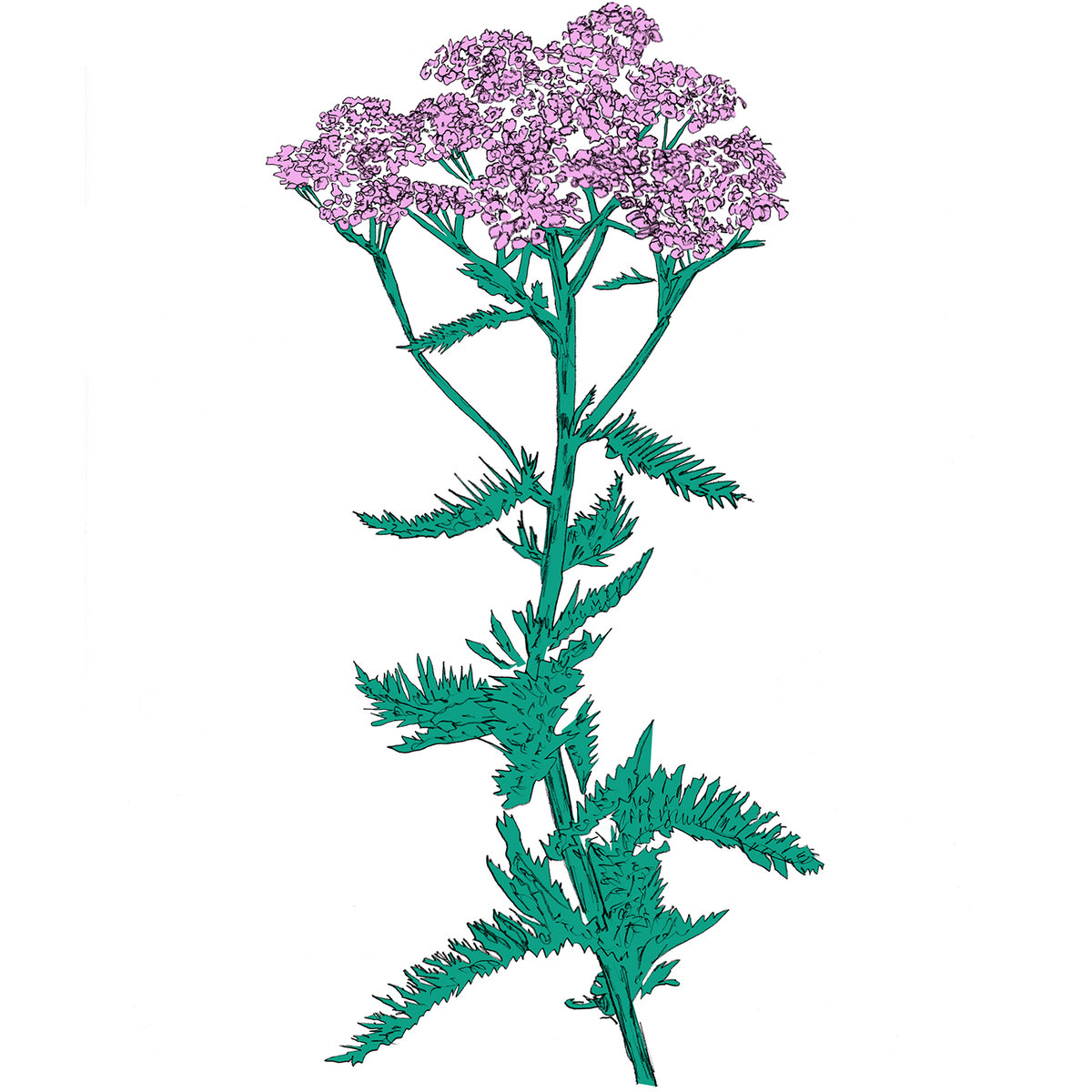
Patricia Wolf’s ‘Yarrow’ is an elegant meditation on botanical life, ecological interdependence, and attentive listening, transforming scientific observation into deeply expressive ambient composition. Inspired by her residency at the Rocky Mountain Biological Laboratory in Colorado, the Portland-based composer and field recordist approaches the natural world not as scenery or metaphor but as an active collaborator. Every composition carries the imprint of close study, where ecological processes are translated into patient harmonic movement, environmental recordings, and restrained melodic development. Rather than presenting nature through sentimental idealism, Wolf creates music that mirrors the extraordinary sophistication already present within living systems.
The opening piece, “Abiotic Factors,” establishes the album’s conceptual foundation with remarkable assurance. Gentle synthesizer layers emerge with measured clarity, surrounded by carefully integrated field recordings gathered at the Rocky Mountain Biological Laboratory. The composition reflects the invisible forces that govern life long before any seed germinates (light, moisture, temperature, wind, and mineral-rich soil), becoming musical ideas rather than scientific abstractions. Wolf’s sound design possesses remarkable transparency, allowing every sustained note to retain its individual character while contributing to an immersive sonic environment. The effect is contemplative without becoming static, drawing the listener toward subtle variations that echo the complexity of natural processes.
“Sessile Existence” shifts attention below the visible surface. Plants remain rooted, yet their apparent stillness conceals extraordinary biological activity. Wolf responds with harmonies that seem to circulate beneath one another, suggesting hidden communication networks and gradual adaptation rather than physical motion. Her pacing demonstrates unusual confidence, refusing dramatic gestures in favour of carefully calibrated evolution. The composition carries an understated emotional resonance born from observation rather than imposed narrative, encouraging appreciation for forms of life that flourish through persistence instead of spectacle.
The luminous “Inflorescence” serves as one of the record’s emotional centres. Here, melodic fragments blossom gradually across shimmering electronic textures, reflecting the flowering stage with quiet exuberance. Instead of celebrating blooms through obvious musical brightness, Wolf balances delicacy with structural sophistication. New sonic elements emerge organically, resembling petals opening in response to seasonal rhythms. Every harmonic decision appears informed by ecological understanding, creating a rare fusion of scientific awareness and artistic intuition. “Genus Bombus” introduces welcome contrast through its concise duration and playful energy. Dedicated to bumblebees and pollination, the piece employs flickering motifs and agile rhythmic pulses that suggest constant movement without resorting to literal imitation. Wolf avoids caricature, capturing instead the intricate relationship between pollinators and flowering plants. The composition functions as an elegant miniature whose brevity reinforces its purpose, demonstrating that scale bears little relation to expressive impact.
At under a minute, “Seed Dispersal” becomes an exquisite transitional vignette. Fleeting textures drift outward with remarkable economy, suggesting both fragility and possibility. Much like the ecological event it references, the composition understands that even the briefest moment may contain the potential for entirely new ecosystems. Its concise form leaves a lingering resonance that extends well beyond its running time. “Adapted for Extreme Conditions” deepens the album’s emotional register. Inspired by species that survive in demanding environments, Wolf constructs an expansive landscape where resilience is communicated through gradual harmonic endurance rather than dramatic confrontation. The electronic palette remains luminous yet restrained, allowing subtle shifts in tone and density to accumulate significant emotional weight. The music conveys adaptation as an ongoing process of quiet negotiation, reflecting evolutionary persistence without romanticizing hardship. It is among the album’s most affecting achievements, balancing vulnerability with remarkable inner strength.
The concluding “Ecosystem Meditation,” featuring spoken word by Dr. Paul CaraDonna, expands the album beyond music into philosophical reflection. CaraDonna’s measured narration draws directly from years of ecological research, inviting contemplation of interconnected biological communities with warmth and intellectual generosity. His voice never dominates Wolf’s composition; instead, spoken observations and ambient textures coexist in mutual dialogue. Scientific language acquires unexpected lyricism when surrounded by gently shifting harmonies and environmental recordings, dissolving artificial boundaries between empirical knowledge and emotional experience. Across twenty-two absorbing minutes, the piece becomes both meditation and invitation, encouraging sustained attention toward ecological relationships that often escape everyday awareness.
Wolf deserves equal recognition as composer, performer, field recordist, and mixing engineer. Her integration of environmental recordings avoids novelty, functioning instead as essential musical material woven seamlessly into the electronic framework. The result possesses extraordinary cohesion, demonstrating that field recordings need not exist merely as documentary evidence but can become integral compositional voices. Max Wolf’s mastering preserves this delicate balance with exceptional sensitivity, maintaining generous dynamic range while allowing even the quietest details to retain remarkable presence.
One of the album’s most impressive achievements lies in its refusal to simplify either science or music. Wolf honors the complexity of ecological systems without becoming academically inaccessible, while simultaneously avoiding the predictable ambient clichés that often accompany environmental themes. The work invites curiosity rather than prescribing conclusions, encouraging listeners to consider plants not as passive scenery but as active participants within astonishingly sophisticated networks of cooperation, adaptation, and survival. ‘Yarrow’ succeeds because it transforms careful observation into meaningful artistic expression without sacrificing intellectual depth or emotional intimacy. Patricia Wolf demonstrates that attentive listening can become a form of ecological understanding, revealing profound beauty within processes that typically remain unnoticed. The record offers neither escapism nor environmental sermonizing. Instead, it cultivates awareness through patience, subtlety, and extraordinary compositional discipline. Long after its closing moments have faded, the album leaves behind a renewed sensitivity to the quiet intelligence of the living world, reminding listeners that every landscape contains countless stories waiting for those willing to listen with genuine care.
Learn more links:
Music To Watch Seeds Grow By
Bandcamp
Link Tree