
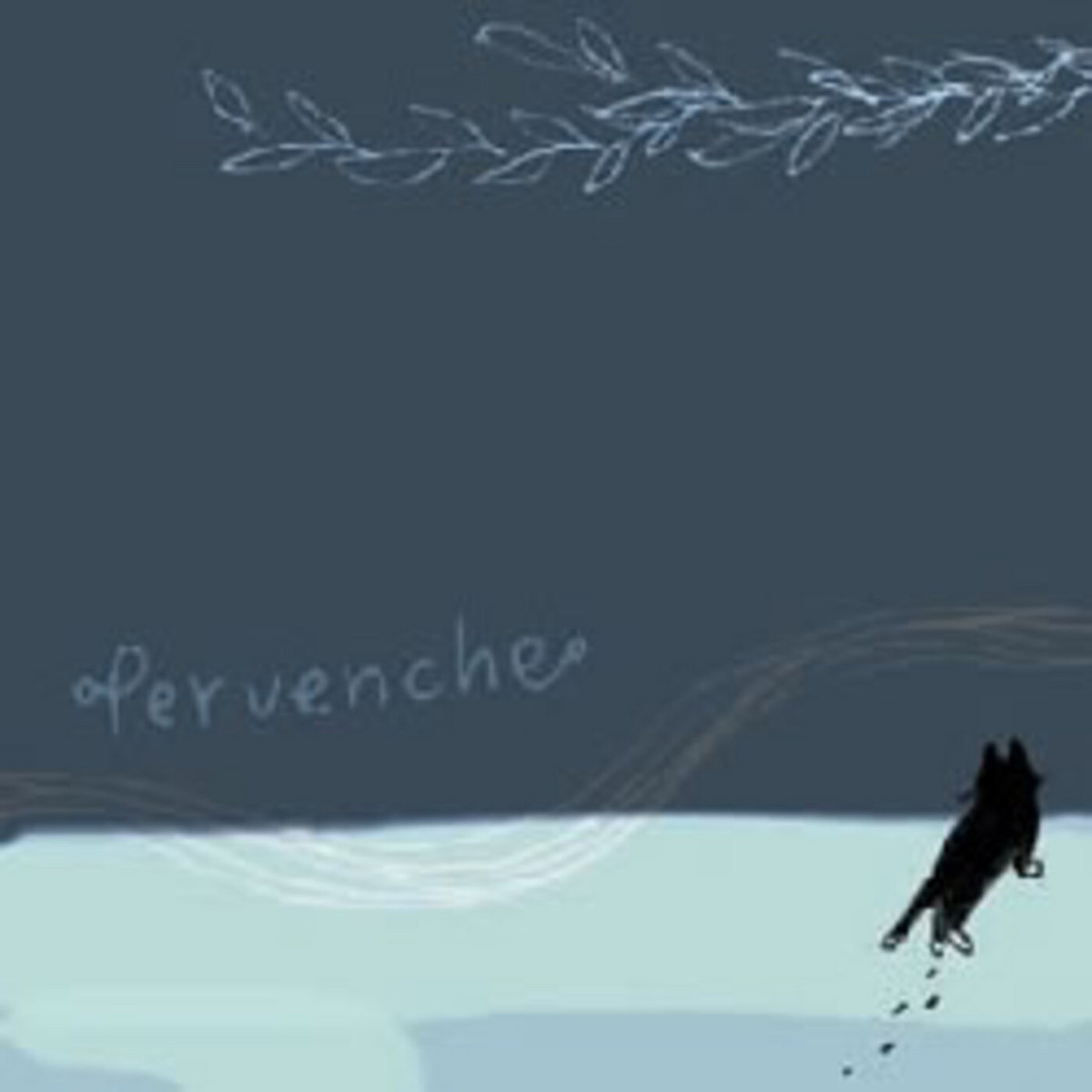
Pervenche’s ‘Subtle Song’ carries the quiet authority of a record shaped over time rather than in haste, its origins stretching back to a period of gradual refinement between April 2000 and May 2001. Now presented in a carefully remastered analog pressing, the album feels less like a relic and more like a preserved atmosphere, its sonic character deepened by Masato Saito’s renewed mastering from original mixes. What emerges is not merely a document of a band’s debut, but a study in restraint, intimacy, and the understated interplay of distinct musical sensibilities.
The title track serves as an aesthetic thesis. Masako Kato’s voice is unadorned yet precise, her phrasing guided by an instinct for melody that avoids flourish in favor of clarity. Around her, Saito and Michio Kawata’s guitars sketch delicate harmonic frameworks, while Shintaro Kiyonari’s bass provides a gentle sense of grounding. The arrangement feels intentional in its sparseness, inviting attention to small details rather than broad gestures.
“Blue Painting” introduces a faintly more experimental texture, aided by Akifumi Ikeda’s MS-20 contribution, which adds a soft electronic hue without disrupting the album’s organic core. The track feels like a fleeting impression, its brevity reinforcing its sense of transience. That same instinct for nuance carries into “Play The Wind,” where the ensemble expands its palette. Nicholas Allott’s saxophone lines weave through the composition with a measured lyricism, complemented by Julia Sugino’s bass arrangement and Maya Saito’s chorus work. The result is one of the album’s most layered pieces, yet it retains the lightness that defines the record as a whole.
“Earl Grey Tea” and “Picnic” continue this exploration of modest scale, their titles suggesting domestic or everyday imagery that is mirrored in the music’s unassuming tone. Hiroshi Nagai’s percussion subtly shapes the rhythmic contours, while Kato’s vocal delivery remains centered and contemplative. “Long Holiday,” brief and almost fragmentary, feels like a pause in the album’s narrative, its chorus enriched by Ikeda’s contribution yet never tipping into excess.
“Mess” introduces a slightly more unsettled mood, though even here the band resists overt dramatics. Instead, the track relies on tonal shifts and understated interplay between guitars to suggest complexity. “Snufkin,” with its evocative title, carries a sense of wandering introspection, its melodic line unfolding with quiet confidence. “Ano Neko” stands out not only for its compositional strength but also for the presence of Bart Cummings on electric guitar, whose contribution adds a subtle brightness without overshadowing the ensemble’s cohesion.
The album’s reinterpretation of “September’s Not So Far Way,” originally by Bobby Wratten of The Field Mice, is handled with a careful respect that avoids imitation. Pervenche reshape the song within their own aesthetic parameters, emphasizing its melodic core while allowing their characteristic restraint to guide its pacing. “Out of The Room” follows with one of the album’s more expansive arrangements, its extended runtime giving space for instrumental textures to develop with a quiet assurance.
Closing track “We Surely Become Happy” offers a resolution that feels both modest and quietly affirmative. It does not seek to conclude with grandeur, but instead settles into a reflective tone that aligns with the album’s overall sensibility. The cumulative effect is one of coherence, each track contributing to a unified atmosphere shaped by patience and attentiveness.
Throughout ‘Subtle Song’, the contributions of each musician remain carefully balanced. Kato’s vocals provide an emotional center, while Saito and Kawata’s guitars form a nuanced dialogue. Kiyonari’s bass and Nagai’s percussion operate with subtle precision, creating a rhythmic foundation that supports rather than dominates. The additional collaborators, from Ikeda’s electronic textures to Allott’s saxophone and Cummings’ guitar work, enhance the record without disrupting its internal logic.
What distinguishes ‘Subtle Song’ is its commitment to proportion. Every element feels measured, every decision guided by an understanding of how much is enough. The analog remastering does not attempt to modernize the album so much as clarify its original intent, allowing its textures to resonate with renewed depth. The result is a work that feels quietly assured, its elegance rooted not in complexity, but in the careful shaping of sound and silence.
For more information, please visit Pervenche | KiliKiliVilla | Clover Records | Masato Saito.