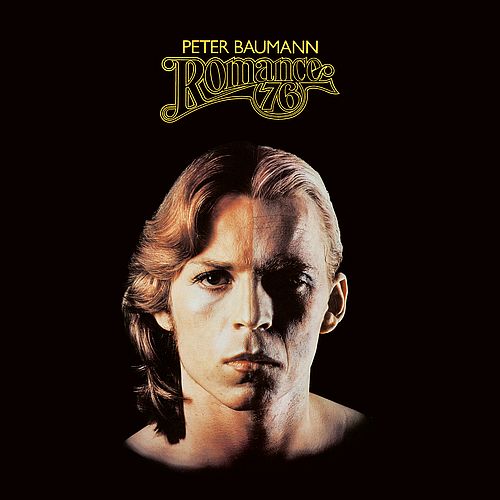
The half-century milestone of Peter Baumann’s solo debut arrives not merely as a nostalgic retrospective, but as a vital interrogation of the moment electronic music transitioned from communal experimentation into a singular, cinematic language. The ‘Romance 76 – 50th Anniversary Reissue’ preserves the icy clarity of a record that, in its time, signaled a departure from the sprawling improvisations of Tangerine Dream toward something more structured, haunting, and meticulously crafted. Baumann, serving as both architect and auteur, utilized this space to explore the tension between the organic human pulse and the relentless precision of the machine, a theme that remains startlingly relevant in our current digital epoch.
While his tenure with the classic Tangerine Dream trio was defined by the cosmic, long-form expeditions of ‘Phaedra’ (Virgin, 1974) and ‘Rubycon’ (Virgin, 1975), this solo endeavor reveals the disciplined, rhythmic hand that guided those larger movements. The album opens with “Bicentennial Presentation,” a track that functions as a subversive fanfare. It captures the complex irony of a European perspective on a landmark American moment, utilizing synthesized fanfares that feel both celebratory and unsettlingly synthetic. This leads seamlessly into the title track, “Romance,” which stands as a masterpiece of understated tension. Here, Baumann strips away the warmth usually associated with the term, replacing it with a rhythmic, mechanical pulse emerged, mimicking a heart of gears within the sterile, neon-drenched space. This shift toward melodic clarity and minimalist precision highlights a definitive move away from the meandering textures of his parent band toward a focused, neon-lit urbanity.
As the first side concludes with “Phase By Phase,” the listener is treated to a display of Baumann’s mastery of modular synthesis. The track is a shifting kaleidoscope of frequency and form, where the interplay of overlapping sequences creates a sense of perpetual motion. It is here that the influence of the Munich Philharmonic Orchestra’s strings and members of the choir, who contributed to the session, begins to color the edges of the electronic framework. This fusion of traditional orchestration with avant-garde synthesis provides the record with a grandeur that few of its contemporaries could match, proving that Baumann was moving beyond the Berlin School to find a narrative, semi-classical voice.
The second half of the release is dominated by the ambitious, multi-part “Meadow Of Infinity.” This composition represents the album’s most profound foray into the abstract. In “Part 1,” the atmosphere is thick with a primordial fog, utilizing the voices of the choir to create a haunting, liturgical quality that feels detached from any specific era. The transition into “The Glass Bridge” serves as a moment of crystalline fragility; the melodies here are delicate and transparent, shimmering like light reflecting off an arctic shelf. It is a brief, breathtaking pause before the journey concludes with “Meadow Of Infinity (Part 2),” where the rhythmic drive returns to guide the listener out of the sonic wilderness and back into a structured, albeit transformed, reality.
The contributions of the musicians involved, from the disciplined precision of the orchestral players to the choral arrangements, ensure that ‘Romance 76’ never feels sterile. Instead, it occupies a unique space where the futuristic and the ancient coexist. This reissue highlights the meticulous production values of the era, showcasing how Baumann’s vision pushed the boundaries of what was possible within the studio environment. By distilling the sprawling genius of his work in Tangerine Dream into these potent, cinematic vignettes, Baumann effectively bridged the gap between 1970s experimentation and the streamlined synth-pop that would follow.
Ultimately, this anniversary edition serves as a reminder that Peter Baumann was not merely a participant in the electronic revolution, but one of its most visionary cartographers. ‘Romance 76’ remains a sophisticated, brooding, and essential document of a musician finding his voice in the silence between the notes. It is a work of cold beauty that continues to burn with an internal, unquenchable flame.
Find out more by visiting: Bureau B | Bandcamp | Facebook.