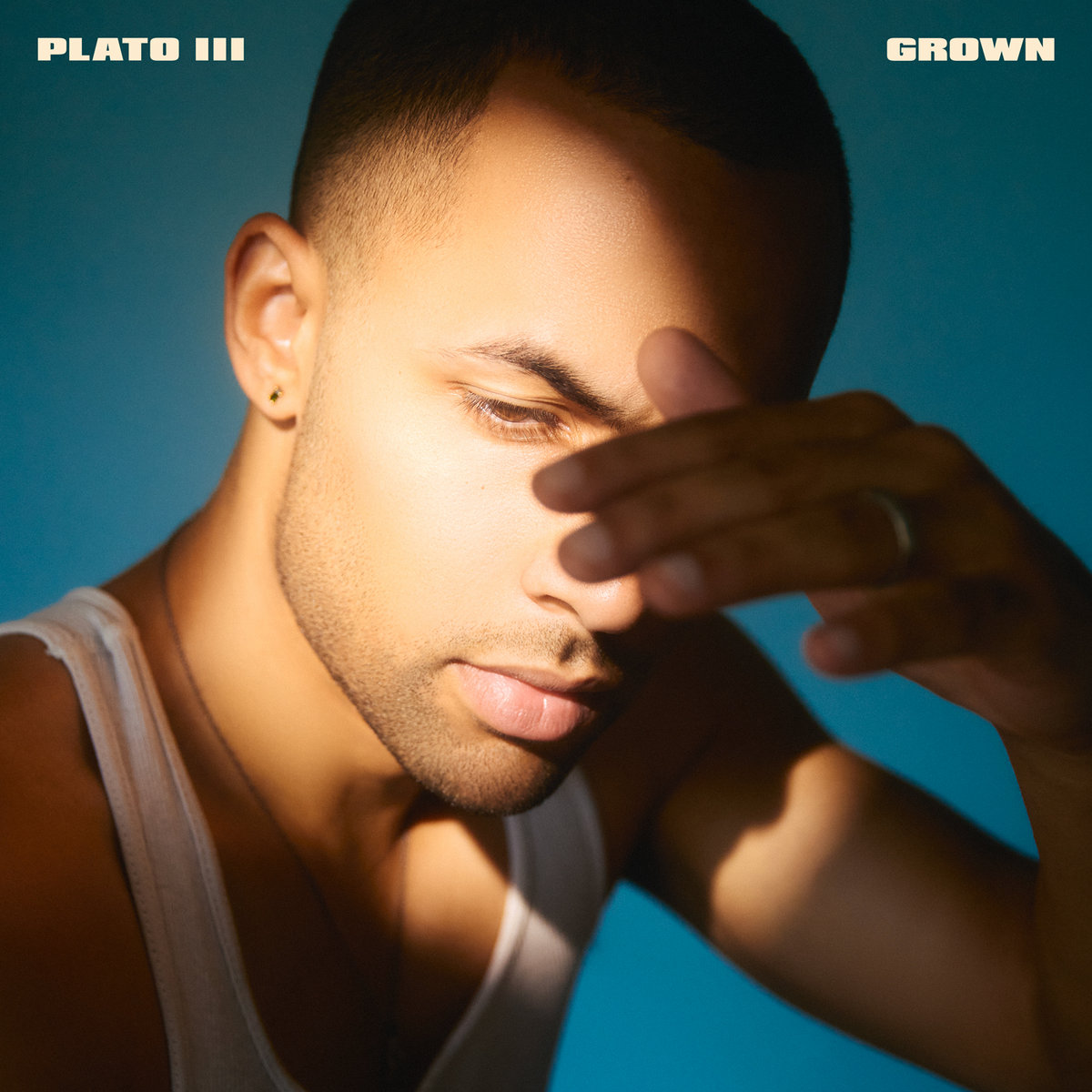
For listeners who have long kept hip hop at arm’s length, wary of its reliance on programmed loops and borrowed hooks, Plato III’s ‘Grown’ offers an unexpected point of entry. This is not an album that demands fluency in rap’s lineage or allegiance to its conventions. Instead, it invites the ear through arrangement, texture, and musicianship. In a production landscape often dominated by digital sheen, ‘Grown’ feels human, shaped by hands rather than hard drives. Though the record moves with the cadence of hip hop, its architecture will feel familiar to admirers of indie rock, soul, jazz, and even chamber-folk. The songs unfold as compositions rather than beat platforms. Instruments do not merely underpin verses; they converse, expand, and occasionally lead.
The opening track, “Good Problems,” establishes this ethos immediately. Its melodic warmth and fluid rhythm evoke alternative soul more than any preconceived notion of rap. The groove breathes. There is space between the notes, and within that space, subtle details emerge: the swell of keys, the elasticity of the bass, the gentle push and pull of percussion that resists mechanical rigidity. It feels performed rather than assembled. “I Want (Money),” featuring mb3merk, continues this emphasis on musical depth. Mb3merk’s contribution adds tonal layering that integrates seamlessly into a richly percussive framework. The track’s structure is dynamic, evolving rather than cycling predictably. For those accustomed to singer-songwriter records or band-driven arrangements, this interplay will feel intuitive and inviting.
On “Stable,” the instrumentation is stripped to its essentials. The arrangement is lean, but never bare bones. Each element resonates with intention, allowing the emotional undercurrents of the songwriting to surface naturally. The restraint here is telling; Plato III understands that sophistication is often found not in excess but in precision. “In a Funk,” again with mb3merk, leans into a low-slung groove that recalls the improvisational spirit of jazz. The rhythm section moves with a loose confidence, as if it could veer into an extended jam at any moment. Rather than adhering to rigid genre templates, the track prioritizes mood and tonal atmosphere. It is easy to imagine it appealing to listeners who value the exploratory textures of fusion or downtempo instrumental music.
“Marissa” shifts the focus toward a more cinematic sensibility. Layers are introduced gradually, creating a sense of depth and dimension. The track rewards keen ears; subtle melodic lines flicker at the edges, and the arrangement unfolds like a carefully lit scene. It is less about lyrical bravado and more about immersive sound design. The title track, featuring Xay III, acts as the album’s emotional center. A grounded rhythmic foundation supports soaring melodic accents, suggesting both gravity and uplift. The bridge offers nuanced shifts in tone and pacing, demonstrating a compositional awareness that transcends genre boundaries. Even listeners typically resistant to rap’s assertiveness may find themselves drawn in by the song’s structural elegance and harmonic layering. “Coulda Died” introduces urgency without sacrificing musical sophistication. Its kinetic energy is channeled through textured instrumentation rather than blunt force. The propulsion feels earned, not imposed.
One of the album’s most striking moments arrives with “Stay Sane,” a collaboration with Bei Bei, whose virtuosic guzheng performance reshapes the record’s sonic vocabulary. The shimmering cascades of the traditional Chinese zither create a luminous counterpoint to the contemporary rhythm section. The effect is neither ornamental nor gimmicky; it is integrative, expanding the album’s tonal palette into the realm of global chamber music and avant-garde fusion.
“Do You Still Need My Love?,” featuring Remi Lėkun and Wonderfox, bridges classic soul warmth with modern experimental shading. The harmonies feel lush and enveloping, while the instrumentation carries an organic glow. The track underscores the album’s central argument: that hip hop can serve as a framework for expansive musical storytelling rather than a narrow stylistic lane. The closing piece, “Let’s Get Old,” featuring the intricate guitar work of Eli Winter, provides perhaps the clearest invitation to non-hip hop listeners. Winter’s fingerpicking is delicate and expressive, drawing from folk traditions with an almost pastoral intimacy. As the album settles into its final moments, the guitar becomes both anchor and farewell, reinforcing the project’s devotion to craft over convention.
By the time ‘Grown’ concludes, it has quietly dismantled assumptions. Plato III demonstrates that hip hop need not be confined to loops or borrowed refrains. Here, it functions as a flexible vessel for composition, collaboration, and instrumental exploration. For those who value the tactile beauty of live performance, the interplay of musicians, and the subtle architecture of thoughtfully arranged songs, ‘Grown’ is less a genre exercise than an invitation to listen differently.
Learn more here: Bandcamp | Instagram | Youtube | Polyvinyl Records