
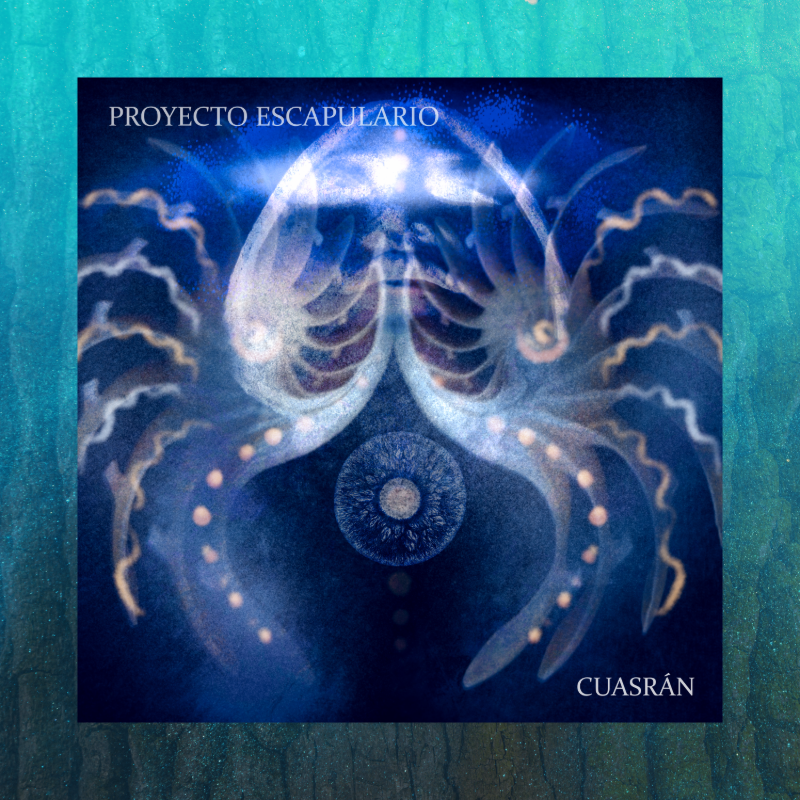
Reviewing a song sung in a language I am not fluent in might seem difficult, but I think it actually makes you consider more deeply how music speaks to us. Okay, as a non-Spanish speaker, the lyrics are lost on me (sorry, typical lazy Brit, I’m afraid), but the voice and the sound of the words are more than just direct communication; they can be, as they are here, an instrument in their own right. And after all, the lyrical component is only one part of the process, especially when the music is this emotive and mysterious, captivating and exciting.
Even if I hadn’t read the press release, I would have sensed the ancient forces at work within the song: the dark, earthy connection with nature, and the mysterious figure of Cuasrán sitting at its heart. Guitars spiral through the wild places, a mournful violin drifts through forest paths, and the bass and beat lay down a primal pulse, more a ritual than a song, more a feeling than a piece of entertainment; this is music as a memory, art as a tribute, a direct connection with things predating the modern world, ideas and echoes that have always pulsed through the natural world.
Inspired by band leader Ariel Maniki’s visit to the Boruca community in southern Costa Rica, and his longstanding admiration for their arts and crafts, culture and traditions, which the band has since woven through their live shows, this is a song which, even with my lack of lyrical understanding, loses little in terms of communication. It is still every bit as mysterious and beguiling, otherworldly and awesome as I’m sure it is to a Spanish speaker. Perhaps more so, as I am not led to the conclusion that the writer wants, but instead have to navigate the soundscape to find my own conclusions.
A great song and a reminder that communication comes in many forms, music being a particularly emotive, powerful, ancient and fulfilling one.