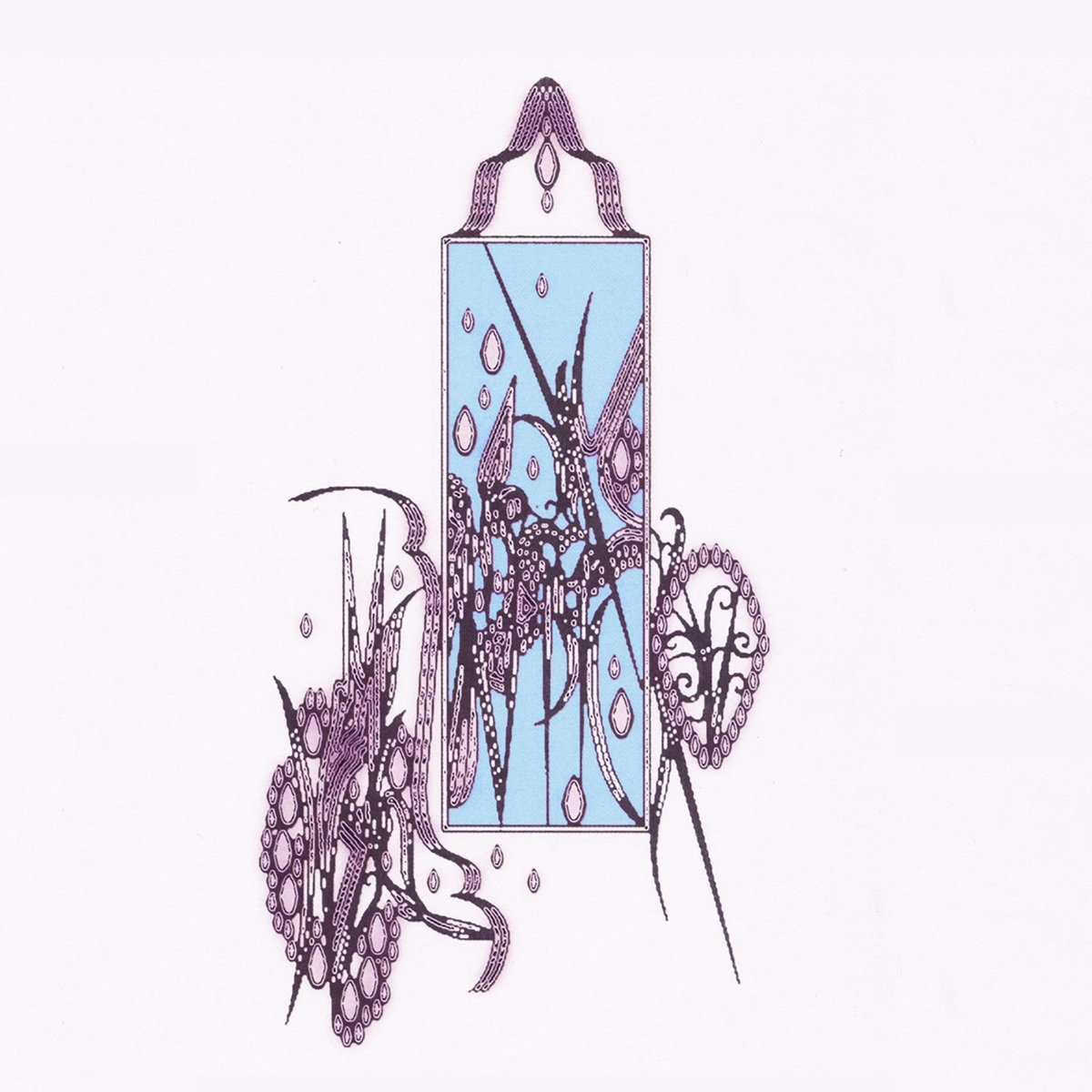
‘Talking in a Different Way’ is an album about change that avoids the usual language of transformation. Nothing announces itself. Pan, a multi-instrumentalist and composer based in Oakland, builds the album out of tiny changes in texture, harmony, voice and mood, landing in the in-between place where you’re no longer who you were but not yet someone new. Ten tracks containing a mix of ambient, electronic, dream pop, avant-garde classical and post-punk adds up to a personal language, close and oddly cosmic at once.
The record’s central question is how we relate to ourselves when the world that formed us no longer exists. Pan approaches it through sound, letting memory go unstable and identity stay porous. The album doesn’t describe alienation from a safe distance; it lives inside it, tracking the small sonic disturbances that happen when familiar structures stop being enough. “Promise” sets this up. Jas Stade’s guitar enters Pan’s carefully built environment without breaking its delicacy. After walking away from a traditional symphonic career, the conservatory violinist has found a new kind of exactness that embraces the unknown, and her beautifully arranged music no longer feels trapped by the rigid discipline that once drained her.
“Out loud” brings the voice forward, though Pan’s singing is less a pop focal point than another instrument in an electroacoustic arrangement. Drums from Rick Altieri (Above Me), along with Chris Grant and Parker Richard’s synthesizer create a quiet push between organic percussion and electronic suspension. The title suggests declaration, but her delivery stays close and private, so speaking outward becomes discovery rather than proclamation. Pan comes from a world where excellence meant exactness, hierarchy and loyalty to established forms; this record proposes another kind of rigor, based on listening closely enough to notice when imperfection carries information. “Nobody” is spacious without being empty, its melodic fragments asking whether solitude and absence are the same thing.
“Eyes” adds Richard’s guitar and vocals, yet it never settles into standard indie rock. It plays like a half-remembered memory stitched back together, and that’s one of her best gifts as a composer: she knows ambiguity can hold a song up, not just color it. “Douse the flame of memory” makes the idea explicit. Pan treats memory not as storage but as an active process of alteration, her looping textures suggesting recollection repeating until its original shape has changed. Beneath beauty is an uneasy intelligence: to remember is also to revise, leave out, distort and invent. David Alvarez’s warm, breathy saxophone on “Is that really you?” sits against Pan’s electronic and string-leaning palette. People, relationships and even the self can turn unfamiliar, and Pan builds that uncertainty into the music. “Roulette” plays with risk while staying controlled, a contradiction that runs through the album: pure chance held inside deliberate structure. Her composing is less about dropping structure than locating structures flexible enough to convey surprise.
“Strange pop” may be the most revealing, since it describes her aesthetic. These are songs whose usual parts have been stretched until their roles blur. Melody, rhythm and pop’s emotional directness still matter, but each is surrounded by odd harmonic spaces, samples, loops and electronic haze. Pan doesn’t reject pop’s power to communicate; she asks how far it can be altered before it becomes something new. “Talking in a different way” gathers many of these ideas into one statement. Communication here isn’t just finding new words for the same thing; it’s the possibility that changing the language changes the thought itself. When familiar forms fail, the answer may not be going back to them harder but building another way of expressing yourself.
“Grasshopper” closes the album with a fitting sense of motion. The insect’s name suggests fragility, instinct and sudden movement, qualities that run through the album. Pan offers no grand resolution, leaving an impression of ongoing change, as if the album were one temporary chamber in a much larger process. She performed, composed and recorded it herself, giving it coherence, while Beau Sorenson’s mixing and Sébastien Politi’s mastering protect the delicacy of those relationships.
Pan’s background is key to the record, but it never plays like a résumé or a rebellion against classical culture. Her real achievement is turning what she learned into something freer. Her grip on loops and arrangements hasn’t loosened, but the pecking order has: improvisation, electronics, post-punk bursts and gentle pop melodies now coexist with equal weight. The album understands that changing who you are isn’t a sudden, perfect action. It’s a slow drift: one layer drops away, another takes its place. Her debut full-length doesn’t just ask how we communicate once the old language fails. It listens closely for the new one already beginning to form.
Learn more links:
Constellation Tatsu
Bandcamp
Soundcloud
Instagram
Facebook
Twitter