
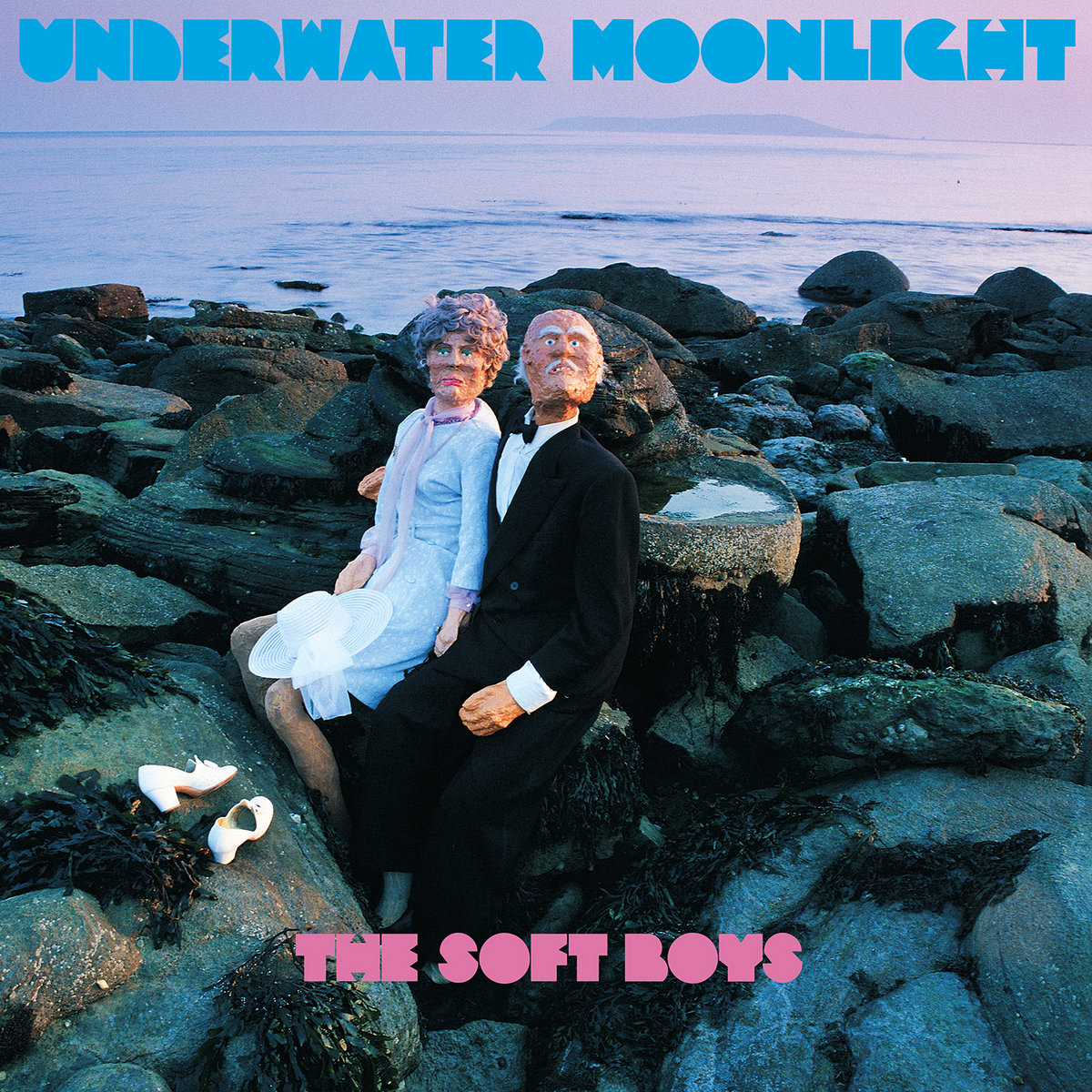
Few albums occupy such a curious and influential position within the history of guitar music as ‘Underwater Moonlight’ by The Soft Boys. Upon its original release in 1980, the record seemed to arrive from a parallel dimension, one where the psychedelic imagination of the late 1960s had survived punk’s scorched-earth revolution and emerged stranger, sharper, and more intellectually adventurous. Four and a half decades later, the 45th anniversary remaster serves not merely as a commemorative reissue but as a reminder of just how singular this album remains. Far from sounding trapped within its historical moment, it continues to radiate a restless creativity that many contemporary records still struggle to match.
The remastering work by John Baldwin, sourced from the original tapes, reinforces the remarkable chemistry at the heart of the album. Robyn Hitchcock’s visionary songwriting and eccentric lyricism provide its conceptual backbone, yet the record’s enduring power stems equally from the collective performance of the band. Kimberley Rew’s guitar work supplies melodic brilliance and muscular energy, Matthew Seligman’s bass anchors the songs with elegance and precision, and Morris Windsor’s drumming combines discipline with spontaneity. Together they create a sound that is simultaneously sophisticated and unruly, capable of accommodating surreal imagery, pop hooks, and bursts of guitar-driven exhilaration within the same song.
The opening track, “I Wanna Destroy You,” remains one of the great paradoxes in British rock. Constructed around a bright, irresistible melody, the song examines hostility, resentment, and social fracture with unsettling clarity. Hitchcock delivers the lyrics with a mixture of irony and genuine concern, transforming what could have been a simple protest song into something far more psychologically nuanced. Rew’s guitar lines sparkle throughout, creating a fascinating contrast between musical exuberance and lyrical unease. “Kingdom Of Love” follows by plunging into darker and more enigmatic territory. One of Hitchcock’s most celebrated compositions, the song transforms romantic obsession into a form of gothic mythology. The imagery is bizarre, occasionally unsettling, and yet strangely moving. Seligman’s bass performance provides a steady undercurrent beneath the song’s shifting moods, while the guitars weave intricate patterns that blur the boundaries between dream and reality.
The infectious “Positive Vibrations” demonstrates the band’s gift for combining wit with immediacy. On paper, the title suggests optimism, but The Soft Boys rarely deal in straightforward emotional categories. Beneath the song’s buoyant surface lies a sly commentary on fashionable idealism and cultural clichés. Windsor’s drumming propels the track forward with infectious momentum, ensuring that its conceptual playfulness never overshadows its musical vitality. “I Got The Hots” showcases another side of the album’s personality. Here, desire is presented not as romantic fulfillment but as a destabilizing force, something capable of producing both exhilaration and absurdity. Hitchcock’s vocal performance embraces the song’s comic dimensions without reducing it to novelty. Rew’s guitar work is especially impressive, balancing precision and abandon with remarkable confidence.
The emotional volatility continues with “Insanely Jealous,” a song that explores possessiveness and insecurity with uncomfortable honesty. Rather than presenting jealousy as a dramatic gesture, Hitchcock treats it as a psychological condition that distorts perception itself. The arrangement mirrors this instability, moving with an urgency that reflects the narrator’s increasingly obsessive perspective. “Tonight” introduces a moment of relative warmth and accessibility. Beneath its melodic immediacy lies a subtle melancholy that prevents the song from becoming merely romantic. The interplay between the rhythm section and the guitars demonstrates the band’s intuitive understanding of dynamics. Every element serves the composition while retaining its individual character.
The co-written “You’ll Have To Go Sideways” stands among the album’s most delightfully eccentric moments. Hitchcock and Rew create a song that appears to operate according to its own internal logic, embracing absurdity while remaining emotionally coherent. Its brevity only enhances its charm, functioning as a compact burst of imagination that encapsulates many of the album’s defining qualities. “Old Pervert,” credited collectively to Hitchcock, Rew, Seligman, and Windsor, represents one of the album’s sharpest character studies. Equal parts satire and social observation, the song examines aging, desire, and self-awareness with a mixture of humor and discomfort. The full-band writing credit feels particularly appropriate, as the performance radiates a collaborative energy that gives the track a distinctive personality within the album’s broader narrative.
“The Queen Of Eyes” arrives like a surreal hallucination compressed into two minutes. One of the record’s most concise compositions, it demonstrates Hitchcock’s remarkable ability to evoke entire worlds through fragmented images and unexpected associations. The song’s economy becomes one of its greatest strengths, leaving a lasting impression long after it ends. The title track, “Underwater Moonlight,” provides a magnificent conclusion. Stretching beyond four minutes, it gathers together many of the album’s recurring themes and sonic characteristics. The guitars achieve an almost transcendent quality, creating layers of melody that seem to shimmer and drift while remaining firmly grounded in rock and roll. Andy King’s sitar contribution enriches the song’s psychedelic atmosphere, while Gerry Hale’s violin adds further depth to the album’s already expansive palette. Hitchcock’s lyrics embrace mystery without sacrificing emotional resonance, allowing the song to function as both culmination and invitation.
What makes ‘Underwater Moonlight’ such an extraordinary achievement is its refusal to choose between intelligence and immediacy. The album contains memorable hooks, energetic performances, and accessible melodies, yet it also challenges listeners through its literary sensibility, surreal imagery, and unconventional perspectives. Hitchcock’s songwriting draws equally from psychedelia, post-punk, folk traditions, and absurdist humor, creating a body of work that resists easy categorization.
Pat Collier’s production deserves significant recognition for preserving this balance. Recorded across James Morgan, Alaska, and Spaceward studios, the album captures the band with remarkable clarity while retaining the spontaneous energy essential to its character. The 2025 remaster enhances those qualities without compromising the spirit of the original recording. Rather than modernizing the sound, it illuminates details that were always present, allowing the musicianship and songwriting to emerge with renewed vividness.
The influence of ‘Underwater Moonlight’ has become increasingly apparent over the decades. Elements of alternative rock, indie pop, neo-psychedelia, and guitar-driven underground music can all trace lines back to this album’s adventurous spirit. Yet influence alone does not explain its continued relevance. The record endures because it remains delightfully unpredictable. Every song contains unexpected turns, unusual images, and musical ideas that challenge assumptions about what rock music can achieve. Forty-five years after its original appearance, ‘Underwater Moonlight’ retains its capacity to surprise, amuse, provoke, and enchant. The Soft Boys created a work that exists comfortably outside conventional chronology, belonging neither entirely to the past nor fully to the present. This anniversary edition serves as a welcome opportunity to revisit one of the most imaginative albums of its era; a record whose peculiar brilliance has only become more apparent with time.
For more information, please visit Bandcamp | Tiny Ghost Records | Instagram | Twitter | Facebook