
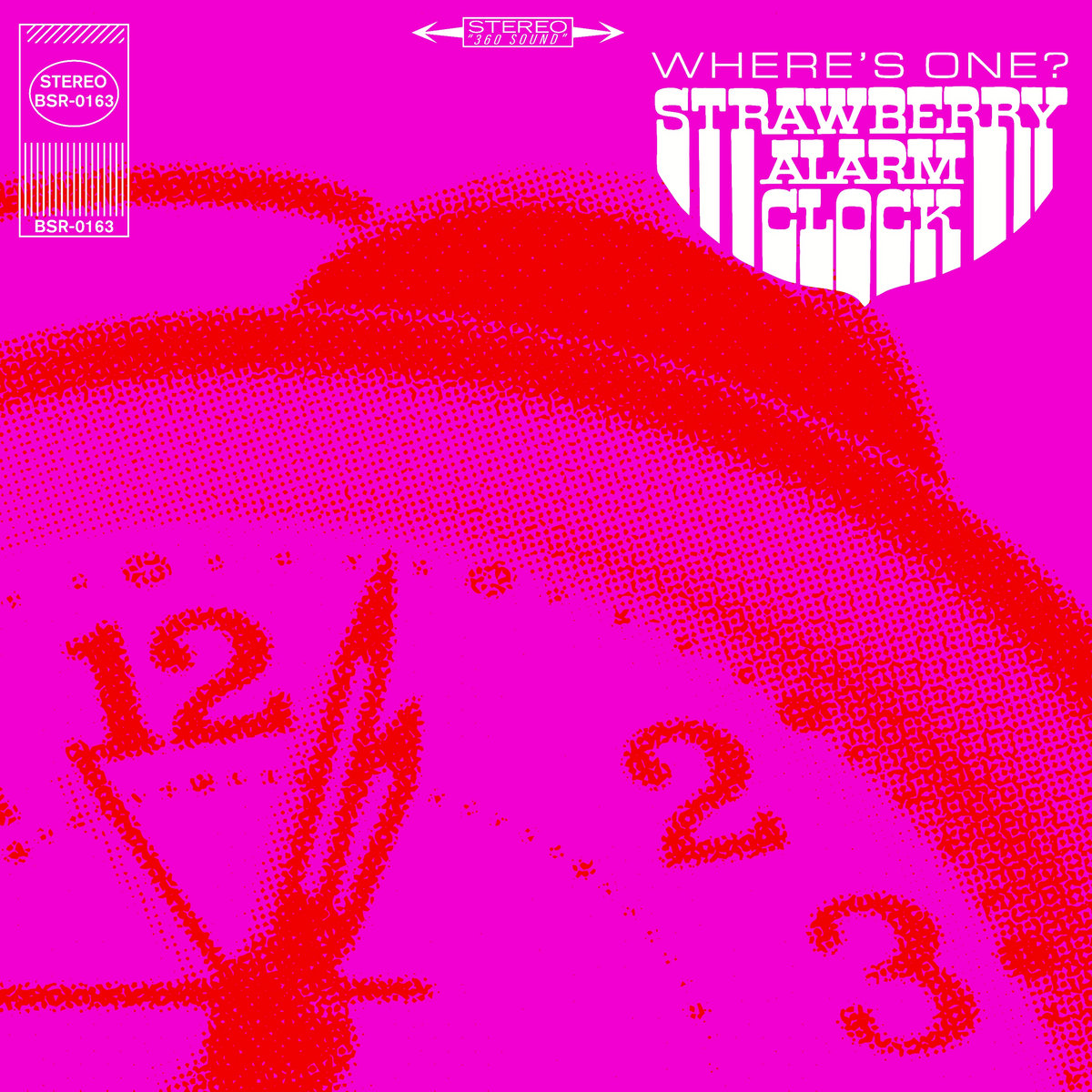
Revisiting the vanguard of West Coast psychedelia after more than half a century demands a delicate balance between temporal reverence and artistic evolution. With ‘Where’s One?’, Strawberry Alarm Clock achieves a rare feat, delivering an expansive musical statement that honors their countercultural roots while boldly expanding their sonic architecture. ‘Where’s One?’ represents the group’s first full-length offering of fresh material since 1969. Far from a hollow exercise in nostalgia, the record thrives on the formidable interplay of its personnel, boasting five musicians from the band’s historic late-sixties era.
The group’s core is comprised of keyboardist Mark Stephen Weitz, drummers and percussionists Randy Seol and Gene Gunnels, bassist George Bunnell, and guitarist, flautist, and sitar player Steve Bartek and rekindles a creative synchronicity that has only deepened across decades. Augmented by guitarist Howie Anderson, who has anchored the lineup since their mid-eighties reconstitution, the ensemble demonstrates a collective elasticity that refuses to replicate past triumphs rigidly. Instead, they treat their foundational psych-rock blueprint as a living, breathing idiom capable of absorbing multi-generational influences.
The album opens with the immaculate vocal arrangements of “Feel The Love,” a sun-drenched a cappella introduction that briefly evokes the pristine pop sensibilities of the late sixties before the band pivots into darker, more adventurous territory. The subsequent piece, “Monsters,” shifts the emotional axis entirely. Driven by a sinister, loping cadence reminiscent of nineties trip-hop and funk, the track employs swirling organ flourishes and ominous textures to explore the complexities of long-term human relationships, demonstrating that the band’s contemporary perspective is well-suited for thematic nuance.
This spirit of reinvention carries into their radical interpretations of classic material. Rather than offering faithful renditions of the Lennon-McCartney songbook, the band approaches “Day Tripper” and “Within You Without You” with a subversive, deconstructive energy. The former transforms the familiar guitar riff into a delightfully askew, new-wave-adjacent experiment, while the latter honors the Eastern mysticism of the original through a distinctly modern, fractured lens.
As the album progresses, the stylistic scope expands exponentially. “White Light” emerges as a centerpiece of heavy experimentation, juxtaposing ethereal vocal harmonies against intense, near-metal guitar work and intricate, progressive time signatures. The composition directly addresses the anxieties of artistic trajectory, asking pivotal questions about direction and purpose. The band shifts gears effortlessly on “Blow Your Mind,” a piece infused with the raw garage-rock energy of the ‘Nuggets’ era, driven by Weitz’s vibrant keyboard work.
The second half of the record highlights the band members’ individual and collective songwriting growth, drawing upon deeply personal narratives that elevate the material beyond mere genre exercises. Anderson’s contributions, “Since You Have Gone Away” and “I’m Not The One,” ground the album’s broader cosmic ambitions in intimate domestic reflections. The former features sophisticated, elegant chamber-pop strings orchestrated by Bartek (who co-produced the record alongside Michael Stern), while the latter navigates complex progressive rock arrangements to articulate the poignant reality of children leaving the familial nest.
The rhythm section of Bunnell, Seol, and Gunnels keeps the foundation fluid and unpredictable throughout the deeper cuts. “Live Water” incorporates a syncopated groove that nods to seventies funk, while “Primordial Soup” embraces an avant-garde, art-rock sensibility reminiscent of Frank Zappa or Captain Beefheart, exploring the philosophical bridge between the inorganic and biological life. The band even detours into a sophisticated simulation of mid-century exotica on “Tahitian Gardens,” proving their willingness to explore any musical avenue that strikes their fancy.
Optimism shines brightly on “The Sky Isn’t Falling,” a track that channels the radiant harmonies of seventies AM radio pop, offering a luminous contrast to the heavier conceptual moments. The album reaches its thematic and sonic zenith with the closing suite, “Galactic Symphony – Persian Skies.” Written collectively by the entire ensemble, this extended psychedelic excursion features a compelling spoken-word contribution from the legendary Los Angeles poet laureate Stephen J. Kalinich. It serves as a fitting culmination to an album that functions less as a retrospective and more as an ongoing exploration.
Co-produced with an emphasis on emotional resonance rather than sterile digital perfection, ‘Where’s One?’ retains the band’s inherent sense of whimsy and human vulnerability. It stands as a testament to lifelong creative partnerships, proving that the search for the elusive musical center remains just as vital for Strawberry Alarm Clock today as it did at the dawn of their career.
Releases August 7, 2026
For more information or to pre-order, please visit: